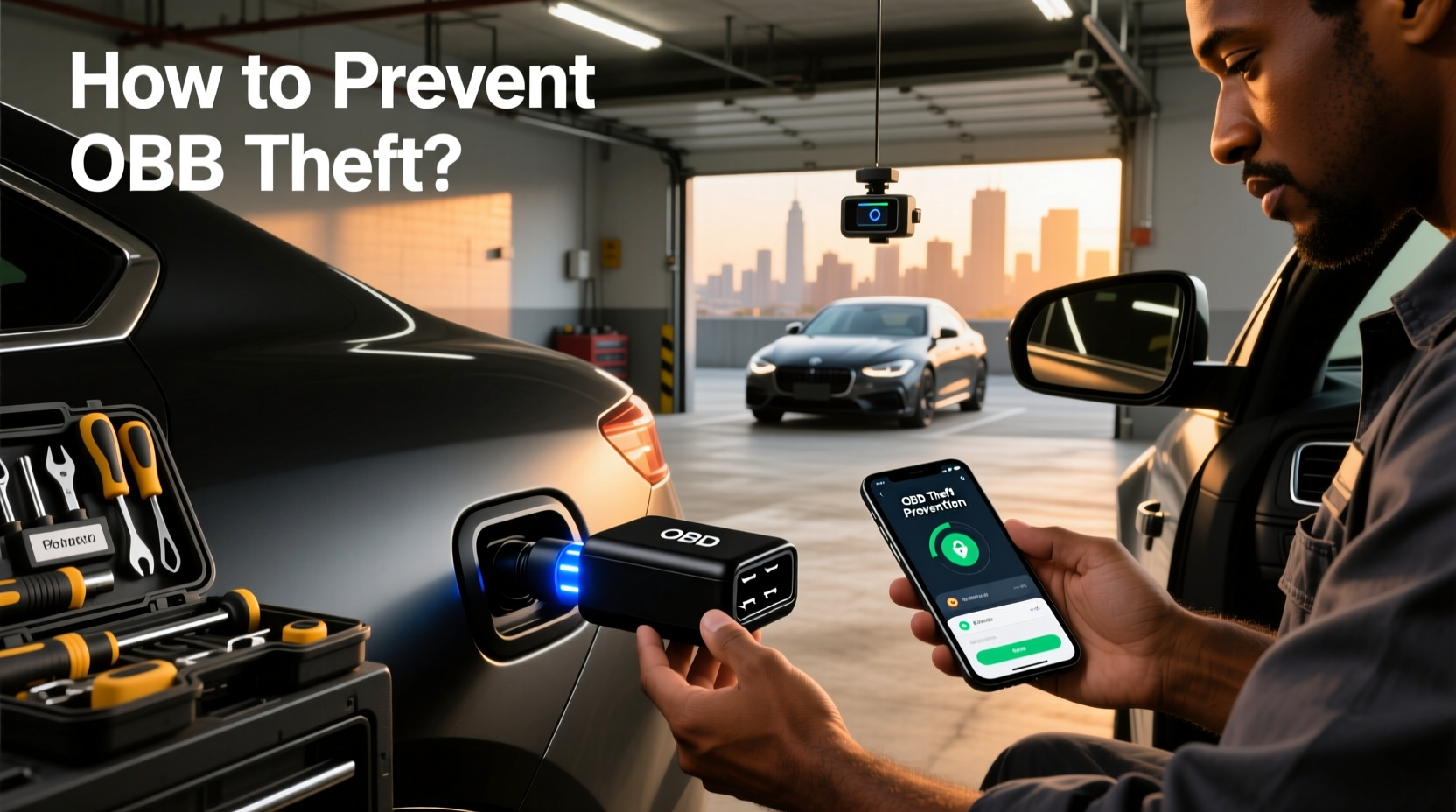
If you're asking how to choose an obd speed lock device or seeking effective ways for how to prevent OBD theft, start by identifying your primary threat model: opportunistic access vs. advanced hacking. For most drivers, a metal OBD port lock is the most cost-effective solution to block physical tampering 1. However, if your vehicle has keyless entry or you park in high-risk areas, consider combining it with an OBD kill switch or firewall device for layered protection 2. Avoid cheap plastic covers—they can be easily broken. Always verify compatibility with your car’s OBD-II socket location and ensure installation doesn’t interfere with routine diagnostics.
🛒 About OBD Speed Lock Devices & How to Prevent OBD Theft?
An OBD speed lock device—more accurately referred to as an OBD port lock—is a physical or electronic mechanism designed to restrict unauthorized access to a vehicle’s On-Board Diagnostics (OBD-II) port. This standardized 16-pin connector, required in all vehicles manufactured after 1996, provides direct communication with the car’s Controller Area Network (CAN bus), which controls critical systems like the engine, transmission, and immobilizer 3.
While mechanics use the OBD port for diagnostics and repairs, thieves exploit it for key fob cloning, alarm bypassing, ECU reprogramming, and data harvesting 4. A true “speed lock” does not limit vehicle speed but secures the port against intrusion. The term often arises from confusion with speed-limiting telematics devices. When researching how to prevent OBD theft, focus on access control rather than performance modification.
📈 Why OBD Port Security Is Gaining Popularity
Modern car theft increasingly relies on digital tools rather than traditional hotwiring. According to recent reports, OBD-based attacks have contributed to rising non-force theft incidents, especially in urban areas 5. Vehicles with keyless entry are particularly vulnerable to relay attacks and OBD port exploitation.
As awareness grows, more owners are adopting aftermarket solutions beyond factory immobilizers. Insurance providers in some regions now recommend OBD locks as part of comprehensive anti-theft strategies. Additionally, the rise of plug-in GPS trackers—often connected via OBD—has highlighted the dual nature of the port: useful for monitoring, yet risky if left exposed.
🔧 Types and Variants of OBD Security Solutions
Different OBD protection methods serve varying levels of risk tolerance and technical comfort. Below are the main types:
✅ Physical OBD Port Locks
These are mechanical covers that fit over the OBD-II socket and require a unique key for removal.
- Metal Locks: Made from hardened steel or aluminum alloy, these resist drilling and prying. Often secured with tamper-proof screws 6.
- Plastic Covers: Lower-cost options, but easily shattered with minimal force—not recommended for real security.
Pros: Inexpensive, easy to install, immediate deterrent.
Cons: Does not stop wireless attacks; visible location may prompt port relocation attempts.
⚡ OBD Kill Switches
An electronic interrupter that cuts power to the OBD port when activated, usually via a hidden toggle or remote.
Pros: Renders the port unusable without power; highly effective against cloning.
Cons: Requires wiring into the vehicle’s electrical system; improper installation risks short circuits.
🌐 OBD Firewalls & Encryption Devices
Advanced modules that sit between the OBD port and any connected device, filtering commands and blocking unauthorized access. Some offer app-based alerts for tamper detection 7.
Pros: Real-time monitoring, digital defense layer.
Cons: Higher cost; may conflict with diagnostic tools; needs firmware updates.
📍 Port Relocation
The OBD port is moved to a concealed area (e.g., under dash trim, behind panels) by a professional installer.
Pros: Eliminates easy access; adds time barrier for thieves.
Cons: Costly; complicates future diagnostics; must be documented to avoid service delays.
🔍 Key Features and Specifications to Evaluate
When assessing how to choose an obd speed lock device or broader OBD security solution, consider these factors:
- Material Strength: Opt for metal (steel/aluminum) over plastic.
- Key Uniqueness: Look for non-standard keys to prevent duplication.
- Installation Method: Tool-free snap-on vs. screw-mounted vs. hardwired.
- Compatibility: Confirm fit with your vehicle’s OBD-II housing (some EVs have recessed ports).
- Tamper Resistance: Check for anti-drill pins or locking mechanisms.
- Diagnostic Access: Some locks allow scan tool passage via keyed access—useful for mechanics.
- Integration Capability: For firewall devices, verify compatibility with existing GPS trackers or alarms.
pros and cons
Understanding the trade-offs helps match the solution to your needs.
Best suited for: Urban parking, keyless entry vehicles, frequent valet use, older models without advanced immobilizers.
Not ideal for: DIY-unfriendly users (for hardwired systems), those who regularly use OBD scanners (may need quick-access designs), or leased vehicles where modifications aren’t allowed.
📋 How to Choose an OBD Speed Lock Device: Step-by-Step Buying Guide
Follow this checklist to make an informed decision on how to prevent OBD theft effectively:
- Assess Your Risk Level: Do you park on the street? Use keyless entry? Own a high-theft-target model?
- Choose Protection Type: Start with a metal port lock if budget-constrained. Add a kill switch or firewall if higher risk.
- Verify Vehicle Compatibility: Measure OBD port depth and surrounding space. Some compact cars have tight dash layouts.
- Avoid These Red Flags:
- Plastic construction
- Universal keys (easily duplicated)
- No tamper evidence indicators
- Claims of ‘unbreakable’ or ‘guaranteed’ protection (no system is foolproof)
- Test Installation: Ensure you—or a technician—can install it without damaging dash components.
- Plan for Service Access: Inform your mechanic or keep spare keys accessible.
💰 Price & Market Insights
Pricing varies significantly based on type and complexity:
- Physical Metal Locks: $15–$40. Most affordable and widely available.
- OBD Kill Switches: $50–$120 (device only); +$100–$200 for professional installation.
- Firewall/Encryption Devices: $100–$250+, often subscription-based for app features.
- Port Relocation: $200–$500 depending on labor and concealment complexity.
Value-for-money depends on usage. A metal lock offers strong ROI for average users. High-end electronics suit fleets or luxury vehicles. Prices may vary by region and retailer—always compare specs, not just price.
📊 Top-Seller & Competitive Analysis
| Solution | Avg. Price | Installation | Security Level | Service-Friendly? |
|---|---|---|---|---|
| Metal OBD Lock | $25 | DIY (5 min) | Moderate | Yes (with key) |
| OBD Kill Switch | $80 | Professional (1–2 hrs) | High | No (must reactivate) |
| OBD Firewall | $180 | DIY/Pro (30 min) | High | Limited (filter rules) |
| Port Relocation | $350 | Professional (2+ hrs) | High | No (location must be shared) |
This comparison highlights that while advanced systems offer superior protection, they come with higher costs and maintenance trade-offs. For most consumers, a metal lock combined with other deterrents (like steering wheel locks) provides balanced security.
📝 Customer Feedback Synthesis
Analysis of verified buyer reviews reveals consistent patterns:
Frequent Praises:
- “Simple to install and gives peace of mind.”
- “Thief tried to break in—left quickly when they couldn’t find the port.”
- “Mechanic could still access with provided key.”
Common Complaints:
- “Cheap version cracked after one week.”
- “Blocked my USB port due to poor design.”
- “App alerts kept triggering falsely.” (for smart firewalls)
- “Installer forgot to reconnect port after service.”
🏭 Sourcing & Supplier Tips
When purchasing, prioritize reputable suppliers:
- Retailers: Auto parts stores (physical and online), certified locksmith distributors.
- Bulk Buyers: Consider wholesale platforms for fleet deployments; request samples first.
- Dropshipping/Vendors: Verify return policies and warranty terms before resale.
- Verification Steps:
- Check product dimensions against your vehicle manual.
- Confirm return eligibility if incompatible.
- Look for UL or ISO certification where applicable (rare but valuable).
🧼 Maintenance, Safety & Legal Considerations
Regular inspection ensures ongoing effectiveness:
- Maintenance: Clean around the lock monthly; check for corrosion or looseness.
- Safety: Never disable airbag systems during installation. Use insulated tools for electrical variants.
- Legal Notes: Modifications like port relocation may affect warranty or insurance claims. Always disclose such changes to service centers and insurers. Regulations vary by country—verify local compliance through manufacturer guidance or legal counsel if uncertain.
✅ Conclusion: Matching Security to Your Needs
There is no one-size-fits-all answer to how to prevent OBD theft. If you need basic, affordable protection, a metal OBD port lock is sufficient for most drivers. For enhanced security in high-risk environments, combine it with a kill switch or electronic firewall. Remember, physical deterrence remains the most cost-effective starting point. Pair your OBD protection with other measures—steering wheel locks, Faraday pouches for key fobs, and GPS tracking—for a multi-layered defense strategy.
❓ FAQs
Can I install an OBD lock myself?
Yes, most physical OBD port locks are designed for DIY installation and require no tools. Electronic systems like kill switches or firewalls may need professional help.
Will an OBD lock prevent all types of car theft?
No. It specifically blocks OBD-based attacks like key cloning but doesn’t stop window smashing or towing. Combine it with other anti-theft devices for full coverage.
Does an OBD firewall work with my existing GPS tracker?
Some do, but not all. Check device specifications for pass-through mode or whitelist functionality to ensure compatibility.
Is relocating the OBD port worth it?
It adds security through obscurity but increases service complexity. Best suited for high-value or frequently targeted vehicles.
Can thieves bypass an OBD lock?
Determined attackers with time and tools might remove or drill through weak locks. High-quality metal locks significantly delay intrusion, increasing the chance of detection.




 浙公网安备
33010002000092号
 浙B2-20120091-4