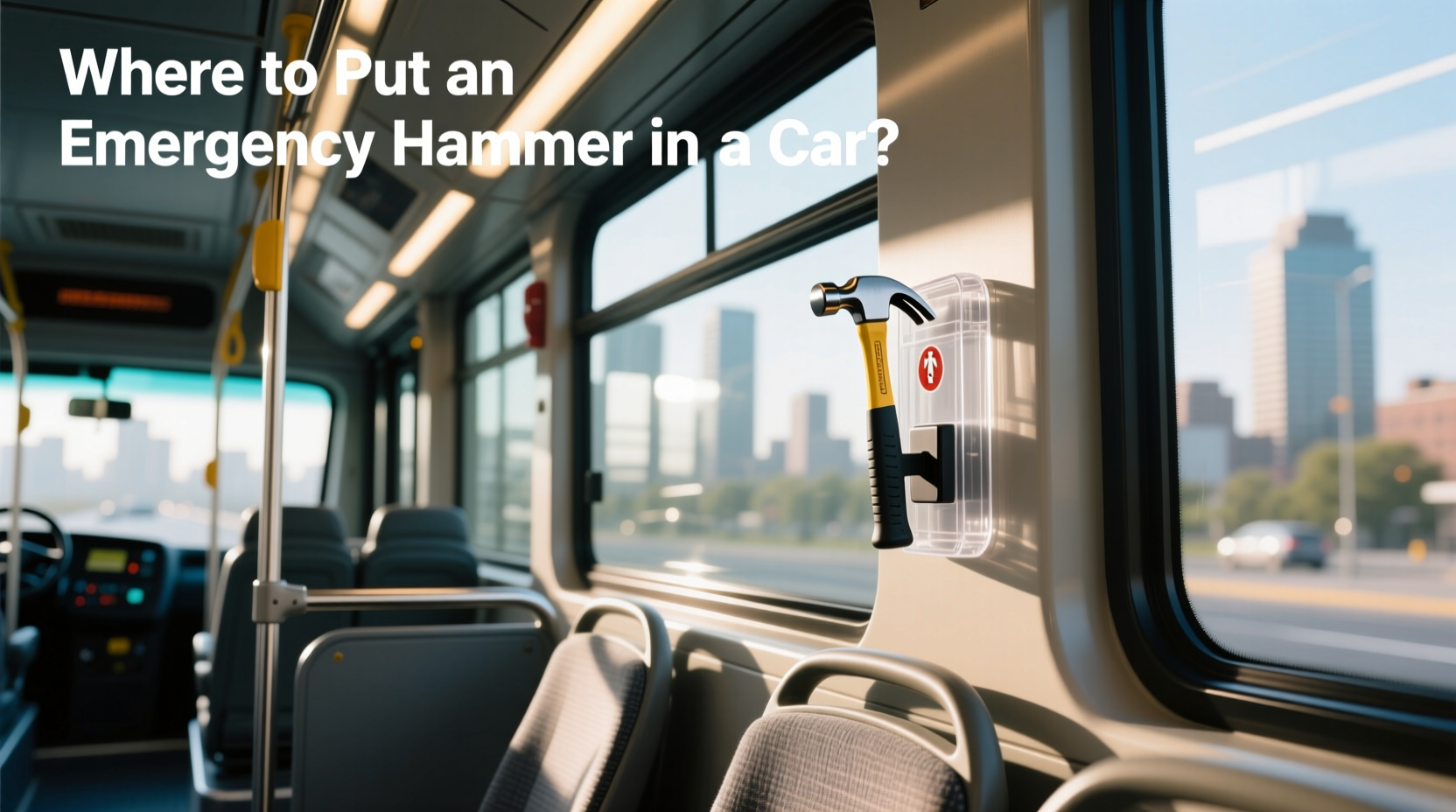
If you're asking how to choose safety emergency hammer bus,Where to put an emergency hammer in a car?, start by identifying your vehicle type and primary use case. For buses, hammers are typically mounted near windows at eye level for passenger access 1. In private cars, optimal placements include under the driver’s seat or in the center console—locations that balance accessibility with safety. Avoid placing hammers on the dashboard, as they can become dangerous projectiles in a crash. When choosing a model, prioritize tools with dual functions (glass breaker + seatbelt cutter), durable construction, and clear activation indicators. Key factors like ease of access, mounting method, and compliance with local safety standards should guide your decision.
About safety emergency hammer bus,Where to put an emergency hammer in a car?
The term "safety emergency hammer bus,Where to put an emergency hammer in a car?" combines two related but distinct safety concerns: standardized emergency equipment in public transport and personal preparedness in private vehicles. An emergency hammer is a compact tool designed to break tempered glass and cut seatbelts during entrapment situations—such as vehicle submersion, fire, or collision. While commonly installed in buses and commercial transit systems, many drivers now equip their personal cars with these devices due to rising awareness of escape readiness.
In buses, emergency hammers are part of regulated safety infrastructure. They are usually fixed near windows at eye level, protected by plastic covers to prevent tampering while allowing visibility 1. In contrast, placement in private cars depends on owner preference, vehicle layout, and intended accessibility. Understanding both contexts helps inform better purchasing and positioning decisions regardless of vehicle type.
Why safety emergency hammer bus,Where to put an emergency hammer in a car? is gaining popularity
Incidents involving vehicle entrapment—especially those involving water submersion or post-crash fires—have increased public interest in emergency escape tools. Media coverage of accidents where occupants couldn't exit quickly has highlighted the importance of accessible egress solutions. As a result, consumers are proactively researching how to choose safety emergency hammer bus,Where to put an emergency hammer in a car? for both family protection and regulatory compliance.
School buses and public transit agencies follow strict guidelines ensuring all passengers, including those with disabilities, can reach emergency exits and tools 2. This institutional focus trickles down to individual buyers who seek similar reliability in personal vehicles. Additionally, modern car designs with reinforced frames and laminated side windows make traditional escape methods less effective, increasing reliance on specialized tools.
Types and variants
Emergency hammers vary in design, functionality, and mounting style. Choosing the right type depends on usage context—public fleet vs. personal vehicle—and required durability.
- 🔧Fixed Mount Hammers (Buses/Public Transport): Permanently installed with breakable plastic covers. Often red-colored for visibility. Pros: Tamper-resistant, standardized placement. Cons: Not portable; requires manual reset after use.
- 🧰Portable Dual-Function Tools (Private Cars): Combine glass breaker and seatbelt cutter. May include LED lights or keychain loops. Pros: Multi-use, easy to relocate. Cons: Can be misplaced if not stored consistently.
- 📍Magnetic Mount Models: Attach via strong magnets to metal surfaces (e.g., door frame, under seat). Pros: Secure yet instantly removable. Cons: Less effective on non-metallic interiors.
- 🛒Dashboard Displays: Decorative or branded units placed visibly on dashboards. Pros: Highly visible. Cons: Safety hazard in collisions; not recommended.
Key features and specifications to evaluate
When evaluating options for safety emergency hammer bus,Where to put an emergency hammer in a car?, consider these measurable criteria:
- Glass Breaking Mechanism: Tungsten carbide tip is standard; ensures repeated effectiveness on tempered glass.
- Seatbelt Cutter: Sharp, exposed blade (manual or spring-assisted) improves cutting speed under stress.
- Ergonomic Design: Non-slip grip and intuitive shape help users operate the tool even with wet hands.
- Visibility & Activation Indicator: Bright color (red/yellow) and audible click when removed enhance situational awareness.
- Mounting System: Wall bracket, magnetic base, or adhesive pad—choose based on interior material and expected frequency of access.
- Durability: Look for IP-rated sealing against moisture and corrosion resistance for long-term storage.
Pros and cons
| Use Case | Pros | Cons |
|---|---|---|
| Bus Fleets | Standardized access, compliant with regulations, clearly marked | Limited mobility, potential obstruction by seating/wheelchairs 2 |
| Family Vehicles | Empowers quick escape, especially for children/pets, dual-function models add value | Risk of misplacement, improper installation reduces effectiveness |
| Commercial Rideshares | Enhances passenger safety perception, low cost per unit | Potential misuse or theft without monitoring |
How to choose safety emergency hammer bus,Where to put an emergency hammer in a car?
Follow this step-by-step guide to make an informed choice:
- Assess Vehicle Type: Buses require fixed, code-compliant installations. Private cars allow flexible placement but demand responsible storage.
- Determine Primary Users: If children or elderly passengers are frequent riders, ensure the tool is reachable and operable by them.
- Select Functionality Level: At minimum, choose a model with glass breaker and seatbelt cutter. Additional features (light, alarm) may aid visibility in smoke/darkness.
- Evaluate Mounting Options: Prefer secure but accessible spots—under driver’s seat, center console, or door-side panel. Avoid loose storage in glove compartments.
- Check Local Regulations: Some regions mandate specific types or placements for commercial fleets. Verify requirements through official transport authorities.
- Test Accessibility: Simulate emergency conditions—can you retrieve the hammer within 5 seconds using one hand?
🚩 Red Flags to Avoid: Do not buy untested generic models without tungsten tips. Avoid decorative dashboard units that compromise safety. Never install near airbag zones or obstruct emergency exits.
Price & market insights
Emergency hammers range from $3–$25 USD. Basic single-function models cost $3–$8. Dual-function tools with ergonomic grips sell for $8–$15. Premium versions with lighting, alarms, or smart sensors reach $15–$25. Fleet-grade fixed units may exceed $30 when factoring in professional installation.
Higher price doesn’t always mean higher reliability. Independent testing shows mid-range ($10–$15) models often outperform both budget and premium tiers in consistent breakage tests. However, prices may vary significantly by region and retailer. Always check manufacturer specifications and warranty terms before purchase.
Top-seller & competitive analysis
Popular models emphasize simplicity, proven performance, and ease of integration into existing vehicle layouts. Below is a comparison of widely available types:
| Model Type | Avg. Price | Key Features | Best For |
|---|---|---|---|
| Fixed Wall-Mount (Red Handle) | $12 | Plastic cover, wall bracket, tungsten tip | Buses, school vans |
| Keychain Combo Tool | $7 | Mini size, belt cutter, pocket clip | Personal carry, rideshares |
| Magnetic Base with Light | $14 | LED indicator, strong magnet, rubber grip | Families, SUVs |
| Digital Alert Model | $22 | Sound alarm, motion sensor, rechargeable | High-end fleets, taxis |
Customer feedback synthesis
Analysis of verified buyer reviews reveals recurring themes:
- Positive Feedback: Users appreciate dual-function tools that also cut seatbelts. Magnetic mounts receive praise for secure hold and instant release. Bright colors help locate the hammer in low light.
- Common Complaints: Some report weak springs in automatic breakers. Poorly angled cutters require excessive force. A few note that adhesive mounts fail over time due to temperature changes.
- Usage Insights: Many mention keeping a second hammer in the backseat for rear passengers. Parents often cite peace of mind as a key motivator.
Sourcing & supplier tips
Emergency hammers are widely available online and in auto parts stores. For individual buyers, reputable retailers offering return policies and product testing data are preferable. Bulk purchasers (e.g., fleet managers) should request compliance documentation and batch testing reports.
When sourcing:
- Verify third-party certifications (if claimed), such as ISO or CE marks.
- Request samples before large orders to assess build quality.
- Confirm packaging includes multilingual instructions for diverse user groups.
- Consider suppliers with regional service support for replacements or recalls.
Maintenance, safety & legal considerations
Regular inspection ensures continued functionality. Check every 3–6 months for:
- Tip wear or dulling
- Blade sharpness
- Mount integrity
- Battery life (if equipped with light/alarm)
Safety note: Store away from direct sunlight and moisture to prevent degradation. Educate household members or passengers on its location and proper use—practice retrieval drills periodically.
Legally, while most jurisdictions don’t require private vehicles to carry emergency hammers, commercial operators (especially school buses) must comply with federal and state exit accessibility rules 2. These may restrict placement near wheelchair securements or emergency doors. Always confirm local requirements directly with transportation authorities.
Conclusion
Choosing the right safety emergency hammer and determining where to put an emergency hammer in a car? involves balancing accessibility, durability, and regulatory alignment. If you operate a bus or commercial fleet, select fixed-mount models installed per safety codes near windows at eye level. For personal vehicles, prioritize dual-function tools stored securely under the driver’s seat or in the center console. Avoid dashboard placement due to projectile risks. Ultimately, the best choice supports fast, reliable egress when every second counts—so test accessibility regularly and maintain the device as part of your vehicle safety routine.
Frequently Asked Questions
- Where is the best place to keep an emergency hammer in a car? The safest and most accessible locations are under the driver’s seat or in the center console—places that are reachable but won’t fly around during a crash.
- Can I install an emergency hammer myself in a bus? Installation in commercial buses should follow regulatory guidelines and may require professional setup to ensure compliance with NHTSA or local standards 2.
- Do emergency hammers expire? They don’t have expiration dates, but components like springs or blades can degrade. Inspect every 6 months for signs of wear.
- Are there laws requiring emergency hammers in private cars? Most regions do not legally require them, though some countries encourage or mandate their presence. Check your local traffic authority for current rules.
- How do I test an emergency hammer without breaking glass? Tap the tip gently on a hard surface to verify the striker mechanism engages. For seatbelt cutters, try slicing a scrap piece of nylon webbing.




 浙公网安备
33010002000092号
 浙B2-20120091-4