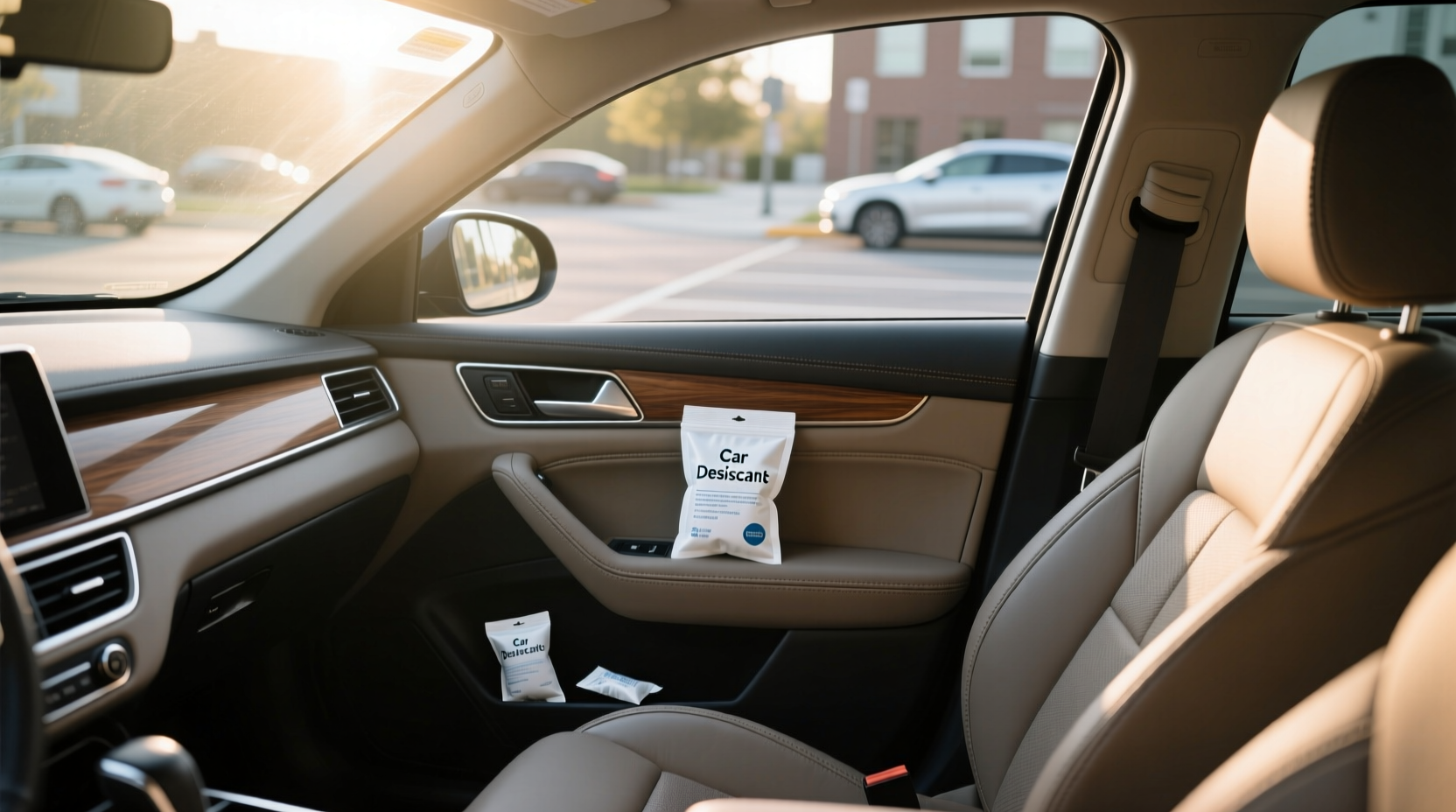
When learning how to choose car desiccant,Where to put desiccant in car?, start with a 200g packet or two 100g units placed strategically—under seats, in footwells, and on the dashboard—to manage humidity effectively 📍. For best results, use calcium chloride or silica gel types with moisture indicators, and replace them every 1–3 months depending on climate. Avoid placing desiccants where they block airflow or can be damaged by heat. Multiple smaller bags often outperform one large unit by targeting key moisture zones like trunks and door pockets.
About car desiccant,Where to put desiccant in car?
A car desiccant is a passive moisture-absorbing product designed to reduce humidity inside vehicle cabins. These devices help prevent fogging, mold growth, musty odors, and corrosion on metal components such as electronics and seat frames. The question of where to put desiccant in car? is central to its effectiveness, as placement directly impacts air circulation and exposure to high-moisture areas.
Common forms include small packets, hanging bags, reusable canisters, and gel-filled containers. They are typically made from materials like silica gel, clay, or calcium chloride—each with varying absorption capacities and lifespans. While often used after water damage or during seasonal storage, many drivers now use desiccants year-round, especially in humid climates or coastal regions.
Typical usage scenarios include protecting interiors during long-term parking, preventing window fogging in winter, drying out damp floor mats after rain, and safeguarding stored items in trunks. Understanding both product selection and proper positioning ensures consistent performance across different environmental conditions.
Why car desiccant,Where to put desiccant in car? is gaining popularity
Moisture buildup in vehicles has become a growing concern due to increased time spent parked, more frequent extreme weather events, and higher reliance on electronic systems vulnerable to corrosion. As a result, interest in solutions like car desiccant,Where to put desiccant in car? has risen significantly over recent years.
Drivers in rainy or tropical climates report fewer issues with interior mildew when using desiccants regularly. Additionally, electric vehicle (EV) owners are adopting these products to protect sensitive battery management systems and cabin electronics from condensation-related failures. Seasonal users, such as those storing classic cars or RVs, also find desiccants essential for preserving upholstery and insulation.
Social media and automotive forums have amplified awareness, with real-world testimonials highlighting reduced windshield fogging and cleaner-smelling interiors. This trend reflects a broader shift toward proactive vehicle maintenance rather than reactive repairs—making knowledge about optimal placement and selection increasingly valuable.
Types and variants
Different desiccant types offer distinct advantages based on chemistry, capacity, and reusability:
- Silica Gel ✨: Common in small packets, this type absorbs up to 40% of its weight in moisture. It often includes color-changing beads (blue to pink) to indicate saturation. Pros: Non-toxic, safe around children and pets, widely available. Cons: Lower capacity than alternatives, less effective in very humid environments.
- Calcium Chloride ⚡: Highly efficient at absorbing moisture—even in saturated air—and capable of holding several times its weight in water. Often found in bucket-style or hanging bag formats. Pros: High absorption rate, works well in extreme humidity. Cons: Can leak liquid once saturated; requires careful handling and placement.
- Clay-Based Desiccants 🌍: Made from natural montmorillonite clay, these are eco-friendly and non-corrosive. Used primarily in breathable pouches. Pros: Biodegradable, odor-free, moderate cost. Cons: Slower absorption, limited lifespan compared to synthetic options.
- Rechargeable Units 🔧: Typically contain silica or hybrid gels that can be dried in an oven or microwave after saturation. Pros: Cost-effective over time, sustainable choice. Cons: Requires user effort to regenerate, may degrade after multiple cycles.
The choice depends on your environment, budget, and willingness to maintain the product.
Key features and specifications to evaluate
To make an informed decision when considering a car desiccant,Where to put desiccant in car?, assess the following criteria:
- Absorption Capacity 📊: Measured in grams of water per gram of desiccant. Calcium chloride leads here, followed by silica gel.
- Volume Coverage 📏: Match the desiccant size to your vehicle’s interior volume. A general rule is 1g per ~2L of space 1.
- Indicator System 👀: Color-change technology helps track saturation without guesswork.
- Form Factor 📦: Pouches fit tight spaces; buckets suit trunks or larger areas.
- Lifespan & Reusability 🔄: Disposable lasts 1–6 months; rechargeable models offer longer service with upkeep.
- Leak Resistance 🛡️: Critical for calcium chloride units to avoid residue on surfaces.
These specs determine suitability for specific climates and vehicle sizes.
Pros and cons
Advantages ✅
- Prevents mold and mildew on upholstery and carpets
- Reduces window fogging, improving visibility
- Protects electrical connections and sensors from corrosion
- Inexpensive and easy to install
- No power required—works passively
Limitations ❗
- Not a substitute for active drying after flooding
- Requires monitoring and replacement
- Some types may drip if overloaded
- Limited effect in poorly sealed or constantly open vehicles
Desiccants work best as part of a broader moisture management strategy.
How to choose car desiccant,Where to put desiccant in car?
Follow this step-by-step guide to select and deploy desiccants effectively:
- Determine Your Climate and Use Case 🌦️: In high-humidity areas, prioritize high-capacity calcium chloride. For occasional use, silica gel suffices.
- Select Appropriate Size ⚖️: Use 100–200g total per standard sedan. Larger SUVs may need 200g+ distributed across zones.
- Choose Placement Zones 📍: Target areas where moisture accumulates:
- Under Seats: Traps dampness from shoes and floor mats
- Footwells: Direct contact with wet footwear
- Dashboard/Windshield: Prevents fogging
- Trunk/Cargo Area: Stores wet gear
- Door Pockets/Glove Box: Enclosed spaces prone to condensation
- Rear Window Shelf: Addresses rear glass fogging
- Center Console: Central location for balanced air exposure
- Avoid These Mistakes ⚠️:
- Placing near direct heat sources (can degrade material)
- Blocking HVAC vents or pedal movement
- Using only one bag in a large vehicle
- Ignoring replacement schedules
- Monitor and Maintain 📝: Check monthly. Replace or recharge based on indicator status or visible moisture.
For maximum coverage, combine multiple smaller units instead of relying on a single large one.
Quick Tip: In very humid seasons, place desiccants under front and rear seats plus the trunk for full-cabin protection.
Price & market insights
Pricing varies by type, capacity, and brand:
- Disposable Silica Gel (100g): $5–$10
- Calcium Chloride Bags (200g): $8–$15
- Reusable Canisters: $15–$25 (one-time investment)
Higher prices often reflect better leak-proof design, larger capacity, or indicator technology. Bulk packs reduce per-unit cost, making them ideal for fleet managers or seasonal prep. Note that prices may vary by region and retailer. Always compare absorption ratings, not just price or size, to assess true value.
Top-seller & competitive analysis
Popular models focus on reliability, ease of use, and clear saturation signals. Below is a comparison of common types:
| Desiccant Type | Avg. Price | Absorption Capacity | Lifespan | Best For |
|---|---|---|---|---|
| Silica Gel Packets | $5–$10 | Moderate | 1–3 months | Small cars, glove boxes |
| Calcium Chloride Hanging Bags | $8–$15 | High | 1–2 months | Humid climates, trunks |
| Clay Pouches | $6–$12 | Low-Moderate | 2–4 months | Eco-conscious users |
| Rechargeable Canisters | $15–$25 | High (renewable) | 6+ months (with reuse) | Frequent users, EVs |
No single model fits all needs—selection should align with your vehicle size, local humidity, and maintenance preferences.
Customer feedback synthesis
Analysis of buyer reviews reveals recurring themes:
Positive Feedback ✅
- “Reduced morning window fogging significantly”
- “No more musty smell after leaving windows cracked”
- “Easy to monitor with color-changing beads”
- “Great for protecting tools stored in truck bed covers”
Common Complaints ❌
- “Bag leaked liquid onto carpet” (mostly calcium chloride)
- “Didn’t last through rainy season”
- “Too small for my SUV—needed multiple units”
- “Color indicator stopped working after first month”
These insights highlight the importance of leak-resistant designs and realistic expectations regarding lifespan.
Sourcing & supplier tips
Car desiccants are widely available online and in auto parts stores. When sourcing:
- Verify Specifications 🔍: Confirm absorption capacity and compatibility with enclosed spaces.
- Check Return Policies ↩️: Especially important when buying in bulk or trying new brands.
- Consider Bulk Options 🛒: Cost-effective for fleets, dealerships, or storage facilities.
- Avoid Unknown Brands 🚫: Poorly manufactured units may lack proper sealing or accurate labeling.
- Inspect Upon Arrival 🧰: Ensure packaging is intact and contents undamaged before deployment.
For business buyers, consider suppliers offering MSDS sheets and compliance documentation.
Maintenance, safety & legal considerations
Proper use enhances safety and longevity:
- Replace Regularly ⏱️: Follow manufacturer guidelines; inspect monthly in high-humidity conditions.
- Handle Spills Carefully 🧼: Clean any leaked solution immediately to prevent surface damage.
- Keep Away from Children/Pets 👶: Even non-toxic types should not be ingested.
- Do Not Incinerate 🔥: Some materials release harmful fumes when burned.
- Compliance 📋: While no universal regulations govern consumer desiccants, verify local rules for transportation or disposal if used commercially.
Always refer to product labels for specific handling instructions.
Conclusion
If you're researching how to choose car desiccant,Where to put desiccant in car?, focus on matching the desiccant type and quantity to your climate and vehicle size. Use 100–200g of high-efficiency material like calcium chloride or indicator-equipped silica gel. Distribute units across critical zones—under seats, in footwells, on dashboards, and in the trunk—for comprehensive protection. Rechargeable models offer long-term savings, while disposable options provide convenience. Replace or regenerate based on observed saturation. Ultimately, success depends not just on the product chosen, but on strategic placement and consistent maintenance.
FAQs
Can I leave a car desiccant in direct sunlight?
It's best to avoid prolonged exposure to direct sunlight, as heat can reduce absorption efficiency and potentially damage certain materials, especially plastic containers or hanging bags.
How often should I replace my car desiccant?
Most desiccants last 1–3 months depending on humidity levels. Check monthly for signs of saturation, especially during rainy seasons. Reusable types should be regenerated according to manufacturer instructions.
Are desiccants safe for use in electric vehicles?
Yes, desiccants are safe and recommended for EVs to protect sensitive electronics from moisture-related corrosion. Just ensure they’re placed away from battery access points and don't obstruct service panels.
What happens if a desiccant bag leaks?
Some calcium chloride units may leak brine when fully saturated. Immediately remove the unit and clean the area with water to prevent staining or corrosion on metal surfaces.
Can I use household desiccants in my car?
Only if sized appropriately and placed securely. Small shoebox packets are too weak for full cabins, but larger closet-sized units (100g+) can work if positioned correctly and checked frequently.




 浙公网安备
33010002000092号
 浙B2-20120091-4