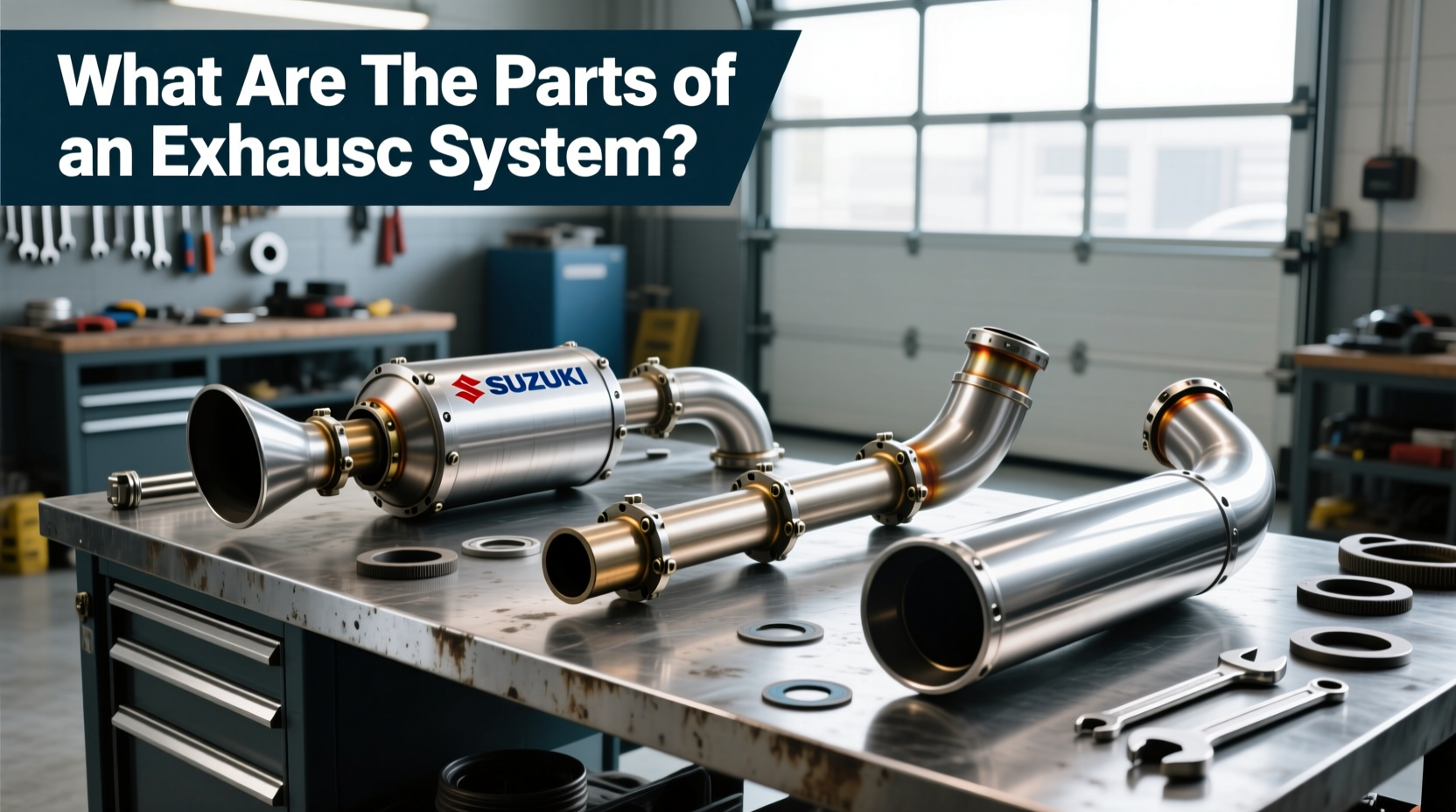
Short Introduction: How to Choose Suzuki SX4 Exhaust Parts
When choosing Suzuki SX4 exhaust parts, it's essential to first understand what are the parts of an exhaust system? and how they work together. For most owners, replacement becomes necessary due to corrosion, leaks, or reduced performance. Whether you're replacing a failing muffler or upgrading for better flow, selecting compatible, durable components is critical. The key is matching the part type—such as catalytic converter, O2 sensor, or downpipe—to your vehicle’s model year, engine size (1.6L or 2.0L), and emission standards (CARB vs. EPA) 1. Avoid cheap universal-fit parts that may not align correctly or fail emissions tests. Instead, prioritize OEM-spec or certified aftermarket units from reputable suppliers to ensure fit, longevity, and compliance.
About Suzuki SX4 Exhaust Parts: What Are the Parts of an Exhaust System?
The exhaust system in a Suzuki SX4 consists of several interconnected components designed to safely route combustion gases away from the engine, reduce noise, and minimize harmful emissions 2. Understanding each part helps you identify which ones need repair or upgrade:
- Exhaust Manifold: Collects gases from engine cylinders; prone to cracking over time.
- Flex Pipe: Absorbs engine vibration; failure causes rattling noises.
- Downpipe: Connects manifold to catalytic converter; often integrated in OEM setups.
- Catalytic Converter: Reduces pollutants; expensive but legally required.
- Oxygen Sensors: Monitor oxygen levels; faulty sensors trigger check engine lights.
- Resonator & Muffler: Reduce sound at different frequencies; common wear points.
- Tailpipe: Final exit point; visible damage affects appearance and clearance.
These parts vary slightly between the 2007–2014 Suzuki SX4 models depending on trim, drivetrain (FWD/AWD), and regional emissions requirements.
Why Suzuki SX4 Exhaust Parts Are Gaining Popularity
As the Suzuki SX4 ages, more vehicles enter high-mileage ranges where exhaust components begin to degrade. Owners seek replacements not only for reliability but also for subtle improvements in efficiency and driving experience. Aftermarket interest has grown due to increased availability of direct-fit parts and online resources guiding DIY repairs 3. Additionally, some drivers explore mild upgrades—like performance mufflers—to enhance tone without violating noise ordinances. This blend of necessity and customization drives ongoing demand for accurate, reliable information on how to choose Suzuki SX4 exhaust parts effectively.
Types and Variants of Exhaust System Components
Different parts serve distinct functions, and their variants affect performance, cost, and lifespan.
\uD83D\uDD27 Exhaust Manifold vs. Headers
OEM manifolds are cast iron and durable but restrictive. Aftermarket headers use tuned tubing to improve scavenging and reduce backpressure. However, long-tube headers may require custom fabrication and can increase engine bay heat.
- Pros: Better airflow, slight power gain
- Cons: Higher cost, potential fitment issues
\uD83D\uDD27 Catalytic Converters: OEM, High-Flow, and Test Pipes
OEM units meet strict emissions standards. High-flow cats offer improved exhaust flow while remaining legal in most areas. Test pipes (decat) remove the catalyst entirely—illegal for street use in regulated regions.
- Pros: High-flow improves responsiveness
- Cons: Decat illegal; risk of failed inspections
\uD83D\uDD27 Muffler Types: Chambered, Turbo, Glasspack
- Chambered: Smooth, deep tone; good noise reduction
- Turbo: Quiet, efficient; stock-like sound
- Glasspack: Loud, aggressive note; less effective at low RPMs
\uD83D\uDD27 Universal vs. Direct-Fit Parts
Universal parts require cutting/welding and may not seal properly. Direct-fit (bolt-on) replacements match factory dimensions and simplify installation.
Key Features and Specifications to Evaluate
To make an informed decision when buying Suzuki SX4 exhaust parts, assess these technical and practical factors:
- Material: Stainless steel resists rust better than aluminized steel.
- Wall Thickness: Thicker tubing (16–18 gauge) lasts longer under thermal stress.
- Emissions Compliance: CARB-certified parts are required in California and other strict states.
- OEM Number Match: Ensures compatibility with your VIN-specific configuration.
- Sound Level: Measured in decibels; check local noise laws before choosing loud mufflers.
- Warranty: Reputable brands offer 1–3 year warranties against defects.
Always cross-reference part numbers with your SX4’s year, engine code, and transmission type.
Pros and Cons of Upgrading Suzuki SX4 Exhaust Parts
| Scenario | Recommended Action | Not Recommended For |
|---|---|---|
| Replacing corroded muffler | Use direct-fit stainless steel unit | Using thin-gauge universal replacements |
| Improving engine sound mildly | Install chambered performance muffler | Glasspacks in residential areas (noise complaints) |
| Seeking fuel economy gains | Limited benefit; focus on maintenance instead | Expecting major MPG increases from exhaust alone |
| Performance tuning | Combine header + high-flow cat + cat-back system | Street-driven vehicles in regulated regions |
While some claim improved throttle response, real-world gains on the naturally aspirated SX4 are modest unless paired with ECU tuning.
How to Choose Suzuki SX4 Exhaust Parts: Step-by-Step Buying Guide
Follow this checklist to avoid costly mistakes:
- Diagnose the Issue: Is there a rattle (flex pipe)? Rotten egg smell (catalyst failing)? Loud drone (muffler gone)?
- Identify Your Model: Note year, engine size, and whether it's JDM or North American spec.
- Check Local Regulations: Confirm if modified exhausts must pass emissions or noise tests.
- Select Part Type: Replace only what’s needed unless pursuing full system upgrade.
- Choose Material: Opt for stainless steel for longest life, especially in snowy climates.
- Verify Fitment: Use fitment tools on retailer sites; read reviews mentioning installation ease.
- Review Return Policy: In case of fitment errors or quality issues.
Price & Market Insights
Prices vary widely based on component and brand:
- Muffler Replacement: $80–$200 (aluminized to stainless)
- Catalytic Converter: $250–$600 (OEM vs. aftermarket)
- Oxygen Sensor: $50–$150 (upstream/downstream)
- Full Cat-Back System: $300–$700
Premium brands like Walker, MagnaFlow, or Bosal command higher prices but often provide better durability and fit. Budget options may save money upfront but could require earlier replacement. Consider total cost of ownership rather than initial price alone.
Top-Seller & Competitive Analysis
Popular choices among Suzuki SX4 owners include OEM-style replacements and well-reviewed aftermarket systems.
| Part | Brand | Material | Compliance | Price Range | User Feedback |
|---|---|---|---|---|---|
| Muffler | Walker Dynomax | Stainless Steel | EPA Compliant | $140–$180 | Good sound, easy bolt-on fit |
| Cat Converter | Bosal | Stainless | CARB Certified | $400–$550 | Fewest error codes reported |
| O2 Sensor | Denso (OEM) | N/A | OEM Spec | $90–$130 | Reliable readings, long life |
| Exhaust Kit | MagnaFlow | Stainless | Not for California | $500–$650 | Deeper tone, minor performance feel |
Note: CARB-compliant parts are essential in regulated states. Always confirm certification status before purchase.
Customer Feedback Synthesis
Analysis of buyer reviews reveals consistent patterns:
- Positive: Direct-fit systems praised for ease of installation; stainless steel parts lauded for corrosion resistance after winter driving.
- Negative: Complaints center on poor gasket sealing, inaccurate flange holes, and premature weld failures in budget mufflers.
- Common Surprise: Some users report increased cabin resonance (“drone”) at highway speeds after installing performance mufflers.
Ensuring proper hanger placement and using new mounting hardware can prevent many post-installation issues.
Sourcing & Supplier Tips
Purchase from suppliers offering:
- Detailed fitment databases linked to VIN or year/make/model/engine
- Clear return policies (at least 30 days)
- Support documentation (installation guides, warranty terms)
Online retailers like RockAuto, CarParts.com, and specialized Japanese import vendors often carry both OEM and aftermarket options. For bulk purchases or resale, verify supplier authenticity and request material certifications. Inspect packaging and weld quality upon delivery—look for clean seams and correct labeling.
Maintenance, Safety & Legal Considerations
Regular inspection helps extend exhaust life:
- Inspect Annually: Look for rust, cracks, loose hangers, and unusual sounds.
- Listen for Changes: New rattles or hissing indicate developing leaks.
- Check Sensors: Replace O2 sensors per manufacturer schedule (~100k miles).
- Legal Note: Removing or bypassing the catalytic converter violates federal law in the U.S. and similar regulations in EU/UK/Canada 2.
If modifying the system, ensure all components meet local emissions and noise standards. When in doubt, consult a licensed mechanic or emissions testing station.
Conclusion
Choosing the right Suzuki SX4 exhaust parts starts with understanding what are the parts of an exhaust system and identifying your specific need—replacement, durability, or mild enhancement. For most drivers, OEM-spec or direct-fit aftermarket parts made from stainless steel offer the best balance of cost, longevity, and compliance. Avoid modifications that compromise emissions control unless operating off-road. If you need reliable daily performance, stick with certified replacements. If you want a sportier sound within legal limits, select a well-reviewed cat-back system with a chambered muffler. Always verify fitment and compliance before purchasing.
FAQs
Noises like rattling, hissing, or excessive drone, combined with decreased fuel economy or a check engine light related to O2 sensors, often indicate exhaust system issues.
Yes, individual components like the muffler or catalytic converter can be replaced separately, provided the new part matches the existing system’s diameter and mounting points.
High-quality aftermarket parts from reputable brands are reliable and often come with warranties. Ensure they are labeled as direct-fit and compliant with local emissions standards.
Lifespan varies by climate and usage. Aluminized steel lasts 5–7 years; stainless steel can exceed 10 years with proper maintenance.
Minimal gains are possible if restrictions are removed, but real-world improvements on the SX4 are usually negligible without additional engine tuning.




 浙公网安备
33010002000092号
 浙B2-20120091-4