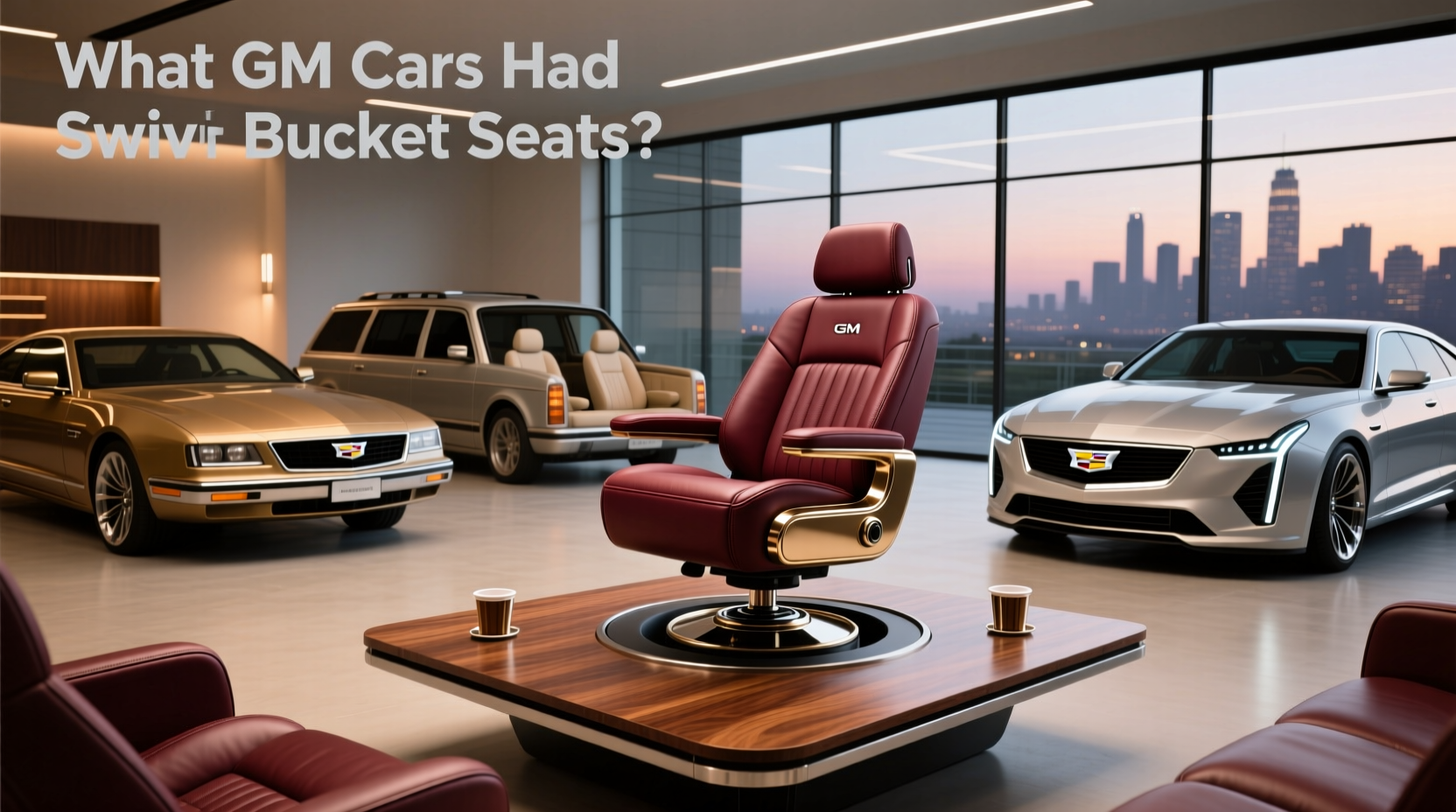
If you're searching how to choose swivel seat bucket lid, what GM cars had swivel bucket seats?, focus first on whether your goal is restoration, retrofitting, or modern adaptation. For classic GM A-body vehicles from 1973–1977—like the Chevrolet Monte Carlo, Chevelle, Oldsmobile Cutlass, Pontiac, and Buick models—a factory-original swivel seat bucket lid ensures authenticity ✅. However, if you’re upgrading a van, truck, or custom build, consider aftermarket swivel bases with durable lids designed for commercial or recreational use 🛠️. Key red flags include misaligned mounting brackets, brittle plastic components, and lack of tilt-lock mechanisms ⚠️. Prioritize compatibility with your seat track system and verify material resilience against UV exposure and frequent use.
About Swivel Seat Bucket Lids and GM’s Swivel Bucket Seat History
A swivel seat bucket lid typically refers to the cover or trim piece associated with front bucket seats that rotate outward to assist entry and exit. While the term "lid" may be ambiguous in modern contexts, historically it relates to interior trim surrounding the swivel mechanism base or storage compartments in some configurations 🔧. The true innovation lies in the swivel bucket seat itself—an engineered feature offered by General Motors (GM) across its intermediate A-body platform from 1973 to 1977.
GM marketed these rotating seats under names like "Strato Bucket" seats, emphasizing convenience for drivers and passengers, especially seniors or those with mobility challenges 👥. Unlike standard sliding seats, these could pivot up to 45 degrees outward while maintaining forward/backward adjustability via a specialized track system ⚙️. This design was not exclusive to one brand within GM but spanned multiple divisions due to shared platforms.
Why Swivel Seat Bucket Lids and GM’s Swivel Seats Are Gaining Popularity Again
Interest in swivel seat systems has resurged due to three main trends: classic car restoration, adaptive vehicle modifications for accessibility, and the rise of van life conversions 🌐. Enthusiasts restoring 1970s American muscle and personal luxury coupes seek originality, making accurate reproduction parts—including proper seat lids and hardware—increasingly valuable 💬.
Additionally, individuals modifying vehicles for elderly users or people with limited mobility see historical swivel designs as functional predecessors to modern power-adjustable seating. Aftermarket manufacturers now offer universal swivel bases compatible with OEM seats, often including locking lids or integrated armrests 🚚. Even automakers exploring autonomous interiors reference this era's innovations when designing lounge-style cabins where seats face each other ✨.
Types and Variants of Swivel Seat Systems
- 🚗Factory-OEM Swivel Bases (1973–1977 GM A-body): Found in select Chevrolet, Oldsmobile, Pontiac, Buick, and Cadillac models. These use a manual lever-actuated rotation mechanism built into the floor track.
- Pros: Authentic fit, integrated with original upholstery, smooth glide when maintained.
- Cons: Hard to find intact units; prone to rust; awkward lever placement noted by some users 1.
- 🔧Aftermarket Manual Swivel Bases: Universal kits that bolt between existing seat and floor. Common in Sprinter vans, RVs, and trucks.
- Pros: Affordable ($80–$200), easy installation, 360° rotation possible.
- Cons: May reduce ground clearance; lacks fine-tuning; plastic components can degrade over time.
- ⚡Electric/Pneumatic Swivel Systems: Motorized rotation used in high-end mobility vans or concept cars.
- Pros: Hands-free operation, programmable stops, ideal for wheelchair users.
- Cons: Expensive ($500+), requires wiring and battery access, complex maintenance.
- 🧰Lowrider & Custom Fabricated Units: Modified hydraulic or mechanical setups popular in lowrider culture.
- Pros: Stylish, full control, often paired with hydraulics.
- Cons: Not street-legal in all areas; unreliable for daily driving; difficult to source safely.
Key Features and Specifications to Evaluate
When evaluating options related to swivel seat bucket lid, what GM cars had swivel bucket seats?, assess the following criteria:
- Compatibility: Confirm fitment with your vehicle’s make, model, year, and seat type (bucket vs bench).
- Rotation Range: Factory GM seats rotated ~45° outward; aftermarket units may allow full 360° spin.
- Locking Mechanism: Look for secure detents at driving position and optional locks at rotated angles.
- Material Quality: Metal bases (steel/aluminum) outlast plastic ones, especially under UV exposure.
- Lever Accessibility: Older GM designs were criticized for hard-to-reach levers—consider ergonomic upgrades.
- Weight Capacity: Standard range is 250–350 lbs; verify if higher ratings are needed.
- Installation Method: Bolt-on vs weld-in; check whether drilling is required.
Pros and Cons of Swivel Seat Bucket Lids and Systems
| Aspect | Advantages ✅ | Disadvantages ❌ |
|---|---|---|
| Mobility Assistance | Easier ingress/egress for elderly or disabled users | Manual effort still required in non-powered versions |
| Restoration Accuracy | Critical for concours-level classic car builds | Original parts are rare and expensive |
| Versatility | Useful in campers, ambulances, delivery vans | Can interfere with airbag deployment if improperly installed |
| Comfort Perception | Reduces strain during long drives | Some report stiff cushioning and upright posture in vintage models 1 |
| Resale Value | Adds uniqueness and appeal in niche markets | May deter general buyers unfamiliar with function |
How to Choose a Swivel Seat Bucket Lid: Step-by-Step Buying Guide
Follow this checklist when deciding what to look for in swivel seat bucket lid, what GM cars had swivel bucket seats?
- Determine Your Use Case: Restoration? Daily driver mod? Commercial fleet? Each demands different durability and authenticity levels.
- Identify Compatible Vehicles: Refer to the table below for confirmed GM models with factory swivel seats.
- Inspect Original Equipment Condition: Check for cracked tracks, seized bearings, or missing springs.
- Source Reproduction Parts Carefully: Buy from reputable suppliers specializing in GM A-body interiors.
- Test Rotation Smoothness: Manually turn the seat; resistance indicates wear or debris.
- Verify Safety Integration: Ensure no interference with seat belts, SRS systems, or pedals.
| GM Model | Years Offered | Seat Type | Notes |
|---|---|---|---|
| Chevrolet Monte Carlo | 1973–1977 | Strato Bucket | Popular option, especially on Landau trim 2 |
| Chevrolet Chevelle / Laguna | 1973–1977 | Bucket | Available on SS and luxury trims |
| Oldsmobile Cutlass | 1973–1977 | Strato Bucket | One of the most common applications 3 |
| Pontiac LeMans/GTO | 1973–1977 | Bucket | Part of A-body family; availability varied by trim |
| Buick Century/Skylark | 1973–1977 | Bucket | Included in premium interior packages |
Price & Market Insights
Prices vary significantly based on origin and condition:
- Used OEM Units: $150–$400 per seat (depending on completeness and rarity)
- New Reproduction Lids/Trim: $60–$120 each
- Aftermarket Swivel Bases: $80–$200 (manual), $400–$800 (powered)
- Complete Restored Assemblies: Up to $1,200 for pair with correct foam and covers
Expect regional variation in availability. Classic car auctions and online forums (e.g., ClassicCars.com, Jalopy Journal) often list NOS (New Old Stock) parts. Always confirm return policies before purchase.
Top-Seller & Competitive Analysis
Among aftermarket leaders, brands like Sprinter Store, GLIDR, and Rancho dominate the utility segment. Below is a comparison of top choices:
| Brand | Type | Rotation | Price Range | Ideal For |
|---|---|---|---|---|
| Sprinter Store Universal Base | Manual | 360° | $119–$179 | Van conversions, budget builds |
| GLIDR Pro Series | Manual w/ dampening | 360° with lock points | $249–$299 | Daily drivers, smooth operation |
| Rancho Quick Release | Manual | Adjustable stop | $199 | Off-road/utility vehicles |
No single product replicates the exact geometry of 1970s GM swivel tracks, so adapters may be necessary. Prioritize models with metal gears and sealed bearings.
Customer Feedback Synthesis
Analysis of user reviews reveals consistent themes:
- Positive Feedback:
- "Made getting into my van so much easier at age 70."
- "Perfect for our food truck crew switching spots quickly."
- "High-quality welds and smooth rotation on GLIDR unit."
- Common Complaints:
- "Plastic gears cracked after six months of use."
- "Difficult to align with factory holes without modification."
- "Lid doesn’t stay closed during sharp turns."
Sourcing & Supplier Tips
For authentic parts:
- Search salvage yards specializing in 1970s GM vehicles.
- Check eBay Motors using VIN-specific searches.
- Contact reproduction parts vendors like Year One or Classic Industries.
For aftermarket systems:
- Buy from companies offering demo videos and CAD drawings.
- Ask about warranty length and replacement part availability.
- Request references from customers who’ve installed the same kit.
When sourcing in bulk or considering resale, verify compliance with FMVSS standards where applicable.
Maintenance, Safety & Legal Considerations
Maintain swivel mechanisms by:
- Lubricating pivot points every 6 months with silicone-based grease.
- Inspecting bolts and welds annually for stress cracks.
- Cleaning debris from tracks regularly.
Safety-wise, ensure:
- The seat locks securely in the forward position before driving.
- No interference with side airbags or curtain modules.
- Seat belts remain anchored correctly.
Legally, rotating seats must not compromise federal safety standards (e.g., FMVSS 207/210). Modifications should not affect crash performance. Always consult local regulations—some jurisdictions restrict non-standard seating in passenger zones.
Conclusion
If you’re restoring a 1973–1977 GM A-body car like a Monte Carlo or Cutlass, prioritize OEM-spec swivel seat bucket lids and hardware for accuracy 🏁. If adapting a modern van or truck for accessibility or convenience, choose a robust aftermarket base with metal construction and positive locking. Avoid cheap plastic-core models for frequent use. Ultimately, your choice depends on authenticity needs, usage frequency, and safety integration. Whether answering how to choose swivel seat bucket lid, what GM cars had swivel bucket seats? or planning a retrofit, clarity on purpose leads to better decisions.
FAQs
Which GM cars had swivel bucket seats?
Chevrolet Monte Carlo, Chevelle, Oldsmobile Cutlass, Pontiac LeMans/GTO, and Buick Century/Skylark models from 1973 to 1977 offered factory swivel bucket seats as an option.
Are swivel seat bucket lids available for modern vehicles?
Not typically from OEMs, but aftermarket swivel bases with compatible lids are sold for vans and trucks, especially in mobility and van-life markets.
Can I install a swivel seat in any car?
Technically yes with aftermarket kits, but safety and legality depend on proper installation, structural integrity, and compliance with local vehicle codes. Consult a professional installer.
Do swivel seats affect airbag deployment?
Potentially. Any modification that shifts seat position or interferes with sensors may impact SRS functionality. Always test post-installation and follow manufacturer guidelines.
Where can I find original GM swivel seat parts?
Check specialty salvage yards, online marketplaces like eBay Motors, and restoration suppliers such as Classic Industries or Year One.




 浙公网安备
33010002000092号
 浙B2-20120091-4