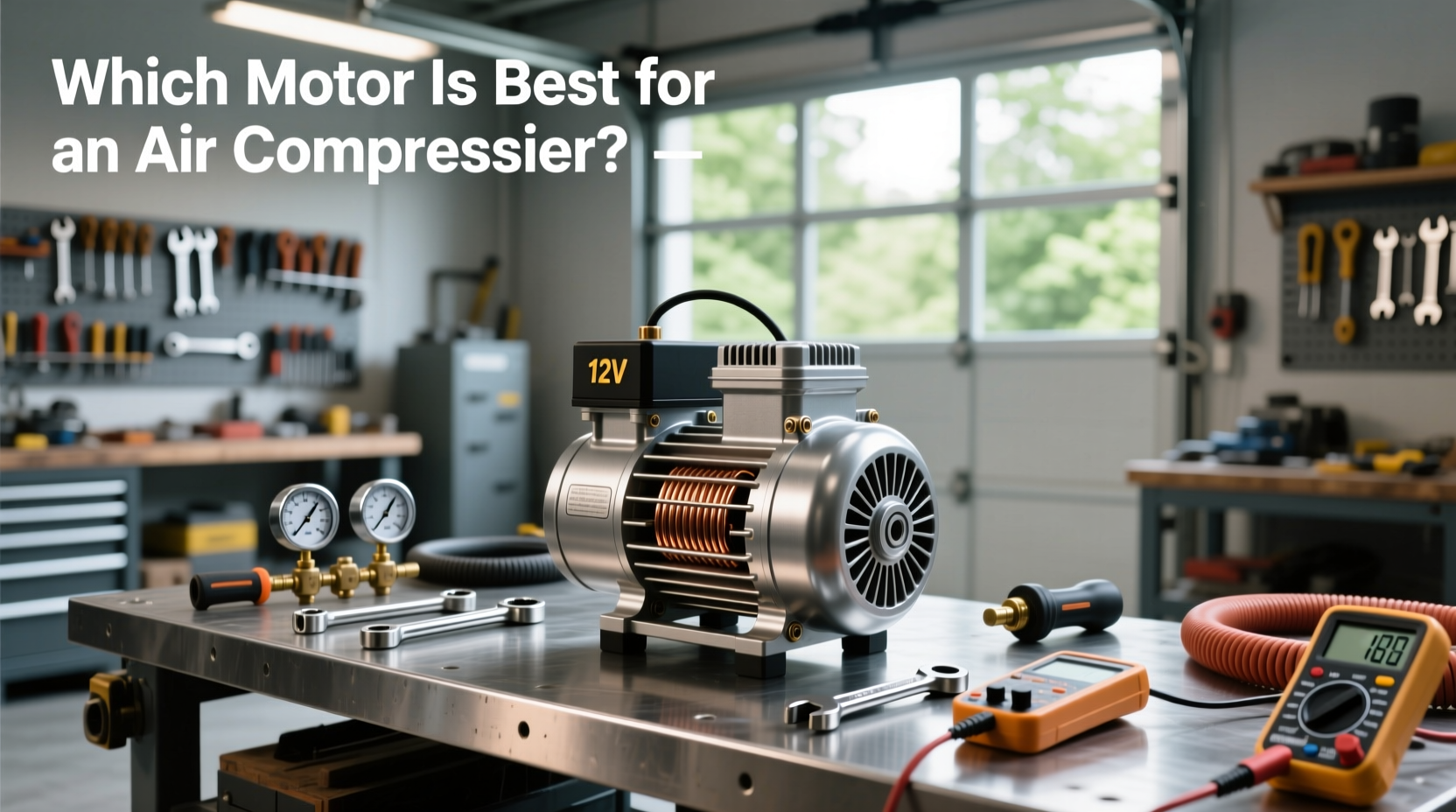
The best 12V mini air compressor motor depends on your intended use, but for most demanding applications—such as inflating vehicle tires, powering pneumatic tools, or onboard installations—a brushless DC (BLDC) motor is generally the top choice due to its higher efficiency, longer lifespan, and superior cooling 1. When asking which motor is best for an air compressor?, consider airflow (CFM), pressure (PSI), power draw (amps), duty cycle, and protection ratings. For lighter uses like inflating sports equipment or small inflatables, a compact brushed motor may suffice and offer cost savings. Understanding how to choose a 12V mini air compressor motor means balancing performance needs with portability, power source compatibility, and long-term reliability.
About 12V Mini Air Compressor Motors: What They Are & Common Uses
A 12V mini air compressor motor is a compact electric motor designed to drive a piston or diaphragm pump that compresses ambient air into a storage tank or directly through a hose. These motors operate on a standard 12-volt DC power supply, typically sourced from a vehicle battery via a cigarette lighter socket or direct wiring. Their primary function is to deliver pressurized air for inflation, actuation, or tool operation in mobile or off-grid environments.
Common applications include:
- 🚗 Inflating car, motorcycle, ATV, and RV tires
- 🔧 Powering small pneumatic tools (e.g., impact wrenches, nail guns)
- 🛠️ Operating air lockers in off-road vehicles
- 🧼 Cleaning electronics or machinery with bursts of air
- 🏭 Industrial automation tasks requiring low-volume, high-pressure air
- 🏥 Medical devices and laboratory equipment needing clean, oil-free air 2
Why 12V Mini Air Compressor Motors Are Gaining Popularity
The demand for 12V mini air compressor motors has grown significantly due to increasing interest in overlanding, van life, and mobile work setups. Users value the convenience of having reliable compressed air without relying on stationary AC-powered units. The shift toward brushless motor technology has further fueled adoption by improving durability and reducing maintenance 3.
Additionally, advancements in thermal management, electronic speed control, and ingress protection (IP) ratings have made these compressors more resilient in harsh conditions. As consumers seek self-reliance and preparedness, especially during long trips or emergency situations, portable 12V systems offer peace of mind. This trend reflects a broader move toward integrated, efficient, and user-friendly mobile solutions across automotive and industrial sectors.
Types and Variants of 12V Air Compressor Motors
Different motor types serve distinct purposes. Knowing their strengths and limitations helps answer which motor is best for an air compressor?
Brushed DC Motors
These traditional motors use carbon brushes to transfer current to the rotating armature. They are simpler in design and less expensive to manufacture.
- ✅ Pros: Lower upfront cost, widely available, adequate for light-duty tasks
- ❗ Cons: Brushes wear out over time, shorter lifespan, less efficient, generate more heat
- 📌 Best for: Occasional tire inflation, low-flow medical or coffee machine pumps 4
Brushless DC (BLDC) Motors
These use electronic commutation instead of physical brushes, resulting in smoother operation and reduced mechanical wear.
- ✅ Pros: Higher efficiency, longer lifespan, better heat dissipation, capable of continuous operation (100% duty cycle)
- ❗ Cons: Higher initial cost, more complex electronics
- 📌 Best for: Heavy-duty inflation, air tools, off-road vehicles, onboard systems 5
Twin-Motor Configurations
Some high-performance models feature dual brushless motors working in parallel to increase airflow.
- ✅ Pros: Significantly higher CFM output, faster fill times, ideal for large tires and air lockers
- ❗ Cons: Higher power draw, larger size and weight, increased cost
- 📌 Best for: Trucks, Jeeps with air lockers, professional field use
Key Features and Specifications to Evaluate
To make an informed decision when selecting a 12V air compressor motor, assess these technical parameters:
- ⚡ Motor Type: Brushless offers superior longevity and efficiency.
- 📊 Airflow (CFM): Measured in cubic feet per minute at 0 PSI. Higher CFM = faster inflation. For passenger vehicles, 3–5 CFM is sufficient; trucks may need 6+ CFM.
- 📈 Pressure (PSI): Most 12V compressors reach 100–150 PSI, enough for most tires and tools.
- 🔋 Power Consumption (Amps): Ranges from 2.5A (micro pumps) to over 60A (high-output twin motors). Ensure your vehicle’s electrical system can support peak draw, especially with engine off.
- ⏱️ Duty Cycle: A 100% duty cycle allows continuous operation. Lower cycles require cooldown periods to prevent overheating.
- 🌐 Cooling & Protection: Look for active cooling fans and IP67/IP55 ratings for dust/water resistance.
- 📏 Size & Weight: Compact designs suit tight spaces or portable kits. Brushless motors often enable smaller footprints.
Pros and Cons: Who Should Buy One?
Suitable For:
- 👥 Off-road enthusiasts needing onboard air for tire inflation or lockers
- 🚚 RV and van lifers maintaining tire pressure during travel
- 🏭 Technicians using portable pneumatic tools in remote locations
- ✈️ Travelers preparing for emergencies or flat tires
Not Ideal For:
- ❌ Users expecting industrial-grade performance from a mini unit
- ❌ Those with weak batteries or older vehicles unable to handle high amp draw
- ❌ Applications requiring constant, high-volume airflow (consider AC-powered compressors)
How to Choose a 12V Mini Air Compressor Motor: Step-by-Step Guide
Follow this checklist to select the right model based on your needs:
- Define Your Use Case: Are you inflating tires only, or running tools? High-CFM models are needed for tools.
- Select Motor Type: Opt for brushless if durability and performance matter.
- Check CFM and PSI: Match specs to your largest intended load (e.g., truck tire).
- Verify Power Compatibility: Confirm your vehicle can supply required amps. Avoid drawing >80% of alternator capacity.
- Assess Duty Cycle: For repeated use, 100% duty cycle prevents downtime.
- Evaluate Build Quality: Metal pump heads last longer than plastic. Sealed bearings improve longevity.
- Review Protection Ratings: IP67-rated units withstand rain and dust.
- Unrealistic performance claims (e.g., 10 CFM on 30A draw)
- No thermal overload protection
- Vague or missing specifications
- Plastic housings in high-heat zones
Price & Market Insights
Pricing varies widely based on motor type, build quality, and features:
- 🛒 Budget ($20–$60): Brushed motors, lower CFM, basic protection. Suitable for occasional home or car use.
- ✨ Mid-Range ($60–$150): Entry-level brushless models with decent airflow and IP ratings.
- ⭐ Premium ($150–$300+): High-end brushless or twin-motor units with 100% duty cycle, advanced cooling, and rugged construction.
Prices may vary by region and retailer. Always compare specs, not just price. A slightly more expensive brushless model often provides better long-term value than frequent replacements of cheaper brushed units.
Top-Seller & Competitive Analysis
Below is a comparison of leading 12V air compressor motors to help answer what to look for in a 12V mini air compressor motor?
| Model | Motor Type | Max Airflow (CFM) | Max Pressure (PSI) | Current Draw (Amps) | Duty Cycle | Best Use Case |
|---|---|---|---|---|---|---|
| ARB CKBLA12 | Brushless | 4.59 @ 0 PSI | 150 | 45 | 100% | Onboard vehicle use, fast tire inflation |
| ARB CKMTA12 | Brushless (Twin) | 6.16 @ 0 PSI | 150 | 68.6 | 100% | Air lockers, heavy trucks, professional tools |
| BODENFLO BD-07A | Brushed | 3.47 | 87 | ≤2.5 | 1000 hrs | Medical devices, coffee machines |
| Solinst 12V | Brushed | 1.12 @ 0 PSI | 150 | 18–20 | Auto On/Off | Groundwater sampling, lab equipment |
Customer Feedback Synthesis
Analysis of buyer reviews reveals consistent themes:
Common Praises:
- Brushless models praised for reliability and quiet operation
- High-CFM units deliver quick tire inflation (⏱️)
- IP67-rated compressors perform well in wet/dirty conditions (🌍)
- Electronic controls enhance usability (✨)
Frequent Complaints:
- Brushed motors fail prematurely under heavy use (❗)
- Overheating in units with poor cooling or low duty cycle
- Inaccurate pressure gauges in budget models
- Excessive power draw draining vehicle batteries
Sourcing & Supplier Tips
When purchasing, consider:
- Reputable Retailers: Buy from authorized distributors or well-reviewed online platforms.
- Spec Verification: Cross-check manufacturer datasheets before bulk orders.
- Warranty & Support: Look for at least 1-year warranty and accessible customer service.
- Sample Testing: For resellers or integrators, test units under real-world loads before scaling.
- Compliance: Confirm CE, RoHS, or other regional certifications apply to your market.
Maintenance, Safety & Legal Considerations
To ensure safe and long-lasting operation:
- Maintenance: Clean intake filters regularly; inspect hoses and connections for leaks.
- Safety: Never exceed maximum PSI; avoid operating near open flames.
- Battery Safety: Use proper gauge wiring; disconnect when not in use for extended periods.
- Regulatory Note: Compliance with electromagnetic interference (EMI) standards may be required depending on country. Always check local regulations before commercial integration.
Conclusion: Matching Motor Type to Your Needs
Answering which motor is best for an air compressor? depends on context. For high-performance, durable, and efficient operation—especially in mobile or demanding environments—a brushless DC motor is the optimal choice. It delivers superior airflow, longer life, and better thermal management. However, for low-duty-cycle, specialized, or budget-conscious applications, a brushed motor may be sufficient. When learning how to choose a 12V mini air compressor motor, focus on matching CFM, PSI, power draw, and protection level to your specific use case. Avoid models with unclear specs or inadequate cooling. Ultimately, investing in a quality brushless unit often pays off in reliability and reduced downtime.
Frequently Asked Questions
Can I run a 12V air compressor from my car battery with the engine off?
Yes, but only for short durations. High-draw compressors (40A+) can drain a battery quickly. Limit use to under 2 minutes at a time and monitor voltage. Recharge by driving afterward.
What’s the difference between CFM and PSI in air compressors?
CFM (cubic feet per minute) measures airflow volume—how fast air is delivered. PSI (pounds per square inch) measures pressure—how forceful the air is. Both are important: CFM affects speed, PSI affects capability.
Do brushless motors really last longer than brushed ones?
Yes. Brushless motors eliminate wearing carbon brushes, reducing mechanical failure points. They also run cooler and more efficiently, contributing to longer operational life under similar conditions.
How do I know if my vehicle can handle a high-amp compressor?
Check your alternator’s output rating (typically 80–150A). The compressor should not exceed 80% of available current when other systems are running. Consult a mechanic if unsure.
Are 12V compressors suitable for powering air tools?
Only high-CFM models (5+ CFM) with 100% duty cycle are suitable for continuous tool use. Most mini compressors are better suited for inflation tasks rather than sustained tool operation.




 浙公网安备
33010002000092号
 浙B2-20120091-4