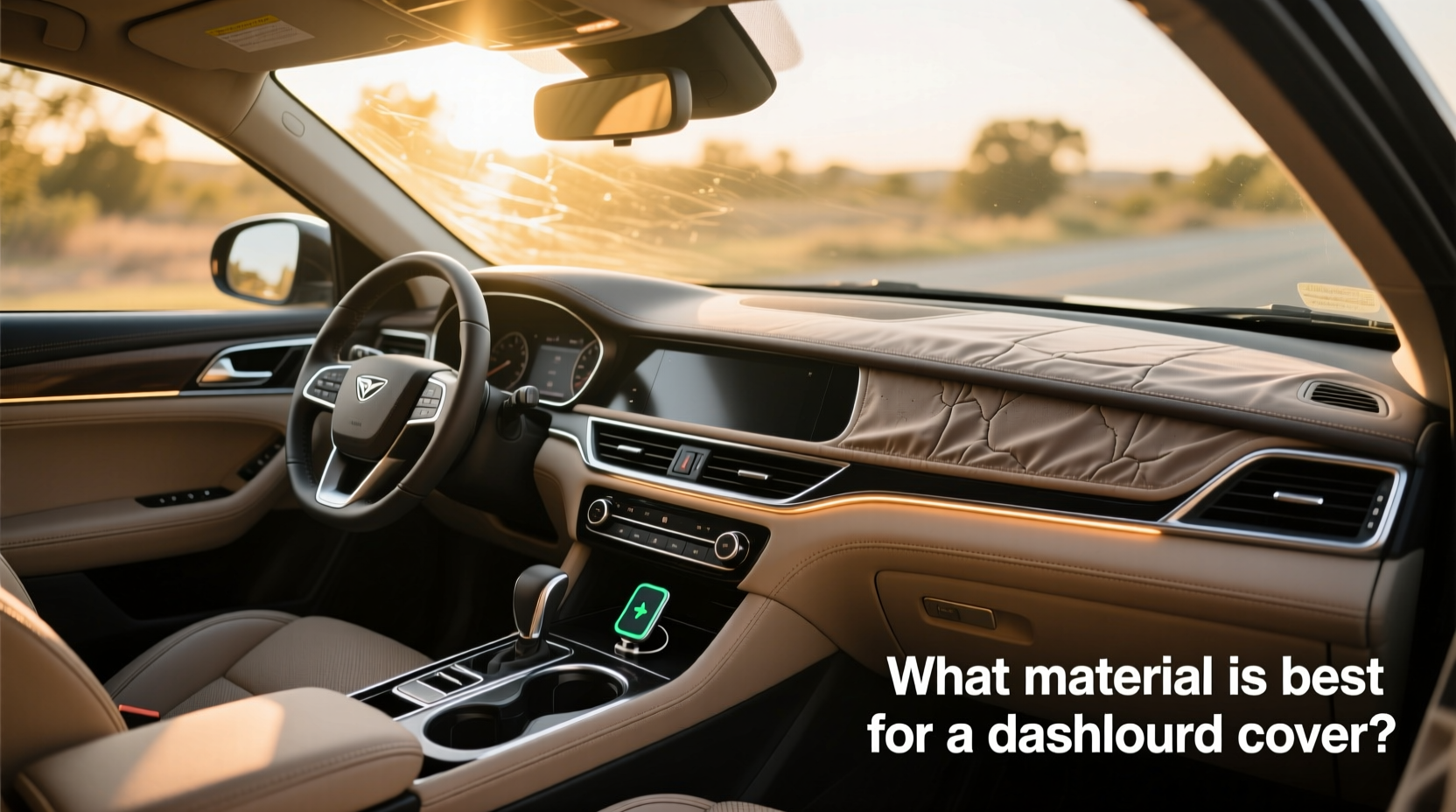
The best material for a dashboard cover depends on your priorities—durability, comfort, or heat resistance. For long-term protection against UV rays and spills, vinyl is a top choice due to its stain-resistant surface and low maintenance needs 1. If you're asking how to choose vinyl for dashboard, what material is best for a dashboard cover?, consider that vinyl excels in high-wear environments but may retain more heat than fabric options like poly-carpet or suede. Avoid covers with adhesive backing that could leave residue, and always verify custom fitment to prevent airbag interference—a key safety concern when selecting any dashboard protector.
About Vinyl for Dashboard: What Material Is Best for a Dashboard Cover?
Vinyl dashboard covers are protective accessories designed to shield a vehicle’s interior dashboard from prolonged sun exposure, extreme temperatures, and daily wear. They are commonly used in regions with intense sunlight or where cars are frequently parked outdoors. The term "vinyl for dashboard" refers specifically to synthetic polymer-based materials engineered for resilience against cracking, fading, and staining. When evaluating what material is best for a dashboard cover, it's important to understand that each option serves different needs—vinyl prioritizes toughness and ease of cleaning, while fabrics like velour emphasize aesthetics and texture.
These covers typically span from the windshield base across the instrument panel, covering areas prone to UV degradation. A well-fitted vinyl cover reduces glare on the windshield, helps maintain cabin temperature, and preserves the original dashboard surface. Unlike temporary solutions like reflective sunshades, vinyl dashboard covers offer continuous protection and can remain installed during driving, provided they do not obstruct visibility or safety systems.
Why Vinyl for Dashboard, What Material Is Best for a Dashboard Cover? Is Gaining Popularity
Vinyl has gained traction among drivers seeking durable, low-maintenance interior protection. Its rise correlates with increasing awareness of UV damage to automotive plastics and upholstery. In urban areas with limited covered parking, consumers are turning to long-term solutions rather than short-term fixes. Additionally, rising fuel costs have made cabin cooling efficiency more relevant—preventing excessive heat buildup lowers AC load and improves comfort upon entry.
Another factor driving adoption is aesthetic customization. Modern vinyl covers come in various textures (matte, glossy, carbon fiber patterns) and colors, allowing integration with a vehicle’s interior design. Some users also appreciate the wipe-clean nature of vinyl, especially those who transport children, pets, or work equipment. As part of a broader trend toward preserving resale value, many owners install dashboard covers early in vehicle ownership to minimize aging signs.
Types and Variants
Different materials offer distinct performance profiles. Understanding these variants helps answer what to look for in vinyl for dashboard, what material is best for a dashboard cover?
🛒 Poly-Carpet
A rugged woven polyester blend often backed with foam for insulation.
- Pros: Excellent heat absorption, reduces glare, soft texture
- Cons: Heavier, harder to clean spills, may trap dust
✨ Velour
Luxurious plush fabric laminated with high-density foam for shape retention.
- Pros: Elegant appearance, comfortable feel, matches factory interiors
- Cons: Foam layer may degrade in hot climates, potential odor emission
📍 Suede (Synthetic)
Fine-textured polyester with a smooth finish and protective coating.
- Pros: Easy to wipe clean, premium look, resistant to light abrasion
- Cons: Less durable under heavy use, may show scuffs over time
🔧 Molded Dash Covers
Thermoformable material shaped precisely to a specific vehicle model.
- Pros: Seamless fit, no shifting, excellent coverage
- Cons: Higher cost, limited availability for older models
🏭 Vinyl
Durable synthetic polymer, often textured to mimic leather or carbon fiber.
- Pros: Highly resistant to stains, UV rays, and scratches; easy maintenance
- Cons: Can feel plasticky, retains heat, less breathable
👥 Leather (Genuine or Synthetic)
Premium material offering a high-end finish.
- Pros: Long-lasting, luxurious appearance, ages well
- Cons: Expensive, requires conditioning (genuine), sensitive to drying
Key Features and Specifications to Evaluate
When exploring how to choose vinyl for dashboard, what material is best for a dashboard cover?, assess the following criteria:
- ✅ Material Composition: Determines longevity and tactile experience. Vinyl and leather resist wear; fabrics absorb heat better.
- 📏 Custom Fitment: Precision-cut covers ensure full coverage without gaps. Poor fit risks interfering with airbags or controls 2.
- ☀️ UV & Heat Protection: Look for materials with UV inhibitors. Vinyl reflects some heat but conducts warmth; foam-backed fabrics provide insulation.
- 🧼 Ease of Cleaning: Spill-resistant surfaces like vinyl only require damp cloth wiping. Fabric types may need specialized cleaners.
- ⚡ Non-Slip Backing: Rubberized or textured undersides prevent movement during driving maneuvers.
- 🔍 Installation Method: Hook-and-loop fasteners or elastic straps allow secure mounting without adhesives that risk residue.
Pros and Cons
| Aspect | Advantages | Limitations |
|---|---|---|
| Vinyl Durability | Resists cracking, fading, and liquid penetration | May become brittle in extreme cold over time |
| Heat Retention | Protects underlying dash from direct sun | Surface gets hot; can radiate heat into cabin |
| Maintenance | Easy to clean with mild soap and water | Glossy finishes may show fingerprints |
| Safety | No loose parts if properly fitted | Poorly designed covers might impede airbag deployment |
| Aesthetics | Available in multiple styles and colors | Less natural feel compared to fabric or leather |
Best suited for: Fleets, rideshare vehicles, outdoor parkers, pet owners.
Not ideal for: Vehicles in extremely hot climates without ventilation, luxury interiors seeking soft-touch finishes.
How to Choose Vinyl for Dashboard: What Material Is Best for a Dashboard Cover?
Follow this step-by-step checklist when deciding what material is best for a dashboard cover:
- Identify Your Primary Need: Is it UV protection, glare reduction, aesthetics, or spill resistance?
- Select Material Type: Choose vinyl for durability and easy cleaning; opt for suede or velour for comfort and style.
- Verify Vehicle Compatibility: Use manufacturer lookup tools to confirm year/make/model fit.
- Check Mounting Style: Prefer non-adhesive methods (straps, clips) to avoid dashboard damage.
- Review Safety Clearance: Ensure the cover doesn’t sit above the dashboard edge near airbag zones.
- Assess Texture and Color: Match or complement your interior to maintain visual harmony.
Red flags to avoid:
- Covers requiring glue or sticky tapes
- Universal-fit models with excessive folding or bunching
- No clear product specifications or material details
- Missing customer reviews or return policy information
Price & Market Insights
Pricing varies significantly based on material, construction, and brand reputation:
- Fabric Covers (Poly-Carpet, Velour): $20–$40 — budget-friendly, widely available
- Synthetic Suede / Vinyl: $30–$60 — mid-range, better durability
- Molded or Leather Covers: $60–$150+ — premium fit and finish
Prices may differ by region and retailer. While vinyl offers good value for frequent use, higher upfront investment in molded or leather versions often pays off in lifespan and appearance. Always compare warranties—lifetime guarantees are common for carpet and molded types 1.
Top-Seller & Competitive Analysis
Popular models focus on precise fit and functional design. Below is a comparison of leading categories:
| Material | Average Price | Lifespan | Best For |
|---|---|---|---|
| Poly-Carpet | $25 | 5+ years | Daily drivers, sun protection |
| Velour | $35 | 3–5 years | Comfort, matching OEM look |
| Vinyl | $45 | 4–7 years | Spill resistance, commercial use |
| Molded | $80 | 7+ years | Precision fit, modern cabins |
| Leather | $120 | 6–8 years | Luxury vehicles, resale value |
Note: Lifespan estimates assume regular maintenance and moderate climate exposure. Actual results may vary.
Customer Feedback Synthesis
Analysis of verified buyer reviews reveals consistent themes:
- ✅ Frequent Praises: “Perfect fit,” “easy to install,” “reduced dashboard temperature,” “looks factory-made.”
- ❗ Common Complaints: “Slipped forward during braking,” “left sticky residue,” “airbag warning light activated,” “color didn’t match description.”
- 🔧 Recurring Suggestions: Include alignment guides, use non-slip silicone backing, improve packaging clarity.
Many satisfied customers emphasize the importance of model-specific ordering. Negative experiences often stem from universal-fit compromises or incorrect installation.
Sourcing & Supplier Tips
When purchasing, prioritize suppliers offering:
- Detailed fitment databases (by VIN or trim level)
- Clear return policies (especially for color/texture mismatches)
- Transparent material sourcing (e.g., “PVC-free vinyl” or “OE-grade foam”)
- Options for bulk orders or reseller programs (for fleets or auto detailers)
For business buyers, request samples before large purchases. Inspect stitching quality, edge finishing, and underside texture. Confirm whether the supplier provides compliance documentation if selling internationally.
Maintenance, Safety & Legal Considerations
Maintenance: Clean vinyl with mild detergent and a microfiber cloth. Avoid abrasive pads or ammonia-based cleaners that may degrade the surface.
Safety: Never install a cover that blocks access to vents, sensors, or airbag labels. Periodically remove and inspect the dashboard underneath to prevent moisture buildup or debris accumulation.
Legal/Compliance: While no federal laws ban dashboard covers, some jurisdictions restrict items that impair driver visibility or interfere with safety systems. Always check local regulations. Manufacturers generally advise against placing objects on the dash—ensure your cover is labeled as airbag-safe if applicable. When in doubt, consult your vehicle’s manual or contact the automaker directly.
Conclusion
If you need maximum durability and easy maintenance, vinyl is one of the best materials for a dashboard cover, particularly for commercial vehicles or harsh climates. If comfort and aesthetics are top priorities, consider velour or suede. For seamless integration and long-term protection, molded or leather covers justify their higher cost. Ultimately, the right choice balances protection, fit, and safety. Always verify compatibility with your specific vehicle and avoid adhesive-based installations to protect your dashboard’s integrity.
FAQs
Can vinyl dashboard covers cause airbag issues?
Vinyl covers themselves don’t block airbags if properly fitted. However, thick or ill-fitting models may interfere with deployment. Choose low-profile, vehicle-specific designs and avoid stacking objects under the cover.
Do dashboard covers reduce cabin heat?
Yes, all quality dashboard covers act as insulators, reducing direct solar heating. Fabric materials like poly-carpet absorb heat, while vinyl reflects some radiation but can feel hot to touch.
How do I clean a vinyl dashboard cover?
Wipe with a damp microfiber cloth and mild soap. Avoid harsh chemicals or scrubbing tools. Let dry completely before reinstalling.
Are universal-fit dashboard covers reliable?
They’re less reliable than custom-fit versions. Universal models often require trimming or folding, which can lead to slippage or incomplete coverage. For best results, choose a model designed for your exact vehicle make and model.
Will a dashboard cover damage my car’s interior?
Properly designed covers won’t cause damage. However, low-quality ones with adhesive backing may leave residue or trap moisture. Regular removal and inspection help prevent long-term issues.




 浙公网安备
33010002000092号
 浙B2-20120091-4