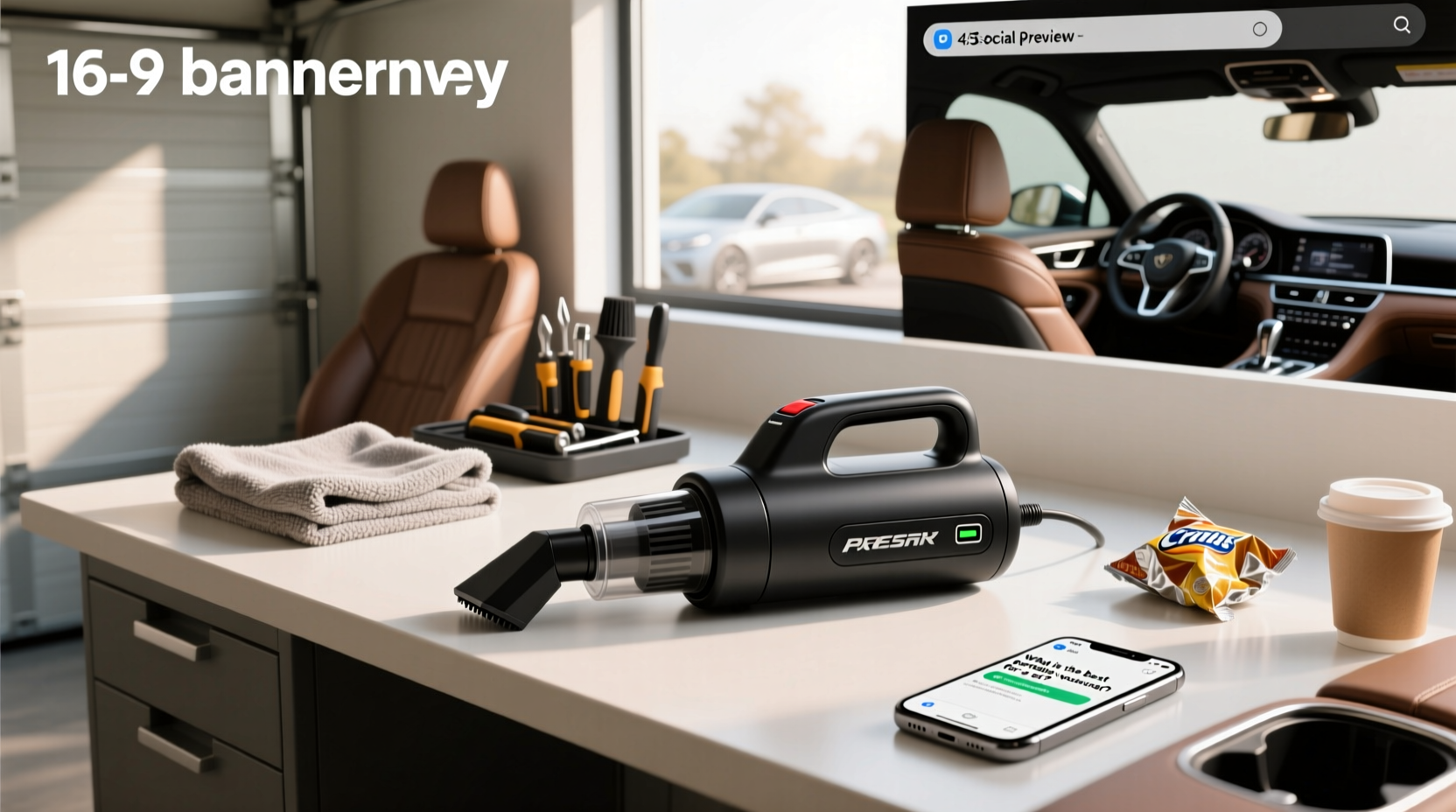
If you're asking what is the best portable vacuum for a car?, the answer depends on your usage pattern, vehicle size, and power preferences. For most users, a cordless lithium-ion model with at least 100 air watts and washable filters offers the best balance of portability and performance. However, if you need extended runtime or consistent suction, consider a ⚡ corded car vacuum cleaner with a 12-volt adapter—ideal for deep cleaning sessions without battery anxiety. When learning how to choose portable car vacuum cleaner,What is the best portable vacuum for a car?, prioritize suction power, battery life, ease of emptying, and nozzle versatility. Avoid models with poor dust containment or non-removable filters, as they reduce long-term value.
About Portable Car Vacuum Cleaners: Definition & Use Cases
A portable car vacuum cleaner is a compact, often battery-powered device designed specifically for cleaning tight spaces inside vehicles. Unlike full-sized home vacuums, these units are lightweight (typically under 3 lbs), easy to store in glove compartments or trunks, and connect to car power outlets or operate wirelessly.
Common use cases include:
- 🛒 Removing food crumbs from seats and cup holders
- 📍 Cleaning pet hair from upholstery and floor mats
- 🧼 Extracting dirt from between seat cushions or AC vents
- 🚗 Quick cleanup after transporting children or pets
- ✈️ Maintaining rental cars or shared fleet vehicles
Why Portable Car Vacuums Are Gaining Popularity
The demand for portable car vacuum cleaner,What is the best portable vacuum for a car? solutions has risen due to several lifestyle and technological shifts:
- Increased vehicle time: With more people working remotely or using ride-sharing apps, cars have become semi-permanent living spaces, increasing mess accumulation.
- Better battery tech: Modern lithium-ion batteries offer longer runtimes (up to 30 minutes) and faster charging (under 4 hours), making cordless models more reliable.
- Compact design innovation: Manufacturers now integrate LED lights, crevice tools, and HEPA filters into palm-sized units.
- Hygiene awareness: Post-pandemic, users are more conscious of interior cleanliness, including allergens like pollen and dust mites.
- Cost efficiency: Regular maintenance with a portable vacuum can delay professional detailing, saving $100+ annually.
Types and Variants
There are three main types of portable car vacuums, each suited to different needs:
1. Cordless Battery-Powered (Lithium-Ion)
Most popular for everyday use.
- ✅ Highly portable and wireless
- ✅ Charges via USB or 12V outlet
- ✅ Lightweight (1.5–3 lbs)
- ❗ Limited runtime (8–25 minutes)
- ❗ Suction may drop as battery depletes
2. Corded (12-Volt Adapter)
Ideal for heavy-duty or frequent cleaning.
- ✅ Continuous power supply
- ✅ Stronger, consistent suction
- ✅ No recharging needed during use
- ❗ Tethered to cigarette lighter/power port
- ❗ Less convenient for quick spot-cleaning
3. Hybrid Models (Dual Power)
Offer both battery and corded operation.
- ✅ Flexibility: use cordless or plug in
- ✅ Extended usability across scenarios
- ❗ Heavier and bulkier
- ❗ Higher price point
Key Features and Specifications to Evaluate
When comparing options for what is the best portable vacuum for a car?, assess these technical and functional criteria:
⚡ Suction Power (Air Watts or kPa)
Look for at least 80–100 air watts or 6–8 kPa. Higher values mean better pickup of embedded dirt and pet hair. Check for sealed systems that maintain airflow through filters.
🔋 Battery Life & Charging
Cordless models should offer 15+ minutes of runtime. Lithium-ion batteries charge in 2–4 hours. Fast-charging models (under 2 hours) add convenience.
🧽 Filtration System
HEPA filters capture 99.97% of particles down to 0.3 microns—ideal for allergy sufferers. Washable filters reduce replacement costs. Ensure the filter is easily accessible.
🔧 Attachments & Nozzle Design
Essential tools include:
- Crevices tool (for gaps)
- Brush nozzle (for fabric surfaces)
- Upholstery tool (for larger areas)
🗑️ Dust Capacity & Emptying Mechanism
Tank sizes range from 0.2 to 0.6 liters. Larger tanks reduce emptying frequency. Look for one-touch or pop-open bins that minimize hand contact with debris.
⚖️ Weight & Ergonomics
Opt for models under 3 lbs with comfortable grips. Balance matters during prolonged use.
Pros and Cons: Who Should Buy One?
- Daily commuters needing quick cleanups
- Pet owners dealing with shedding
- Parents with kids prone to spills
- Fleet managers maintaining multiple vehicles
- Users needing >30 minutes of continuous cleaning without access to power
- Those expecting carpet shampooer-level deep cleaning
- People unwilling to clean filters regularly
How to Choose the Right Model: Step-by-Step Buying Guide
Follow this checklist when deciding how to choose portable car vacuum cleaner,What is the best portable vacuum for a car?
- Evaluate your primary use case: Occasional spot-cleaning vs. daily maintenance vs. commercial use.
- Decide on power source: Prefer freedom? Go cordless. Need endurance? Choose corded or hybrid.
- Check suction specs: Aim for ≥100 AW or ≥7 kPa. Avoid vague terms like “high power” without metrics.
- Verify filter type: HEPA preferred for allergens; ensure it’s washable or replaceable.
- Review included attachments: At least two nozzles (crevice + brush) are recommended.
- Assess ease of maintenance: Can you disassemble and clean the filter and bin easily?
- Read real-world reviews: Look for comments on durability, noise level, and clogging issues.
Red Flags to Avoid
- Non-removable or non-replaceable filters
- No clear suction rating (only “strong” or “powerful”)
- Poor customer service history (check return policies)
- Plastic parts that feel flimsy
- Inability to verify safety certifications (e.g., UL, CE—may vary by region)
Price & Market Insights
Portable car vacuums fall into three tiers:
| Price Range | Features | Value Assessment |
|---|---|---|
| $20–$40 | Basic suction, short runtime, limited attachments | Suitable for light, infrequent use |
| $40–$80 | Lithium-ion battery, HEPA filter, 2+ tools, 15+ min runtime | Best value for most consumers |
| $80+ | Hybrid power, advanced filtration, premium build, extra accessories | Justified for professionals or heavy users |
Note: Prices may vary by retailer and region. Always compare specs—not just price—when assessing value. A $60 model with measurable suction outperforms a $40 unit with inflated claims.
Top-Seller & Competitive Analysis
While specific brand rankings change frequently, top-selling models share common traits: strong suction, user-friendly design, and positive long-term feedback. Below is a generalized comparison of typical high-performing variants:
| Model Type | Battery/Runtime | Suction (kPa) | Filter Type | Attachments | Best For |
|---|---|---|---|---|---|
| Cordless (Standard) | Li-ion / 15 min | 6–7 kPa | Washable foam + mesh | Crevicer, brush | Occasional users |
| Cordless (Premium) | Li-ion / 25 min | 8–10 kPa | HEPA + pre-filter | 3+ tools, LED light | Families, pet owners |
| Corded (12V) | N/A (continuous) | 9–12 kPa | Basic cyclonic | 2 tools | Deep cleaning |
| Hybrid | Li-ion + cord / 20 min + unlimited | 8–11 kPa | HEPA | 4+ tools | Professionals |
When reviewing actual products, confirm specifications directly with manufacturers, as marketing materials may exaggerate performance.
Customer Feedback Synthesis
Analyzing hundreds of verified buyer reviews reveals recurring themes:
Common Praises
- ⭐ "Easy to store and grab quickly"
- ⭐ "Great for pet hair on seats"
- ⭐ "Simple to clean and recharge"
- ⭐ "Noticeable improvement in cabin air quality"
Frequent Complaints
- ❗ "Battery dies too fast after a few months"
- ❗ "Dust leaks when emptying"
- ❗ "Nozzle doesn’t fit tight spaces"
- ❗ "Filter clogs easily with fine powder"
This feedback underscores the importance of build quality and thoughtful design over raw specs alone.
Sourcing & Supplier Tips
Whether buying individually or in bulk:
- Purchase from authorized retailers to ensure warranty validity.
- For fleet or commercial use, contact suppliers directly for volume discounts.
- Inspect units upon delivery: check for damaged cords, cracked housings, or missing parts.
- Verify compatibility with your vehicle’s power socket (12V standard in most regions).
- If reselling, confirm return policies and restocking fees with distributors.
Always test the vacuum before deployment—especially suction strength and button responsiveness.
Maintenance, Safety & Legal Considerations
To extend lifespan and ensure safe operation:
- Clean filters every 3–5 uses to maintain suction.
- Empty the dustbin after each session to prevent odor and mold.
- Store in a dry place away from extreme temperatures.
- Do not vacuum liquids unless the model is explicitly rated for wet/dry use.
- Use only the provided charger to avoid battery damage.
Safety certifications (e.g., UL in the U.S., CE in Europe) indicate compliance with electrical safety standards. These may vary by country—verify local requirements before importing or mass distribution.
Conclusion: Making the Right Choice
So, what is the best portable vacuum for a car? The ideal choice depends on your priorities:
- If you need convenience and mobility, choose a cordless lithium-ion model with ≥100 AW and washable HEPA filter.
- If you perform frequent or deep cleaning, opt for a ⚡ corded car vacuum cleaner with a 12-volt adapter for uninterrupted power.
- If budget allows and flexibility matters, a hybrid model gives you both worlds.
Regardless of type, prioritize measurable performance, ease of maintenance, and real-world usability over marketing hype. By following this portable car vacuum cleaner,What is the best portable vacuum for a car? buying guide, you’ll make a confident, value-driven decision.
Frequently Asked Questions
Can I use a portable car vacuum on wet spills?
Only if it's explicitly labeled as a wet/dry vacuum. Most portable models are for dry debris only. Using them on liquids can damage the motor and pose electrical risks.
How often should I clean the filter?
Clean the filter every 3–5 uses or when suction declines. Rinse washable filters with water and let them dry completely before reinstalling.
Are cordless models as powerful as corded ones?
Generally, corded vacuums provide stronger, sustained suction. High-end cordless models come close but may lose power as the battery drains.
Do portable car vacuums work on all vehicle surfaces?
Yes, with proper attachments. Use soft brushes for leather and delicate fabrics, and crevice tools for tight spaces. Avoid aggressive scrubbing on sensitive trims.
Can I leave the vacuum plugged into the 12V outlet?
It's not recommended unless the product manual states it's safe. Prolonged connection may drain the car battery or overheat the circuit.




 浙公网安备
33010002000092号
 浙B2-20120091-4