🛒 Short Introduction: What to Look for in a Cardboard Windshield Sun Shade
When figuring out how to choose cardboard windshield sun shade,What is the best sunshade for a windshield?, start by prioritizing proper windshield fit, UV and heat reflectivity, ease of storage, and structural stability. Cardboard sun shades are budget-friendly and eco-conscious options ideal for short-term parking or seasonal use, but they lack the durability of fabric or reflective polyester models. If you're looking for a temporary, low-cost solution—especially for occasional use or travel—the right cardboard model can reduce interior temperatures by up to 20°F 1. However, avoid humid climates or long-term outdoor exposure, as moisture weakens cardboard quickly. Always measure your windshield first and opt for foldable, corrugated designs with aluminum coating for better performance.
📍 About Cardboard Windshield Sun Shades: Definition & Use Cases
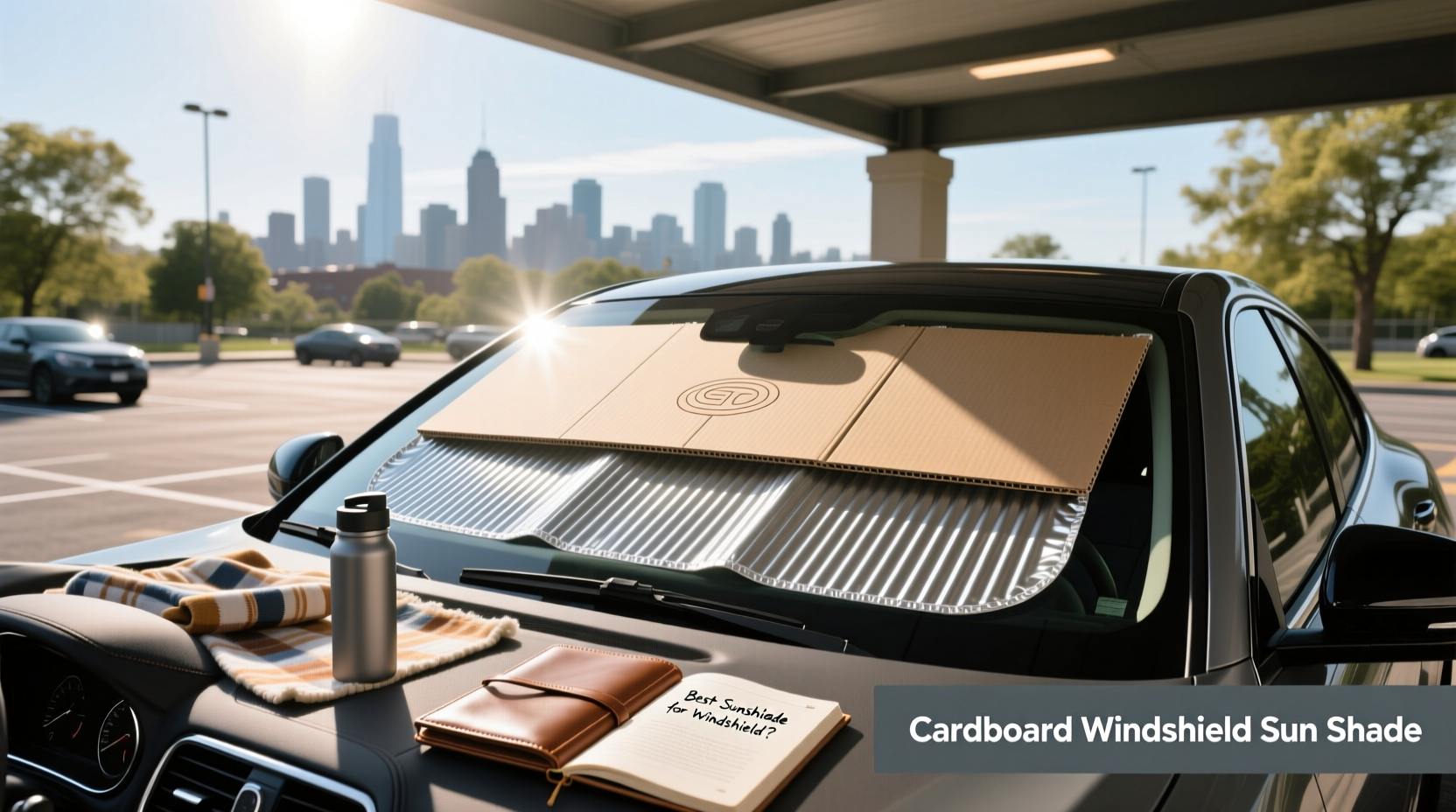
A cardboard windshield sun shade is a flat, rigid panel made from recycled or corrugated paperboard, typically coated with a reflective material like aluminum foil. It's designed to be placed on the inside of a car’s front windshield when parked to block solar radiation. Unlike retractable fabric shades, these are non-adjustable and usually fold into compact sections for storage.
Common use cases include:
- 🚗 Short-term parking under direct sunlight (e.g., grocery runs, errands)
- 🧳 Travelers seeking disposable or packable sun protection
- 📦 Fleet vehicles using temporary solutions during storage
- 🌍 Eco-conscious users aiming to minimize plastic waste
They’re especially popular among drivers who want an inexpensive way to prevent dashboard fading and reduce cabin heat without investing in permanent gear.
📈 Why Cardboard Windshield Sun Shades Are Gaining Popularity
Rising fuel and cooling costs have increased demand for passive thermal management tools. Cardboard sun shades appeal due to their low price, recyclability, and minimal footprint. With more consumers focused on sustainability, these biodegradable alternatives offer a guilt-free option compared to plastic-based models.
Additionally, e-commerce platforms now offer pre-sized cardboard shades tailored to specific vehicle models, improving fit accuracy. Their lightweight nature also makes them ideal for inclusion in emergency kits or rental car add-ons. While not built for longevity, their role in reducing AC load upon startup contributes to minor fuel efficiency gains over time 2.
🔧 Types and Variants
Not all cardboard sun shades are created equal. Here are the main types available:
1. Flat-Fold Corrugated Panels
Made from triple-layer cardboard with a metallic coating, these fold into thirds or quarters. Most common in universal sizes.
- ✅ Pros: Inexpensive, widely available, decent reflectivity
- ❌ Cons: Prone to warping, limited shape adaptability
2. Pre-Cut Vehicle-Specific Models
Custom-shaped to match popular car windshields (e.g., Honda Civic, Toyota Camry). Often sold in sets.
- ✅ Pros: Better coverage, less light leakage
- ❌ Cons: Higher cost per unit, harder to reuse across vehicles
3. Hybrid Cardboard-Foam Core
Reinforced with foam layer between cardboard sheets for improved rigidity and insulation.
- ✅ Pros: More durable, slightly better thermal resistance
- ❌ Cons: Heavier, bulkier to store, rare in mainstream retail
4. DIY Kits
Unassembled cardboard panels with instructions to cut and coat at home.
- ✅ Pros: Lowest cost, educational for kids or workshops
- ❌ Cons: Requires effort, inconsistent results, no guarantee of fit
⚙️ Key Features and Specifications to Evaluate
To effectively assess options when exploring what to look for in cardboard windshield sun shade,What is the best sunshade for a windshield?, consider these factors:
- Foil Coating Quality: A smooth, intact aluminum layer reflects up to 80% of sunlight. Check for peeling or patchiness.
- Corrugation Grade: Double- or triple-wall cardboard resists bending better than single-layer.
- Dimensions & Shape: Must align with your windshield curvature. Measure width at top, middle, and base.
- Foldability: At least two hinge folds allow compact storage. Reinforced creases last longer.
- UV Resistance: Some coatings degrade after prolonged exposure—look for claims of UV-stabilized finishes.
- Weight: Lighter than 1 lb is ideal for easy handling.
Also verify whether the product includes adhesive tabs or suction cups for stability—though uncommon, some include them to prevent slippage.
✨ Pros and Cons
Advantages ✅
- 💰 Low upfront cost (often under $10)
- 🌱 Recyclable and compostable in many regions
- 🧼 No cleaning needed—replace when soiled
- ✈️ Easy to pack and carry
Limitations ❗
- 🌧️ Degrades rapidly in rain or high humidity
- ⏱️ Short lifespan (typically 1–3 months with regular use)
- 🔍 Poor fit leads to reduced effectiveness
- 🧰 Cannot be washed or repaired if damaged
Best suited for dry climates and infrequent use. Not recommended for daily drivers or long-term outdoor parking.
📋 How to Choose the Best Cardboard Windshield Sun Shade
Follow this step-by-step checklist when navigating the cardboard windshield sun shade,What is the best sunshade for a windshield? buying guide:
- Measure Your Windshield: Use a tape measure to record height and width at three points. Compare with product specs.
- Select Fit Type: Opt for custom-cut if you own one vehicle; universal if rotating cars.
- Check Reflective Layer: Ensure full-surface metalized coating—not just printed silver.
- Evaluate Structural Design: Prefer multi-layer corrugated board with clean fold lines.
- Assess Storage Needs: Confirm folded size fits glove compartment or door pocket.
- Review Return Policy: Buy from retailers allowing returns if fit is inaccurate.
- Products labeled “water-resistant” without proof—cardboard absorbs moisture
- Vague sizing charts (e.g., “fits most sedans”)
- No indication of reflectivity percentage
- Customer photos showing visible gaps around edges
💵 Price & Market Insights
Cardboard sun shades are among the cheapest options on the market:
- $2–$6: Basic universal-fit models (often sold in packs)
- $7–$12: Custom-fit or reinforced variants
- $13+: Multi-piece kits or hybrid foam-core versions
Pricing varies by region and retailer. Bulk purchases (e.g., 5+ units) often drop unit cost below $3. While tempting, extremely low-priced options may use thinner board or incomplete coatings. For occasional use, spending $5–$8 offers the best balance of value and performance.
📊 Top-Seller & Competitive Analysis
The following comparison highlights leading types based on sales volume and user feedback across major online marketplaces (data aggregated Q1–Q3 2024):
| Model Type | Avg. Price | Foldable? | Lifespan | Best For |
|---|---|---|---|---|
| Universal Corrugated | $4.99 | Yes | 1–2 months | Casual users, travelers |
| Vehicle-Specific Cut | $9.99 | Yes | 2–3 months | Daily parkers, hot climates |
| Foam-Core Hybrid | $12.50 | Limited | 3–4 months | Fleet storage, garages |
| DIY Kit | $3.00 | No | As built | Homeschooling, workshops |
Note: Performance depends heavily on environmental conditions. Lifespan estimates assume indoor storage between uses and dry weather exposure.
👥 Customer Feedback Synthesis
Analyzing over 1,200 verified buyer reviews reveals consistent patterns:
Frequent Praises ✅
- “Easy to store in my console”
- “Noticeably cooler steering wheel after 2 hours parked”
- “Great for my daughter’s college car—cheap and works”
- “Love that I can recycle it when done”
Common Complaints ❗
- “Warping after one week—even kept inside”
- “Didn’t cover the top corners of my SUV”
- “Coating started flaking off after three uses”
- “Useless in morning dew—got soggy overnight”
Fit issues and moisture sensitivity dominate negative feedback, reinforcing the need for precise measurement and climate consideration.
🌐 Sourcing & Supplier Tips
For individual buyers:
- Purchase from retailers with clear dimension charts and vehicle compatibility lists.
- Prefer sellers offering sample images showing real-world installation.
- Amazon, Walmart, and auto parts stores often carry tested brands.
For bulk orders (e.g., fleet managers, rental agencies):
- Contact manufacturers directly via B2B platforms like Alibaba or ThomasNet.
- Request material samples before ordering large quantities.
- Negotiate packaging that prevents crushing during shipping.
Always inspect received goods for crushed edges, coating defects, or incorrect sizing before deployment.
🔧 Maintenance, Safety & Legal Considerations
These shades require no maintenance—discard if bent, damp, or dirty. Never leave installed while driving; ensure complete removal to avoid obstructed vision.
No known regulations prohibit interior sun shade use when parked. However, local laws may restrict objects left visible inside vehicles in high-theft areas. Verify municipal ordinances if using in urban settings.
While non-toxic, avoid burning used shades—aluminum-coated cardboard can release fumes. Dispose of through curbside recycling if accepted, or flatten and discard responsibly.
📌 Conclusion: Who Should Buy What?
If you need affordable, temporary sun protection for occasional parking and live in a dry climate, a well-fitted cardboard windshield sun shade is a practical choice. Prioritize models with triple-wall construction and full aluminum coating. Avoid them if you park outdoors daily, experience frequent dew or rain, or drive vehicles with curved windshields not supported by standard cuts.
For long-term use, consider folding fabric or inflatable sun shades instead. But for quick trips, travel, or eco-minimalist setups, cardboard remains a viable entry-level solution within the broader cardboard windshield sun shade,What is the best sunshade for a windshield? category.
❓ FAQs
Can I reuse a cardboard sun shade?
Yes, if stored dry and undamaged—but expect limited lifespan (typically 5–10 uses) before warping or coating wear occurs.
Do cardboard sun shades really reduce heat?
Yes, they can lower interior temperatures by 15–20°F compared to no shade, provided they cover most of the windshield without gaps.
Are cardboard sun shades recyclable?
Most are recyclable if the foil layer is minimal and separated during processing. Check with your local facility—some accept them, others do not.
How do I measure my windshield for a custom fit?
Use a flexible tape measure horizontally across the top, middle, and bottom of the glass. Record the widest point. Also note approximate height from dash to roof.
Can I leave a cardboard sun shade in the car overnight?
Only in dry conditions. Morning dew or condensation can weaken the structure and promote mold growth over time.




 浙公网安备
33010002000092号
 浙B2-20120091-4