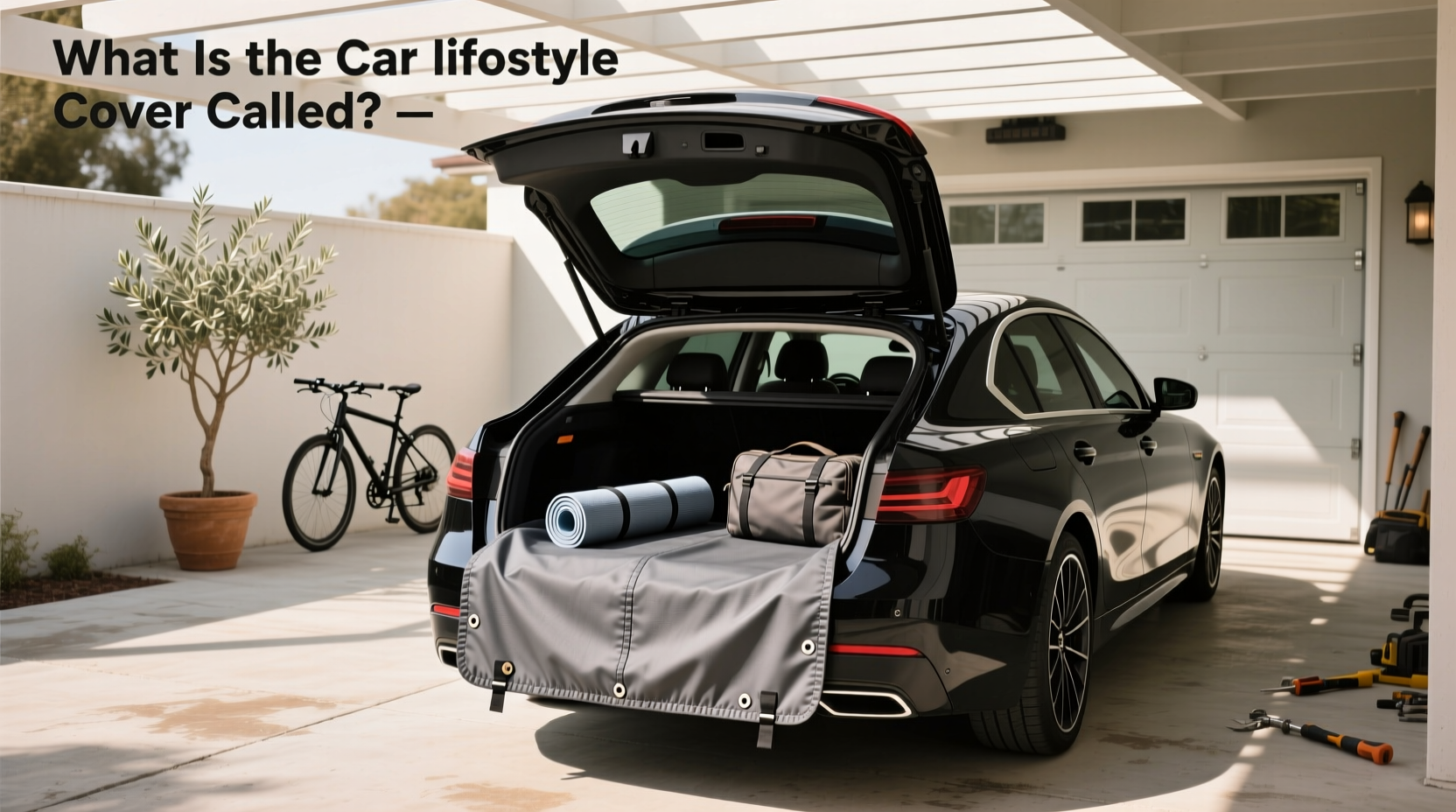
If you're wondering how to choose car boot cargo cover, what is the car boot cover called?, start here: the right cover depends on your vehicle type and usage. For hatchbacks, station wagons, and SUVs, a retractable fabric cargo cover offers flexibility and security ✅. Sedan owners often need a rigid rear parcel shelf (UK) or rear deck (US) to conceal items and protect interior surfaces 📍. When evaluating options, prioritize proper fit, durability, and ease of access ⚙️. Avoid universal-fit models if your car has an irregular cargo shape—measure first! Soft covers suit daily drivers needing quick loading, while hard panels are better for privacy and load separation in family or commercial use.
About Car Boot Cargo Cover, What Is the Car Boot Cover Called?
The term "car boot cargo cover" refers to any panel or fabric used to conceal, protect, or organize items stored in a vehicle's rear storage area. However, naming varies widely by region and vehicle design. In British English, the storage compartment is called the boot, while in American English, it's the trunk. The cover inside this space isn't always called a "boot cover." Instead, common names include:
- Cargo cover: A general term for both soft and hard removable covers used in hatchbacks and SUVs 🌐.
- Rear parcel shelf: Used in the UK for the rigid panel behind the rear seats in sedans 👥.
- Rear deck: The US equivalent of the parcel shelf, often with integrated speakers ✨.
- Retractable cargo area cover: Typically a roller-style fabric cover that extends and retracts across the cargo floor 🚚.
Understanding these terms helps when shopping online or discussing replacements with suppliers. Misunderstanding terminology can lead to ordering incompatible parts, especially when purchasing from international retailers 🔍.
Why Car Boot Cargo Cover, What Is the Car Boot Cover Called? Is Gaining Popularity
More drivers are investing in cargo covers not just for aesthetics but for practical benefits. Urban commuters use them to deter theft by hiding valuables from view ⚡. Families appreciate the safety benefit—keeping loose items contained during sudden stops 🛑. Delivery drivers and gig workers use them to secure equipment between trips 📦.
Additionally, modern vehicles, especially hatchbacks and electric SUVs, come with larger, more exposed cargo areas, increasing the need for organization and privacy. Aftermarket demand has risen as original equipment (OE) covers wear out or get lost. The shift toward multi-use vehicles—used for both personal and professional tasks—has made cargo management a higher priority than before 📈.
Types and Variants
Different vehicle designs require different types of covers. Choosing the right one improves functionality and longevity.
🛒 Retractable Fabric Covers
These roll out from a housing mounted at the rear of the cargo area, usually near the ceiling or tailgate.
- Pros: Easy to operate, compact when retracted, ideal for frequent loading/unloading ⏱️.
- Cons: Less rigid protection; may sag over time; not suitable for heavy loads ❗.
🔧 Rigid Hard Panels (Parcel Shelves)
Common in sedans, these are flat, often carpeted panels that sit horizontally above the spare tire well.
- Pros: Strong support, excellent for concealing items, integrates with speaker systems ✅.
- Cons: Fixed position limits cargo height; must be removed entirely to access lower storage 🧰.
🧩 Folding or Sectional Covers
Composed of multiple hinged panels that fold or stack when not in use.
- Pros: Flexible access; can open partially while keeping some items covered 🔧.
- Cons: More complex mechanism; potential for hinge failure over time ⚠️.
🧼 Mesh or Net Covers
Lightweight fabric nets stretched across the cargo area.
- Pros: Low cost, highly flexible, allows visibility while securing small items 🌍.
- Cons: Offers no privacy or UV protection; less durable in harsh conditions ❌.
Key Features and Specifications to Evaluate
When deciding what to look for in car boot cargo cover, what is the car boot cover called?, consider these measurable factors:
- FIT: OEM (original equipment manufacturer) covers offer perfect fit; aftermarket ones may be universal or model-specific. Always verify dimensions against your cargo area 📏.
- MATERIAL: Soft covers use polyester, vinyl, or mesh; hard covers use ABS plastic, MDF, or aluminum. Vinyl resists moisture; aluminum is lightweight and strong 💧.
- MECHANISM: Retractable models use spring-loaded rollers; folding types rely on hinges. Check smoothness and resistance during operation ⚙️.
- SECURITY: A fully opaque cover hides contents better than mesh. Some models lock into place; others are easily lifted 🛡️.
- WEIGHT CAPACITY: Hard shelves support up to 20–30 kg; fabric covers typically handle only light items like groceries or bags ⚖️.
- INSTALLATION: Most are tool-free. Look for clips, rails, or tension mounts that secure without damaging trim 🔧.
Pros and Cons
✨ Who Benefits Most?
- Frequent travelers storing luggage out of sight ✈️.
- Families with children who need to secure toys or strollers 🧸.
- Delivery drivers protecting packages during transit 🚚.
- Pet owners using the back for crates or carriers 🐶.
❗ When to Avoid
- If you regularly carry tall or bulky items (e.g., furniture, bikes).
- If your vehicle lacks mounting points for retractable systems.
- If you live in extreme climates—some plastics become brittle in cold or warp in heat.
How to Choose Car Boot Cargo Cover, What Is the Car Boot Cover Called?
Follow this step-by-step guide to make a confident purchase:
- Identify your vehicle type: Sedan? Hatchback? SUV? This determines whether you need a parcel shelf or a retractable cover 📍.
- Check existing terminology: Consult your owner’s manual—manufacturers use specific terms like "luggage compartment cover" or "load cover" 📎.
- Measure your cargo area: Record length, width, and vertical clearance from floor to headliner 📏.
- Determine usage: Daily commute vs. weekend hauling? Privacy vs. accessibility? Prioritize accordingly 🔍.
- Select material and mechanism: Choose soft retractable for convenience, hard shelf for rigidity ✅.
- Verify compatibility: Search using your car’s make, model, year, and body style (e.g., "2022 Toyota Camry sedan rear parcel shelf") 🔗.
- Avoid these red flags:
- Universal-fit claims without size charts ❌.
- No return policy or warranty information ⚠️.
- Vague product descriptions lacking material specs or weight limits 🚫.
Price & Market Insights
Pricing varies significantly based on type, material, and origin:
- Budget ($15–$40): Universal-fit fabric retractable covers or basic mesh nets. Often lack durability but work for temporary use 💸.
- Mid-range ($40–$100): Model-specific retractable covers or replacement parcel shelves. Better materials and fit consistency 📊.
- Premium ($100–$200+): OEM parts from dealerships or high-end aftermarket brands with aluminum frames and weather-resistant coatings 🏭.
OEM covers cost more but guarantee perfect fit and integration. Aftermarket options offer value but require careful vetting. Prices may vary by region due to import duties or availability—always compare local and international sellers carefully 🌍.
Top-Seller & Competitive Analysis
Popular models often balance price, fit, and ease of use. Below is a comparison of common best-sellers:
| Model Type | FIT Type | Material | Price Range | Best For |
|---|---|---|---|---|
| OEM Parcel Shelf | Exact (per model) | Carpeted MDF | $90–$180 | Sedans needing factory match |
| Aftermarket Retractable | Model-specific | Reinforced Vinyl | $50–$90 | Hatchbacks with frequent access |
| Folding Panel Set | Custom-fit | ABS Plastic | $70–$120 | SUVs requiring partial access |
| Universal Roll-up Cover | Adjustable | Polyester Fabric | $20–$40 | Occasional use or backup option |
Note: Availability and exact pricing depend on region and supplier. Always confirm compatibility through product specifications, not just titles.
Customer Feedback Synthesis
Based on aggregated reviews, buyers frequently praise:
- Easy installation with no tools required ✅.
- Effective concealment of valuables from street view 🔒.
- Durable materials that resist tearing or sagging after months of use 🛠️.
Common complaints include:
- Poor fit with universal models, especially on curved cargo areas ❌.
- Difficulty retracting or jamming mechanisms in low-cost rollers ⚠️.
- Lack of mounting hardware or unclear instructions in some kits 📝.
To minimize risk, prioritize products with verified purchase reviews and detailed installation guides.
Sourcing & Supplier Tips
Where you buy matters as much as what you buy:
- OEM Parts: Purchase from authorized dealers or manufacturer websites for guaranteed compatibility 🏭.
- Aftermarket: Reputable online auto parts stores (e.g., RockAuto, Autobarn) offer curated selections with fitment tools 🔍.
- Marketplaces: On Amazon or eBay, filter by "Fits Your Vehicle" and read reviews mentioning real-world fit 📋.
- Wholesale/Bulk: Suppliers like Alibaba may offer bulk cargo covers for fleet operators—verify sample quality first 🧰.
Before finalizing a purchase, check the return policy and warranty terms. Confirm whether the seller provides fitment support if issues arise.
Maintenance, Safety & Legal Considerations
Proper care extends lifespan:
- Clean fabric covers with mild soap and water; avoid harsh chemicals 🧼.
- Inspect rollers and hinges every 6 months for debris or wear ⚙️.
- Never overload a cover beyond its stated capacity—this risks injury or damage ⚠️.
Safety-wise, ensure the cover doesn’t obstruct rear visibility when driving. While no universal law bans cargo covers, some regions require unobstructed rear windows—check local regulations via official transport department websites 🌐.
Conclusion
Choosing the right car boot cargo cover, what is the car boot cover called? comes down to matching the cover type to your vehicle and needs. If you drive a sedan and want a clean interior look with speaker integration, go for a rear parcel shelf or rear deck. For hatchbacks or SUVs used daily, a retractable cargo cover offers the best balance of security and convenience. Always measure first, prioritize proper fit, and avoid universal models unless confirmed compatible. By focusing on material, mechanism, and real-world usability, you’ll find a solution that enhances both function and peace of mind.




 浙公网安备
33010002000092号
 浙B2-20120091-4