Short Introduction: How to Choose the Right Drive Belt
If you're asking how to choose a car drive belt, start by confirming your vehicle’s engine type and accessory layout. The right serpentine belt must match your car’s pulley system, length, width, and rib count. A mismatch can lead to slippage, overheating, or failure of the alternator, power steering, or water pump 1. Most modern vehicles use a single serpentine (drive) belt, which replaces older V-belt systems and powers multiple components at once 2. When shopping, prioritize OEM specifications over generic claims—always verify fit using your VIN or manufacturer part number. Avoid belts with inconsistent rib depth or poor tensioner compatibility, as these are leading causes of premature wear.
About Car Drive Belts: What Is a Drive Belt on a Car?
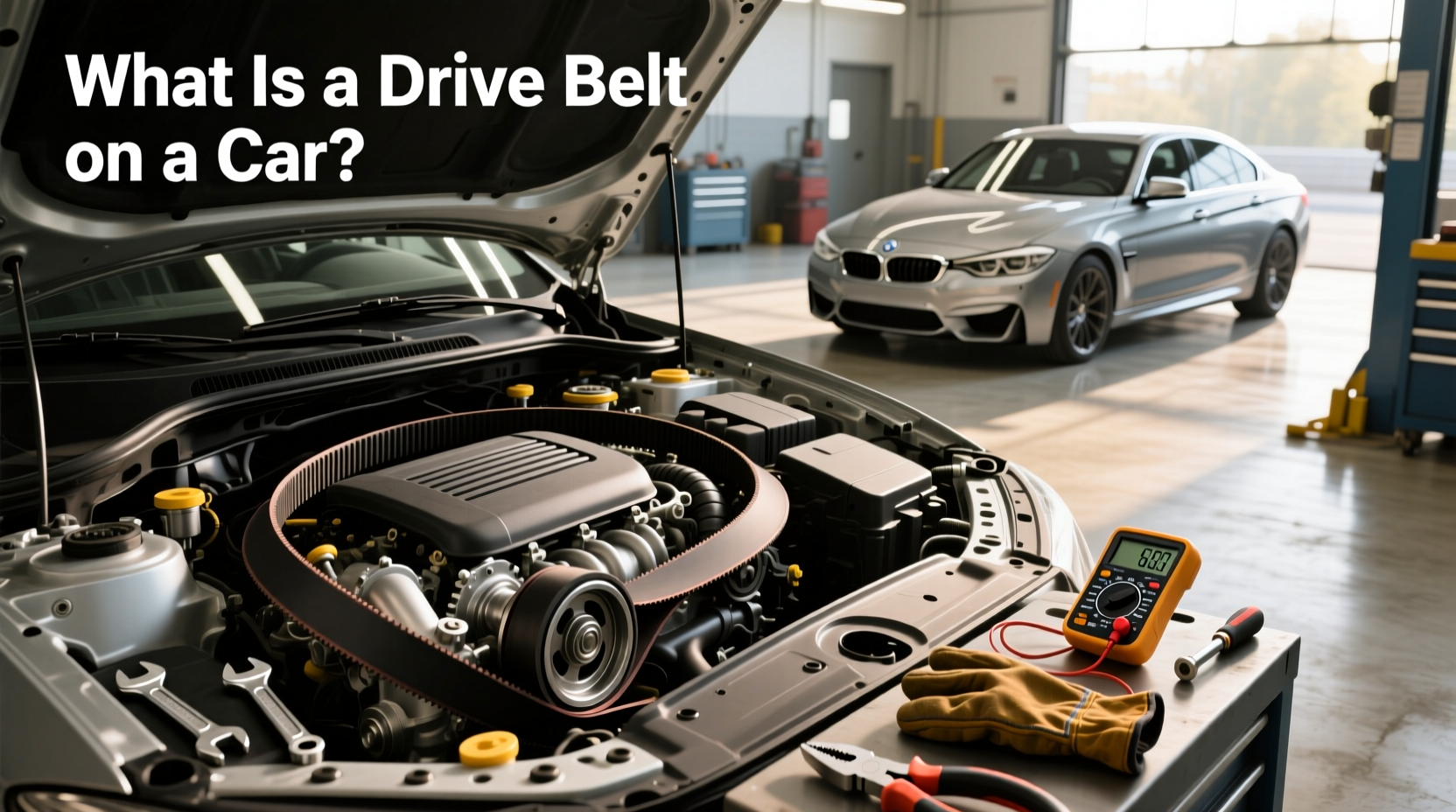
A drive belt, commonly known as a serpentine belt, is a long, ribbed rubber belt that transfers rotational power from the engine’s crankshaft to critical accessories like the alternator, air conditioning compressor, power steering pump, and water pump 3. Unlike timing belts—which synchronize internal engine parts—the drive belt operates externally and does not affect valve timing. It runs across multiple pulleys, guided by an automatic tensioner that maintains proper grip and prevents slipping 4.
Common use cases include daily driving, towing, and operation in extreme temperatures, where consistent power delivery to cooling and charging systems is crucial. Because it drives essential components, a failing drive belt can cause sudden loss of electrical charge, steering resistance, or engine overheating—even if the engine itself remains undamaged 5.
Why Drive Belts Are Gaining Popularity
The shift from multiple V-belts to a single serpentine design has made drive belts standard in vehicles manufactured after 1990. This evolution improves reliability, reduces engine bay clutter, and simplifies maintenance 6. Drivers benefit from fewer moving parts, lower risk of misalignment, and longer service intervals compared to older multi-belt setups.
User motivation centers on preventing roadside breakdowns. With increasing reliance on electrical systems (e.g., advanced infotainment, driver aids), maintaining alternator performance via a reliable drive belt is more important than ever. Additionally, improved materials like EPDM (ethylene propylene diene monomer) offer better heat and ozone resistance, extending average lifespan beyond 80,000 miles under normal conditions 7.
Types and Variants of Drive Belts
While most modern cars use a single serpentine belt, variations exist based on material, construction, and application:
- ⚙️ Traditional Neoprene Belts: Older style, prone to cracking after 50,000–60,000 miles. Less resistant to heat and oil exposure.
- ✨ EPDM Rubber Belts: Modern standard. Last significantly longer (up to 100,000 miles), resist thermal degradation better, and maintain flexibility over time 8.
- ⚡ Hybrid HNBR Belts: Used in high-load or turbocharged engines. Offer superior strength and heat resistance but come at a higher cost.
- 🔧 V-Belts (Legacy Systems): Found in pre-1990 models. Each accessory has its own belt. Failure affects only one system but requires more frequent inspection.
Choosing the correct variant depends on your vehicle’s age, engine load, and operating environment.
Key Features and Specifications to Evaluate
When evaluating a drive belt, consider these technical factors:
- 📏 Length and Width: Must precisely match OEM specs. Even a 1-inch difference can prevent installation or cause misalignment.
- 🔢 Rib Count and Pitch: Determines how the belt engages with pulleys. Mismatched ribs lead to noise and reduced efficiency.
- 🧵 Material Composition: EPDM is preferred for longevity; avoid rebranded neoprene belts marketed as “long-life” without proof.
- 🛡️ Reinforcement Layer: Look for polyester cords embedded in the belt for tensile strength and resistance to stretching.
- 🌡️ Heat and Oil Resistance: Critical for vehicles used in hot climates or under heavy loads (e.g., towing).
- 🔄 Tensioner Compatibility: Ensure the belt works with your vehicle’s auto-tensioner mechanism. Some aftermarket belts have stiffer backings that interfere with spring-loaded arms.
Always cross-reference part numbers with your vehicle’s make, model, and engine size before purchasing.
Pros and Cons of Modern Drive Belts
- Single belt simplifies replacement and inspection
- Improved mechanical efficiency reduces parasitic loss
- Longer lifespan with modern materials
- Less space required in engine compartment
- Failure disables multiple systems simultaneously
- Requires precise routing; incorrect installation leads to rapid wear
- Limited DIY troubleshooting without a diagram
Best for: Daily drivers, fuel-efficient vehicles, newer models (post-1990).
Not ideal for: Classic cars with original V-belt systems unless converted.
How to Choose a Car Drive Belt: Step-by-Step Buying Guide
Follow this checklist when selecting a replacement drive belt:
- 🔍 Identify Your Vehicle’s Requirements: Use your VIN or consult the owner’s manual for exact belt specifications.
- 📊 Check Pulley Configuration: Note the number of driven accessories and idler/tensioner pulleys. Some engines require specific routing patterns.
- 📅 Assess Mileage and Age: Replace proactively between 60,000 and 90,000 miles, even if no symptoms appear.
- 👁️ Inspect for Wear Signs: Cracks, frayed edges, glazed surfaces, or missing ribs indicate imminent failure 9.
- 🛒 Verify Aftermarket Fitment Claims: Not all “universal” belts are compatible. Stick to reputable brands that provide detailed fit guides.
- ✅ Confirm Tensioner Condition: A worn tensioner will destroy a new belt quickly. Replace both together if needed.
Red flags to avoid:
- Belts sold without OEM part numbers or dimensional data
- Products claiming “lifetime durability” without test standards
- Extremely low-priced options lacking material certifications
- Missing installation diagrams or routing instructions
Price & Market Insights
Drive belts typically range from $20 to $80, depending on brand, material, and vehicle application. OEM parts from dealerships may cost up to $120 but ensure perfect fit. Aftermarket leaders like Gates, Dayco, and Continental offer competitive pricing with documented testing.
Value tiers:
- Budget ($20–$40): Suitable for older vehicles with low annual mileage. Often made from neoprene or basic EPDM.
- Mid-range ($40–$60): Best balance of price and longevity. Commonly used in routine replacements.
- Premium ($60–$80+): Designed for high-performance or harsh environments. Includes reinforced fibers and advanced rubber compounds.
Prices vary by region and retailer. Always compare total cost—including potential labor if not DIY—and check return policies in case of fitment issues.
Top-Seller & Competitive Analysis
Popular models include the Gates Micro-V, Dayco StatuTech, and Continental Elite. Below is a comparison of key features:
| Brand | Material | Expected Lifespan | Tensioner Compatibility | Price Range |
|---|---|---|---|---|
| Gates Micro-V | EPDM + Fiberglass | 80,000–100,000 mi | Excellent | $50–$70 |
| Dayco StatuTech | EPDM + Polyester | 70,000–90,000 mi | Very Good | $45–$65 |
| Continental Elite | HNBR Hybrid | 90,000–110,000 mi | Excellent | $60–$80 |
All three are top performers, but Gates and Continental edge out in extreme conditions due to superior reinforcement and heat resistance.
Customer Feedback Synthesis
Analysis of user reviews reveals recurring themes:
- 👍 Frequent Praise: Longevity of EPDM belts, ease of installation with clear diagrams, quiet operation post-replacement.
- 👎 Common Complaints: Poor-quality aftermarket belts cracking within 12 months, missing routing instructions, incorrect length despite catalog fitment claims.
- 🛠️ DIY Challenges: Difficulty releasing tensioners on certain models (e.g., Honda, BMW), lack of space in compact engine bays.
Many users emphasize checking the tensioner during replacement—a frequently overlooked step that impacts belt life.
Sourcing & Supplier Tips
For individual buyers, trusted auto parts retailers (online and brick-and-mortar) offer verified fitment tools. Always double-check compatibility using your VIN. For bulk purchases (e.g., repair shops), consider authorized distributors to ensure authenticity and warranty coverage.
When sourcing internationally, confirm whether the product meets regional standards (e.g., ISO, SAE). Inspect packaging for manufacturing date codes and batch numbers. Upon receipt, verify belt dimensions against your old unit or OEM specs before installation.
Maintenance, Safety & Legal Considerations
Regular inspection every 15,000 miles helps catch wear early. Listen for squealing during acceleration—a sign of slippage. Visually inspect for cracks, especially along inner ribs. Never operate a vehicle with a broken drive belt; doing so risks overheating and complete electrical failure.
No specific legal regulations govern aftermarket drive belts in most regions, but manufacturers must meet general safety standards for automotive components. Always follow OEM torque and alignment procedures during installation to avoid liability in commercial repair settings.
Conclusion: Making the Right Choice
If you need a reliable, long-lasting drive belt for a modern vehicle, choose an EPDM or HNBR model from a recognized manufacturer that matches your OEM specifications exactly. For high-mileage or extreme-condition driving, invest in premium-tier belts with reinforced cores. If you’re maintaining a classic car with a V-belt system, stick to dedicated single belts rather than attempting conversion unless professionally advised. Always replace the tensioner if it shows signs of wear—this small component can compromise even the best belt.
Frequently Asked Questions
- What happens if my drive belt breaks while driving? You’ll lose power to the alternator, power steering, and cooling system. The engine may stall or overheat quickly. Pull over safely and tow the vehicle.
- Can I replace the drive belt myself? Yes, if you have basic tools and access to a routing diagram. However, some vehicles require special tools to release the tensioner.
- Do I need to replace the tensioner with the belt? Not always, but it’s recommended if the tensioner is noisy, stiff, or near the end of its service life.
- How often should I inspect the drive belt? Every 15,000 miles or annually, whichever comes first. Check for cracks, fraying, and proper tension.
- Are all serpentine belts the same? No. They differ in length, width, rib count, and material. Always verify compatibility with your specific engine.




 浙公网安备
33010002000092号
 浙B2-20120091-4