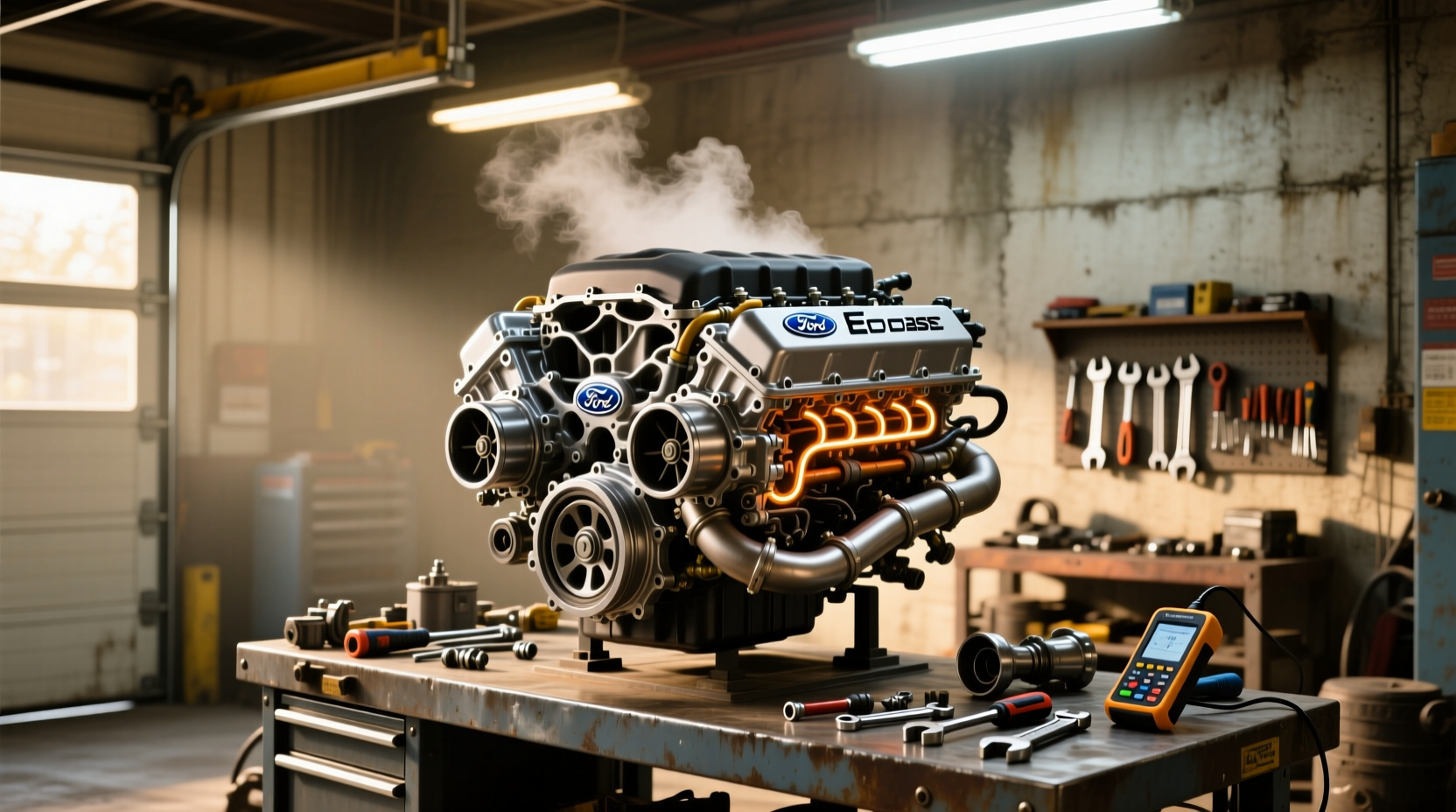
If you're asking what engine does a Ford F-150 EcoBoost have, the answer is a twin-turbocharged 3.5L V6 engine designed for high power and efficiency. When deciding how to choose a Ford F-150 EcoBoost engine, focus on generation (2011–2016, 2017–2020, or 2021–present), trim level, towing needs, and fuel type requirements. The standard 3.5L EcoBoost delivers up to 400 hp and 500 lb-ft of torque, while the High-Output version offers 450 hp and 510 lb-ft—ideal for Raptor or Limited trims. Avoid early models (2011–2013) if reliability is a top concern due to known turbo and cooling issues 1. For most buyers seeking balance, the third-generation (2021+) standard EcoBoost offers strong performance, improved durability, and broad compatibility.
📍 About the Ford F-150 EcoBoost Engine
The Ford F-150 EcoBoost engine refers specifically to the 3.5-liter twin-turbocharged V6 engine introduced in 2011 as part of Ford’s strategy to replace larger naturally aspirated engines with more efficient, turbocharged alternatives 2. This engine uses direct fuel injection, twin independent variable camshaft timing (Ti-VCT), and twin turbochargers to deliver performance comparable to traditional V8s while improving fuel economy and reducing emissions.
This engine is ideal for users who need strong towing capacity, off-road capability, or daily driving performance without sacrificing too much fuel efficiency. It's commonly found in higher trims like Lariat, King Ranch, Platinum, Limited, and the off-road-focused Raptor. Buyers considering heavy hauling, trailer towing, or performance driving will find this engine particularly relevant when evaluating what to look for in a Ford F-150 EcoBoost engine.
📈 Why the Ford F-150 EcoBoost Engine Is Gaining Popularity
Since its debut, the 3.5L EcoBoost has become one of the most popular engine options in the F-150 lineup. Its rise reflects broader industry trends toward downsizing and forced induction—using smaller, turbocharged engines to achieve better power-to-efficiency ratios.
Consumers are increasingly choosing the EcoBoost over the 5.0L V8 not just for fuel savings, but for superior low-end torque delivery, which enhances real-world drivability and towing responsiveness. Additionally, the integration of advanced materials like aluminum blocks reduces overall vehicle weight, improving handling and braking performance.
Another reason for its popularity is continuous improvement across generations. Each update brought measurable gains in horsepower, torque, transmission refinement, and thermal management. As a result, later models address many of the early reliability concerns, making the EcoBoost a more trustworthy option today than it was a decade ago.
🔧 Types and Variants of the F-150 EcoBoost Engine
Understanding the different versions is critical when determining how to choose a Ford F-150 EcoBoost engine. There are two main variants: the standard 3.5L EcoBoost and the High-Output 3.5L EcoBoost, each available across multiple model years and generations.
✅ Standard 3.5L EcoBoost V6
- Available Years: 2011–Present
- Horsepower: 365 hp (Gen 1), 375 hp (Gen 2), 400 hp (Gen 3)
- Torque: 420–500 lb-ft depending on generation
- Fuel Requirement: Regular unleaded gasoline (87 octane)
Best For: Daily drivers, moderate towing (up to 13,500 lbs), family use, and general-purpose truck owners.
Pros:
- Balanced performance and fuel economy
- No requirement for premium fuel
- Widely available across trims and configurations
- Strong resale value
Cons:
- Earlier generations had known turbo and cooling system issues
- Slightly lower towing capacity than 5.0L V8 in some configurations
⚡ High-Output 3.5L EcoBoost V6
- Available Years: 2017–Present (F-150 Raptor, Limited trim)
- Horsepower: 450 hp @ 5,000 rpm
- Torque: 510 lb-ft @ 3,500 rpm
- Fuel Requirement: Premium unleaded gasoline (91 octane recommended)
- Max Towing: 8,200 lbs
Best For: Off-road enthusiasts, high-performance applications, and those prioritizing maximum acceleration and payload responsiveness.
Pros:
- Significantly higher output than standard EcoBoost
- Optimized for extreme conditions (e.g., desert running in Raptor)
- Enhanced cooling and oiling systems
Cons:
- Requires premium fuel, increasing operating cost
- Lower towing capacity due to performance tuning
- Limited availability (only on select trims)
📊 Key Features and Specifications to Evaluate
When researching what to look for in a Ford F-150 EcoBoost engine, consider these technical and practical factors:
⚙️ Generation and Model Year
Each generation brings improvements in power, efficiency, and reliability. Here’s a quick reference:
| Generation | Years | Horsepower | Torque | Transmission | Key Upgrades |
|---|---|---|---|---|---|
| 1st Gen | 2011–2016 | 365 hp | 420 lb-ft | 6-speed auto | First turbo V6 in F-150 |
| 2nd Gen | 2017–2020 | 375 hp | 470 lb-ft | 10-speed auto | Electronic wastegates, dual injection |
| 3rd Gen | 2021–Present | 400 hp | 500 lb-ft | 10-speed auto | Improved durability, higher redline |
🚚 Towing and Payload Capacity
The EcoBoost excels in towing, especially the third-gen model with up to 13,500 lbs capacity. However, actual numbers depend on cab size, bed length, axle ratio, and equipment package. Always verify using Ford’s official towing calculator for your specific configuration.
⛽ Fuel System and Efficiency
Fuel economy ranges from 17 city / 25 highway MPG (standard EcoBoost) to N/A for High-Output models (which don’t publish EPA ratings). The second and third generations use port + direct injection, reducing carbon buildup compared to first-gen’s direct-only system.
🧰 Transmission and Drivetrain
All second- and third-gen EcoBoost trucks use a 10-speed automatic transmission, offering smoother shifts and better gear spacing. Four-wheel drive is optional and recommended for off-road or slippery conditions.
✅ Pros and Cons: Who Should Buy It?
Advantages
- High Torque Output: Delivers strong pulling power at low RPMs, ideal for towing and hauling.
- V8-Level Performance: Matches or exceeds the 5.0L V8 in torque while being more fuel-efficient.
- Lightweight Aluminum Construction: Improves weight distribution and fuel economy.
- Continuous Refinement: Later models fix early design flaws and offer better longevity.
Disadvantages
- Potential Reliability Issues (Early Models): First-gen units may experience turbo failures, exhaust manifold cracks, or coolant leaks 1.
- Fuel Cost (High-Output): Requires premium gas, increasing long-term ownership costs.
- Complex Maintenance: Turbo systems and intercoolers require specialized knowledge for repairs.
📋 How to Choose a Ford F-150 EcoBoost Engine: Step-by-Step Guide
Follow this checklist to ensure you’re making an informed choice based on your needs and budget:
- Determine Your Use Case: Are you towing heavy trailers? Driving off-road? Commuting daily? Choose standard EcoBoost for mixed use; High-Output only if you need peak performance.
- Select the Right Generation: Prioritize 2017+ models for the 10-speed transmission and improved turbos. 2021+ offers best reliability and performance.
- Check Trim Compatibility: High-Output is only available on Raptor and Limited trims. Standard EcoBoost is widely available.
- Verify Service History (Used Trucks): Look for records of turbocharger inspections, intercooler cleaning, and coolant system maintenance.
- Avoid These Red Flags:
- Unexplained overheating or coolant loss (sign of cracked manifold)
- Whining turbo noises or lagging acceleration
- Excessive oil consumption (may indicate turbo seal failure)
- Lack of service documentation
- Confirm Fuel Requirements: Standard EcoBoost runs on regular fuel; High-Output requires premium. Using lower-octane fuel in High-Output can cause knock and reduced performance.
- Test Drive: Pay attention to smoothness of turbo spool-up, transmission shifts, and any unusual vibrations or sounds.
💰 Price & Market Insights
Pricing varies significantly by model year, trim, and condition. As of 2024:
- New F-150 with Standard EcoBoost: $50,000–$65,000 depending on trim and options
- New Raptor with High-Output EcoBoost: $75,000–$90,000+
- Used 2017–2020 Models: $30,000–$50,000
- Used 2011–2016 Models: $18,000–$30,000
Value Tip: The 2017–2020 second-gen models offer excellent value—significant upgrades over first-gen, yet priced below newer models. Third-gen trucks command a premium due to higher output and modern features.
Note: Prices may vary by region, dealer incentives, and supply chain conditions. Always check current MSRP and invoice pricing through official Ford channels or trusted automotive platforms.
🚚 Top-Seller & Competitive Analysis
The 3.5L EcoBoost competes with other F-150 engine options. Here’s how they stack up in the 2025 lineup:
| Engine | Horsepower | Torque | Max Towing | Fuel Economy (MPG) |
|---|---|---|---|---|
| 2.7L EcoBoost V6 | 325 hp | 400 lb-ft | 8,400 lbs | 19/25 |
| 5.0L V8 | 400 hp | 410 lb-ft | 12,900 lbs | 16/24 |
| 3.5L EcoBoost V6 | 400 hp | 500 lb-ft | 13,500 lbs | 17/25 |
| PowerBoost Hybrid V6 | 430 hp | 570 lb-ft | 11,200 lbs | 22/24 |
| High-Output EcoBoost | 450 hp | 510 lb-ft | 8,200 lbs | N/A |
Takeaway: The standard 3.5L EcoBoost leads in torque and towing among non-hybrid options. The PowerBoost offers better fuel economy and electric functionality but less towing capacity. The High-Output is unmatched in raw power but sacrifices utility.
👥 Customer Feedback Synthesis
Based on aggregated owner reviews and forum discussions:
👍 Common Praise
- “Smooth, powerful acceleration—even with a full load.”
- “Tows my 8,000-lb trailer effortlessly on highways.”
- “Love the quiet idle and responsive throttle.”
- “Third-gen feels bulletproof after 50k miles.”
👎 Common Complaints
- “Turbo failed at 60k miles—expensive repair.”
- “Intercooler collects water; needs periodic draining.”
- “First-gen had rough cold starts and oil consumption.”
- “Premium fuel requirement adds up quickly on High-Output.”
🔧 Maintenance, Safety & Legal Considerations
Proper maintenance is crucial for long-term reliability:
- Oil Changes: Use full-synthetic oil every 7,500–10,000 miles. Shorter intervals under heavy load.
- Intercooler Drain: Check and drain condensation regularly to prevent water ingestion.
- Cooling System: Inspect hoses, radiator, and turbo coolant lines for leaks—especially on pre-2017 models.
- Software Updates: Ensure PCM and transmission modules are up to date via dealership.
Safety-wise, ensure all driver-assist systems (if equipped) are functional, and brakes are inspected regularly due to increased performance. No special legal restrictions apply to stock EcoBoost engines, but modifications (e.g., tuning, exhaust) may affect emissions compliance—verify local regulations before altering the engine.
📌 Conclusion: Making Your Final Decision
The Ford F-150 EcoBoost engine remains a compelling choice for buyers seeking a blend of power, efficiency, and versatility. If you're trying to decide how to choose a Ford F-150 EcoBoost engine, here’s a summary:
- If you need maximum towing and balanced daily use: Choose the third-generation (2021+) standard 3.5L EcoBoost.
- If you prioritize off-road performance or track-like response: Opt for the High-Output version in a Raptor or Limited trim—but be prepared for higher fuel costs.
- If budget is tight and reliability isn't critical: A well-maintained 2017–2020 second-gen model offers great value.
- Avoid early 2011–2013 models unless thoroughly inspected and priced accordingly.
Always verify specifications with the manufacturer, inspect used vehicles carefully, and test drive under real-world conditions before buying.
❓ FAQs
What engine does a Ford F-150 EcoBoost have?
The Ford F-150 EcoBoost is powered by a 3.5-liter twin-turbocharged V6 engine. It comes in standard and high-output variants, delivering between 365 and 450 horsepower depending on the model year and trim.
How reliable is the 3.5L EcoBoost engine?
Reliability has improved over time. First-generation models (2011–2016) had issues with turbos and cooling systems. Second- and third-gen engines are significantly more durable, especially with proper maintenance.
Does the EcoBoost require premium fuel?
The standard 3.5L EcoBoost runs on regular unleaded (87 octane). The High-Output version recommends premium fuel (91 octane) for optimal performance and engine protection.
Can the 3.5L EcoBoost tow 10,000 pounds?
Yes, the standard 3.5L EcoBoost can tow up to 13,500 pounds when properly equipped. Always confirm towing capacity based on cab, bed, axle ratio, and package using Ford’s official towing guide.
What are common problems with the 3.5L EcoBoost V6?
Early models may suffer from turbocharger failure, exhaust manifold cracking, and coolant leaks. Later generations have addressed many of these issues, though intercooler water accumulation and high-mileage oil consumption remain occasional concerns.




 浙公网安备
33010002000092号
 浙B2-20120091-4