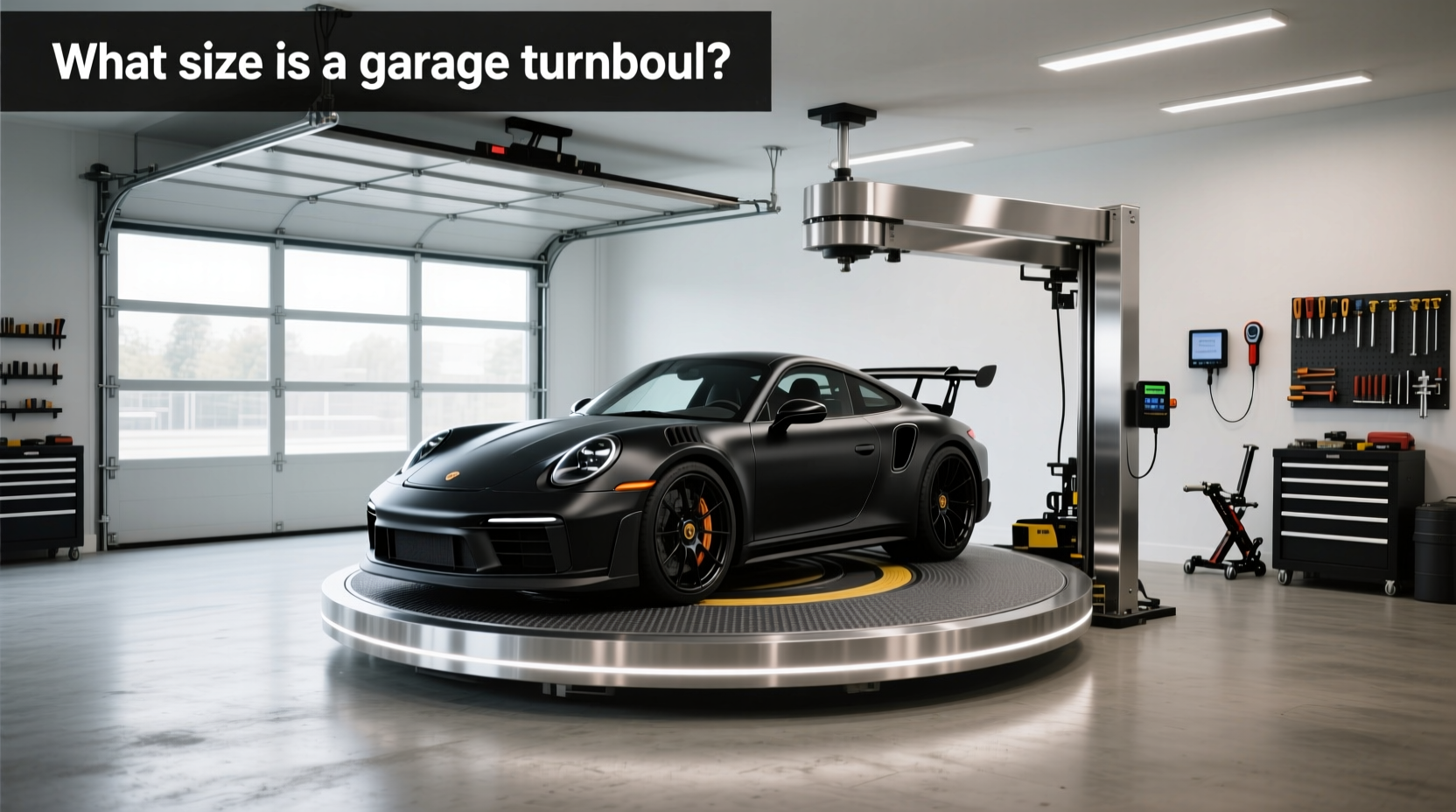
If you're asking how to choose a garage car rotator or wondering what size is a garage turntable, start here: most residential models have a standard diameter of 4.5 meters (14.7 feet), with a recommended clearance zone of at least 6.5 meters (21.3 feet) to prevent collisions during rotation 12. For larger vehicles like SUVs or trucks, consider a 5.0–6.0 meter model. Load capacity should match your heaviest vehicle—typically between 3,000 kg (6,614 lbs) and 5,000 kg (11,023 lbs). Avoid undersized installations in tight spaces; always verify local building codes and consult a professional installer before purchase.
About Garage Car Rotators: What Size Is a Garage Turntable?
A garage car rotator, also known as a car turntable or vehicle turntable, is a rotating platform installed in garages or driveways to allow cars to be turned 360 degrees without needing to reverse out. This eliminates tight backing maneuvers, especially useful in narrow driveways, underground parking, or compact home garages.
The key specification when selecting one is its diameter, commonly referred to when asking what size is a garage turntable?. The standard size for most residential applications is 4.5 meters (14.7 feet), designed to accommodate average sedans and mid-sized SUVs 3. However, sizes can range from 4.0 meters (13.1 ft) up to 6.0 meters (19.7 ft) or more for custom builds.
It's important to distinguish between the turntable’s physical diameter and the required clearance zone. While the unit may be 4.5 meters wide, a minimum of 6.5 meters (21.3 feet) of open space around it is recommended to ensure safe operation and avoid contact with walls, pillars, or other parked vehicles 4.
Why Garage Car Rotators Are Gaining Popularity
HomeAs luxury features go, garage car rotators are increasingly common among homeowners seeking convenience, safety, and aesthetic appeal. One major driver is urban infill development—where lots are narrower and garages are deeper, making forward-exit parking difficult. A turntable solves this by enabling drivers to enter nose-first and exit the same way.
Another growing use case is among collectors who display high-value vehicles. A rotating platform allows for dynamic showcasing in glass-walled showrooms or private museums. Real estate developers also install them as premium differentiators in high-end properties, potentially increasing marketability ✨.
From a practical standpoint, reducing reversing distances improves safety, especially in homes with children or pets. Additionally, automated systems integrate well with smart home platforms, allowing control via app or remote 📱.
Types and Variants of Garage Car Turntables
When exploring how to choose a garage car rotator, understanding the available types helps match functionality to your space and needs.
📍 Surface-Mounted Turntables
These units sit above ground level and are bolted directly onto a concrete pad. They require minimal excavation and are often quicker to install than recessed models.
- Pros: Lower installation cost, easier retrofitting, no need for deep foundations
- Cons: Visible platform edge, slight trip hazard, less seamless integration with flooring
🔧 Flush-Mounted (Recessed) Turntables
Installed below floor level, these create a flush surface when not in use, blending seamlessly into driveways or garage floors.
- Pros: Aesthetically clean, safer foot traffic, ideal for modern architectural designs
- Cons: Higher installation complexity and cost, requires precise pit construction, potential drainage concerns
🏭 Custom-Size & High-Capacity Models
Built to order for non-standard vehicles (e.g., limousines, classic trucks) or commercial applications such as dealerships and auto shows.
- Pros: Tailored fit, supports heavier loads (up to 10,000 lbs), customizable finishes
- Cons: Significantly higher price, longer lead times, specialized engineering needed
Key Features and Specifications to Evaluate
To make an informed decision on what to look for in a garage car rotator, assess these core specifications:
📏 Diameter and Clearance Requirements
As noted earlier, 4.5 meters is standard. But if you own a large pickup or full-size SUV, consider a 5.0–6.0 meter model to maintain adequate clearance during rotation 1. Measure your vehicle’s turning radius and add at least 30 cm (12 inches) on each side.
🧰 Load Capacity
Standard capacities range from 3,000 kg (6,614 lbs) to 5,000 kg (11,023 lbs), sufficient for most passenger vehicles 5. Heavy-duty models support up to 10,000 lbs, suitable for trucks or modified vehicles 6. Always check your vehicle’s curb weight and GVWR before selecting.
⚡ Power and Electrical Needs
Most units operate on 230V–240V AC power and may require a dedicated circuit. Confirm electrical availability at the installation site. Battery backup options exist for uninterrupted operation during outages.
✅ Safety Mechanisms
Look for models with built-in safety features such as:
- Obstacle detection sensors
- Emergency stop buttons
- Overload protection
- Child lock functions
Pros and Cons of Installing a Garage Car Turntable
| Pros | Cons |
|---|---|
| Eliminates risky reversing in tight spaces | High upfront cost ($15,000–$20,000+) |
| Enables forward-only entry/exit design | Requires significant floor space and structural prep |
| Enhances property aesthetics and value | Professional installation mandatory |
| Ideal for vehicle collectors and display setups | Potential maintenance over time (seals, motors) |
| Integrates with smart home systems | May require permits or zoning approval |
How to Choose a Garage Car Rotator: Step-by-Step Buying Guide
Follow this checklist to answer what size is a garage turntable best for your situation and how to choose one wisely.
📋 Step 1: Assess Your Vehicle Dimensions
Measure the length and width of your largest intended vehicle. Use manufacturer specs if unsure. Ensure the turntable diameter exceeds the vehicle’s diagonal footprint.
📍 Step 2: Evaluate Available Space
Mark out a circle of at least 6.5 meters (21.3 ft) in diameter. If space is limited, explore low-profile (27mm height) or custom designs that maximize usable area 7.
🔧 Step 3: Decide on Installation Type
Choose based on budget and design goals:
- Surface-mounted: Faster, cheaper, good for retrofits
- Flush-mounted: Sleeker look, better integration, higher labor cost
⚙️ Step 4: Verify Technical Compatibility
Check:
- Power supply (230V–240V outlet nearby?)
- Floor strength (concrete slab thickness ≥ 150mm?)
- Drainage plan (for outdoor/recessed units)
❗ Red Flags to Avoid
- Models without overload or obstacle sensors
- Suppliers who don’t provide detailed installation manuals
- Units lacking third-party safety certifications (if applicable in your region)
- Quotes that exclude delivery or setup fees
Price & Market Insights
Residential garage turntables typically start at $15,000–$20,000 USD, excluding installation 87. Custom or industrial-grade models can exceed $50,000 depending on size, load rating, and finish.
Cost factors include:
- Diameter and load capacity
- Installation complexity (pit vs. surface)
- Material upgrades (stainless steel, powder coating)
- Smart controls and integration features
Top-Seller & Competitive Analysis
Below is a comparison of leading brands offering solutions relevant to how to choose garage car rotator, what size is a garage turntable?
| Supplier | Standard Diameter | Load Capacity | Installation Type | Starting Price Range |
|---|---|---|---|---|
| Pre-Motion | 4.5–6.0 m | 3,000–5,000 kg | Recessed/Surface | $18,000–$25,000 |
| CarTurner | 4.06 m (13'4") | 3,000 kg | Surface/Flush | $15,000–$20,000 |
| Rotoquip | 4.5 m | 3,000 kg | Surface | $17,000–$22,000 |
| Carotation | 4.27–6.1 m (14'–20') | 4,536 kg (10,000 lbs) | Flush | $22,000–$35,000 |
| NOSTEC LIFT | 4.5–6.0 m | 2,000–5,000 kg | Pit/Floor | $16,000–$24,000 |
Note: All prices are approximate and may vary by region and configuration. Check manufacturer websites for updated specs and dealer networks.
Customer Feedback Synthesis
Based on aggregated buyer reviews and expert analyses, here are the most frequent points raised:
• Smooth, quiet motor performance
• Professional appearance after flush installation
• Elimination of difficult reversing scenarios
• Durable build quality in top-tier models
• Unexpected additional costs (e.g., excavation, electrical work)
• Long wait times for custom orders
• Complexity of DIY attempts
• Lack of post-sale technical support from some suppliers
Buyers emphasize the importance of hiring certified installers and getting full project estimates upfront.
Sourcing & Supplier Tips
Purchase through authorized dealers or directly from manufacturers to ensure warranty validity. Reputable suppliers often offer:
- Detailed CAD drawings for pre-installation planning
- On-site consultation services
- International shipping options
Before finalizing any order:
- Verify return policy and warranty terms (typically 1–5 years)
- Request references or case studies
- Confirm compliance with regional electrical and safety standards
Maintenance, Safety & Legal Considerations
Regular maintenance extends lifespan and ensures reliability. Recommended practices include:
- Inspect seals and bearings annually
- Clean debris from rotation track monthly
- Lubricate moving parts per manufacturer schedule
- Test safety sensors quarterly
Safety-wise, never allow foot traffic on the platform while in motion. Install warning lights or audible alerts if used in shared areas.
Legally, some jurisdictions require permits for structural modifications or outdoor installations. Always confirm local regulations with your municipality before breaking ground. Building inspectors may require engineering certification for load-bearing components.
Conclusion: Choosing the Right Garage Car Rotator
If you’re deciding how to choose a garage car rotator or determining what size is a garage turntable, prioritize fit, safety, and long-term usability. For most homes, a 4.5-meter diameter turntable with a 3,000–5,000 kg load capacity is ideal. Opt for flush mounting if aesthetics matter, or surface mounting for faster, lower-cost installation.
Always involve a qualified contractor early in the process. Measure twice, verify power and space requirements, and select models with robust safety features. When in doubt, choose a slightly larger size to accommodate future vehicle changes.
FAQs
❓ What size is a standard garage turntable?
The standard diameter for most residential garage turntables is 4.5 meters (14.7 feet), accommodating vehicles up to mid-size SUVs. Larger models (5.0–6.0 m) are available for bigger trucks or custom applications.
❓ Can I install a car turntable myself?
While technically possible, professional installation is strongly recommended due to electrical, structural, and alignment requirements. Improper setup risks mechanical failure or safety hazards 9.
❓ How much weight can a garage car rotator hold?
Most standard models support 3,000–5,000 kg (6,614–11,023 lbs). Heavy-duty versions can handle up to 10,000 lbs, suitable for large pickups or modified vehicles. Always check your vehicle's gross weight before purchasing.
❓ Do garage turntables increase home value?
They can enhance marketability in luxury or collector-focused markets, though exact ROI varies. Their impact depends on buyer preferences, regional trends, and overall property positioning.
❓ Are there ongoing maintenance needs?
Yes. Regular cleaning, lubrication, and annual inspections of motors, seals, and sensors help ensure longevity. Follow the manufacturer’s maintenance schedule for optimal performance.




 浙公网安备
33010002000092号
 浙B2-20120091-4