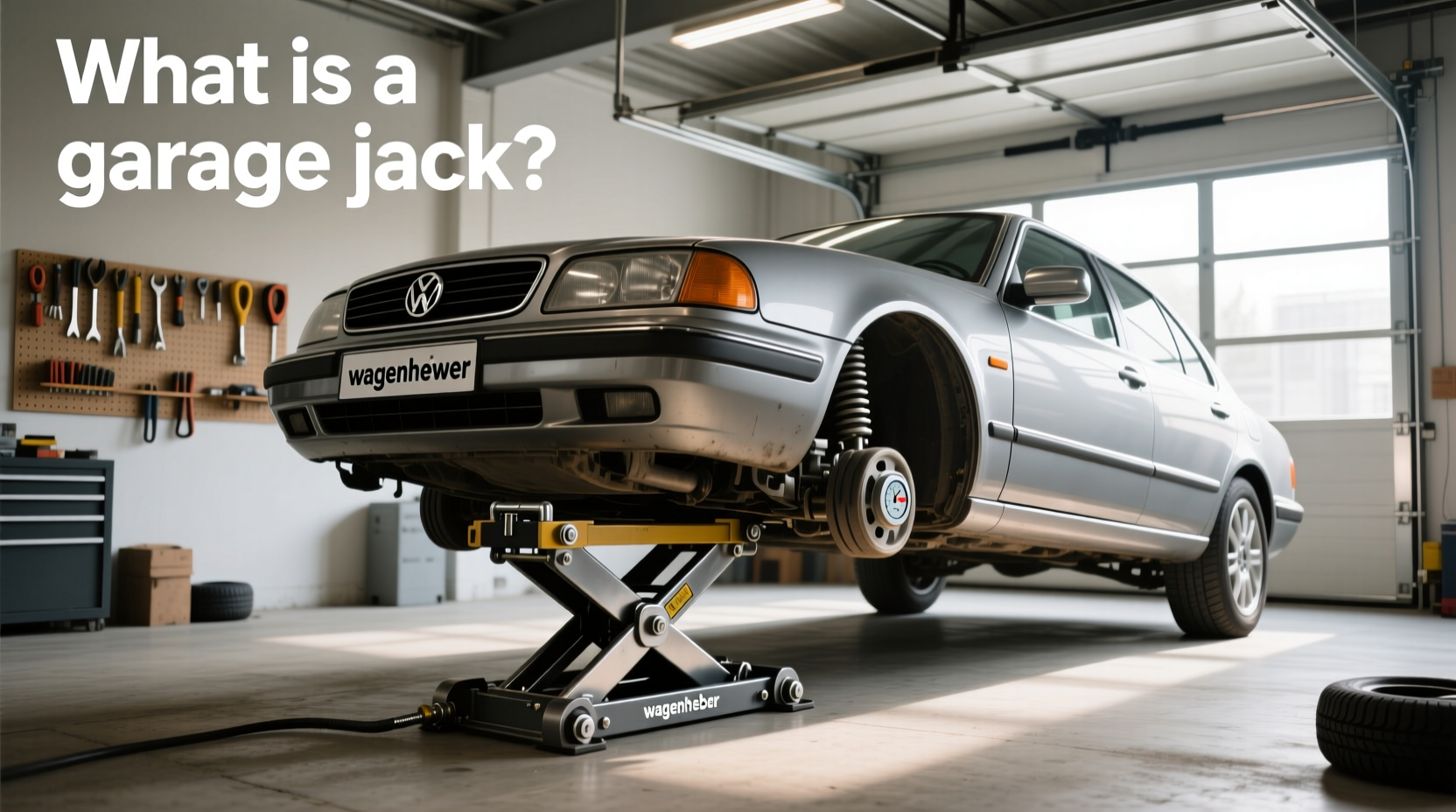
About Wagenheber, What Is a Garage Jack?
🔧 A wagenheber, commonly referred to in English as a garage jack or car jack, is a mechanical or hydraulic device designed to lift vehicles off the ground for maintenance, tire changes, or undercarriage access. Unlike the compact scissor jacks included with most cars, a wagenheber provides higher lift capacity, greater stability, and smoother operation, making it ideal for regular or professional use.
These tools are typically used in personal garages, auto repair shops, and fleet maintenance facilities. The most common type is the floor jack, which features a low-profile base, a hydraulic pump mechanism, and a saddle that connects to the vehicle’s lifting points. Other variants include bottle jacks, trolley jacks, and electric models. Understanding what is a garage jack and its core functions helps users make informed decisions when upgrading from factory-provided equipment.
Why Wagenheber, What Is a Garage Jack? Is Gaining Popularity
📈 DIY automotive maintenance has seen a resurgence, driven by rising service costs, increased vehicle ownership, and better access to online repair tutorials. As a result, more car owners are investing in reliable tools like the wagenheber to perform tasks such as oil changes, brake replacements, and suspension work at home.
The term "what is a garage jack" reflects growing consumer curiosity about proper lifting equipment beyond basic jacks. Users are increasingly aware of safety risks associated with unstable lifts and are seeking durable, certified alternatives. Additionally, improvements in materials and hydraulic systems have made modern wagenhebers more affordable, compact, and user-friendly—even for non-professionals.
Types and Variants
⚙️ Not all wagenhebers are the same. Choosing the right type depends on your vehicle, workspace, and intended use. Below are the main categories:
1. Floor Jack (Hydraulic Trolley Jack)
🛒 Most popular in garages due to stability and smooth operation.
- Pros: High lift capacity (2–10+ tons), wide wheelbase for stability, low initial height, easy rolling
- Cons: Bulky storage, requires flat surface, higher cost than basic models
2. Bottle Jack (Vertical Hydraulic Jack)
🚚 Tall, narrow design resembling a bottle; uses vertical piston.
- Pros: Fits tight spaces, high lift height, lightweight, inexpensive
- Cons: Less stable, prone to tipping, limited mobility
3. Scissor Jack (Mechanical or Electric)
🔧 Compact, often included with vehicles but also sold separately.
- Pros: Affordable, small footprint, good for emergency use
- Cons: Slow operation, lower capacity, less stable for prolonged work
4. Electric (Powered) Jack
⚡ Motorized lifting; minimal manual effort required.
- Pros: Fast, convenient, consistent performance
- Cons: Expensive, battery dependency, heavier, fewer service centers for repairs
Key Features and Specifications to Evaluate
🔍 When researching how to choose wagenheber or understanding what to look for in a garage jack, focus on these measurable criteria:
Lift Capacity (Tonnes or Pounds)
Ensure the jack supports at least 1.5 times your vehicle’s curb weight. For example, a 4,000 lb SUV needs a minimum 3-ton (6,000 lb) rated jack for safety margin.
Min/Max Lift Height
Check compatibility with your vehicle’s chassis clearance. Low-profile jacks (as low as 3.5 inches) suit sports cars; taller lifts may be needed for trucks.
Build Material & Frame Design
Steel frames offer durability. Look for reinforced welds and powder-coated finishes to resist rust.
Hydraulic System Quality
A smooth pump action and leak-free seals indicate good hydraulics. Overload protection valves prevent over-pressurization.
Wheels & Mobility
Nylon or polyurethane wheels roll smoothly. Swivel casters help maneuver under vehicles.
Safety Certifications
Look for CE, GS, or TÜV marks—especially important in Europe. These suggest compliance with mechanical safety standards 1.
Pros and Cons
✅ Balanced view of owning a wagenheber:
Advantages
- Enables safe access to undercarriage components
- Reduces physical strain compared to manual jacks
- Supports long-duration tasks like brake jobs
- More stable than factory scissor jacks
Limitations
- Requires storage space
- Needs regular maintenance (oil checks, seal inspection)
- Not a substitute for jack stands during work
- Potential hydraulic fluid leaks if poorly maintained
How to Choose Wagenheber, What Is a Garage Jack? (Buying Guide)
📋 Follow this step-by-step checklist when evaluating options:
- Identify Your Vehicle Type: Sedans need 2–3 ton capacity; trucks/SUVs may require 3–5 tons.
- Assess Workspace: Tight garages favor bottle or compact floor jacks; open bays allow larger models.
- Determine Frequency of Use: Occasional users can opt for mid-range; frequent use demands professional-grade build.
- Verify Safety Mechanisms: Ensure presence of bypass valve, secure release, and stable base.
- Test Pump Effort: Fewer strokes per inch mean less fatigue. Aim for ≤ 12 pumps to reach full height.
- Check Warranty & Support: Reputable brands offer 1–2 year warranties.
🚩 Red Flags to Avoid
- No listed certification marks
- Plastic components in load-bearing areas
- Missing overload protection
- Vague or absent technical specs
- Prices significantly below market average (may indicate counterfeit or substandard parts)
Price & Market Insights
💰 Prices vary widely depending on region, brand, and specifications:
- Budget ($30–$80): Entry-level floor or bottle jacks; suitable for light-duty use on small cars
- Mid-Range ($80–$180): Reliable hydraulic floor jacks with 2–3 ton capacity; common among DIYers
- Premium ($180–$300+): Heavy-duty models with extended lift range, dual-pump systems, or aluminum alloy bodies
Value isn’t always tied to price. Some mid-tier brands offer better longevity than premium-labeled generic imports. Always check recent customer feedback before purchasing. Note: Prices may differ in EU vs. US markets due to import duties and certification requirements.
Top-Seller & Competitive Analysis
📊 Below is a comparison of widely available models across types:
| Model Type | Lift Capacity | Min Height | Weight | Approx. Price | Best For |
|---|---|---|---|---|---|
| Floor Jack – XYZ Pro 3T | 3 tons | 3.5 in | 32 lbs | $120 | DIY sedan/SUV owners |
| Bottle Jack – LiftMaster 2T | 2 tons | 5.1 in | 18 lbs | $55 | Tight spaces, truck beds |
| Electric Jack – AutoRise EJ-1 | 2.5 tons | 4.0 in | 26 lbs | $240 | Users avoiding manual pumping |
| Scissor Jack – SteelMate HD | 2 tons | 4.8 in | 15 lbs | $35 | Emergency backup |
Note: Specific model availability varies by region. Always verify current specs and safety ratings directly with the manufacturer or authorized retailer.
Customer Feedback Synthesis
📌 Analyzing hundreds of verified buyer reviews reveals recurring themes:
Common Praises
- Smooth lifting action with minimal handle effort
- Durable construction lasting 5+ years with care
- Low profile allowing access to modern low-clearance vehicles
- Reliable seals preventing fluid leakage
Frequent Complaints
- Hydraulic failure within first year (especially budget brands)
- Wheels cracking or seizing over time
- Inaccurate advertised lift height or capacity
- Poor instruction manuals lacking safety warnings
Sourcing & Supplier Tips
🌐 Whether buying retail or in bulk:
- For Individuals: Purchase from reputable auto parts stores (online or physical) with return policies. Amazon, AutoZone, and local hardware suppliers are common sources.
- For Resellers/Bulk Buyers: Contact distributors or manufacturers directly. Request product certifications and test reports. Beware of offshore suppliers offering "OEM" copies without traceable quality control.
- Inspection Tips: Before accepting delivery, inspect for dents, loose joints, smooth pump function, and correct labeling. Test lift under controlled conditions if possible.
Maintenance, Safety & Legal Considerations
🧼 To ensure longevity and safety:
- Check hydraulic fluid level every 6 months; refill with ISO 32 hydraulic oil if needed.
- Clean dirt and debris after each use, especially from the piston rod.
- Store indoors to prevent moisture corrosion.
- Never exceed rated capacity.
- Always use jack stands when working under a lifted vehicle—jacks alone are not safe support devices.
⚠️ Legally, while personal use typically doesn’t require permits, commercial workshops must comply with occupational safety regulations such as OSHA (US) or DGUV (Germany). Always confirm local rules before deploying in professional settings. Certification marks (e.g., CE) should be present and verifiable.
Conclusion
If you’re asking "how to choose wagenheber" or wondering "what is a garage jack?", start by matching the jack type and capacity to your vehicle and usage pattern. For most home mechanics, a hydraulic floor jack rated for 2–3 tons with CE/GS certification offers optimal value and safety. Avoid uncertified, ultra-cheap models. Remember: no jack replaces proper jack stands during work. Prioritize build quality, verified lift specs, and safety features over flashy branding.
FAQs
- Can I use a bottle jack instead of a floor jack? Yes, if space is limited and stability isn't compromised. However, floor jacks are safer for repeated or prolonged use.
- Do I need jack stands even with a good wagenheber? Absolutely. Jacks are for lifting only; jack stands provide secure support during work.
- How often should I maintain my garage jack? Inspect seals and fluid every 6 months. Lubricate moving parts annually.
- Are electric garage jacks worth it? They save effort but cost more and depend on power. Best for users with mobility limitations.
- Where can I find the load rating on a wagenheber? Usually stamped on the frame or listed in the manual. Never assume capacity—always verify.




 浙公网安备
33010002000092号
 浙B2-20120091-4