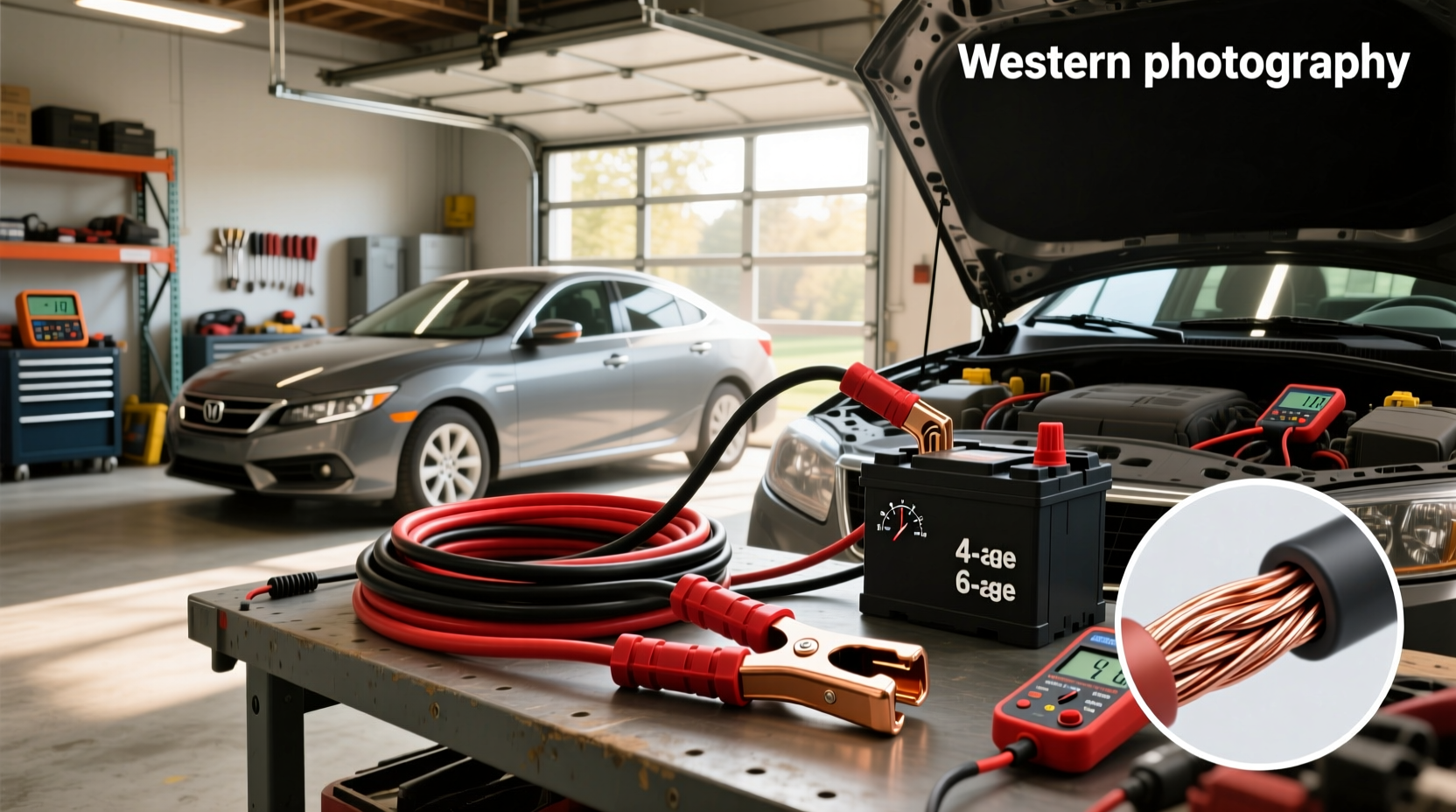
The right gauge wire for jumping cars depends on your vehicle’s engine size. For most passenger vehicles like sedans and small SUVs, 4-gauge or 6-gauge jumper wires provide optimal power transfer with manageable thickness 1. Smaller cars with 4-cylinder engines may work with 10-gauge cables, but they deliver less amperage and can require longer charging before starting 2. Larger trucks and SUVs with V8 or diesel engines need thicker 2-gauge or even 1-gauge cables to ensure sufficient current flow 3. When choosing jumper wire for car, always prioritize solid copper construction, thick insulation, and heavy-duty clamps—avoid copper-plated aluminum as it degrades over time and reduces conductivity 4.
About Jumper Wire for Car, What Gauge Wire for Jumping Cars?
Jumper wires—commonly known as jumper cables—are essential tools used to transfer electrical power from a functioning vehicle battery to a dead one, enabling a jump-start. The term "jumper wire for car" typically refers to insulated copper cables with alligator-style clamps on each end, designed to connect two automotive batteries safely. Understanding what gauge wire for jumping cars is appropriate ensures that enough electrical current (amperage) flows efficiently from the donor vehicle to revive the stalled engine.
Gauge, in this context, refers to the thickness of the wire measured using the American Wire Gauge (AWG) system. A lower gauge number means a thicker wire, which offers less resistance and allows more current to pass through. This is critical because insufficient current can fail to turn over larger engines or cause overheating in undersized cables. These cables are primarily used during cold weather, battery aging, or alternator failure scenarios when a car won’t start.
Why Jumper Wire for Car, What Gauge Wire for Jumping Cars? Is Gaining Popularity
As vehicle ownership increases globally and extreme weather events become more frequent, preparedness tools like jumper wires are seeing renewed interest. Modern drivers recognize that roadside emergencies often stem from preventable issues like drained batteries, especially in older vehicles or those parked for extended periods. With rising fuel prices and service delays, many prefer self-reliance over towing services.
Additionally, advancements in cable materials and safety features—such as reverse polarity protection and insulated clamp housings—have made modern jumper wires safer and easier to use for non-experts. There's also growing awareness about the importance of matching cable gauge to vehicle type, reducing failed jump attempts. As electric vehicle (EV) adoption grows, traditional internal combustion engine (ICE) owners are investing in reliable emergency kits, further boosting demand for high-quality jumper wires.
Types and Variants
Different types of jumper wires cater to various needs based on engine size, frequency of use, and storage constraints. Here are the main variants:
Standard Copper Jumper Cables ⚡
- Pros: High conductivity, durable, widely available.
- Cons: Heavier than alternatives; lower-end versions may use copper-clad aluminum.
- Best for: Most personal vehicles requiring reliable performance.
Copper-Plated Aluminum Cables 🛠️
- Pros: Lighter weight, lower cost.
- Cons: Lower conductivity; plating wears off over time, exposing less conductive metal underneath 4.
- Best for: Occasional users with small engines who prioritize portability.
Foldable/Jump Starter Kits with Integrated Cables 🔋
- Pros: Compact, include built-in battery; no second vehicle needed.
- Cons: Limited lifespan; require periodic recharging.
- Best for: Urban drivers or those frequently driving alone.
Heavy-Duty Commercial Grade Cables 🚛
- Pros: Extremely thick (1–2 AWG), designed for diesel engines and commercial fleets.
- Cons: Bulky, expensive, difficult to store in compact cars.
- Best for: Trucks, RVs, farm equipment, and fleet operators.
Key Features and Specifications to Evaluate
When evaluating how to choose jumper wire for car, consider these technical and practical factors:
Wire Gauge (AWG) 📊
Lower numbers indicate thicker wires. Match gauge to engine size: 10-gauge for compacts, 6–4 for average cars, 2–1 for large trucks.
Amperage Rating ⚡
Look for peak amperage between 400–800A depending on vehicle class. Higher amps support faster cranking.
Cable Length 📏
10 feet is minimum; 20 feet offers greater flexibility if vehicles can't be positioned closely 3.
Clamp Quality 🔧
Thick, spring-loaded clamps with sharp teeth ensure solid contact. Solid copper clamps outperform plated ones.
Insulation & Jacket Material 🛡️
Rubber or PVC jackets protect against abrasion, moisture, and temperature extremes. Thicker insulation prevents arcing.
Safety Features ✅
Reverse polarity alarms, LED indicators, and protective covers reduce user error risks.
| Vehicle Type | Recommended Gauge | Amperage Range | Use Case |
|---|---|---|---|
| Compact Cars (4-cyl) | 10-gauge | 200–400A | Basic jump starts; may require donor engine run time |
| Sedans / Small SUVs | 6–4 gauge | 400–600A | Most common choice; balances power and ease of use |
| Trucks / V8 Engines | 4–2 gauge | 600–800A+ | High-demand engines; quick starts in cold conditions |
| Diesel Trucks / Commercial | 2–1 gauge | 800A+ | Maximum power delivery; professional-grade reliability |
Pros and Cons
Advantages ✅
- Enables quick recovery from dead battery situations
- Inexpensive compared to towing or repair costs
- Simple to use with proper instructions
- Long lifespan if stored properly
Limitations & Risks ❗
- Requires a second running vehicle (unless using a jump starter pack)
- Incorrect connections can damage electronics or cause sparks
- Poor quality cables may overheat or fail under load
- Not effective if battery is completely dead or damaged
How to Choose Jumper Wire for Car, What Gauge Wire for Jumping Cars?
Follow this step-by-step guide to make an informed decision:
- Identify Your Vehicle Type: Check engine size. 4-cylinder? 6- or 8-cylinder? Diesel?
- Select Appropriate Gauge: Use 10-gauge for small cars, 6–4 for standard vehicles, 2–1 for trucks/SUVs.
- Check Wire Material: Opt for solid copper core. Avoid copper-plated aluminum.
- Evaluate Clamp Design: Look for robust, corrosion-resistant clamps with strong grip.
- Consider Cable Length: 16–20 feet provides flexibility without excessive bulk.
- Inspect Insulation: Thick, flexible jacketing resists cracking in cold weather.
- Look for Safety Add-ons: Reverse polarity warnings improve user safety.
Price & Market Insights
Jumper wire prices vary by gauge, length, material, and brand. Basic 10-gauge sets cost $15–$25, while premium 4-gauge copper cables range from $30–$60. Heavy-duty 1–2 gauge models may exceed $80. Prices may differ by region and retailer.
Higher price doesn’t always mean better performance—check specifications rather than relying on branding. For most consumers, spending $35–$50 on a well-constructed 6-gauge set offers the best value. Always verify return policies and inspect packaging upon delivery to ensure no damage occurred during shipping.
Top-Seller & Competitive Analysis
Popular models emphasize balance between gauge thickness, usability, and safety. While specific brands aren't endorsed here, top-selling products commonly feature:
- Solid copper conductors (not aluminum)
- 4-gauge wire with 20-foot length
- Rubber-insulated handles and clamps
- Reverse polarity protection circuitry
- Storage bag included
| Feature | Budget Option | Mid-Range | Premium |
|---|---|---|---|
| Gauge | 10 AWG | 6 AWG | 4 AWG |
| Length | 10 ft | 16 ft | 20 ft |
| Core Material | Cu-clad Al | Solid Copper | Solid Copper |
| Safety Features | None | Insulated Clamps | Reverse Polarity Alarm |
| Price Range | $15–$25 | $30–$45 | $50–$80 |
Customer Feedback Synthesis
Analysis of verified buyer reviews reveals consistent themes:
Frequent Praises ✅
- "Thick 4-gauge cables started my truck instantly in winter."
- "Easy-to-grip clamps made connection simple, even with gloves."
- "Lasted over five years with seasonal use."
Common Complaints ❌
- "Cables melted when trying to jump a large SUV—too thin at 10-gauge."
- "Clamps corroded after two winters; poor plating quality."
- "Couldn’t reach between vehicles—the 10-foot length was too short."
Sourcing & Supplier Tips
Jumper wires are widely available online and in auto parts stores. When sourcing in bulk—for fleet operations or resale—consider suppliers offering MIL-STD or SAE-compliant testing documentation. Verify wire composition through product specs, not marketing terms like "heavy-duty" or "industrial strength."For individual buyers, reputable retailers with clear return policies reduce risk. Inspect cables upon arrival: check for kinks, brittle insulation, or loose clamps. If purchasing internationally, confirm voltage compatibility isn't an issue—jumper cables themselves are passive components, but integrated jump starters may have regional charger differences.
Maintenance, Safety & Legal Considerations
Store jumper wires coiled loosely in a dry place, away from extreme temperatures. Periodically inspect clamps for corrosion and clean with baking soda/water if needed. Test connectivity annually by attempting a jump under supervision.
Safety practices include turning off both vehicles before connecting, attaching positive first, then negative to unpainted engine metal (not the dead battery’s negative terminal directly). Never allow cables to touch moving parts.
While no universal regulations govern jumper cable design, some regions may have safety certification requirements (e.g., CE, UKCA). Always follow local guidelines and manufacturer instructions. If unsure, consult a certified mechanic before performing electrical work.
Conclusion
Choosing the right jumper wire for car involves balancing gauge, material, length, and safety. If you drive a compact car, a 10-gauge cable may suffice for occasional use. For most sedans and SUVs, opt for 6–4 gauge solid copper cables with 16–20 foot length. Owners of trucks, V8s, or diesel engines should invest in 2–1 gauge heavy-duty sets. Regardless of type, avoid copper-plated aluminum and flimsy clamps. Proper selection enhances reliability and safety during emergencies.
Frequently Asked Questions
Can I use 10-gauge jumper cables for a truck?
While possible in emergencies, 10-gauge cables lack sufficient amperage for reliable truck starts, especially in cold weather. Use 2–4 gauge cables for trucks.
Does longer jumper cable reduce effectiveness?
Yes, increased length adds resistance, slightly reducing power delivery. However, 20-foot cables with low gauge (4 or lower) minimize this effect and offer practical advantages.
Are expensive jumper cables worth it?
Not necessarily. Focus on wire gauge, copper core, and clamp quality rather than price. Well-constructed mid-range cables often outperform overpriced branded sets.
How often should I replace jumper cables?
Inspect annually. Replace if insulation is cracked, clamps are corroded, or connections feel weak. With care, quality cables last 5–10 years.
Can jumper cables be dangerous?
Yes, if misused. Incorrect connections can cause sparks, battery explosions, or damage to vehicle electronics. Always follow proper jump-start procedures.




 浙公网安备
33010002000092号
 浙B2-20120091-4