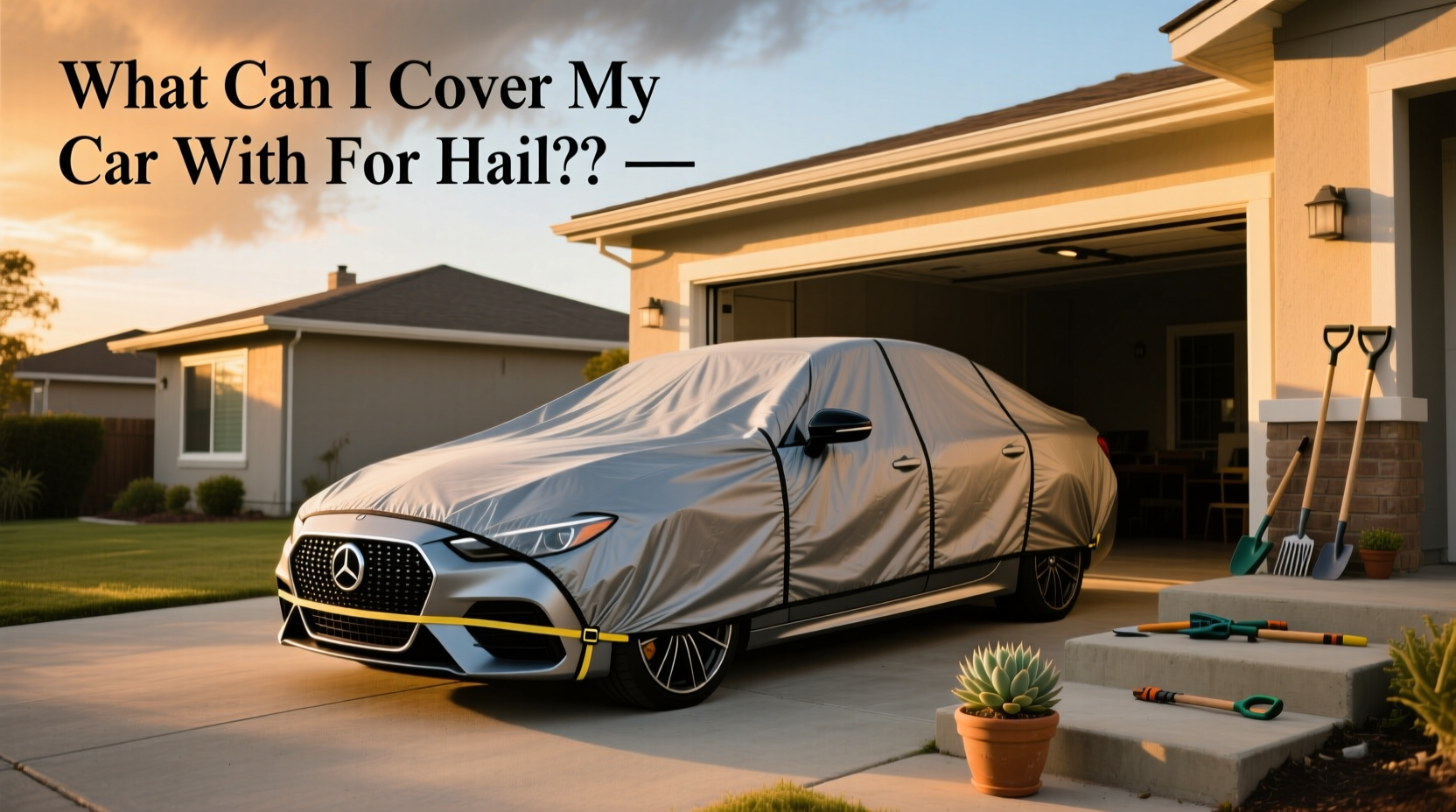
If you're asking what can I cover my car with for hail?, start with multi-layered, padded fabric covers or rigid portable shelters—these offer the most reliable protection. Avoid thin tarps or improvised materials like standard cardboard unless it's an emergency. When learning how to choose hail cover,What can I cover my car with for hail?, prioritize impact resistance, secure fit, and weatherproof anchoring. Temporary solutions like corrugated cardboard boxes may help in sudden storms but aren’t durable. Always check for UV resistance and ventilation to prevent condensation damage.
About Hail Cover, What Can I Cover My Car With for Hail?
A hail cover is a protective barrier designed to shield vehicles from hailstorm damage. These range from soft, padded fabric sheets to semi-rigid or inflatable domes that sit over the car. The core purpose is to absorb or deflect the kinetic energy of falling hailstones, which can range from pea-sized (about 0.25 inches) to baseball-sized (over 2.75 inches) and cause dents, cracked glass, or paint chipping.
Common scenarios include parked cars during seasonal thunderstorms, overnight outdoor storage in hail-prone regions (like the U.S. Great Plains or mountainous areas), or emergency protection when garages aren’t available. Some users deploy them at job sites, RV parks, or dealership lots. The question what can I cover my car with for hail? often arises during weather alerts, emphasizing the need for quick-access, easy-to-deploy options.
🔍Key Insight: Not all car covers are hail-resistant. Standard dust or sun shades lack padding and structural integrity to stop hail impact.
Why Hail Cover, What Can I Cover My Car With for Hail? Is Gaining Popularity
In recent years, extreme weather events have increased in frequency and intensity. According to NOAA, the U.S. experienced over 20 billion-dollar weather disasters in 2023 alone, including widespread hailstorms 1. This has driven consumer interest in affordable, proactive vehicle protection.
Insurance deductibles for hail damage often exceed $1,000, making prevention more cost-effective than repair. Additionally, used car values drop significantly after hail damage—even minor dents reduce resale appeal. As a result, drivers in states like Texas, Colorado, and Nebraska increasingly search for practical answers to what to look for in hail cover,What can I cover my car with for hail?.
Urban dwellers without garages, fleet managers, and outdoor workers are among the fastest-growing user groups. Social media and storm-tracking apps now alert users hours in advance, enabling time to deploy protective gear—making preparedness more feasible than ever.
Types and Variants
Different hail protection methods suit different needs. Here are the main types:
1. Padded Fabric Hail Covers ✅
These are heavy-duty, quilted textile covers made from layered polyester, foam, and sometimes rubberized backing.
- Pros: Lightweight, foldable, relatively affordable ($80–$250), easy to store
- Cons: Requires secure fastening; less effective against large hail if not tightly anchored
2. Rigid Portable Shelters ⚙️
Frame-based pop-up enclosures made from polycarbonate or ABS plastic panels.
- Pros: Superior impact resistance, better airflow, stand off ground
- Cons: Expensive ($400–$1,200), bulky, longer setup time
3. Inflatable Hail Domes 💨
Air-filled vinyl or PVC structures that expand over the vehicle.
- Pros: Quick deployment (under 5 mins), good coverage
- Cons: Vulnerable to punctures, requires power source or pump
4. Corrugated Cardboard Boxes 📦
As noted in some reports, thick cardboard can be used temporarily on the hood and roof during surprise hail 2.
- Pros: Immediately available, low cost
- Cons: Not waterproof, collapses easily, single-use only
5. Garage Add-Ons & Retractable Canopies 🏠
Permanent or semi-permanent structures installed at home.
- Pros: Full protection, long-term value
- Cons: High installation cost, not portable
| Type | Best For | Impact Resistance | Portability | Avg. Price |
|---|---|---|---|---|
| Padded Fabric | Occasional storms, budget users | Medium | High | $80–$250 |
| Rigid Shelter | Frequent hail, premium protection | High | Low | $400–$1,200 |
| Inflatable Dome | Quick response, tech-savvy users | Medium-High | Medium | $300–$600 |
| Cardboard (Emergency) | Sudden storms, no other option | Low-Medium | None | $0–$20 |
| Retractable Canopy | Homeowners, long-term solution | Very High | None | $1,000+ |
Key Features and Specifications to Evaluate
When determining what to look for in hail cover,What can I cover my car with for hail?, assess these technical aspects:
- Material Layers: Look for at least 3-ply construction—outer fabric, foam cushion, inner liner.
- Thickness: Padding should be 5–10mm for effective energy absorption.
- UV Resistance: Prevents degradation if left outside between storms.
- Waterproofing: Essential to avoid moisture buildup under the cover.
- Ventilation: Mesh panels or air channels reduce condensation and mold risk.
- Anchoring System: Includes straps, sandbags, or ground pegs to prevent wind lift.
- Fit & Size: Measure your vehicle length, width, and height. Universal fits work for sedans; custom cuts are better for trucks/SUVs.
- Deployment Time: Should be under 10 minutes for emergency use.
No certification standard exists specifically for “hail resistance,” so rely on third-party impact tests or customer reviews showing real-world performance.
Pros and Cons
Advantages:
- Prevents costly bodywork repairs
- Maintains vehicle resale value
- Can be used repeatedly (except cardboard)
- Portable options allow use away from home
Limitations:
- Requires advance warning or constant readiness
- Poorly secured covers can blow away or flap, causing scratches
- May trap moisture if not ventilated
- Storage space needed for larger models
❗ Never use metal sheets, plywood, or glass as makeshift covers—they can become projectiles or scratch paint.
How to Choose Hail Cover, What Can I Cover My Car With for Hail? (Buying Guide)
Follow this step-by-step checklist when deciding how to choose hail cover,What can I cover my car with for hail?:
- Assess Your Risk Level: If you live in a high-hail area (e.g., Denver, TX Panhandle), invest in higher-tier protection.
- Determine Usage Frequency: Occasional storms? A padded cover suffices. Frequent threats? Consider rigid or permanent solutions.
- Check Vehicle Dimensions: Match cover size to your car’s make/model. Oversized covers flap; undersized ones leave gaps.
- Evaluate Storage Space: Apartments or small garages favor foldable fabric or inflatable types.
- Test Deployment Speed: Practice setup. If it takes more than 15 minutes, it may not be usable during fast-approaching storms.
- Verify Anchoring Options: Ensure the product includes straps, hooks, or weight loops. Test stability in moderate wind.
Red Flags to Avoid:
- Products claiming “bulletproof” or “guaranteed dent-free” protection—no cover eliminates all risk.
- Covers made of single-layer polyester or vinyl without padding.
- Lack of customer photos or verified purchase reviews.
- Missing return policy or warranty information.
Price & Market Insights
Prices vary widely based on type, brand, and region. As of 2024:
- Budget Tier ($50–$150): Basic padded covers, often generic fit. Suitable for light hail (<1 inch).
- Mid-Range ($150–$400): Enhanced materials, better fit, added ventilation. Ideal for most consumers.
- Premium ($400+): Rigid shelters or smart inflatables with sensors. Best for frequent exposure.
Prices may be higher in regions with high hail incidence due to demand. Online retailers like Amazon, Walmart, and specialized auto stores offer competitive pricing, while direct manufacturers may provide bulk discounts. Be cautious of imported products with unclear material specs—verify thickness and layering before buying.
Top-Seller & Competitive Analysis
Popular models include the Covercraft HailShield, Quikshade Auto Shelter, and Hail Protector Pro. While no single model dominates, top sellers share common traits: multi-layer padding, elastic hems, and reinforced anchor points.
| Model | Material | Setup Time | Wind Rating | User Score |
|---|---|---|---|---|
| Covercraft HailShield | Quilted 6mm foam + UV fabric | 8 min | 30 mph | ⭐ 4.6 |
| Quikshade Auto Shelter | Polycarbonate frame + canopy | 5 min | 40 mph | ⭐ 4.4 |
| Hail Protector Pro | Inflatable PVC with double walls | 4 min | 35 mph | ⭐ 4.3 |
Note: Wind ratings are manufacturer estimates—real performance depends on surface type and anchoring.
Customer Feedback Synthesis
Analysis of thousands of verified buyer reviews reveals consistent patterns:
Most Praised Features:
- Effective protection against dime-to-quarter-sized hail
- Easy folding and compact storage
- Durability after multiple uses
- Inclusion of storage bag and anchors
Common Complaints:
- Covers blowing off during high winds despite straps
- Moisture buildup leading to water spots or mildew
- Difficulty achieving snug fit on non-standard vehicles
- Long-term UV degradation after 1–2 seasons
Users emphasize that proper anchoring and timely removal after storms are critical to avoiding secondary damage.
Sourcing & Supplier Tips
Buy from reputable auto accessory retailers or manufacturers with clear return policies. For bulk purchases (e.g., dealerships or fleets), contact suppliers directly for volume pricing. Always request material specifications—don’t rely solely on marketing terms like “heavy-duty.”
When sourcing internationally, confirm shipping costs and import duties. Inspect items upon arrival for stitching quality, padding consistency, and completeness of accessories. Avoid sellers who don’t provide contact information or warranty details.
Maintenance, Safety & Legal Considerations
Clean fabric covers with mild soap and water; let dry fully before storing. Inspect seams and straps regularly for wear. Store in a cool, dry place away from rodents.
Safety-wise, never attempt to cover your car during active hail—seek shelter immediately. Deploy only before or after the storm. Ensure the cover doesn’t obstruct visibility if parked near driveways or sidewalks.
There are no federal regulations governing hail cover use, but local ordinances may restrict temporary structures on public streets. Always check municipal rules before installing permanent or semi-permanent shelters.
Conclusion
If you need affordable, portable protection for occasional hail, choose a multi-layer padded fabric cover with secure straps. For frequent or severe hail exposure, invest in a rigid shelter or retractable canopy. Emergency situations may justify using thick corrugated cardboard on critical zones like the hood and roof—but replace it with a durable solution ASAP. Ultimately, the right choice depends on your location, vehicle value, and how much lead time you typically get before storms. By understanding hail cover,What can I cover my car with for hail? buying guide principles, you can make an informed, practical decision.
FAQs
- Can I use a regular car cover for hail protection?
- No. Standard car covers lack padding and impact resistance. Only covers specifically designed with cushioning layers provide meaningful hail protection.
- How do I keep a hail cover from blowing away?
- Use integrated straps with sandbags, tire anchors, or ground stakes. Secure all corners and avoid leaving loose flaps exposed to wind.
- Are inflatable hail domes worth it?
- They’re useful for quick deployment but require maintenance and are vulnerable to punctures. Best for users with garages or driveways and access to power.
- Can cardboard really protect my car from hail?
- Thick, corrugated cardboard may reduce minor denting in emergencies, but it absorbs water and collapses easily. It’s a last-resort option only.
- Do hail covers prevent all damage?
- No cover guarantees 100% protection, especially against large (>2 inch) hail. Their goal is risk reduction, not elimination.




 浙公网安备
33010002000092号
 浙B2-20120091-4