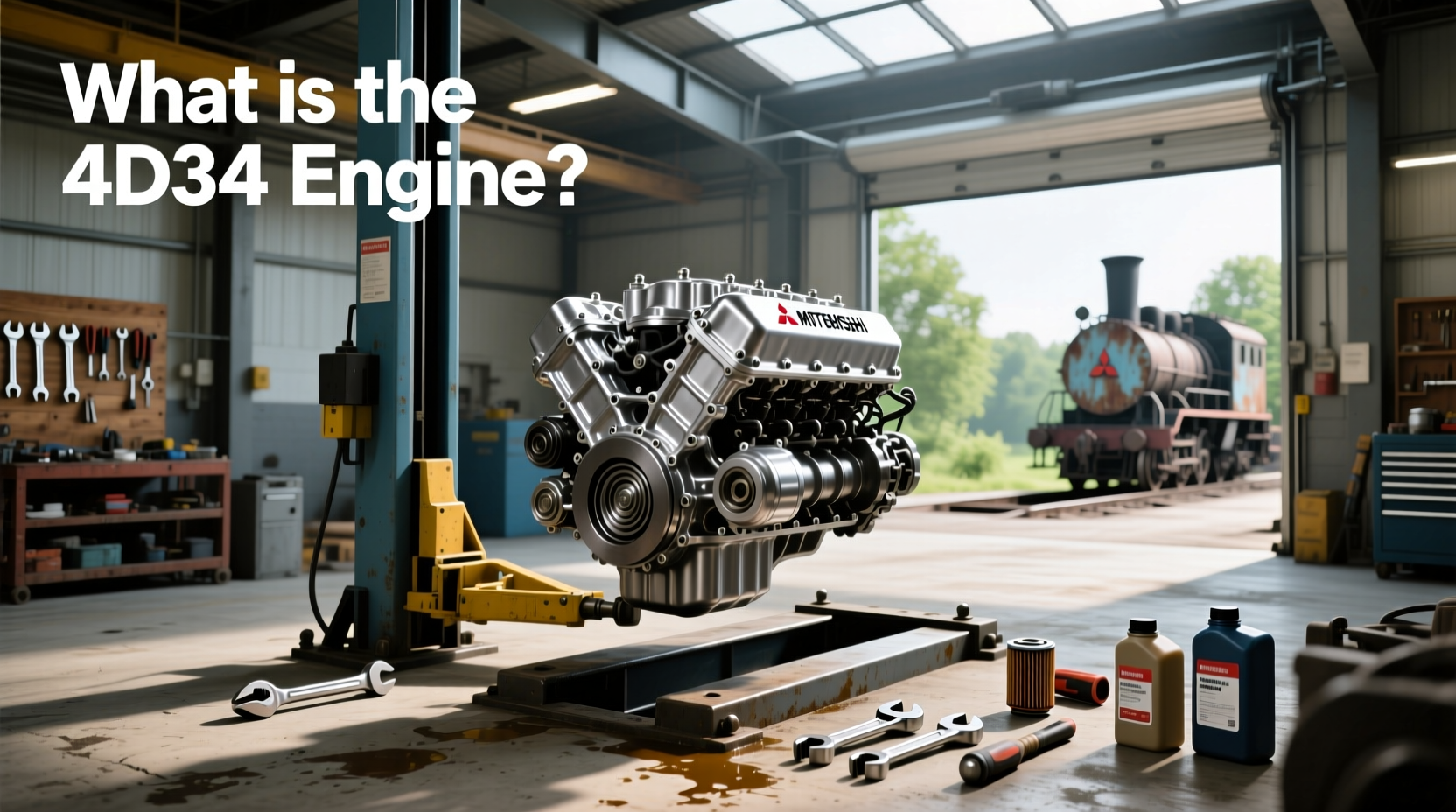
If you're looking for a durable, mechanically robust diesel engine for commercial trucks, buses, or industrial equipment, the Mitsubishi 4D34 engine is a strong contender ✅. When deciding how to choose a Mitsubishi 4D34 engine, focus on matching the model variant—such as 4D34-2AT4 or 4D34-2AT5—to your vehicle’s weight class and torque demands ⚙️. Naturally aspirated versions suit lighter loads, while turbocharged models (like 4D34-2AT7) deliver higher torque (up to 373 Nm) for heavy-duty applications 🚚. Avoid electronically controlled variants if you operate in remote areas with limited diagnostic tools—opt instead for mechanical fuel systems that are easier to service 🔧. Key pitfalls include mismatching power output to load requirements and overlooking spare parts availability in your region.
About the Mitsubishi 4D34 Engine: What Is the 4D34 Engine?
The Mitsubishi 4D34 engine is a 3.9-liter (3,907 cc), inline 4-cylinder, turbocharged diesel engine developed primarily for medium-duty commercial vehicles and industrial machinery 🏭. It belongs to the broader 4D3 series of engines produced by Mitsubishi Fuso, known for reliability and long service life under demanding conditions 1. The '4D34' designation breaks down as follows: '4' cylinders, 'D' for diesel, '3' series, and '4' as the specific model within that line.
Commonly found in Mitsubishi Fuso Canter light-to-medium-duty trucks (ranging from 4.4 to 8.25 tons), the 4D34 also powers the Mitsubishi Rosa minibus, construction equipment, marine generators, and stationary power units 2,3. Its water-cooled design ensures stable operation even in high-temperature environments, making it suitable for tropical and off-road applications.
So, what is the 4D34 engine? In essence, it's a workhorse diesel engine built for longevity, mechanical simplicity, and consistent performance across diverse operational contexts—from urban delivery fleets to rural transport networks in regions like East Africa and Southeast Asia.
Why the Mitsubishi 4D34 Engine Is Gaining Popularity
The enduring appeal of the Mitsubishi 4D34 engine stems from its proven track record in real-world conditions, especially in markets where access to advanced repair facilities is limited 🌍. Operators in countries such as Tanzania, Kenya, Indonesia, and the Philippines favor this engine due to its fuel efficiency, high low-end torque, and ease of field maintenance 4.
Unlike modern electronically managed diesels, many 4D34 variants use mechanical injection pumps and analog systems, reducing dependency on specialized diagnostics and expensive control modules. This makes them ideal for operators who prioritize uptime over emissions compliance or peak horsepower.
Additionally, the global secondhand market for Fuso Canter trucks equipped with the 4D34 has expanded significantly, driven by Japan’s export culture of used commercial vehicles. These well-maintained, low-mileage units often arrive with fully functional 4D34 engines, offering cost-effective entry points into reliable commercial transport.
Types and Variants of the 4D34 Engine
Understanding the differences between 4D34 variants is critical when evaluating how to choose a Mitsubishi 4D34 engine for your specific application. Below is an overview of common models:
| Model Code | Power Output | Torque | Application | Key Features |
|---|---|---|---|---|
| 4D34 (NA) | 115 PS @ 3200 rpm | Not specified | Light-duty trucks, older models | Naturally aspirated, direct injection, simpler mechanics |
| 4D34-2AT4 | 136 PS @ 2900 rpm | 370 Nm @ 1600 rpm | Canter 6.0–8.2 tons | Turbocharged, high torque at low RPM, widely exported |
| 4D34-2AT5 | 110 PS @ 2900 rpm | 275 Nm @ 1600 rpm | Canter 4.4–6.0 tons | Lower output, fuel-efficient, suited for city logistics |
| 4D34-2AT7 | 136 PS @ 2900 rpm | 373 Nm @ 1600 rpm | Canter 8.25 tons (Indonesia) | Heavy-load optimization, durable internals |
| 4D34-2AT8 | 125 PS @ 2900 rpm | 324 Nm @ 1600 rpm | Canter 7.5 tons (Indonesia) | Balanced performance, moderate load capacity |
- ⚡Turbocharged Models (e.g., 2AT4, 2AT7): Offer superior pulling power and better hill-climbing ability. Best for heavy cargo, hilly terrain, or frequent stop-start driving.
- 🧼Naturally Aspirated (Base 4D34): Simpler design, fewer components to fail. Suitable for lighter duties but lacks responsiveness under load.
- 🔧Mechanical vs. Electronic Fuel Systems: Earlier models use mechanical injection (easier to fix); later ones may have electronic governors (more precise but harder to maintain without tools).
Key Features and Specifications to Evaluate
When researching what to look for in a Mitsubishi 4D34 engine, assess these core technical parameters:
- 📏Displacement: 3.9 liters (3,907 cc)—provides ample cylinder volume for efficient combustion and torque generation.
- 🌀Aspiration: Turbocharged versions enhance air intake, improving power and fuel economy compared to naturally aspirated units.
- 🔥Cooling System: Water-cooled design maintains thermal stability during prolonged operation 2.
- 💪Power Range: 110–136 PS depending on variant—match this to your payload needs.
- ⚙️Torque Output: Critical for hauling; ranges from 275 Nm to 373 Nm. Higher torque at lower RPM reduces strain on transmission.
- 🔧Maintenance Accessibility: Look for models with top-mounted injectors, easily reachable filters, and standardized fasteners.
- 🌍Spare Parts Availability: Confirm local supply chains for fuel pumps, injectors, gaskets, and belts before purchase.
Avoid assuming all 4D34 engines are identical—specifications can vary based on production year, export destination, and regulatory standards.
Pros and Cons of the Mitsubishi 4D34 Engine
| ✅ Pros | ❌ Cons |
|---|---|
| Durable cast-iron block and proven mechanical design | No modern emission controls (may not meet Euro IV/V standards) |
| High torque at low RPM ideal for loaded vehicles | Fuel efficiency lags behind newer common-rail diesels |
| Easy to maintain using basic tools and local workshops | Limited power output compared to larger 6-cylinder engines |
| Widely available spare parts in Africa, Asia, Middle East | Heavier than some contemporary alternatives |
| Compatible with biodiesel blends (with injector monitoring) | Manual timing adjustments required after major servicing |
Best suited for: Fleet operators, independent haulers, and industrial users needing dependable, repairable engines in non-urban or developing-region settings.
Not recommended for: Applications requiring strict emissions compliance, high-speed highway cruising, or integration with advanced telematics systems.
How to Choose a Mitsubishi 4D34 Engine: Step-by-Step Buying Guide
Follow this checklist when selecting a 4D34 engine to ensure compatibility and long-term value:
- 📋Define Your Use Case: Will it power a 6-ton truck, a generator, or a bus? Match engine output accordingly.
- 📊Check Power & Torque Requirements: For payloads over 5 tons, choose turbocharged models (2AT4 or 2AT7).
- 🔍Verify Model Number: Inspect the engine plate for exact code (e.g., 4D34-2AT4). Do not rely solely on VIN or chassis description.
- 🧰Assess Mechanical Condition: Check for oil leaks, coolant contamination, excessive smoke, and unusual noises during startup.
- 🔗Confirm Spare Parts Access: Contact local suppliers to verify availability of critical components like injection pumps and turbochargers.
- 📍Evaluate Emissions Compliance: Ensure the engine meets local environmental regulations, especially in urban zones.
- ❗Red Flags to Avoid:
- Engines with unknown service history
- Signs of overheating (warped manifold, discolored block)
- Aftermarket modifications to boost power
- Paperwork discrepancies in imported units
Always test-run the engine and inspect compression levels if possible. For remanufactured or used engines, request documentation of recent rebuilds.
Price & Market Insights
Pricing for the Mitsubishi 4D34 engine varies widely based on condition, origin, and configuration:
- 🛒New/Reconditioned Units: $2,500–$4,500 USD (from authorized dealers or rebuilders in Asia or Africa)
- ✈️Used Imported Engines: $1,800–$3,000 USD (typically from Japan-sourced dismantlers)
- 🏭Complete Long Block: Includes cylinder head, turbo, pump—ideal for full replacements.
- 🧩Short Block Only: Lower cost (~$1,200), but requires sourcing additional components separately.
Prices may be higher in regions with import tariffs or limited competition. Always compare total landed cost—including shipping, taxes, and installation—before finalizing a purchase.
Top-Seller & Competitive Analysis
The 4D34-2AT4 is among the most popular variants due to its balanced output and wide application range. Here’s how it compares to similar engines in its class:
| Engine Model | Power (PS) | Torque (Nm) | Fuel System | Common Applications |
|---|---|---|---|---|
| Mitsubishi 4D34-2AT4 | 136 | 370 | Mechanical Injection | Trucks, Buses, Generators |
| Isuzu 4JB1-T | 105 | 225 | Mechanical/PDE | Pickups, Light Trucks |
| Hino N04C | 150 | 400 | Electronic Common Rail | Medium Trucks |
| Toyota 14B | 130 | 350 | Mechanical Injection | Trucks, Industrial |
The 4D34 holds an edge in durability and workshop familiarity over the Isuzu 4JB1-T, though it falls short of Hino’s electronically optimized N04C in fuel economy and emissions. Compared to the Toyota 14B, the 4D34 offers slightly better torque and broader OEM support.
Customer Feedback Synthesis
Based on operator reviews and field reports, here are recurring themes:
- ⭐Frequent Praises:
- 'Runs for over 500,000 km with regular oil changes'
- 'Easy to adjust valves and time injection pump manually'
- 'Parts are cheap and available at local markets'
- 'Strong torque helps climb steep hills even when fully loaded'
- ❗Common Complaints:
- 'Smokes heavily on cold start, especially in older units'
- 'No OBD port—hard to diagnose subtle issues'
- 'Fuel consumption increases noticeably after 300k km'
- 'Turbocharger fails earlier if oil change intervals are ignored'
Longevity remains the top-rated attribute, while aging-related wear and lack of digital diagnostics are the main drawbacks cited.
Sourcing & Supplier Tips
When sourcing a Mitsubishi 4D34 engine:
- 🌐Preferred Channels: Reputable Japanese exporters (e.g., BE FORWARD, Carused), certified rebuilders in Kenya or India, or industrial engine suppliers on B2B platforms.
- 📦For Bulk Buyers: Negotiate container shipments directly with dismantlers to reduce per-unit costs.
- 🔎Verification Steps:
- Request photos of the actual engine (not stock images)
- Ask for service records or rebuild certificates
- Verify serial number against manufacturer databases if possible
- 🛡️Shipping & Inspection: Use escrow services for online transactions. Upon arrival, inspect for shipping damage and perform a compression test before installation.
Maintenance, Safety & Legal Considerations
To maximize lifespan and ensure safe operation:
- ⏱️Maintenance: Change oil every 5,000–7,500 km; replace fuel and air filters regularly; inspect coolant quality to prevent internal corrosion.
- ⚠️Safety: Always depressurize the fuel system before working on injectors. Allow the engine to cool before draining fluids.
- 📜Legal: Verify that installing or operating the engine complies with local emissions and noise regulations. Registration authorities may require proof of conformity for modified or imported units.
- ✅Compliance Tip: If retrofitting into another chassis, consult transportation authorities to confirm eligibility for road use.
These guidelines help avoid fines, safety hazards, and premature failures.
Conclusion
The Mitsubishi 4D34 engine remains a practical choice for operators prioritizing mechanical reliability, ease of repair, and operational resilience over cutting-edge technology. If you need a no-nonsense diesel engine for a medium-duty truck, bus, or industrial machine—and operate in an environment where advanced diagnostics are scarce—the 4D34, particularly the turbocharged 2AT4 or 2AT7 variants, is worth serious consideration. However, if you must comply with modern emissions standards or demand high fuel efficiency, explore newer-generation engines instead. Ultimately, success in choosing the right 4D34 lies in aligning the model’s specifications with your real-world workload, maintenance capabilities, and regional support infrastructure.




 浙公网安备
33010002000092号
 浙B2-20120091-4