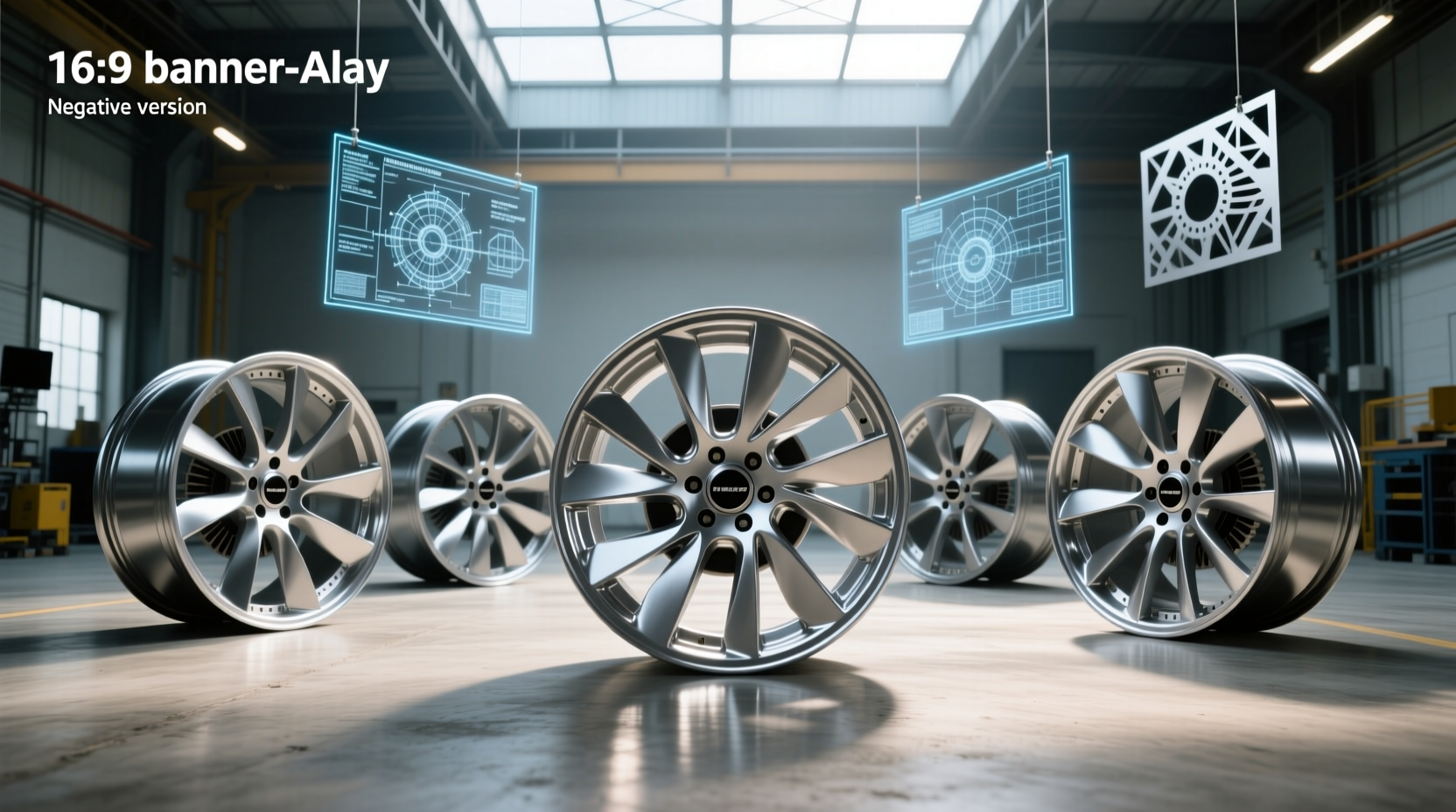
About Turbine Alloy Wheels: What Materials Are Turbine Wheels Made Of?
Turbine alloy wheels are critical rotating components used in aerospace, power generation, automotive turbochargers, and marine propulsion systems. These wheels convert thermal or fluid energy into mechanical rotation under extreme conditions—often exceeding 700°C and tens of thousands of RPM. The materials used must resist creep, thermal fatigue, oxidation, and mechanical stress. Unlike standard metal parts, turbine wheels are typically manufactured from advanced alloys engineered for performance at elevated temperatures.
So, what materials are turbine wheels made of? The primary categories include nickel-based superalloys, cobalt-based superalloys, titanium aluminide (TiAl), and next-generation multi-element alloys. Each offers distinct advantages depending on the operational environment. For example, a gas turbine in a power plant will likely use a directionally solidified nickel alloy like GTD-111, while a Formula 1 turbocharger may employ TiAl for its low mass and high dynamic response.
Why Turbine Alloy Wheels Are Gaining Popularity
Advancements in material science and manufacturing have driven increased adoption of high-performance turbine alloy wheels across industries. As efficiency standards tighten and operating temperatures rise, traditional materials no longer suffice. Engineers are turning to advanced alloys that maintain structural integrity under prolonged thermal exposure. This shift is especially evident in aerospace and high-performance automotive sectors, where every gram saved and degree tolerated translates to better fuel economy or faster acceleration.
Additionally, additive manufacturing has enabled more complex geometries and internal cooling channels, previously impossible with casting alone. This innovation supports the use of materials like Inconel in intricate designs, improving aerodynamic efficiency and heat dissipation. As a result, how to choose turbine alloy wheels now involves evaluating not just composition but also production method and design flexibility.
Types and Variants
⭐ Nickel-Based Superalloys
These are the most widely used materials for turbine wheels due to their excellent strength-to-density ratio at high temperatures.
- Inconel (718, 625): High corrosion and thermal fatigue resistance; commonly used in industrial turbochargers and aircraft engines 9.
- MAR-M Alloys (M247): Designed for high creep resistance; used in aerospace turbines operating above 700°C 8.
- IN 713C / IN 713LC: Investment-cast variants used in marine and transport turbochargers 1.
Pros: Excellent thermal stability, proven reliability, wide availability.
Cons: High density (~8.5 g/cm³), expensive raw materials, difficult to machine.
⚡ Cobalt-Based Superalloys
Used in environments with aggressive chemical exposure or where oxidation resistance is paramount.
Pros: Superior hot corrosion resistance, good thermal fatigue performance.
Cons: Lower high-temperature strength than nickel alloys, limited availability, higher cost.
✈️ Titanium Aluminide (TiAl)
A lightweight intermetallic compound increasingly used in automotive and aerospace applications.
Pros: Density ~3.8 g/cm³ (less than half of nickel alloys), high stiffness, improved transient response.
Cons: Brittle at room temperature, challenging to manufacture, sensitive to impact damage.
🔬 Multi-Element Alloys (High-Entropy Alloys)
An emerging class of materials composed of three or more principal elements in near-equal proportions.
Pros: Exceptional strength and ductility at temperatures up to 1400°C, potential to eliminate cooling systems in future turbines 7.
Cons: Still in R&D phase, not commercially widespread, long-term durability data limited.
Key Features and Specifications to Evaluate
When assessing turbine alloy wheels, focus on these measurable criteria:
- Material Grade: Confirm exact alloy designation (e.g., Inconel 718 vs. 625) as properties vary significantly.
- Operating Temperature Range: Match max continuous and peak temperatures to your system’s exhaust conditions.
- Density and Rotational Inertia: Lower inertia (achieved via TiAl or design) improves spool-up time in turbochargers.
- Creep Resistance: Critical for sustained high-load operations; measured in stress-rupture tests.
- Manufacturing Method: Investment casting dominates, but additive manufacturing allows novel cooling features 6.
- Surface Finish and Dimensional Accuracy: Affects aerodynamic efficiency and balance.
- Certifications: Look for compliance with industry standards (e.g., AMS, ASTM) when applicable.
Pros and Cons
| Material Type | Best For | Limitations |
|---|---|---|
| Nickel-Based | High-temperature stability, long service life, reliability | Heavy, costly, slower response in dynamic applications |
| Cobalt-Based | Corrosive environments, marine applications | Less strength at very high temps, niche supply chain |
| TiAl | Racing, lightweight turbos, fast transient response | Fragile, expensive machining, not ideal for stop-start cycles |
| Multi-Element | Next-gen turbines aiming for higher efficiency | Not yet mature, limited real-world data |
How to Choose Turbine Alloy Wheels: A Step-by-Step Guide
- Using TiAl in applications with frequent thermal cycling without proper coating.
- Selecting unverified 'equivalent' alloys without testing data.
- Ignoring post-processing requirements like stress relief or balancing.
Price & Market Insights
Pricing varies widely based on material, size, and manufacturing method:
- Nickel Alloys: $200–$2,000+ per wheel, depending on grade and complexity.
- TiAl Wheels: Often 2–3x more than nickel equivalents due to machining difficulty.
- Additively Manufactured Parts: Higher unit cost but lower tooling expense; economical for prototypes or low volumes.
Prices may differ by region and supplier. Always compare quotes with identical specifications. Be cautious of unusually low prices—they may indicate substandard materials or counterfeit products.
Top-Seller & Competitive Analysis
While specific brand recommendations are avoided, top-performing turbine wheels share common traits: certified materials, precision manufacturing, and rigorous quality control. Below is a comparison of typical offerings based on public technical data.
| Material | Max Temp (°C) | Density (g/cm³) | Typical Application | Production Method |
|---|---|---|---|---|
| Inconel 718 | 700 | 8.2 | Industrial Turbochargers | Investment Casting |
| MAR-M247 | 700–750 | 8.5 | Aerospace Turbines | Directional Solidification |
| TiAl | 650 | 3.8 | Performance Automotive | CNC Machining |
| GTD-111 | 750+ | 8.6 | Gas Power Plants | DS Casting |
| Multi-Element Alloy | 1400 (tested) | ~7.0 | R&D Prototypes | Additive Manufacturing |
Customer Feedback Synthesis
Analysis of user reviews and technical forums reveals consistent patterns:
- Positive Feedback: Longevity of nickel alloys, improved throttle response with TiAl, reliability in continuous operation.
- Common Complaints: Unexpected failure of non-certified replicas, cracking in TiAl under improper installation, delays in custom orders.
- Recurring Advice: Users emphasize verifying material specs and using OEM or reputable aftermarket suppliers for critical applications.
Sourcing & Supplier Tips
Procurement strategy depends on volume and application:
- Prototyping or Low Volume: Work with specialized foundries offering CNC or 3D printing services.
- Bulk Orders: Engage manufacturers with investment casting capabilities and ISO certification.
- Verification Steps: Request sample test reports, inspect surface finish, and confirm dimensional tolerances before full commitment.
- Logistics Note: International shipping may involve customs documentation for controlled materials—verify export regulations if applicable.
Maintenance, Safety & Legal Considerations
Proper handling ensures safety and longevity:
- Inspect wheels regularly for cracks, erosion, or distortion, especially after overheating events.
- Follow manufacturer-recommended balancing procedures after any repair or modification.
- Avoid exposing TiAl components to sharp impacts during assembly.
- Confirm compliance with local emissions or aviation regulations if used in regulated equipment.
- Dispose of worn superalloy parts according to environmental guidelines due to heavy metal content.
Conclusion
Selecting the right turbine alloy wheel hinges on matching material properties to operational demands. If you need maximum temperature resistance and proven reliability, nickel-based superalloys like Inconel 718 or MAR-M247 are optimal choices. For lightweight, high-dynamic-response applications such as racing, titanium aluminide offers significant advantages despite higher cost and fragility. Cobalt-based alloys serve well in chemically aggressive environments, while multi-element alloys represent the future of ultra-efficient turbine design. Always validate material certifications, consider total lifecycle value, and avoid uncertified alternatives in critical systems.
Frequently Asked Questions
- What are turbine wheels made of? Most turbine wheels are made from nickel-based superalloys like Inconel or MAR-M due to their high-temperature strength. Alternatives include cobalt-based alloys for corrosion resistance and titanium aluminide (TiAl) for lightweight performance in motorsports.
- How do I verify the material of a turbine wheel? Request a Material Test Report (MTR) from the supplier, which documents chemical composition and mechanical properties. Independent lab testing via spectroscopy can also confirm alloy type.
- Can I replace a nickel alloy wheel with a TiAl one? Only if the system design accounts for TiAl’s lower ductility and different thermal expansion. Retrofitting requires engineering validation to ensure compatibility with housing, seals, and thermal cycles.
- Are 3D-printed turbine wheels reliable? Metal 3D-printed wheels using binder jetting can achieve over 97% density and mechanical properties comparable to cast parts 6. However, they require post-processing and inspection to ensure quality.
- Why are turbine wheels so expensive? High cost stems from expensive raw materials (nickel, cobalt), complex manufacturing (investment casting, CNC), stringent quality control, and low production volumes. Certified aerospace-grade parts command premium pricing.




 浙公网安备
33010002000092号
 浙B2-20120091-4