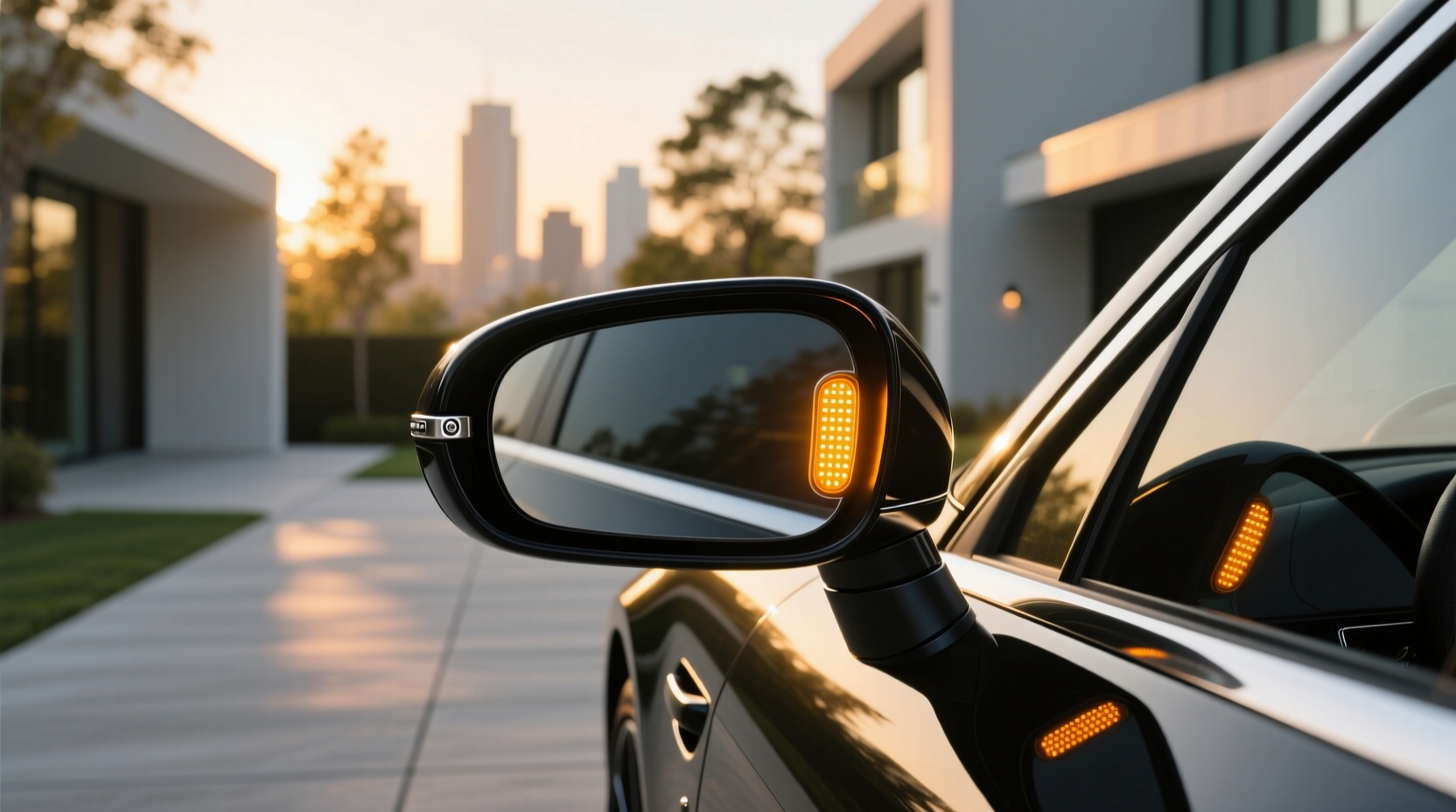
Short Introduction: What to Look for in Car Side Mirror Turn Signal Lights
When choosing car side mirror turn signal lights, prioritize LED brightness, proper fitment for your vehicle model, and compliance with local safety standards. The right turn signal indicator mirrors enhance visibility for adjacent drivers and reduce blind spot risks 1. Look for models with fast LED response times (around 0.2 seconds faster than incandescent bulbs) and weather-resistant sealing. Avoid universal-fit kits that lack OEM-level alignment, as improper installation can create glare or signal confusion. If you frequently drive in dense traffic or low-light conditions, consider dynamic sequential lighting or integrated blind spot warning systems for added awareness 2.
For most buyers, factory-installed or direct-replacement OEM-style units offer the best balance of reliability and compatibility. Aftermarket options vary widely—verify wiring harness compatibility and check whether the product includes necessary connectors. Always confirm that the lights meet FMVSS 108 (or equivalent regional regulation) for legal road use. Understanding these core factors early helps avoid costly returns and ensures safer on-road communication.
About Car Side Mirror Turn Signal Lights: What Are Turn Signal Indicator Mirrors?
📍Turn signal indicator mirrors, also known as side mirror turn signal lights, are integrated LED modules mounted within or adjacent to a vehicle’s exterior side-view mirrors. These lights activate in sync with the vehicle’s turn signals, typically forming a directional arrow pattern visible from the side 3. Their primary function is to improve lateral visibility during lane changes and turns, especially for vehicles approaching from behind or alongside.
Unlike traditional front fender or rear taillight turn indicators, mirror-mounted signals sit at eye level for other drivers, increasing conspicuity in urban environments, heavy traffic, and low-light scenarios. Inside the cabin, some designs emit a soft glow visible to the driver, reinforcing signal activation without distraction. Common applications include passenger cars, SUVs, and commercial fleets where enhanced signaling improves safety during frequent maneuvers.
Why Car Side Mirror Turn Signal Lights Are Gaining Popularity
📈Adoption of mirror-based turn signals has risen due to growing emphasis on active safety and driver awareness. Studies suggest that side-mounted signals reduce miscommunication between vehicles, particularly when changing lanes on multi-lane roads 4. As LED technology becomes more affordable, automakers increasingly include them as standard or optional equipment across mid-tier and luxury segments.
Additionally, consumer demand for modern aesthetics plays a role—integrated lighting contributes to a sleek, high-tech appearance. Fleet operators value the long-term durability and energy efficiency of LEDs over halogen bulbs. With rising attention to pedestrian safety, these side-positioned signals also benefit individuals walking parallel to traffic flow who may not see forward-facing indicators.
Types and Variants
🔧Different configurations exist depending on vehicle integration level and feature set:
- OEM Factory-Installed: Built into original equipment mirrors; fully integrated with vehicle electronics. High reliability, perfect alignment.
- Aftermarket Replacement Mirrors: Complete mirror assemblies with embedded turn signals. Designed as direct swaps; often require no modification.
- Add-On Modules: Clip-on or adhesive-mounted LED pods attached to existing mirrors. Lower cost but potential fitment and durability issues.
- Dynamic Sequential: LEDs illuminate in a flowing motion (left to right or vice versa), drawing more visual attention than static flashes.
- Multi-Function Units: Combine turn signals with blind spot monitoring alerts, ground illumination (puddle lights), or daytime running lamps (DRLs).
Pros & Cons Summary:
✅ Advantages
- Improved side visibility for other drivers
- Faster LED response time (~0.2s quicker)
- Energy efficient and longer lifespan
- Modern styling appeal
- Reduces blind spot-related misunderstandings
❗ Limitations
- Add-on types may vibrate loose over time
- Potential incompatibility with older vehicle electrical systems
- Higher-end models increase replacement cost
- Improper installation can cause water ingress
- Not all regions recognize non-OEM modifications
Key Features and Specifications to Evaluate
🔍To make an informed decision, assess these technical and functional attributes:
- Luminance (Brightness): Measured in candelas (cd); higher values ensure visibility in daylight and adverse weather.
- LED Type: SMD or COB LEDs generally offer better uniformity and longevity than older through-hole variants.
- Water Resistance: Look for IP67 or IP68 ratings indicating dust-tight and submersion protection.
- Activation Speed: LEDs illuminate nearly instantly, providing critical reaction time advantages.
- Wiring Compatibility: Match voltage (typically 12V DC) and connector type to your vehicle’s harness.
- Beam Pattern: Arrow-shaped projection is standard; verify directionality aligns correctly after installation.
- Thermal Management: Heat dissipation design affects lifespan—avoid units with poor ventilation.
Pros and Cons: Balanced Assessment
📊Suitable For: Drivers in congested urban areas, frequent highway users, fleet vehicles, and those upgrading older models lacking advanced signaling. Ideal if you prioritize safety clarity and modern aesthetics.
Less Suitable For: Owners of vintage or classic cars where authenticity matters, budget-focused buyers considering unreliable add-ons, or regions with strict regulations on aftermarket lighting modifications. Not recommended if DIY electrical work causes hesitation.
How to Choose Car Side Mirror Turn Signal Lights: Step-by-Step Buying Guide
📋Follow this checklist to select the optimal product:
- Confirm Vehicle Compatibility: Use your VIN or model/year/engine specs to find matching units. OEM replacements should list exact fitment data.
- Determine Installation Type: Decide between full mirror replacement, plug-and-play add-ons, or custom wiring solutions based on skill level.
- Check Electrical System Voltage: Most vehicles use 12V; confirm yours before ordering, especially for imported or RV applications.
- Evaluate Light Output: Prioritize products listing luminance specs. Avoid vague claims like "super bright" without measurable data.
- Review Ingress Protection Rating: IP67 or higher ensures resistance to rain, snow, and car washes.
- Verify Legal Compliance: Ensure the product meets FMVSS 108 (U.S.), ECE R6 or similar standards depending on region.
- Assess Warranty and Support: Reputable suppliers offer minimum 1-year warranties and responsive customer service.
🚩 Red Flags to Avoid:
- No clear manufacturer specifications
- Missing certification marks (DOT, SAE, CE, etc.)
- Universal-fit claims without mounting templates
- Negative reviews citing premature failure or flickering
- Prices significantly below market average (may indicate counterfeit components)
Price & Market Insights
💸Pricing varies by type and functionality:
- Add-On Modules: $20–$50 per pair; economical but mixed reliability.
- Aftermarket Replacement Mirrors: $80–$200 each; better integration and build quality.
- OEM Parts: $150–$400+; highest compatibility and durability, often dealer-only.
- Smart Mirrors (with BSW/DRL): $250–$600+; premium features justify cost for tech-focused buyers.
Prices may differ by region and retailer. Consider total ownership cost—OEM or high-quality aftermarket parts often prove more cost-effective over time despite higher upfront investment.
Top-Seller & Competitive Analysis
⭐Popular models emphasize reliability, ease of installation, and regulatory compliance. Below is a comparison of common choices:
| Model Type | Avg. Price | Key Features | Compatibility Notes |
|---|---|---|---|
| OEM Factory Unit | $300 | Perfect fit, integrated design, full warranty | Exact model match required |
| Aftermarket OEM-Style | $120 | Plug-and-play, IP67 rated, DOT compliant | Verify connector type |
| Dynamic Sequential Add-On | $45 | Eye-catching flow effect, adhesive mount | |
| Mirror with Blind Spot Warning | $480 | Integrated radar sensor, dual alerts | Requires power and calibration |
When comparing top sellers, focus on verified buyer feedback and return rates rather than star ratings alone.
Customer Feedback Synthesis
👥Analysis of user reviews reveals consistent patterns:
- Common Praises: Improved visibility, easy installation (for plug-and-play models), modern look, reliable performance (especially OEM).
- Frequent Complaints: Poor wire insulation leading to shorts, inaccurate color temperature (too blue), fogging inside lens, weak adhesives on clip-ons, and incorrect beam angle affecting legality.
- Recurring Suggestions: Users recommend professional installation for complex units and stress checking local laws before installing non-standard colors (e.g., white turn signals).
Sourcing & Supplier Tips
🌐Available through auto parts retailers, online marketplaces, and authorized dealers. For individual buyers, choose vendors offering:
- Clear return policies (at least 30 days)
- Detailed product specifications (not just photos)
- Verified seller status and responsive support
For bulk purchases (fleet upgrades, resale), contact manufacturers directly for wholesale terms. Always request sample units first. Inspect packaging integrity, labeling accuracy, and physical condition upon delivery. Test functionality before final installation.
Maintenance, Safety & Legal Considerations
🛠️Maintain optimal performance by periodically cleaning lenses with mild soap and inspecting seals for cracks. Replace any unit showing condensation, dimming, or inconsistent flashing.
Safety-wise, ensure signals do not dazzle nearby drivers—alignment should project downward toward road level, not horizontally into eyes. Never modify color output to red or blue, which can be mistaken for emergency vehicles.
Legally, lighting modifications must comply with national or state regulations. While many countries accept OEM-equivalent replacements, modified or decorative installations may fail inspections. Always verify local rules via transportation authority websites or licensed mechanics before installation.
Conclusion: Making the Right Choice
📌Selecting the right car side mirror turn signal lights depends on your priorities. If you need seamless integration and maximum reliability, choose OEM or certified aftermarket replacement mirrors. For budget flexibility and temporary enhancement, carefully vetted add-on modules may suffice—but expect trade-offs in durability. Tech-savvy drivers seeking comprehensive safety upgrades should explore multi-function units with blind spot detection. Ultimately, prioritize verified compatibility, regulatory compliance, and proven build quality over flashy features or low price alone.
FAQs
Can I install turn signal mirrors myself?
Yes, if you have basic automotive wiring skills and the kit includes clear instructions. Plug-and-play units are easier; complex integrations may require professional help.
Do turn signal mirrors improve safety?
Studies suggest they enhance lateral visibility, giving nearby drivers earlier notice of lane changes, which may reduce side-impact incidents 5.
Are LED turn signals legal everywhere?
Most jurisdictions allow LED turn signals as long as they meet brightness, color (amber preferred), and placement standards. Verify local regulations before modifying stock lighting.
How long do LED mirror turn signals last?
Quality LEDs typically last 30,000–50,000 hours, far exceeding incandescent bulbs. Lifespan depends on heat management and environmental exposure.
What's the difference between static and dynamic turn signals?
Static signals flash uniformly; dynamic ones use sequential LEDs to create a sweeping motion, increasing attention-grabbing effect 3.




 浙公网安备
33010002000092号
 浙B2-20120091-4