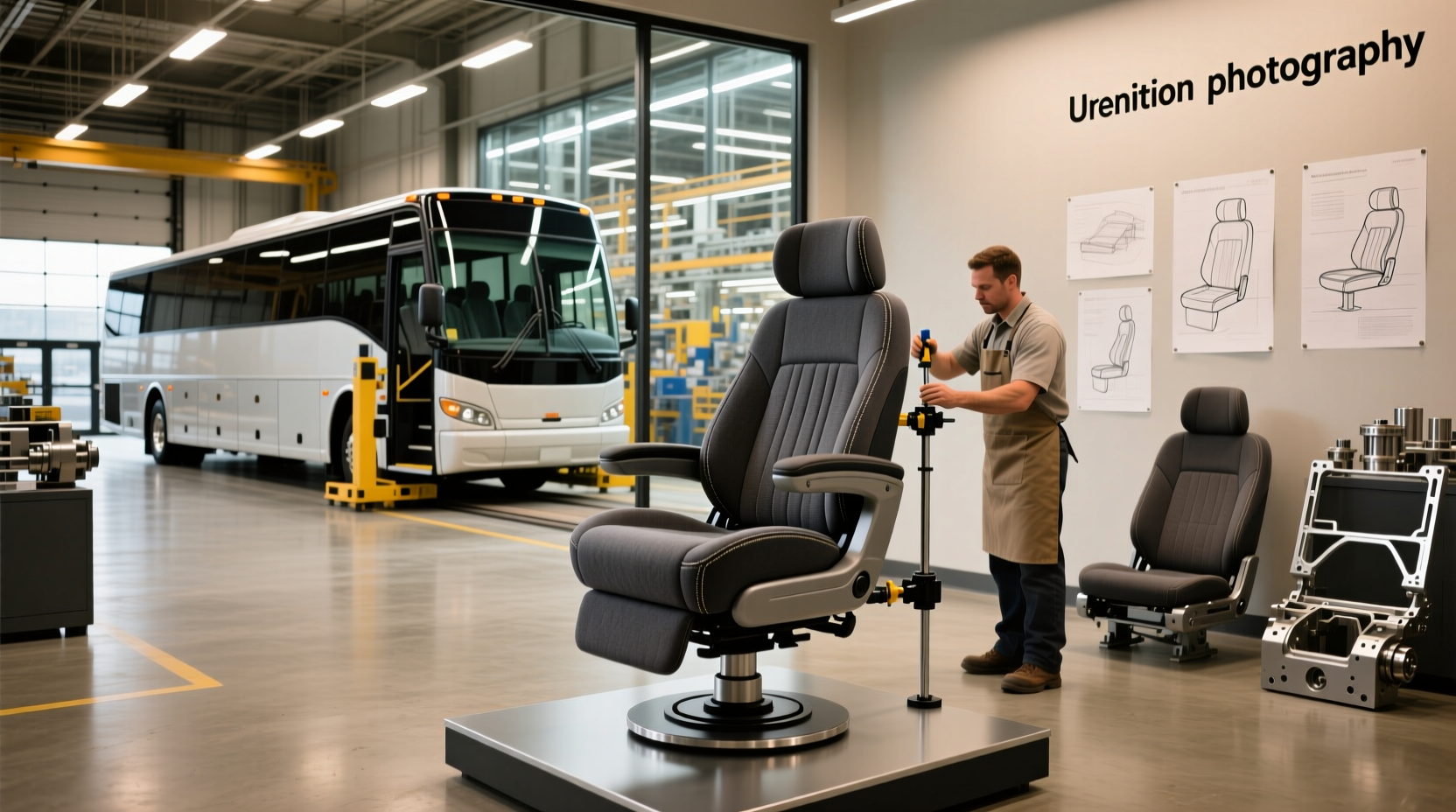
🛒 About Bus Passenger Seat Manufacturers, Who Manufactures Buses in the USA?
The U.S. transportation sector relies heavily on domestically manufactured buses and specialized components such as passenger seating systems. Bus passenger seat manufacturers are companies that design, engineer, and produce seating units tailored for school buses, transit coaches, and luxury motorcoaches. These seats must meet rigorous safety standards, offer long-term durability, and provide comfort over extended periods.
Meanwhile, U.S. bus manufacturers build complete vehicles—from chassis integration to final assembly. Many of these companies have decades of experience and are increasingly investing in sustainable technologies like battery-electric and propane-powered fleets 3.
Understanding both sides of this ecosystem is essential when outfitting or replacing fleet vehicles. Whether you're managing a public transit agency, a private charter company, or a school district, knowing who manufactures buses in the USA—and which seat suppliers they partner with—can influence maintenance costs, rider satisfaction, and regulatory compliance.
📈 Why Bus Passenger Seat Manufacturers, Who Manufactures Buses in the USA? Is Gaining Popularity
Demand for American-made buses and seating is rising due to several interrelated factors:
- Supply chain resilience: Domestic manufacturing reduces reliance on overseas components, minimizing delays and import risks.
- Federal funding incentives: Programs like the Bipartisan Infrastructure Law prioritize purchases from U.S.-based producers, especially for zero-emission transit buses.
- Sustainability goals: Over 70% of new transit bus orders in major cities now include hybrid or fully electric models—a trend led by U.S. manufacturers like Gillig and Proterra (though Proterra’s restructuring highlights market volatility) 1.
- Customization needs: Operators require region-specific configurations, including climate-adapted HVAC systems and ADA-compliant layouts, best handled through local engineering teams.
Additionally, there's growing attention on passenger well-being. The global bus seat market is projected to grow at a 5.6% CAGR from 2022 to 2027, driven by demand for improved ergonomics, reclining options, and integrated child restraints in school buses 4.
🔧 Types and Variants
School Bus Seats
Designed primarily for children, these feature high-back designs, energy-absorbing foam, and reinforced steel frames. Most comply with FMVSS 222, which mandates compartmentalized seating.
- ✅ Pros: High crash protection, low maintenance, standardized dimensions
- ❌ Cons: Limited adjustability, not suitable for adult passengers
Transit Bus Seats
Used in city and regional public transport, these balance space efficiency with moderate comfort. Often made with antimicrobial fabrics and easy-clean surfaces.
- ✅ Pros: Durable materials, modular installation, fire-resistant covers
- ❌ Cons: Minimal lumbar support, shorter lifespan under heavy use
Luxury Coach Seats
Found in intercity and charter buses, these emphasize comfort with reclining mechanisms, footrests, and premium upholstery.
- ✅ Pros: Enhanced passenger experience, longer ride suitability, customizable finishes
- ❌ Cons: Higher cost, more complex repairs, greater weight impact
Aftermarket & Replacement Seats
Offered by companies like HSM Transportation and Freedman Seating, these allow fleet operators to upgrade or replace worn units without full vehicle overhaul.
- ✅ Pros: Cost-effective refresh option, compatibility with multiple OEMs
- ❌ Cons: May lack original warranty coverage, fitment varies by model year
⚙️ Key Features and Specifications to Evaluate
To make an informed decision when choosing bus passenger seat manufacturers or evaluating who manufactures buses in the USA, assess the following criteria:
- Safety Standards Compliance: Confirm adherence to FMVSS 222 (school), FMVSS 207/208 (general seating), and CAL-134 for flammability.
- Material Durability: Look for UV-resistant vinyl, anti-graffiti coatings, and corrosion-proof hardware.
- Ergonomic Design: Check for adjustable headrests, adequate thigh support, and proper seat pitch (minimum 34” recommended for adults).
- Installation Flexibility: Modular mounting systems simplify retrofitting across different bus models.
- OEM Integration: Ensure compatibility with existing floor rails, wiring (for powered seats), and diagnostic systems.
- Sustainability Metrics: Consider recyclable content, carbon footprint during production, and availability of electric/hybrid-compatible variants.
✅ Pros and Cons
✔️ When It’s a Good Fit
- You operate a U.S.-based fleet requiring quick service turnaround.
- Your routes involve extreme weather conditions needing robust materials.
- You’re applying for federal grants that favor domestic procurement.
- You need ADA-compliant or child restraint-integrated seating.
✖️ When to Reconsider
- Budget constraints push toward lower-cost international suppliers.
- You require highly specialized configurations not offered by current U.S. vendors.
- Your volume is too small to justify direct OEM engagement.
- You plan frequent technology upgrades (e.g., AI-driven seating sensors).
📋 How to Choose Bus Passenger Seat Manufacturers, Who Manufactures Buses in the USA?
Follow this step-by-step guide to ensure a sound investment:
- Define Your Use Case: School, transit, or luxury? Each has distinct regulatory and comfort requirements.
- Verify Manufacturer Location and History: Prioritize companies with U.S. manufacturing facilities and 10+ years in operation.
- Request Crash Test Data and Certifications: Ask for documentation proving compliance with relevant FMVSS standards.
- Assess Service Network Coverage: Confirm parts and technician availability within your operating region.
- Review Warranty Terms: Standard warranties range from 1–5 years; watch for prorated clauses or exclusions for commercial wear.
- Test Sample Units: Install a few seats temporarily to evaluate comfort and ease of cleaning.
🚩 Red Flags to Avoid
- No verifiable crash testing records
- Vague answers about material sourcing or fire retardancy
- Unwillingness to provide references from similar-sized fleets
- Pricing significantly below market average (may indicate substandard materials)
- Lack of technical documentation in English
💰 Price & Market Insights
Pricing varies widely based on type, volume, and customization level:
- School bus seats: $180–$350 per unit (single)
- Transit bus seats: $250–$500 each
- Luxury coach recliners: $800–$1,600+ per seat
- Full bus manufacturing: $100,000–$500,000+, depending on size, powertrain, and interior specs
Electric models typically carry a 20–40% premium over diesel equivalents. Bulk orders (10+ units) may receive 5–15% discounts. Note that prices may vary by region due to labor costs and freight logistics. Always request itemized quotes and clarify whether installation, taxes, and shipping are included.
🏆 Top-Seller & Competitive Analysis
Below is a comparison of leading U.S. bus and seat manufacturers commonly selected for government and private contracts:
| Company | Product Type | Key Strength | Typical Use Case | Notable Innovation |
|---|---|---|---|---|
| Blue Bird Corporation | School & Electric Buses | Longevity, EV adoption | K–12 districts | All-electric Vision model |
| Gillig | Transit Buses | Heavy-duty reliability | City transit agencies | Battery-electric Low Floor |
| Thomas Built Buses | School & Shuttle Buses | Safety tech integration | Large school systems | Propane-powered Saf-T-Liner |
| HSM Transportation | Seating Systems | Aftermarket flexibility | Fleet retrofits | Modular replacement kits |
| Freedman Seating | Transportation Seats | Innovative safety features | School & commercial | Impact-absorbing frames |
| Amaya Astron Seating | Luxury Coach Seats | Ergonomic comfort | Charter operators | Mexico-based but NAFTA-compliant |
📌 Customer Feedback Synthesis
Based on industry reports and user reviews, common themes emerge:
👍 Frequent Praise
- Reliability of Blue Bird and Thomas Built school buses over 10-year lifespans
- Prompt technical support from Freedman Seating and HSM Transportation
- Smooth ride quality and quiet cabins in MCI coaches
- Durability of vinyl covers under daily urban transit use
👎 Common Complaints
- Higher upfront cost compared to imported alternatives
- Delays in delivery during peak ordering seasons (Q3–Q4)
- Limited color or fabric choices in standard transit models
- Some electric bus models facing software glitches or range limitations in cold climates
🌐 Sourcing & Supplier Tips
Procurement strategies depend on scale and urgency:
- Direct from OEM: Best for large fleets; allows customization but requires longer lead times (6–12 months).
- Distributors & Dealers: Offer faster access to inventory models and bundled financing.
- Aftermarket Suppliers: Ideal for partial replacements; verify compatibility before purchase.
- Bid Contracts: Public agencies should use formal RFP processes to ensure transparency and compliance.
For international buyers, confirm NAFTA/USMCA eligibility if importing from Mexican subsidiaries like Amaya Astron. Always inspect prototypes or visit manufacturing sites when possible.
🧼 Maintenance, Safety & Legal Considerations
Routine care extends seat life and ensures ongoing compliance:
- Clean seats monthly using manufacturer-approved disinfectants.
- Inspect mounting bolts and harnesses quarterly for wear or loosening.
- Replace damaged padding or torn fabric promptly to prevent injury risks.
- Update firmware on smart seating systems (if applicable) per vendor schedule.
Legally, all seating must continue to meet original certification standards post-installation. While specific regulations vary by state and application, always check with your insurer and local transportation authority before making modifications. For school buses, periodic third-party audits may be required.
🔍 Conclusion
Selecting the right bus passenger seat manufacturers and understanding who manufactures buses in the USA requires balancing performance, compliance, and lifecycle value. If you manage a school district, prioritize companies like Thomas Built Buses and Freedman Seating for their safety-focused designs. Transit agencies benefit from Gillig’s proven durability and HSM’s adaptable seating solutions. Luxury operators should consider Amaya Astron or Premier Products for superior comfort. Regardless of segment, verify certifications, test samples, and evaluate after-sales support before committing. Domestic manufacturing offers strong advantages in service speed and grant eligibility—but only if matched with careful due diligence.
❓ FAQs
What U.S. companies manufacture both buses and seats?
No major U.S. manufacturer currently produces both complete buses and passenger seats at scale. Bus builders like Blue Bird and Gillig typically source seats from specialized suppliers such as HSM Transportation or Freedman Seating.
Are U.S.-made bus seats worth the higher price?
They often are for fleets valuing longevity, regulatory compliance, and local service support. However, budget-constrained operators may find comparable quality in certified international suppliers—verify specifications carefully.
How do I verify if a seat meets U.S. safety standards?
Request official test reports and labeling indicating compliance with FMVSS 222 (school) or FMVSS 207/208 (general). You can also cross-check with the NHTSA database or consult a certified vehicle inspector.
Can I retrofit non-OEM seats into a U.S.-built bus?
Yes, provided the new seats meet all applicable safety standards and do not interfere with structural integrity or emergency egress. Documentation of compliance is essential for insurance and inspection purposes.
Do any U.S. bus manufacturers offer electric models with domestically made seats?
Yes—Gillig’s battery-electric transit bus uses seating from U.S. suppliers like HSM or Freedman. Similarly, Blue Bird’s electric school bus integrates compliant domestic seating systems.




 浙公网安备
33010002000092号
 浙B2-20120091-4