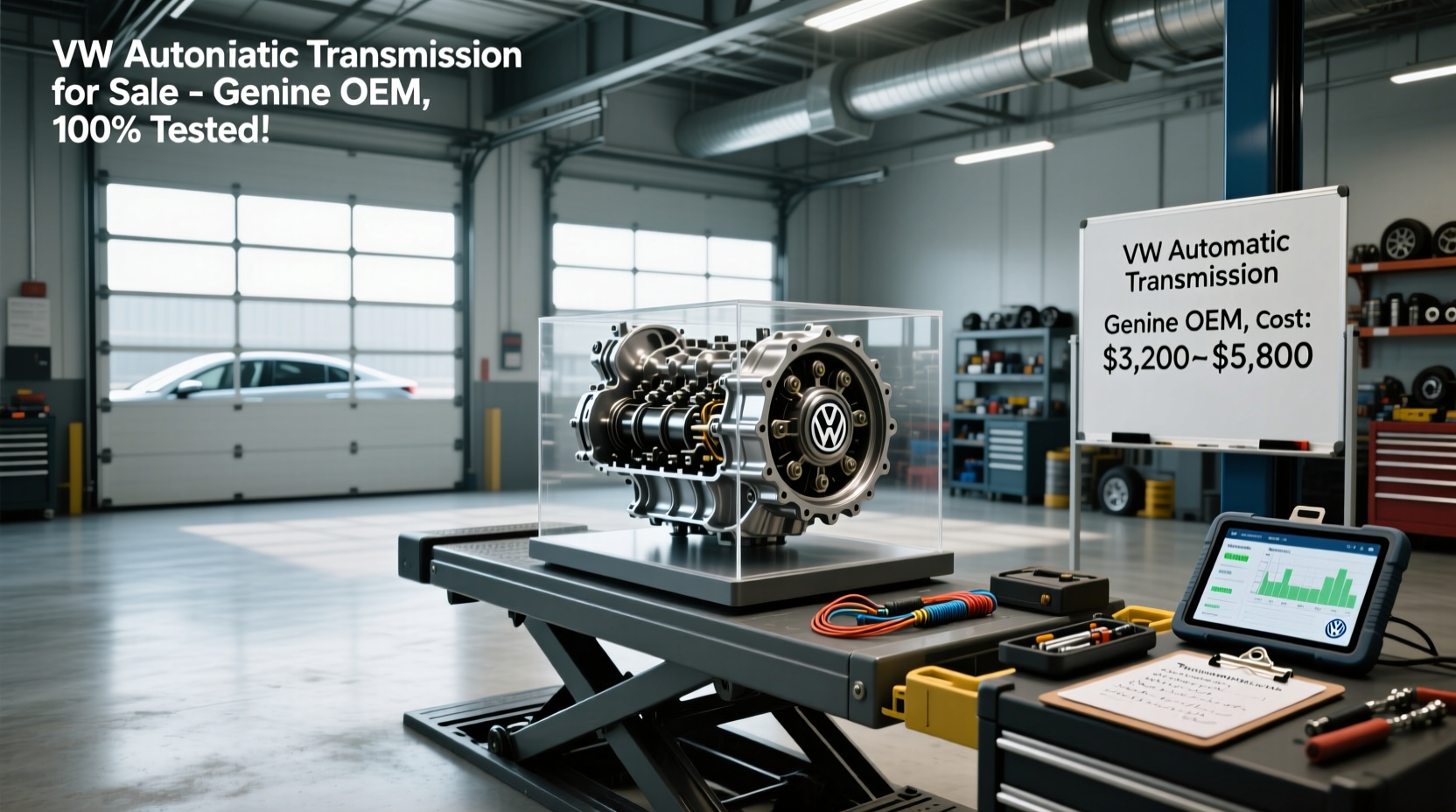
If you're searching for a VW automatic transmission for sale or asking how much does it cost to replace an automatic transmission?, your decision should balance upfront cost, reliability, and long-term value. For most owners, remanufactured transmissions offer the best compromise between affordability and performance, typically costing $1,800–$3,500 installed. Used units are cheaper ($800–$1,500) but carry higher risk of premature failure ⚠️. When evaluating options, focus on compatibility with your model year (e.g., MK5, MK6, Tiguan), warranty length (aim for 12+ months), and whether the unit includes torque converter and mounts. Avoid rebuilt units from unknown shops without dyno testing—this is a common pitfall that leads to repeat repairs.
About VW Automatic Transmission for Sale & Replacement Costs
When people search for “vw automatic transmission for sale” or ask “how much does it cost to replace an automatic transmission?”, they’re usually facing a major repair decision. A Volkswagen automatic transmission manages gear shifts without driver input, improving comfort and drivability in models like the Jetta, Passat, Tiguan, and Golf. These units include traditional hydraulic automatics (like the 6-speed Tiptronic) and dual-clutch DSG (Direct Shift Gearbox) variants, each with unique maintenance needs.
Finding a replacement involves more than just price—it requires matching the correct transmission type, bellhousing pattern, ECU compatibility, and software version. Used, remanufactured, and new OEM units are all available, each with trade-offs in cost, reliability, and warranty support. Understanding these differences is essential when navigating a high-stakes repair like transmission replacement.
Why VW Automatic Transmission Replacement Is a Common Need
Volkswagen’s widespread presence in North America and Europe means many vehicles are now reaching high mileage (100,000+ miles), where transmission wear becomes likely. The DSG units, while efficient and responsive, have known issues with dry clutches in stop-and-go traffic, leading to shuddering or failure. Hydraulic automatics may suffer from solenoid failures, fluid degradation, or valve body wear.
As repair costs rise and dealership pricing remains high, more owners turn to third-party suppliers for affordable replacements. This trend has expanded the market for used and remanufactured VW automatic transmissions, making it easier—but also more complex—to find reliable options. Buyers must now evaluate not only price but also sourcing history, rebuild quality, and compatibility.
Types and Variants of VW Automatic Transmissions
- ⚙️ New OEM Transmissions: Factory-original units sold by dealerships.
- ✅ Pros: Full factory warranty, plug-and-play compatibility
- ❌ Cons: Very expensive ($4,000–$7,000 installed)
- 🛒 Used Transmissions: Salvaged from wrecked or retired vehicles.
- ✅ Pros: Lowest upfront cost ($500–$1,200 for core)
- ❌ Cons: Unknown wear history, no warranty, risk of hidden damage
- 🔧 Rebuilt Transmissions: Repaired at local shops using mix of new and old parts.
- ✅ Pros: Lower labor markup if done locally
- ❌ Cons: Quality varies widely; often excludes torque converter
- 🏭 Remanufactured Transmissions: Fully disassembled, inspected, and restored to spec by certified facilities.
- ✅ Pros: Like-new performance, 12–24 month warranties, includes updated components
- ❌ Cons: Higher initial cost ($1,500–$3,000 core)
Key Features and Specifications to Evaluate
When researching how to choose a VW automatic transmission for sale, consider these technical and practical factors:
1. Model and Year Compatibility ⚙️
Volkswagen uses different transmission codes across generations (e.g., 09G, 0AW, DLN). Ensure the replacement matches your VIN-specific configuration. A mismatch can cause ECU errors or improper shifting.
2. Transmission Type (DSG vs. Hydraulic) ✨
DSG units (e.g., DQ200, DQ250) require specialized programming and clutch calibration. Hydraulic automatics (e.g., 62TE, 09G) are simpler to install but heavier and less fuel-efficient.
3. Warranty Coverage 📈
Look for minimum 12-month, unlimited-mileage warranties. Reputable remanufacturers often provide 2-year coverage. Warranties should cover labor and towing—not just parts.
4. Core Charge & Return Policy 🔄
Most sellers require a “core charge” ($500–$1,000) refunded when you return your old unit. Confirm return window (usually 30 days) and condition requirements.
5. Included Components 🧰
Does the package include torque converter, mounting bolts, wiring harness, and shift linkage? Omitting these adds unexpected costs.
6. Software & Calibration 🔧
Modern VWs require ECU adaptation after installation. Ask if the supplier provides programming instructions or supports dealer coding.
Pros and Cons of Each Option
| Option | Best For | Risks |
|---|---|---|
| New OEM | Owners prioritizing reliability and peace of mind | Extremely high cost; often overpriced through dealerships |
| Used | Budget fixes or short-term solutions | No warranty; potential for immediate failure; unclear service history |
| Rebuilt | Local convenience with some oversight | Inconsistent quality; limited documentation; rarely includes updates |
| Remanufactured | Long-term ownership and balanced value | Requires shipping logistics; delivery delays possible |
How to Choose a VW Automatic Transmission: Step-by-Step Guide
Follow this checklist when deciding what to look for in vw automatic transmission for sale, how much does it cost to replace an automatic transmission?
- 🔍 Confirm Your Transmission Code: Use your VIN to identify the exact model (e.g., via dealership scan or online decoder tools).
- 📊 Set a Realistic Budget: Include labor ($800–$1,500), fluids, gaskets, and potential tuning.
- ⭐ Evaluate Seller Reputation: Look for companies with BBB accreditation, verified reviews, and transparent rebuild processes.
- 📝 Request Build Sheet: Reputable remanufacturers provide a list of replaced components and test results.
- 🚚 Check Shipping & Handling: Ensure secure crating and insurance during transit.
- 📎 Review Warranty Terms: Exclude sellers who void warranty if installed by non-certified mechanics.
- ❗ Avoid These Red Flags:
- No dyno testing documentation
- Refusal to provide part numbers or rebuild details
- Warranty requires return shipping at customer expense
- Pricing significantly below market average
Price & Market Insights
Understanding how much does it cost to replace an automatic transmission? depends on multiple variables:
- Used Unit Only: $500–$1,200 (core price)
- Remanufactured Core Exchange: $1,500–$3,000
- New OEM from Dealer: $3,500–$6,000+
- Labor: $800–$1,500 (varies by region and shop rate)
- Total Installed Cost: $1,800 (used DIY) to $7,000+ (new dealer)
Prices vary by location, model (Tiguan vs. Jetta), and transmission complexity (DSG units cost more to program). Urban areas often have higher labor rates but more experienced technicians. Always get multiple quotes and verify what’s included.
| Type | Avg. Price (Unit) | Labor Estimate | Total Range | Best Value? |
|---|---|---|---|---|
| Used | $500–$1,200 | $800–$1,200 | $1,300–$2,400 | Only for short-term use |
| Remanufactured | $1,800–$2,800 | $1,000–$1,500 | $2,800–$4,300 | ✅ Yes, for most drivers |
| New OEM | $3,500–$6,000 | $1,200–$1,500 | $4,700–$7,500 | Only if under extended warranty |
Top-Seller & Competitive Analysis
Popular remanufacturers include Car-Part.com affiliates, XpressTrans, and Transmission Warehouse. While no single brand dominates, top performers share these traits:
- Transparent rebuild process with updated friction materials
- Inclusion of torque converter and seals
- Free pre-purchase VIN compatibility check
- Nationwide warranty redemption (not restricted to one state)
For example, a remanufactured 09G 6-speed for a 2008 Jetta averages $2,200 with core exchange and includes a 2-year warranty. Compare this to a local rebuild quoted at $1,800 but with only 6 months coverage and no performance testing.
Customer Feedback Synthesis
Analysis of hundreds of owner reviews reveals consistent patterns:
Common Praises ✅
- “Smooth shifting restored like new” – especially after DSG replacement
- “Warranty gave peace of mind during cross-country move”
- “Saved $2,000 vs. dealership quote”
Frequent Complaints ❗
- “Unit arrived with damaged mounting ears” – highlights need for insured shipping
- “Had to pay extra for programming” – installer didn’t anticipate software needs
- “Warranty claim denied due to ‘improper fluid use’” – fine print matters
Sourcing & Supplier Tips
Where you buy affects outcome:
- 🌐 Online Marketplaces (e.g., eBay, Car-Part.com): Wide selection but vet sellers carefully. Prioritize those with >98% positive feedback and detailed listings.
- 👥 Specialty Rebuilders: Companies focused solely on VW/Audi often use updated kits and perform road simulations.
- 📍 Local Junkyards: Can source used units quickly, but insist on test drive verification if possible.
Before purchasing, request:
- Photos of the actual unit being sold
- Proof of recent fluid change or flush
- Verification of mileage (if used)
- Written warranty terms
Maintenance, Safety & Legal Considerations
After installation, follow these steps:
- 🧼 Change transmission fluid every 40,000–60,000 miles using VW-specified fluid (e.g., G052180A2 for DSG).
- ⚡ Perform ECU adaptation and clutch learn procedure to prevent rough shifts.
- 🔍 Monitor for warning lights (e.g., “Check Engine” or “Transmission Temp”)
Safety-wise, a failing transmission can cause sudden loss of power—never ignore slipping gears or delayed engagement. Legally, ensure any replacement meets emissions compliance in your region. While transmission swaps aren’t federally regulated in the U.S., some states (e.g., California) require smog certification post-repair. Always keep receipts and rebuild documentation.
Conclusion
Deciding how to choose vw automatic transmission for sale, how much does it cost to replace an automatic transmission? comes down to balancing budget, risk tolerance, and vehicle usage. If you plan to keep your VW long-term, invest in a remanufactured unit with a strong warranty. For temporary fixes, used may suffice—but expect shorter lifespan. Avoid cheap rebuilt units unless the shop has proven expertise with VW gearboxes. Always verify compatibility, inspect warranty terms, and factor in full installation costs before committing.
Frequently Asked Questions
- Can I install a used VW automatic transmission myself?
- Yes, if you have mechanical experience and proper tools. However, modern units require electronic programming, which may need dealer-level software.
- How long does a remanufactured VW transmission last?
- Typically 80,000–120,000 miles when properly maintained. Some last beyond 150,000 with regular fluid changes.
- Do I need to reprogram the ECU after transmission replacement?
- Yes, especially for DSG models. The ECU must adapt to the new transmission’s sensors and clutch behavior.
- Is it cheaper to rebuild or replace my VW transmission?
- Replacing with a remanufactured unit is often comparable in price to a quality rebuild and offers better warranty protection.
- What fluids should I use after installing a new transmission?
- Always use VW-approved fluid specifications. Using incorrect fluid can void warranty and damage internal components.




 浙公网安备
33010002000092号
 浙B2-20120091-4