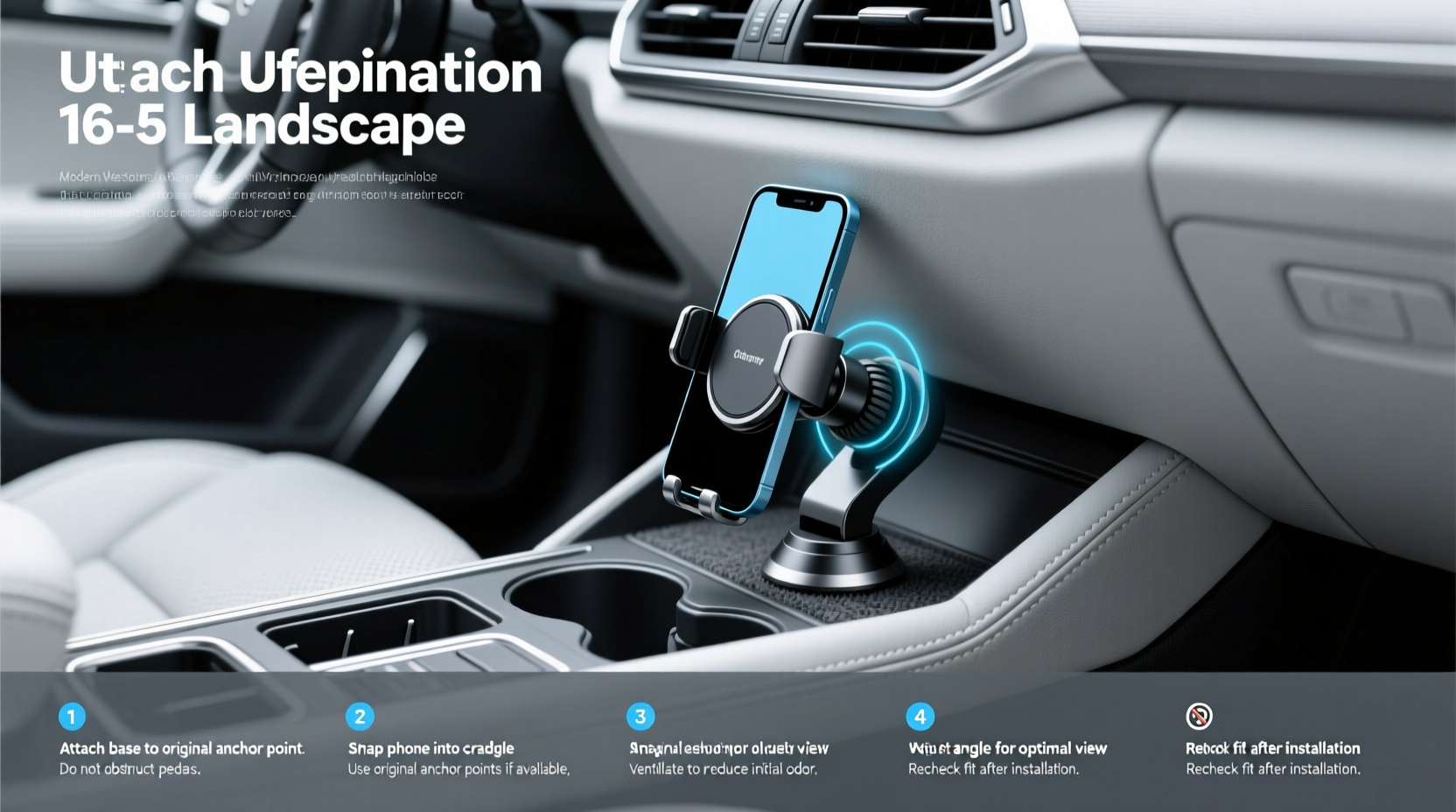
🛒 Short Introduction
If you're asking how to choose how to mount cell phone to record video in car, start by prioritizing stability, unobstructed view, and secure positioning. For dashcam-style front-facing video, a vent or dashboard mount with adjustable arms works best. For ride-share or delivery work, consider a magnetic or adhesive pad combo that allows quick removal. Avoid suction cups on tinted windows—they fail in heat. Look for mounts with 360° rotation and phone retention locks. Always verify local laws before continuous recording. This guide covers key specs, types, and red flags to help you make an informed decision without overpaying.
📍 About How to Mount Cell Phone to Record Video in Car
Mounting a smartphone in a vehicle to record video refers to securely positioning your device inside the car so it can capture high-quality footage while driving. This setup is commonly used for dashcam-like recording, vlogging from the driver’s seat, ride-share documentation, or capturing scenic drives. Unlike passive navigation use, video recording demands consistent framing, minimal shake, and uninterrupted power access. The right mounting solution ensures your phone stays in place, records clearly, and doesn’t obstruct your view of the road. It typically involves a physical holder attached to the windshield, dashboard, air vent, or console, combined with cable management for charging during long sessions.
📈 Why How to Mount Cell Phone to Record Video in Car Is Gaining Popularity
More drivers are using smartphones as affordable alternatives to dedicated dashcams. With high-resolution cameras and cloud storage, phones offer superior video quality and instant sharing capabilities. Rideshare and delivery drivers use them to document interactions and incidents 1. Vloggers and travelers rely on stable mounts to film journeys hands-free. Additionally, insurance claims benefit from timestamped, geotagged video evidence. As mobile networks improve and battery tech advances, continuous recording has become more feasible. This trend drives demand for reliable, easy-to-install mounting systems tailored for active video capture rather than just GPS navigation.
🔧 Types and Variants
Air Vent Mounts
Clips onto car air vents using spring-loaded arms.
- Pros: Easy installation, no residue, rotates freely
- Cons: Less stable on rough roads, may block airflow, not suitable for all vent types
Suction Cup Mounts (Windshield/Dashboard)
Uses a vacuum seal to attach to glass or smooth surfaces.
- Pros: Strong hold, full adjustability, central placement
- Cons: Can detach in extreme heat, leaves residue if failed, illegal in some regions on windshield
Adhesive Dashboard Pads + Cradle
Sticky pad mounted on dash with a removable cradle.
- Pros: Low profile, heat-resistant, customizable position
- Cons: Permanent adhesive, limited repositioning, cradle must match phone size
Magnetic Mounts
Uses magnets embedded in the mount and a metal plate attached to the phone or case.
- Pros: Fast attachment/detachment, sleek design
- Cons: Risk of interference with compass or wireless charging, requires adding metal plate
CD Slot Mounts (Less Common)
Fits into the car’s CD player opening.
- Pros: Unique position, avoids windshield entirely
- Cons: Only works in cars with CD players, limited adjustability, potential damage to slot
⚙️ Key Features and Specifications to Evaluate
- Stability & Vibration Damping: Look for rubberized grips, counterbalanced arms, or gel pads to reduce shake.
- Adjustability: Swivel heads, ball joints, or multi-axis arms allow precise camera angles.
- Phone Compatibility: Check width range (especially for larger phones or cases) and whether it supports portrait/landscape modes.
- Power Integration: Some mounts include built-in USB-C/Lightning cables or pass-through ports for charging.
- Ventilation: Avoid fully enclosed cradles that trap heat—overheating reduces recording time.
- Quick Release Mechanism: Useful for preventing theft or switching between vehicles.
- Material Quality: Reinforced plastic or aluminum construction lasts longer than flimsy polymers.
✅ Pros and Cons
When It’s Worth Using
- You need affordable dashcam functionality
- You’re a content creator filming travel videos
- You drive for Uber, Lyft, or delivery services
- You want geotagged, timestamped incident logs
When to Avoid
- Your local law prohibits any windshield obstruction
- You frequently park in direct sunlight (risk of phone overheating)
- You drive off-road or on very bumpy terrain (increased vibration)
- You forget to manage storage space or battery usage
📋 How to Choose How to Mount Cell Phone to Record Video in Car
- Determine Your Primary Use Case: Front-facing only? Interior + exterior? Passenger-side filming?
- Check Local Regulations: Confirm where you can legally place a device in your vehicle 2.
- Measure Your Phone (with Case): Ensure the clamp opens wide enough.
- Test Mounting Surfaces: Does your car have usable vents? Flat dashboard? Tint strip on windshield?
- Prioritize Stability Over Style: A wobbly mount ruins video quality.
- Avoid These Red Flags: Suction cups near defroster lines, non-locking grips, fully enclosed holders without airflow.
- Plan for Power: Use a high-amperage USB port and consider a cable clip to prevent tugging.
💰 Price & Market Insights
Basic air vent or magnetic mounts cost $8–$15. Mid-tier models with adjustable arms and better materials range from $18–$30. Premium options with integrated charging, advanced stabilization, or modular designs go up to $50. Prices vary by region and retailer. Generally, spending $20+ gets you improved durability and smoother articulation. However, higher price doesn’t always mean better video performance—focus on grip security and positioning flexibility instead of extra features like LED lights or stands.
⭐ Top-Seller & Competitive Analysis
| Model Type | Stability | Adjustability | Price Range | Best For |
|---|---|---|---|---|
| Vent Clip (Basic) | ★☆☆☆☆ | ★★★☆☆ | $8–$12 | Occasional city driving |
| Suction Cup (Premium) | ★★★★☆ | ★★★★★ | $25–$35 | Long-distance or highway use |
| Adhesive Pad + Cradle | ★★★☆☆ | ★★★☆☆ | $15–$20 | Hot climates, permanent setup |
| Magnetic Mount (with Plate) | ★★★☆☆ | ★★★★☆ | $18–$28 | Ride-share drivers needing fast access |
Note: Ratings are generalized based on aggregated user feedback. Actual performance may vary by phone weight and vehicle type.
📊 Customer Feedback Synthesis
Buyers consistently praise mounts that stay in place during turns and bumps. Positive reviews highlight ease of one-handed placement, clear sightlines, and durable hinges. Common complaints include suction cup detachment after temperature changes, vent clips breaking due to thick slats, and magnetic mounts interfering with navigation apps. Some users report difficulty removing adhesive pads without residue. Others note that bulky phone cases don’t fit certain clamps. Long-term durability—especially joint looseness after months of use—is a recurring concern in lower-priced models.
🛍️ Sourcing & Supplier Tips
Purchase from reputable retailers with return policies allowing testing in-car conditions. Amazon, Best Buy, and auto parts stores often provide 30-day returns. When buying in bulk (e.g., for fleet vehicles), contact suppliers directly for B2B pricing—but request samples first. Inspect packaging for model number accuracy and test the locking mechanism before deployment. For international orders, confirm voltage compatibility if the mount includes powered components. Always verify warranty terms and keep proof of purchase.
⚠️ Maintenance, Safety & Legal Considerations
Clean mounting surfaces regularly with alcohol wipes to maintain adhesion. Inspect rubber grips and joints monthly for wear. Never let the phone block your view of the road, side mirrors, or instrument cluster. Turn off recording when parked unless required for security (check local privacy laws). Be aware that audio recording others without consent may violate wiretapping laws in some jurisdictions. Before installing, consult your state/provincial transportation authority website to confirm acceptable mounting locations. If using for commercial purposes, inform passengers about recording when possible.
📌 Conclusion
If you need a simple, removable solution for occasional video logging, a well-reviewed magnetic or vent mount under $20 may suffice. For daily driving or professional use, invest in a high-quality suction or adhesive-based system with robust adjustability and thermal management. Prioritize safety and legality—ensure your setup doesn’t impair visibility or violate local regulations. Remember, the best mount keeps your phone secure, cool, and correctly angled for steady footage without distracting you from driving.
❓ FAQs
Yes, but ensure it’s securely mounted, connected to power, and set to auto-record. Check that your storage and battery can handle extended use.
They can interfere with the compass or magnetometer, affecting navigation apps. Test yours before relying on it for directions.
In most places, yes—for personal use. But laws vary on audio recording and placement location. Verify with local DMV or transportation department.
Avoid direct sunlight, use open-air mounts, disable unused features (Bluetooth, brightness), and take breaks during long sessions.
Near the center of the windshield, just below the rearview mirror—this mimics factory dashcam placement and minimizes blind spots.




 浙公网安备
33010002000092号
 浙B2-20120091-4