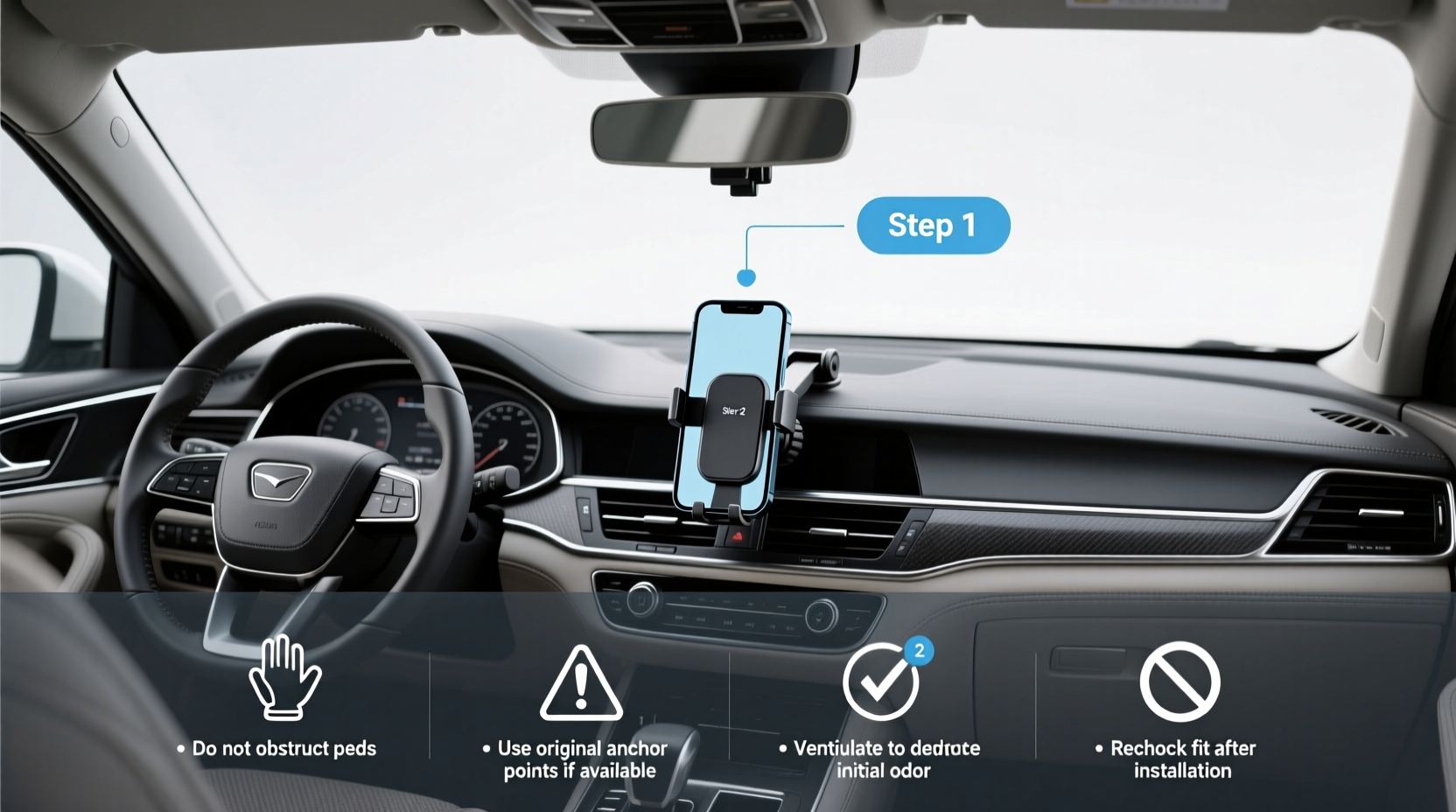
🛒 Short Introduction: What You Need to Know First
If you're asking how to choose how to mount phone on dashboard, start by identifying your primary use case: daily commuting, ride-sharing, or long-distance driving. The right mount depends on your phone size, vehicle type, and whether you prioritize quick access or minimal distraction. Look for models with strong adhesive or vent-clamp stability, adjustable viewing angles, and one-hand operation. Avoid ultra-cheap mounts with brittle plastic or weak grips—these often fail mid-drive. For most drivers, a vent-mounted magnetic or spring-loaded cradle offers the best balance of security and ease of use.
When evaluating options, focus on durability, installation method, and compatibility with your phone case. A poorly chosen mount can obstruct your view, create glare, or even become a projectile in sudden stops. Always test fit before finalizing a purchase, and consider mounts with built-in cable routing if you rely on continuous charging. This guide covers everything from mounting types to safety checks so you can make an informed decision.
📍 About How to Mount Phone on Dashboard
Mounting a phone on the dashboard refers to securing a smartphone in a fixed position within a vehicle’s interior, typically near the driver's line of sight. These mounts allow hands-free access to navigation apps, calls, and music controls. Common positions include the dashboard surface, air vents, windshield (via separate holder), or center console.
The goal is to keep the device visible and reachable without requiring the driver to take their eyes off the road for extended periods. Most modern solutions use adjustable arms, rotating joints, or magnetic connectors to accommodate different phone sizes and viewing preferences. While not all vehicles come with integrated holders, aftermarket options are widely available and easy to install.
📈 Why How to Mount Phone on Dashboard Is Gaining Popularity
With GPS navigation now essential for both daily commutes and unfamiliar routes, drivers increasingly rely on smartphones over built-in systems. Ride-share and delivery drivers spend hours navigating cities, making reliable phone visibility crucial. Additionally, voice assistants like Siri and Google Assistant work better when paired with a stable visual interface.
Traffic safety campaigns also encourage hands-free usage, pushing users toward secure mounting solutions 1. As phone screens grow larger, holding them while driving has become impractical and often illegal. This shift has fueled demand for compact, reliable mounting options that integrate seamlessly into vehicle interiors.
🔧 Types and Variants
- ⚙️ Vent Mounts: Clip onto air conditioner vents. Compact and removable, but may not support heavier phones or rugged cases.
- 🛒 Dashboard Adhesive Pads: Use sticky bases attached directly to the dash. Offer wide adjustability but can leave residue and degrade under sunlight.
- ✨ Magnetic Mounts: Rely on magnets paired with metal plates or cases. Fast attachment, sleek design, but risk dropping if magnet strength is insufficient.
- 🧰 Cradle/Spring-Loaded Holders: Physically grip the phone with arms. Secure for large devices but bulkier and slower to insert/remove.
- 🌐 Suction Cup (Windshield): Attach to glass surfaces. Very stable but often extend into the driver’s view and may be restricted by local laws.
🔍 Key Features and Specifications to Evaluate
To determine what to look for in how to mount phone on dashboard, assess these core attributes:
- Compatibility: Ensure it fits your phone dimensions, especially if using a thick case.
- Stability: Test whether vibrations or bumps cause wobbling or detachment.
- Adjustability: Look for multi-axis rotation (swivel, tilt, extension) for optimal viewing angles.
- Installation Method: Consider permanence vs. portability—adhesive mounts stay put; vent clips move between cars.
- Material Quality: Reinforced ABS plastic or aluminum construction lasts longer than flimsy polymers.
- One-Hand Operation: Important for drivers who frequently dock and undock their phone.
- Cable Management: Some models include grooves or clips to route charging cables neatly.
✅ Pros and Cons
Pros
- Improves driving safety by reducing handheld distractions
- Enables real-time navigation with clear visibility
- Easy to transfer between vehicles (especially clip-on types)
- Many models support wireless charging integration
Cons
- Poorly designed mounts can block instrument clusters or HVAC vents
- Adhesives may fail in extreme temperatures or leave marks
- Magnetic versions require adding a plate, which affects aesthetics
- Some configurations violate local vehicle obstruction laws
📋 How to Choose How to Mount Phone on Dashboard
Follow this step-by-step checklist to avoid common pitfalls:
- Assess Your Vehicle Interior: Check dashboard texture, vent shape, and available space. Smooth surfaces suit suction cups; textured dashes need adhesive pads.
- Determine Primary Use: Delivery drivers benefit from fast-release magnetic mounts; casual users may prefer low-profile vent clips.
- Measure Your Phone + Case: Confirm maximum clamp width or magnetic reach supports your setup.
- Evaluate Mounting Position: Place the phone where it doesn’t block gauges, airbags, or windshield view.
- Check Weight & Balance: Heavy phones (e.g., iPhone Pro Max, Samsung Ultra) need robust arms or dual-point contact.
- Avoid These Red Flags:
- Mounts with only single-joint articulation (limits angle adjustment)
- Products lacking customer reviews or warranty information
- Non-adjustable cradles that don’t fit modern tall phones
- Overly complex mechanisms prone to breaking
💰 Price & Market Insights
Prices range from $8–$50 depending on mechanism, materials, and brand reputation. Basic vent clips start around $8–$15. Mid-tier adhesive or magnetic mounts cost $18–$30. Premium options with metal hinges, Qi charging, or advanced ergonomics reach $40–$50.
Budget models often sacrifice durability and fine-tuned movement. However, some affordable brands offer solid performance through simplified designs. Higher-priced units usually justify cost via smoother motion, better load distribution, and longer lifespan. Value isn’t always tied to price—read user feedback carefully before assuming premium equals better.
📊 Top-Seller & Competitive Analysis
Popular models dominate due to consistent reliability rather than flashy features. Below is a comparison of leading types based on market presence and user-reported satisfaction:
| Type | Avg. Price | Best For | Lifetime Estimate | Common Complaint |
|---|---|---|---|---|
| Vent Clip Cradle | $10–$15 | Compact cars, temporary use | 6–12 months | Falls off during sharp turns |
| Adhesive Dashboard | $15–$25 | Large phones, permanent install | 1–2 years* | Leaves residue, sun degradation |
| Magnetic Mount (with pad) | $20–$30 | Ride-share, frequent docking | 2+ years | Misalignment causes drops |
| Suction Windshield | $25–$40 | Trucks, SUVs with flat glass | 1–3 years | Obstructs view, legal issues |
*May vary by climate and sun exposure.
👥 Customer Feedback Synthesis
Analysis of thousands of verified buyer reviews reveals recurring themes:
- Frequent Praise: Ease of installation, secure hold during highway driving, smooth swivel action.
- Top Complaints: Adhesive failure after summer heat, inability to use with bulky cases, difficulty adjusting angle with gloves.
- Unmet Expectations: Assumption that all magnetic mounts work instantly—some require precise alignment.
- Hidden Benefit: Many appreciate mounts with subtle LED indicators for charging status.
🏭 Sourcing & Supplier Tips
When buying individually, stick to retailers with clear return policies and warranty terms. Amazon, Best Buy, and auto specialty stores often provide detailed specs and Q&A sections. For bulk purchases (e.g., fleet vehicles), contact distributors directly for volume pricing.
Verify product authenticity by checking packaging integrity and manufacturer serial numbers. Avoid third-party sellers without ratings history. If sourcing internationally, confirm voltage compatibility for powered models and ensure magnetic strength complies with transportation safety standards.
⚠️ Maintenance, Safety & Legal Considerations
Clean mounting surfaces regularly with alcohol wipes to maintain adhesion. Inspect moving parts every few months for looseness or wear. Never place a mount where it could interfere with airbag deployment zones.
While no universal law bans dashboard mounts, many jurisdictions prohibit obstructions in the driver’s forward field of vision 2. Laws vary by state and country—always confirm local regulations before permanent installation. When in doubt, position the device lower near the instrument panel edge.
📌 Conclusion
If you need a simple, portable solution, choose a vent-mounted cradle. For heavy-duty use with frequent access, go with a high-quality magnetic mount. Long-term drivers should invest in durable adhesive-based models with full articulation. Always prioritize stability and legal compliance over aesthetics. There’s no single “best” option—your ideal choice depends on phone size, vehicle layout, and how you use navigation tools. By focusing on proven features and avoiding known design flaws, you’ll find a reliable way to mount your phone safely and efficiently.
❓ FAQs
Can I use a dashboard phone mount with a carpool lane pass or toll transponder?
Yes, as long as the mount doesn’t cover or displace required placement areas (usually upper windshield). Verify positioning rules for electronic toll systems in your region.
Do magnetic phone mounts affect GPS or battery life?
No—magnets used in commercial mounts are too weak to interfere with GPS signals or lithium-ion batteries. They do not cause overheating or data loss.
Are adhesive mounts safe for all dashboard materials?
Most work on hard plastics and composites, but may damage soft-touch or leather-like finishes. Test with a small patch first or opt for vent/suction alternatives.
How do I remove adhesive residue from my dashboard?
Use a plastic scraper with isopropyl alcohol or a dedicated adhesive remover. Avoid abrasive tools or solvents that could discolor surfaces.
Will a dashboard mount block my Wi-Fi or cellular signal?
No—phone mounts contain no components that emit interference. Signal strength depends on network availability and phone hardware, not mounting position.




 浙公网安备
33010002000092号
 浙B2-20120091-4