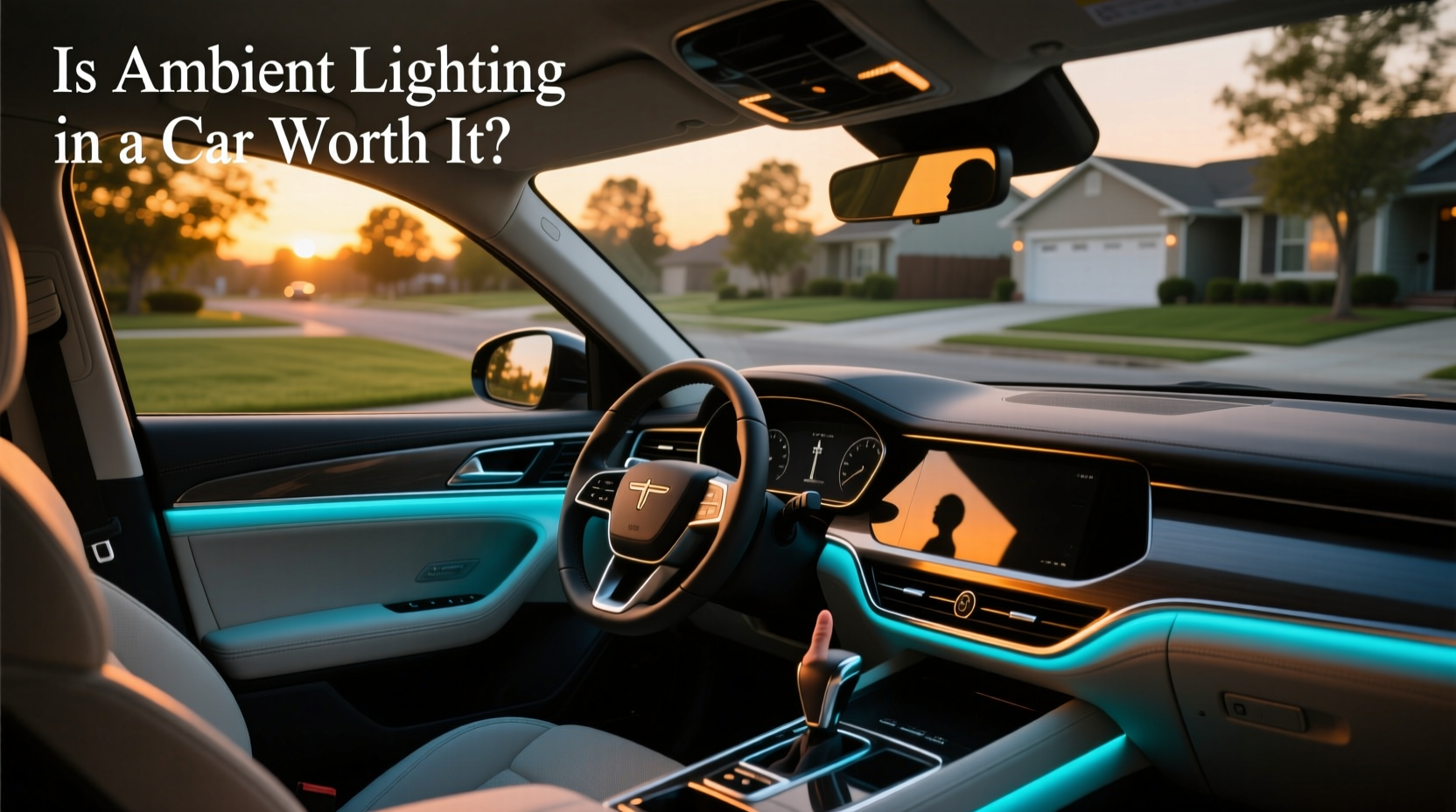
If you're wondering how to choose car ambient lighting and whether ambient lighting in a car is worth it, the answer depends on your priorities. For drivers who value interior aesthetics, nighttime visibility, and personalization, well-installed ambient lighting can enhance comfort and perceived luxury 1. However, poorly designed or overly bright systems may impair night vision and create distracting glare 2. When evaluating options, focus on dimmable, low-glare lights placed in footwells or door sills—not overhead areas. Factory or professional aftermarket installations typically offer better integration and safety than DIY kits. Ultimately, if you prioritize mood enhancement and subtle cabin illumination without compromising safety, ambient lighting can be a worthwhile upgrade.
📍 About Car Ambient Lighting: What It Is and Common Use Cases
Car ambient lighting refers to low-intensity interior lighting designed to softly illuminate the cabin without serving as primary task lighting. Unlike dome lights or map lamps, ambient lights are typically installed along footwells, door panels, center consoles, and dashboards to provide gentle, indirect glow.
Common use cases include:
- Night driving: Helps locate controls and seatbelts without disrupting dark adaptation.
- Passenger comfort: Creates a calming environment during evening rides.
- Vehicle personalization: Allows color customization based on mood or music sync features.
- Showcasing interior design: Highlights premium materials in high-end models.
This feature has evolved from luxury-only offerings to available add-ons across many vehicle segments, appealing to both practical users and style-conscious owners.
✨ Why Ambient Lighting Is Gaining Popularity
The growing demand for ambient lighting reflects broader trends in automotive design and user experience expectations:
- Luxury democratization: Features once exclusive to premium brands (e.g., BMW, Mercedes-Benz) are now accessible via affordable aftermarket kits.
- Interior experience focus: As vehicles become more tech-centric, drivers seek sensory enhancements beyond infotainment.
- Social sharing culture: Customizable RGB lighting enables “Instagrammable” interiors, especially among younger demographics.
- Mood-based technology adoption: Consumers increasingly value products that influence emotional well-being, such as color-tuned lighting 1.
Additionally, automakers use ambient lighting as a differentiator in competitive markets, integrating it with voice assistants and driving modes (e.g., relaxing blue tones in eco mode).
🔧 Types and Variants of Car Ambient Lighting
Different types vary in installation complexity, functionality, and visual impact:
✅ Factory-Installed Systems
Integrated during manufacturing, often part of higher trim levels or optional packages.
- Pros: Seamless design, automatic dimming, full warranty coverage, integrated controls.
- Cons: Higher upfront cost, limited post-purchase upgradeability.
✅ Professional Aftermarket Installations
Custom setups installed by specialists using OEM-style components.
- Pros: High-quality materials, tailored placement, compatibility with CAN bus systems.
- Cons: Costly labor, potential voiding of electrical warranties if not dealer-approved.
✅ DIY LED Strip Kits
Plug-and-play solutions using adhesive-backed LED strips connected to fuse boxes or USB ports.
- Pros: Low cost ($30–$200), easy initial setup, wide color options.
- Cons: Risk of poor wiring, inconsistent brightness, shorter lifespan with cheaper models 1.
⚙️ Key Features and Specifications to Evaluate
When assessing ambient lighting options, consider these technical and functional criteria:
- Color Options: Single-color vs. RGB (millions of colors). RGB allows greater personalization but may increase distraction risk.
- Brightness Control: Look for adjustable or auto-dimming features to prevent glare at night.
- Placement: Footwell and lower door lighting are less disruptive than overhead or dashboard-mounted units.
- Control Interface: Physical buttons, touchscreen menus, smartphone apps, or voice control integration.
- Power Source: Fuse box tap (more reliable) vs. USB/power port (easier install but intermittent power).
- Build Quality: Automotive-grade LEDs last longer and resist heat/cold cycles better than consumer-grade strips.
- Compatibility: Ensure fitment with your vehicle’s make, model, and year—especially for CAN bus communication.
📋 Pros and Cons: Who Should (and Shouldn't) Get Ambient Lighting?
| Pros ✅ | Cons ❗ |
|---|---|
| Improved low-light visibility: Eases finding pedals, gear shift, or dropped items at night 1. | Glare and reduced night vision: Bright or central lights reflect on windshield, impairing outside visibility 2. |
| Aesthetic appeal: Enhances interior ambiance, mimicking premium vehicle designs. | Driver distraction: Animated or rapidly changing colors draw attention away from the road. |
| Mood regulation: Warm tones promote relaxation; cool tones may improve alertness 1. | Installation risks: Poor wiring can damage electronics or pose fire hazards 1. |
| Potential resale value boost: Well-executed systems may appeal to buyers in used luxury markets 1. | Maintenance issues: Some kits fail prematurely due to moisture ingress or voltage fluctuations. |
🛒 How to Choose Car Ambient Lighting: A Step-by-Step Buying Guide
- Assess Your Needs: Are you seeking subtle visibility help or bold customization? Match the system to your primary goal.
- Evaluate Installation Type: Choose factory (best integration), professional aftermarket (custom quality), or DIY (budget-friendly but risky).
- Check Placement Safety: Avoid lights near direct line-of-sight to mirrors or windshields. Opt for downward-facing footwell lighting.
- Verify Dimming Capability: Ensure brightness can be lowered significantly for nighttime driving.
- Review User Controls: Prefer intuitive interfaces—overly complex apps or remotes reduce usability.
- Read Real-World Reviews: Focus on long-term reliability and ease of use, not just initial impressions.
- Hire a Pro If Unsure: For hardwired systems, professional installation minimizes electrical risks 1.
❗ Red Flags to Avoid
- Non-dimmable or excessively bright LEDs.
- Kits requiring permanent wire cutting.
- No thermal protection or waterproofing.
- Vague compatibility claims (e.g., “fits most cars”).
- Overly animated light patterns (e.g., strobes, racing effects).
💰 Price & Market Insights: What You’ll Pay
Costs vary widely depending on type and quality:
| Installation Type | Price Range (USD) | Best For |
|---|---|---|
| Factory-Installed | $500 – $2,000 | New car buyers wanting seamless integration |
| Professional Aftermarket | $300 – $1,500 | Owners seeking premium customization |
| DIY Kits | $30 – $200 | Budget-focused users with technical skills |
Note: Prices may vary by region and vehicle complexity. Higher costs generally correlate with better durability and integration. Consider total cost of ownership—cheap kits may need replacement within a year.
📈 Top-Seller & Competitive Analysis
Popular models emphasize reliability, ease of control, and safety-conscious design. While specific brand comparisons change frequently, top performers share common traits:
- Memory settings
- Fade-in/fade-out transitions
- Low-voltage protection
- OBD-II or fuse box power tapping
- App-based color selection with preset themes
| Feature | High-End Model Traits | Budget Model Traits |
|---|---|---|
| Brightness Control | Auto-dimming with ambient sensors | Manual only, limited range |
| Color Accuracy | Precise RGB calibration | Inconsistent whites, color shifts |
| Installation | Plug-and-play with harness adapters | Basic wiring, tape mounting |
| Lifespan | 30,000+ hours | 5,000–10,000 hours |
👥 Customer Feedback Synthesis
Analysis of buyer reviews reveals consistent themes:
👍 Frequent Praise
- “Transformed my car’s look—feels luxurious.”
- “Helps me find things at night without blinding myself.”
- “Easy app control and smooth color transitions.”
👎 Common Complaints
- “Lights flicker when engine starts.”
- “Adhesive failed after six months.”
- “Too bright even on lowest setting.”
- “App crashes frequently or won’t reconnect.”
Long-term satisfaction correlates strongly with build quality and proper installation—not just initial appearance.
🧰 Sourcing & Supplier Tips
When purchasing:
- Buy from reputable retailers: Amazon, specialized auto accessory stores, or authorized distributors.
- Check return policies: Ensure you can return if brightness or color doesn’t meet expectations.
- For bulk/wholesale: Verify supplier certifications (e.g., CE, RoHS) and request sample testing.
- Inspect packaging: Look for clear labeling, included fuses, and wiring diagrams.
- Avoid no-name brands: Unknown manufacturers often cut corners on insulation and current regulation.
⚠️ Maintenance, Safety & Legal Considerations
To ensure safe and lasting performance:
- Maintenance: Clean lenses gently; check connections annually for corrosion.
- Safety: Never install lights that require splicing critical harnesses (e.g., airbag circuits).
- Legal Compliance: While no universal ban exists, some regions restrict flashing or red/blue colors resembling emergency vehicles. Always verify local rules before installing.
- Use Responsibly: Turn off dynamic modes while driving; keep white/blue hues moderate to avoid overstimulation.
✅ Conclusion: Is Ambient Lighting Worth It?
Whether ambient lighting is worth it depends on your driving habits and preferences. If you drive frequently at night and value a calm, personalized cabin environment, a high-quality, professionally installed system can enhance comfort and usability. If you’re primarily concerned with safety and minimalism, or dislike interior distractions, simpler or no ambient lighting may be preferable. The key is choosing a system that prioritizes function over flash—dim, warm-toned, and strategically placed lights offer benefits without compromising safety. By focusing on build quality, proper installation, and user-centered design, you can decide what to look for in car ambient lighting and make a choice aligned with your real-world needs.
❓ FAQs
Can ambient lighting affect night vision while driving?
Yes, if the lights are too bright or poorly positioned. Lights that reflect off the windshield can create glare and reduce contrast sensitivity, making it harder to see pedestrians or obstacles. Opt for low-lumen, downward-facing fixtures with dimming controls to minimize this risk.
Do factory ambient lights have longer lifespans than aftermarket ones?
Generally yes. Factory systems use automotive-grade components tested for vibration, temperature swings, and longevity. Aftermarket lifespan varies—professional-grade units can match OEM durability, but budget DIY kits often degrade faster.
Are RGB ambient lights safe for daily driving?
Static colors are usually safe, but animated or rapidly changing modes can be distracting. Stick to steady, warm-white or soft-blue settings during driving. Reserve dynamic effects for parked use only.
Can I install ambient lighting myself without voiding my warranty?
It depends. Installing via fuse box adapters typically doesn’t void warranties, but modifications to manufacturer wiring might. Under U.S. Magnuson-Moss Warranty Act, manufacturers must prove damage was caused by the modification. Still, consult your dealer or service manual first.
Does ambient lighting consume a lot of battery power?
No. Most LED ambient systems draw less than 1 amp. Even prolonged use has negligible impact on battery life. However, always ensure the system has an auto-off timer or ignition-linked cutoff to prevent drain when the car is off.




 浙公网安备
33010002000092号
 浙B2-20120091-4