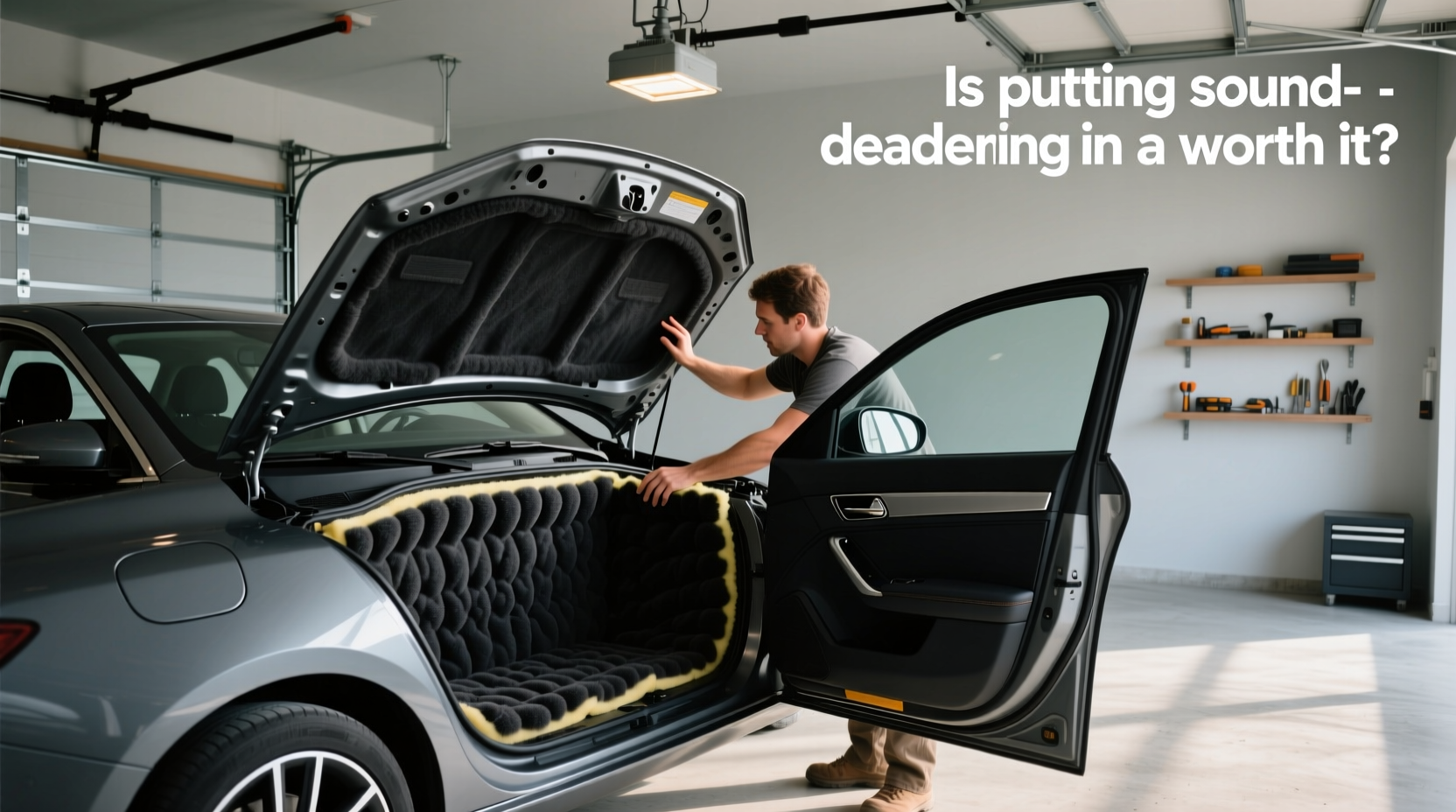
Yes, adding sound deadening to your car is generally worth it if you want a quieter cabin, improved audio quality, and reduced driver fatigue 1. When evaluating how to choose sound deadening felt for car, consider material type (butyl vs. foam), coverage area (doors, floor, firewall), and installation effort. For most drivers, especially those on highways or with upgraded speakers, the benefits outweigh the cost and added weight. However, it won’t eliminate all noise, and improper installation may affect airbags or void warranty 5.
About Sound Deadening Felt for Car: What It Is and Where It’s Used
Sound deadening felt refers to specialized materials applied inside vehicle panels to reduce noise, vibration, and harshness (NVH). These materials work by damping vibrations in metal surfaces and absorbing airborne sound waves from road, wind, and engine noise. Commonly used in aftermarket upgrades, they come in mats, foams, sprays, and rolls.
🚗 Key application areas include:
- 📍Doors: Improves speaker clarity and reduces wind noise
- 🛒Floor: Minimizes tire hum and road rumble
- 🔧Firewall: Blocks engine and exhaust resonance
- 🏭Roof: Reduces wind noise and adds thermal insulation
- 👥Trunk and rear panels: Essential for subwoofer installations
Unlike factory-installed insulation—which is often minimal—aftermarket sound deadening provides measurable improvements in acoustic comfort and perceived build quality.
Why Sound Deadening Is Gaining Popularity Among Drivers
Modern vehicles, even newer models, frequently use lightweight construction and cost-saving measures that compromise sound insulation 5. This has led many owners to seek DIY solutions like butyl-based mats or closed-cell foam. Enthusiasts upgrading their audio systems find that damping door panels significantly improves bass response and clarity.
Additionally, long-distance commuters and rideshare drivers report less fatigue due to lower cabin noise levels. The desire for a premium driving experience—similar to luxury brands—is another major motivator behind the trend.
Types and Variants of Sound Deadening Materials
Different materials serve distinct purposes. Choosing the right one depends on your goals: reducing vibration, blocking sound, or both.
✅ Butyl Mass-Loaded Damping Mats (e.g., Dynamat, Noico)
Ideal for damping panel resonance in doors and floors.
- Pros: Highly effective at stopping metal vibrations; durable; easy to cut and apply
- Cons: More expensive than basic bitumen; heavier than foam options
✨ Closed-Cell Foam
Used primarily for absorbing airborne noise.
- Pros: Lightweight; good for layered applications; enhances thermal insulation
- Cons: Less effective against structural vibrations alone
❗ Bitumen-Based Mats
Budget-friendly option commonly found in older or economy vehicles.
- Pros: Low cost; self-adhesive
- Cons: Heavier; less efficient than butyl; can emit odor when hot
🔧 Spray-On Deadeners
Liquid-applied compounds useful for complex shapes.
- Pros: Reaches tight spaces; seamless coverage
- Cons: Messy application; harder to control thickness; requires drying time
⚡ Mass-Loaded Vinyl (MLV)
Dense sheet material excellent for blocking sound transmission.
- Pros: Superior airborne noise barrier; often used in high-end builds
- Cons: Very heavy; costly; difficult to install without tools
Key Features and Specifications to Evaluate
When assessing what to look for in sound deadening felt for car, focus on these technical and practical factors:
- Density & Thickness: Thicker, denser materials (2–3mm) offer better damping but add more weight.
- Adhesive Quality: A strong, heat-resistant adhesive ensures long-term bonding.
- Temperature Resistance: Should withstand under-hood heat (up to 180°F/82°C).
- Flexibility: Easier to conform to curved panels without cracking.
- VOC Content: Look for low-emission products, especially for enclosed spaces.
- Coverage Area per Roll: Check square footage to estimate how much you’ll need.
For layered setups, combining a damping mat with foam offers balanced performance across vibration and airborne noise.
Pros and Cons: Is Putting Sound-Deadening in a Car Worth It?
| Benefit / Drawback | Description |
|---|---|
| ✅ Noise Reduction | Lowers road, tire, and wind noise, improving cabin comfort 15 |
| ✅ Improved Audio Clarity | Reduces speaker distortion caused by vibrating panels 1 |
| ✅ Perceived Quality | Makes doors feel sturdier and the interior more refined 5 |
| ✅ Thermal Insulation | Slight improvement in cabin temperature stability 1 |
| ❗ Added Weight | Can increase vehicle mass by 30–100 lbs depending on coverage |
| ❗ Installation Complexity | Requires disassembling trim; not reversible without residue |
| ❗ Cost | Full kits range from $200–$600 for DIY 5 |
| ❗ Warranty Risk | Some manufacturers may deny claims if modifications interfere with safety systems 1 |
The value depends on your usage: frequent highway drivers benefit more than city commuters.
How to Choose Sound Deadening Felt for Car: Step-by-Step Buying Guide
Follow this checklist to make an informed decision tailored to your vehicle and priorities:
- Identify Your Primary Goal: Are you targeting road noise, enhancing audio, or reducing fatigue?
- Assess Coverage Needs: Focus on high-impact zones first—doors and floor typically yield the best ROI.
- Select Material Type: Use butyl mats for vibration control; pair with foam for full-spectrum reduction.
- Check Compatibility: Ensure material fits your car’s panel curvature and doesn’t obstruct wiring or mechanisms.
- Evaluate DIY Skill Level: Full treatment takes 6–12 hours. Beginners should start small (e.g., one door).
🚫 Red Flags to Avoid:
- Products with no clear specs on thickness or density
- Cheap bitumen mats that smell strongly at high temperatures
- Materials claiming “complete silence” — unrealistic expectation
- Installation near airbag modules without proper clearance
Always clean metal surfaces before applying and use a roller to eliminate air bubbles.
Price & Market Insights: What to Expect
Pricing varies based on brand, material quality, and coverage:
- DIY Kits: $200–$600+ for full-car treatment using premium butyl mats 5
- Professional Installation: $800–$1,500+, including labor and materials
- Entry-Level Options: Bitumen rolls as low as $50 for partial coverage
While higher-priced butyl mats cost more upfront, they offer better longevity and performance per square foot. Consider total value rather than just price per roll.
Top-Seller & Competitive Analysis
Popular brands include Dynamat, Noico, Hushmat, and Kilmat. While no single product dominates all categories, certain patterns emerge in user feedback.
| Brand/Model | Material Type | Thickness | Best For | Common Feedback |
|---|---|---|---|---|
| Dynamat Xtreme | Butyl + Aluminum | 1.5 mm | High-performance audio setups | Premium performance, higher cost |
| Noico 80mil | Butyl Rubber | 2.0 mm | Balanced noise reduction & value | Strong adhesion, good coverage |
| Kilmat 60mil | Butyl | 1.5 mm | Budget-conscious users | Affordable, slightly thinner |
| Hushmat Pro | Butyl + Foam Layer | 3.0 mm (combined) | Comprehensive NVH solution | Excellent damping, heavier |
There is no universally “best” option—the ideal choice depends on budget, desired outcome, and installation scope.
Customer Feedback Synthesis
Based on aggregated reviews and forum discussions:
👍 Frequent Praise Includes:
- Noticeable drop in road noise after installing on floor and doors
- Clearer midrange and tighter bass from door speakers
- Doors feel more solid when closing
- Good instructions and pre-cut kits save time
👎 Common Complaints:
- Strong chemical smell during installation (especially with lower-tier products)
- Difficulty cutting around curves or electrical harnesses
- Residue left behind if removed later
- Weight gain affecting fuel efficiency slightly (perceived, not always measured)
User satisfaction tends to correlate with realistic expectations and careful installation.
Sourcing & Supplier Tips
You can purchase sound deadening materials from online retailers (Amazon, eBay), specialty auto shops, or direct suppliers. When sourcing:
- Compare specifications—not just brand names
- Look for sellers offering sample packs before committing
- Verify return policies in case of incorrect sizing or odor issues
- For bulk purchases (e.g., shops), consider contacting manufacturers directly for distributor pricing
- Inspect shipments for damage or missing components upon arrival
Avoid unknown brands with no product data sheets or safety certifications.
Maintenance, Safety & Legal Considerations
Once installed, sound deadening requires no maintenance. However:
- Fire Safety: Most reputable materials are flame-retardant; verify compliance with FMVSS 302 or equivalent standards.
- Airbag Clearance: Never cover or compress areas marked for airbag deployment. Confirm safe zones via your vehicle manual.
- Warranty Implications: Modifications may void parts of your warranty if linked to system interference. Consult dealer terms before proceeding 1.
- Mold/Moisture Risk: Seal edges properly to prevent water trapping, which could lead to corrosion or mildew.
Always reassemble components securely and test electrical functions post-installation.
Conclusion: Should You Install Sound Deadening in Your Car?
Adding sound deadening is worth it if:
- You spend significant time driving on highways
- You’ve invested in a quality audio system
- You value a quieter, more premium-feeling interior
- Your vehicle lacks sufficient factory insulation
It’s likely not worth it if:
- You mainly drive short distances in urban areas
- You’re on a tight budget or prefer non-permanent mods
- You’re uncomfortable removing interior panels
- You’re concerned about warranty implications
For optimal results, combine butyl damping mats with foam layers in critical areas like doors and floor. Start with a partial kit to test effectiveness before committing to a full treatment.
Frequently Asked Questions
- Does sound deadening really work in cars?
- Yes, when applied correctly with quality materials. It significantly reduces panel resonance and airborne noise, particularly from roads and wind.
- Can I install sound deadening myself?
- Yes, DIY installation is common but requires time, patience, and attention to detail. Allow 6–12 hours for a full car job.
- Will sound deadening improve my car’s resale value?
- Possibly, especially if done cleanly and paired with other upgrades. However, it’s not a guaranteed selling point.
- Is sound deadening worth it for new cars?
- Sometimes. Many new vehicles have minimal factory insulation, so adding damping can enhance comfort and audio performance.
- Does sound deadening affect fuel efficiency?
- Minimally. Added weight (typically 30–100 lbs) may slightly reduce MPG, but the effect is usually negligible for most drivers.




 浙公网安备
33010002000092号
 浙B2-20120091-4