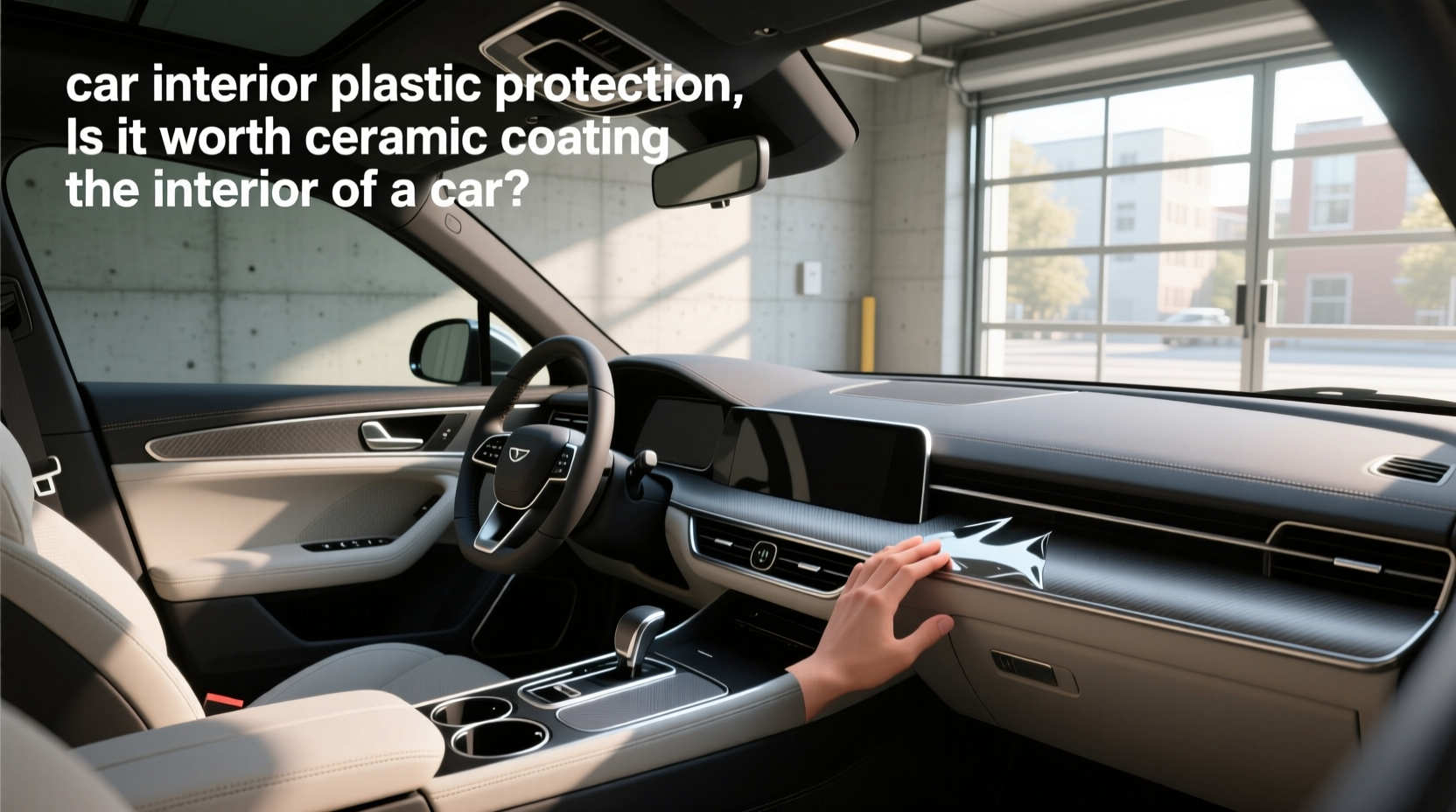
About Car Interior Plastic Protection: Is It Worth Ceramic Coating the Interior of a Car?
Car interior plastic protection refers to treatments designed to shield dashboard trim, door panels, center consoles, and other non-fabric surfaces from degradation caused by sunlight, spills, oils, and daily wear. Among emerging solutions, interior ceramic coating has gained attention as a semi-permanent liquid polymer that bonds at a molecular level with plastic, vinyl, and leather surfaces 1. Unlike waxes or sprays that sit on top and degrade quickly, ceramic coatings form a durable, hydrophobic layer that resists water, grime, and UV rays.
The central question—is it worth ceramic coating the interior of a car?—depends on usage patterns, climate, vehicle value, and personal maintenance preferences. This guide explores how to choose car interior plastic protection by analyzing performance, longevity, cost-effectiveness, and real-world applicability across different driver profiles.
Why Car Interior Plastic Protection Is Gaining Popularity
Modern vehicles feature increasingly complex interiors with soft-touch plastics, textured finishes, and integrated electronics—all vulnerable to UV exposure and surface contamination. Drivers in sunny climates report rapid fading and cracking of dashboards within just a few years. Parents and pet owners face frequent spills and smudges. As a result, demand for advanced protection methods like ceramic coating has grown.
Ceramic technology, once limited to exterior paint protection, is now being adapted for interior use due to its proven durability and aesthetic enhancement. Consumers are shifting from short-term fixes (like silicone-based dressings) toward long-lasting solutions that preserve resale value and reduce cleaning frequency. This trend aligns with broader interest in vehicle preservation and low-maintenance ownership.
Types and Variants of Interior Protection
Not all interior protection methods are equal. Understanding the differences helps clarify where ceramic coating fits in the spectrum of available options.
✨ Traditional Protectants (Sprays & Wipes)
- Pros: Inexpensive ($10–$30), easy to apply at home, widely available.
- Cons: Lasts only 1–3 months, can leave greasy residue, may attract dust, some contain harmful solvents.
🧼 Polymer Sealants
- Pros: Longer-lasting than sprays (3–6 months), more durable bond, less likely to sling.
- Cons: Requires thorough cleaning before application, moderate skill needed, still needs reapplication.
⚡ Ceramic Coatings (Liquid Glass Polymers)
- Pros: Lasts 2–5 years, highly hydrophobic, enhances gloss, UV-resistant, reduces cleaning effort significantly.
- Cons: High initial cost, requires professional application for best results, does not repair existing damage.
🔧 DIY Ceramic Kits
- Pros: Lower cost than professional service ($100–$200), allows self-application.
- Cons: Risk of improper curing or streaking, shorter lifespan if applied incorrectly, time-consuming process.
Key Features and Specifications to Evaluate
When assessing how to choose car interior plastic protection, focus on measurable attributes rather than marketing claims:
- Durability: Look for products rated for 2+ years. Ask providers about accelerated aging tests.
- Hydrophobicity: A true ceramic coating should cause water to bead and roll off surfaces.
- UV Resistance: Essential for preventing fading and material breakdown, especially in southern U.S., Australia, or desert regions.
- Gloss Level: Some coatings offer matte, satin, or high-gloss finishes—choose based on factory appearance.
- Chemical Resistance: Should withstand common cleaners without degrading.
- Application Method: Professional multi-step processes typically yield better adhesion and consistency.
Pros and Cons: A Balanced Assessment
| Aspect | Advantages ✅ | Limitations ❗ |
|---|---|---|
| Longevity | Lasts 2–5 years with proper care | Not permanent; requires reapplication |
| Maintenance | Easy wipe-downs; resists stains and fingerprints | Still requires regular dusting; aggressive scrubbing damages coating |
| Aesthetics | Restores depth and richness to faded plastics | May alter factory finish (e.g., overly glossy) |
| UV Protection | Significantly slows fading and cracking | Does not reverse existing sun damage |
| Cost Efficiency | Reduces need for frequent detailing over time | High upfront cost ($300–$1,000+) |
Best suited for: Long-term vehicle owners, luxury/SUV owners, those in high-sunlight areas, parents/pet owners wanting spill resistance.
Less suitable for: Short-term lease holders, budget-conscious buyers, vehicles with heavy interior damage.
How to Choose Car Interior Plastic Protection: Step-by-Step Guide
Follow this checklist when deciding whether ceramic coating is right for your situation:
- Assess Current Condition: Inspect for cracks, deep scratches, or peeling materials. Coating seals imperfections but won’t fix them.
- Determine Usage Pattern: High daily use? Kids or pets? Frequent sun exposure? These increase the value of durable protection.
- Set a Budget: Weigh the one-time cost against 3–5 years of avoided detailing expenses.
- Research Providers: Check reviews, ask about warranty, request before/after photos, confirm product brand used (e.g., Gtechniq, CarPro).
- Verify Application Process: Proper prep includes deep cleaning, decontamination, and surface activation. Avoid shops skipping steps.
- Ask About Maintenance Requirements: Some coatings require specific pH-neutral cleaners post-application.
🚩 Red Flags to Avoid
- Deals that seem too cheap (<$250 for full interior)
- No mention of surface preparation
- Guarantees lasting “forever” or “lifetime”
- Use of generic or unbranded chemicals
- Lack of written warranty or follow-up support
Price & Market Insights
Pricing varies widely based on vehicle size, coating quality, and labor standards. Here's a general market overview:
| Package Tier | Average Cost (Mid-Size Sedan) | Coverage & Features |
|---|---|---|
| Basic | $300 – $500 | Single layer on major touchpoints (dashboard, console) |
| Mid-Tier | $500 – $800 | Multiple layers, UV protection, includes leather treatment |
| Premium | $1,000+ | Full interior coverage, branded nano-ceramic formula, 3–5 year warranty |
Prices may be higher for SUVs or electric vehicles with larger glass/dash areas. Always get itemized quotes. While DIY kits cost less, professional results typically last longer and perform better due to controlled environment and expertise.
Top-Seller & Competitive Analysis
Leading brands in the interior ceramic space include Gtechniq C1, CarPro Perfection, and Nanolex Interior. These are often used by detailers offering premium packages.
Key differentiators:
- Gtechniq: Known for clarity and longevity; often used in high-end dealership programs.
- CarPro: Offers strong hydrophobic effect; popular among enthusiast-focused detailers.
- Nanolex: Emphasizes UV stability; preferred in hot climates.
When comparing services, don’t just look at price—ask which product is being used and why. Reputable shops will explain their choice based on your vehicle and environment.
Customer Feedback Synthesis
Analysis of hundreds of customer reviews reveals consistent themes:
👍 Common Praises
- “My dashboard looks brand new after 3 years.”
- “Spills wipe off instantly—great with kids.”
- “No more sticky residue from old protectants.”
- “Worth every penny for preserving resale value.”
👎 Frequent Complaints
- “Coating started peeling near vents after 18 months.” (linked to poor prep)
- “Too shiny—looks unnatural on matte surfaces.”
- “Hard to find a trustworthy installer.”
- “Didn’t realize it wouldn’t fix my cracked trim.”
Sourcing & Supplier Tips
If considering a DIY approach, purchase from authorized distributors to avoid counterfeits. For professional services:
- Choose detailers certified by major coating brands.
- Request proof of insurance and business license.
- Inquire about return policy or correction process if issues arise.
- For bulk or fleet applications (e.g., rental cars), negotiate package rates with commercial detailers.
Maintenance, Safety & Legal Considerations
Once applied, maintain ceramic-coated interiors with:
- pH-neutral interior cleaners (avoid citrus-based or solvent-heavy formulas)
- Microfiber cloths only
- Regular dusting to prevent abrasive buildup
Safety-wise, ensure the product is non-toxic and low-VOC, especially if you have allergies or children. While no federal regulations govern interior coatings, some states restrict volatile organic compounds (VOCs). Verify compliance through manufacturer documentation. Always allow full cure time (typically 24–72 hours) before normal use.
Conclusion
Deciding how to choose car interior plastic protection ultimately comes down to balancing upfront cost against long-term benefits. If you plan to keep your vehicle for several years, live in a sunny climate, or want minimal upkeep, ceramic coating is likely worth it. It provides unmatched protection against UV damage, staining, and daily wear while enhancing visual appeal. However, if you're leasing short-term or have budget constraints, traditional sealants may suffice.
Final recommendation: If you need durable, low-maintenance protection and can afford professional application, choose a mid-tier or premium ceramic coating service using a reputable brand. If you’re unsure, start with a basic package focused on high-exposure areas like the dashboard.
Frequently Asked Questions
❓ Can I apply ceramic coating to my car interior myself?
Yes, DIY kits are available, but achieving professional-grade results requires meticulous surface prep, controlled conditions, and technique. Mistakes can lead to streaking or uneven bonding. For best outcomes, professional application is recommended.
❓ Does ceramic coating prevent all types of interior damage?
No. While it protects against UV fading, spills, and light abrasion, it cannot stop deep scratches, impact cracks, or chemical burns from harsh cleaners. It’s a preventive layer, not a restorative solution.
❓ How often does a ceramic-coated interior need maintenance?
Weekly dusting with a microfiber cloth is sufficient. Clean spills immediately with a damp cloth. Avoid abrasive wipes or strong solvents. With proper care, the coating lasts 2–5 years before reapplication.
❓ Will ceramic coating make my plastic surfaces look wet or shiny?
It depends on the product. Some coatings add a subtle gloss, while others are formulated for matte or satin finishes. Discuss your preference with the installer to match factory appearance.
❓ Can ceramic coating be removed if I don’t like it?
Yes, but only through mechanical means like polishing or clay barring, which may damage underlying materials. Removal is difficult and not recommended. Test on a small area first if concerned about appearance.




 浙公网安备
33010002000092号
 浙B2-20120091-4