Short introduction
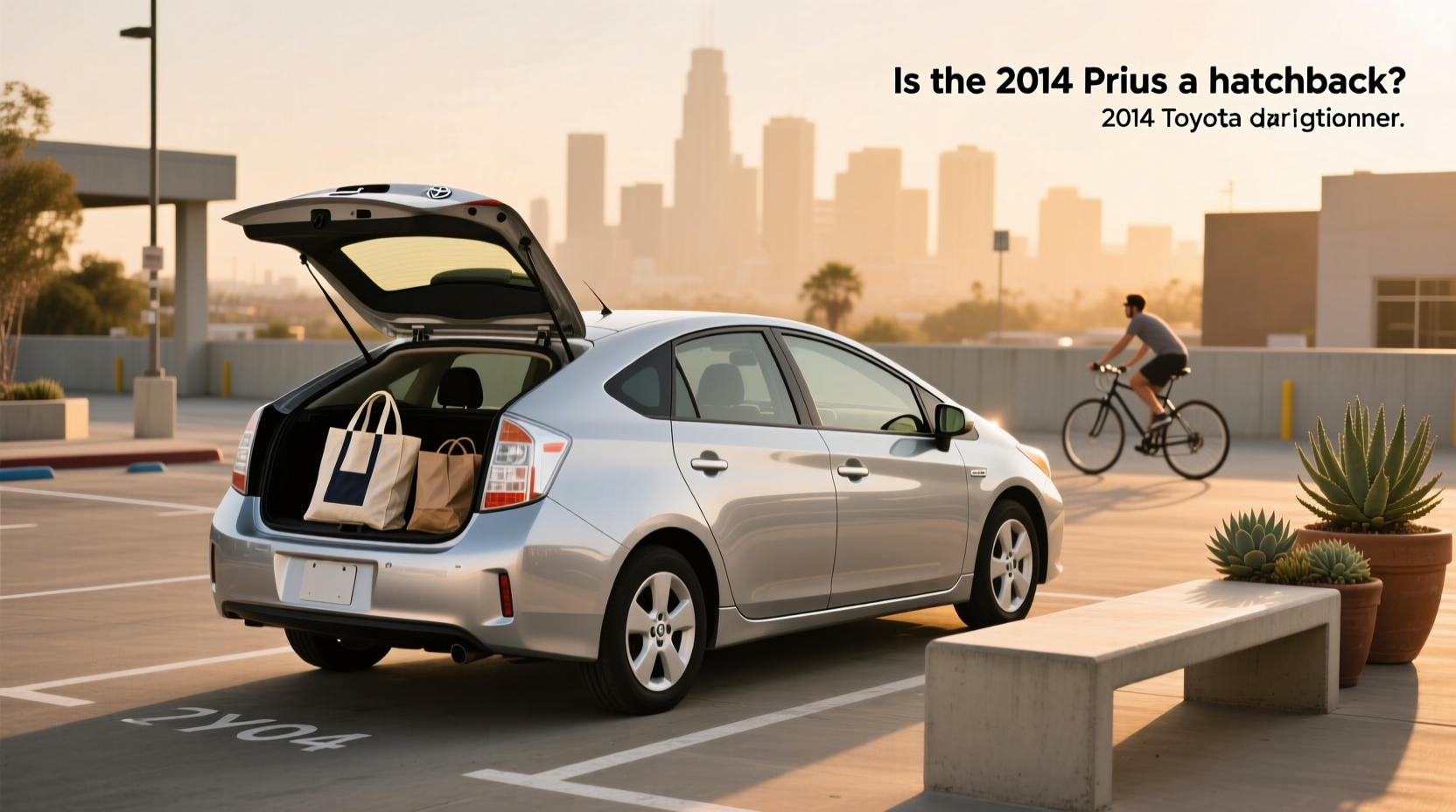
If you're wondering how to choose between a sedan and a hatchback based on practicality and efficiency, the answer often comes down to cargo access and daily use. The 2014 Toyota Prius is officially classified as a 4-door hatchback — not a sedan, not an SUV. This matters because the hatchback design gives you a wide liftgate opening and 21.6 cubic feet of cargo space, making it easier to load bulky items than most midsize sedans 1. If you’re a typical user, you don’t need to overthink this: if you regularly carry groceries, strollers, or sports gear, the Prius’s body style works in your favor.
Over the past year, more buyers have started reevaluating compact hybrids not just for fuel economy but for real-world usability. That shift has made the distinction between hatchbacks and sedans more relevant — especially when parking tight spaces or managing family logistics. Recently, used 2014 Prius models remain common in inventories across North America, and their longevity makes them worth considering. But understanding the body type helps avoid mismatched expectations. What to look for in a hatchback? Prioritize rear clearance when opening the liftgate, interior fold-down seat flexibility, and headroom behind taller front passengers. These factors matter more than badge names.
About the Toyota Prius Body Style
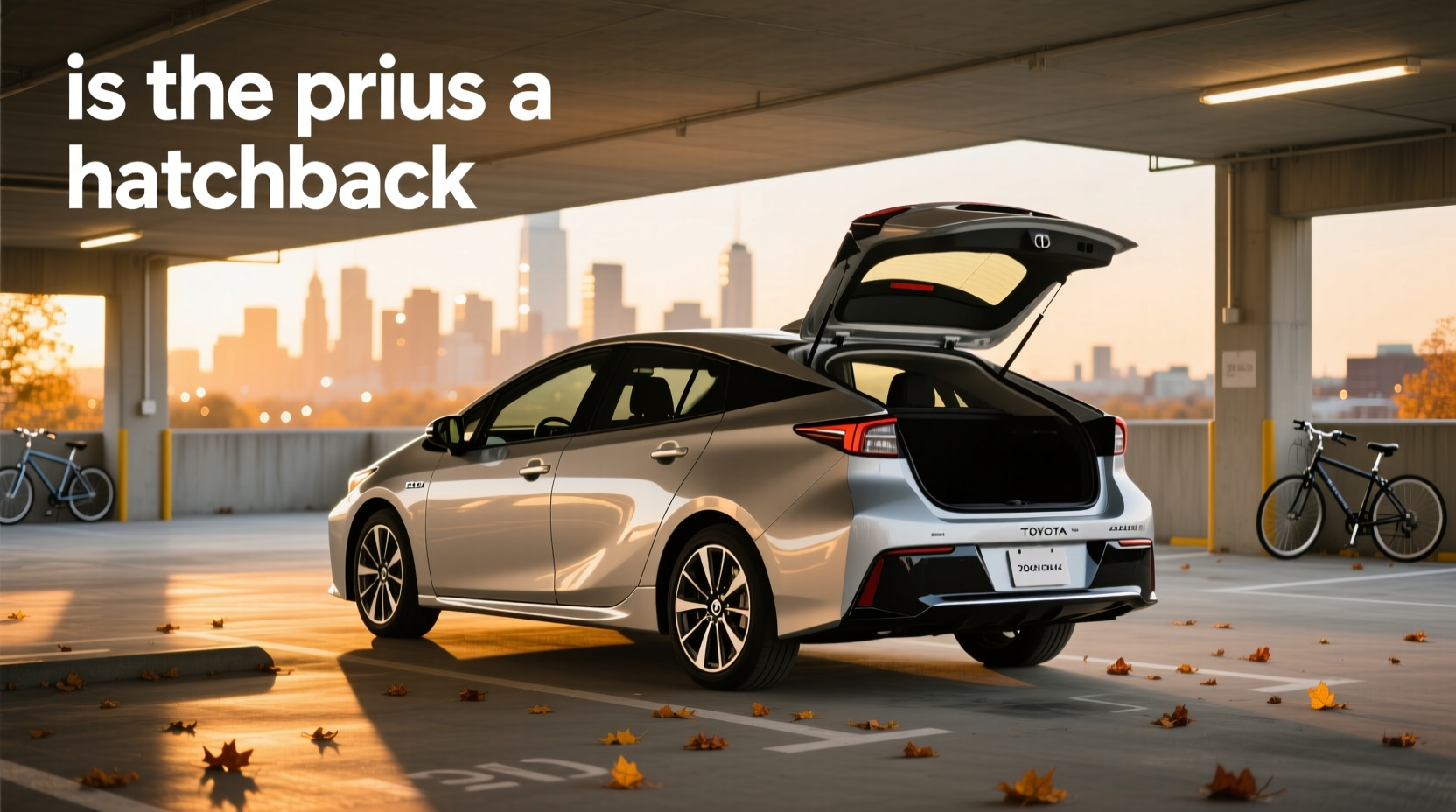
The term "hatchback" refers to a vehicle with a rear door — usually a glass-and-liftgate combo — that opens upward to provide direct access to the cargo area. Unlike sedans with separate trunks, hatchbacks integrate passenger and storage zones, allowing fold-down seats for expanded utility. The standard Toyota Prius, including all 2014 trims (Two, Three, Four, Five), falls under the "4-door hatchback" category 2.
This isn't a marketing label — it's consistent across manufacturer specs, insurance classifications, and safety testing bodies like the Insurance Institute for Highway Safety (IIHS), which lists the 2014 model specifically as a "4-door hatchback" 3. Some people confuse it with a sedan due to its elongated roofline or conservative styling, but structurally, it functions like any modern hatchback: liftgate operation, shared cabin volume, and flexible seating.
Why the Hatchback Design Is Gaining Popularity
Lately, consumers are placing higher value on functional design over traditional form. Compact and midsize hatchbacks like the Prius offer a middle ground between small SUVs and economy sedans. They deliver better fuel efficiency than most crossovers while offering significantly more loading flexibility than trunk-limited cars.
For urban drivers, the hatchback’s vertical loading angle reduces strain and fits into narrower parking spots compared to SUV tailgates that swing outward. For families, the ability to fold rear seats flat allows for longer items without needing a larger vehicle. Over the past year, rising fuel prices and supply chain constraints have also kept interest high in reliable, efficient vehicles — and the 2014 Prius fits that niche well.
If you’re a typical user, you don’t need to overthink this: the popularity isn't about trendiness. It's about solving everyday problems — getting a bike in the back, hauling IKEA shelves, or maximizing resale through proven demand.
Types and Variants
The 2014 Prius lineup includes four trim levels: Two, Three, Four, and Five. All share the same hatchback body structure. Differences lie in features, not shape.
| Trim Level | Key Features | Pros | Cons |
|---|---|---|---|
| Two | Basic infotainment, cloth seats, manual climate control | Lowest price point, simplest maintenance | Fewer convenience features, no backup camera |
| Three | Backup camera, upgraded audio, keyless entry | Better tech at moderate cost | Still lacks advanced driver aids |
| Four | Leather options, navigation, smart key system | Higher comfort and connectivity | Premium features may increase repair costs |
| Five | Solar roof, LED lights, premium sound | Most feature-rich variant | Rarest in used market, potentially harder to service |
This piece isn’t for keyword collectors. It’s for people who will actually use the product.
Key Features and Specifications to Evaluate
When assessing whether the 2014 Prius hatchback suits your needs, focus on these measurable aspects:
- Cargo Volume: 21.6 cu ft behind rear seats, expands to around 39 cu ft with seats folded — excellent for class.
- Liftgate Clearance: Requires overhead space; problematic in underground garages. Measure your parking spot height.
- Seating Comfort: Rear headroom is good, but legroom can feel tight with tall front occupants.
- Fuel Economy: EPA-rated at 50 mpg combined — still competitive today.
- Hybrid Battery Life: Original batteries often last 10+ years, but replacement cost is significant.
When it’s worth caring about: If you drive over 15,000 miles per year, fuel savings outweigh ownership risks. When you don’t need to overthink it: If annual mileage is low and local climate is mild, battery degradation risk drops sharply.
Pros and Cons
Pros
- ✅ High fuel efficiency lowers long-term operating cost
- ✅ Hatchback layout offers superior cargo versatility vs. sedans
- ✅ Proven reliability with widespread service network
- ✅ Strong safety ratings: IIHS Top Safety Pick+ recipient 3
- ✅ Resale demand remains steady due to reputation
Cons
- ❗ Acceleration feels sluggish, especially on highways
- ❗ Interior materials are basic, even on higher trims
- ❗ Infotainment system feels outdated by modern standards
- ❗ Liftgate needs clearance — problematic in tight garages
- ❗ Hybrid battery replacement can exceed $2,000 if not covered
How to Choose a 2014 Prius Hatchback
Buying a used hybrid requires attention to usage history and mechanical condition. Follow this checklist to minimize risk.
Step-by-Step Checklist
- Verify vehicle identification number (VIN) against service records
- Inspect hybrid battery health via OBD-II scan or dealership diagnostic
- Check for water damage — known issue in some coastal-market imports
- Test liftgate struts and sealing for wear or misalignment
- Evaluate tire tread depth and age — uneven wear suggests alignment issues
- Confirm presence and function of ABS, traction control, and airbags
Decision Flow
If you prioritize fuel savings and practicality:
→ Focus on trim level Three or Four for balanced features
→ Prioritize vehicles with documented maintenance
→ Avoid models with aftermarket modifications to powertrain
If budget is primary concern:
→ Consider trim Two with clean Carfax
→ Be prepared for potential upcoming expenses (battery, brakes)
Recommendations by Scenario
- City commuter: Ideal match — short trips suit hybrid efficiency.
- Family runabout: Good for light hauling; verify child seat fit before purchase.
- Rural driver: Less ideal if roads are unpaved — ground clearance is modest.
Red Flags / What to Avoid
- Avoid cars with 'check engine' or 'check hybrid system' lights active
- Steer clear of salvage titles or flood-damaged histories
- Don’t accept verbal assurances about battery health — get proof
- Avoid dealers who refuse pre-purchase inspections
Price & Market Insights
As of recent listings, used 2014 Prius models range from $6,000 to $10,500 depending on trim, mileage, location, and condition. Prices may vary by region/model/seller — colder climates sometimes show lower values due to increased battery stress.
Demand remains stable in metropolitan areas where fuel economy and parking ease are valued. Higher-trim models (Four, Five) command premiums but aren't always worth the extra cost unless specific features matter to you. Always check manufacturer specs and compare against KBB or Consumer Reports valuation tools to avoid overpaying.
Top-Seller & Competitive Analysis
The 2014 Prius competes with other compact hybrids and efficient hatchbacks. Below is a comparison of key rivals.
| Model | Fuel Economy (mpg) | Cargo Space (cu ft) | Hatchback? | Reliability Score |
|---|---|---|---|---|
| Toyota Prius 2014 | 50 | 21.6 | Yes | ⭐⭐⭐⭐☆ |
| Honda Insight 2014 | 45 | 15.6 | No (sedan) | ⭐⭐⭐★☆ |
| Ford Focus Electric 2014 | N/A (EV) | 23.8 | Yes | ⭐⭐★☆☆ |
| VW Golf 2.5L 2014 | 28 | 22.8 | Yes | ⭐⭐⭐☆☆ |
If you’re a typical user, you don’t need to overthink this: among non-plug-in hybrids, the Prius still leads in efficiency and cargo utility. The Honda Insight sacrifices space for simplicity; the Focus EV offers zero emissions but limited range and support. The Golf provides driving engagement but much lower fuel economy.
Customer Feedback Synthesis
Based on aggregated reviews from U.S. News, Consumer Reports, and KBB, owners consistently praise the 2014 Prius for:
- Long-term reliability (many report 200,000+ mile ownership)
- Low fuel costs and predictable maintenance
- Spacious hatchback cargo area relative to footprint
Common complaints include:
- Underwhelming acceleration, particularly uphill or merging
- Outdated dashboard interface and screen resolution
- Noisy engine response under heavy throttle
Sourcing & Supplier Tips
When sourcing a 2014 Prius, prioritize private sellers with full documentation or certified pre-owned programs from Toyota dealerships. CPO units typically include hybrid system checks and extended warranties.
Avoid third-party importers unless you can verify origin and compliance history. Check retailer return policy — many online platforms offer limited or no returns for used vehicles. For international buyers, confirm local registration eligibility and import duties beforehand.
Maintenance, Safety & Legal Considerations
Regular maintenance includes brake inspections (regenerative systems reduce wear), coolant flushes every 100,000 miles, and inverter cooling filter replacements. Hybrid batteries should be monitored for capacity loss — signs include reduced EV-mode operation or warning lights.
Safety-wise, the 2014 Prius earned a Top Safety Pick+ from IIHS, indicating strong crash protection 3. However, older models lack modern driver assistance features like automatic emergency braking.
To stay compliant: verify emissions inspection requirements in your state or province, ensure all recalls have been addressed (check via NHTSA VIN lookup), and confirm insurance availability for hybrid vehicles in your area. Regulations may vary by region.
Conclusion
If you need a fuel-efficient, practical hatchback for city driving or moderate commutes, the 2014 Toyota Prius is a logical choice. Its body style delivers real utility, and its durability is well-documented. If you frequently haul gear, value low operating costs, and drive in stop-and-go traffic, choosing a hatchback like the Prius makes sense. If you prioritize performance or off-road capability, look elsewhere.
Everything You Need to Know
❓ Is the 2014 Prius considered a hatchback?
Yes, the 2014 Toyota Prius is officially categorized as a 4-door hatchback. It features a rear liftgate that opens upward to access the cargo area, a defining trait of hatchback designs. This layout provides greater loading flexibility than traditional sedans.
❓ How much cargo space does the 2014 Prius have?
The 2014 Prius offers 21.6 cubic feet of cargo space behind the rear seats. When the rear seats are folded down, this expands to approximately 39 cubic feet, making it one of the more spacious hybrids in its class.
❓ Does the 2014 Prius have a reliable hybrid battery?
Most 2014 Prius models have shown strong hybrid battery longevity, often lasting 10 years or more. However, replacement can be costly — typically between $1,800 and $2,500. Always verify battery health through a diagnostic test before purchase.
❓ Can the rear seats fold down in the 2014 Prius?
Yes, the rear seats in the 2014 Prius fold down in a 60/40 split, allowing for flexible cargo configurations. This feature enhances the hatchback’s utility for carrying longer or bulkier items.
❓ Is the 2014 Prius suitable for families?
Yes, the 2014 Prius can work well for small families. It seats five comfortably for short trips, though rear legroom may feel tight on long drives with tall passengers. The hatchback design makes loading strollers or car seats easier than in many sedans.




 浙公网安备
33010002000092号
 浙B2-20120091-4