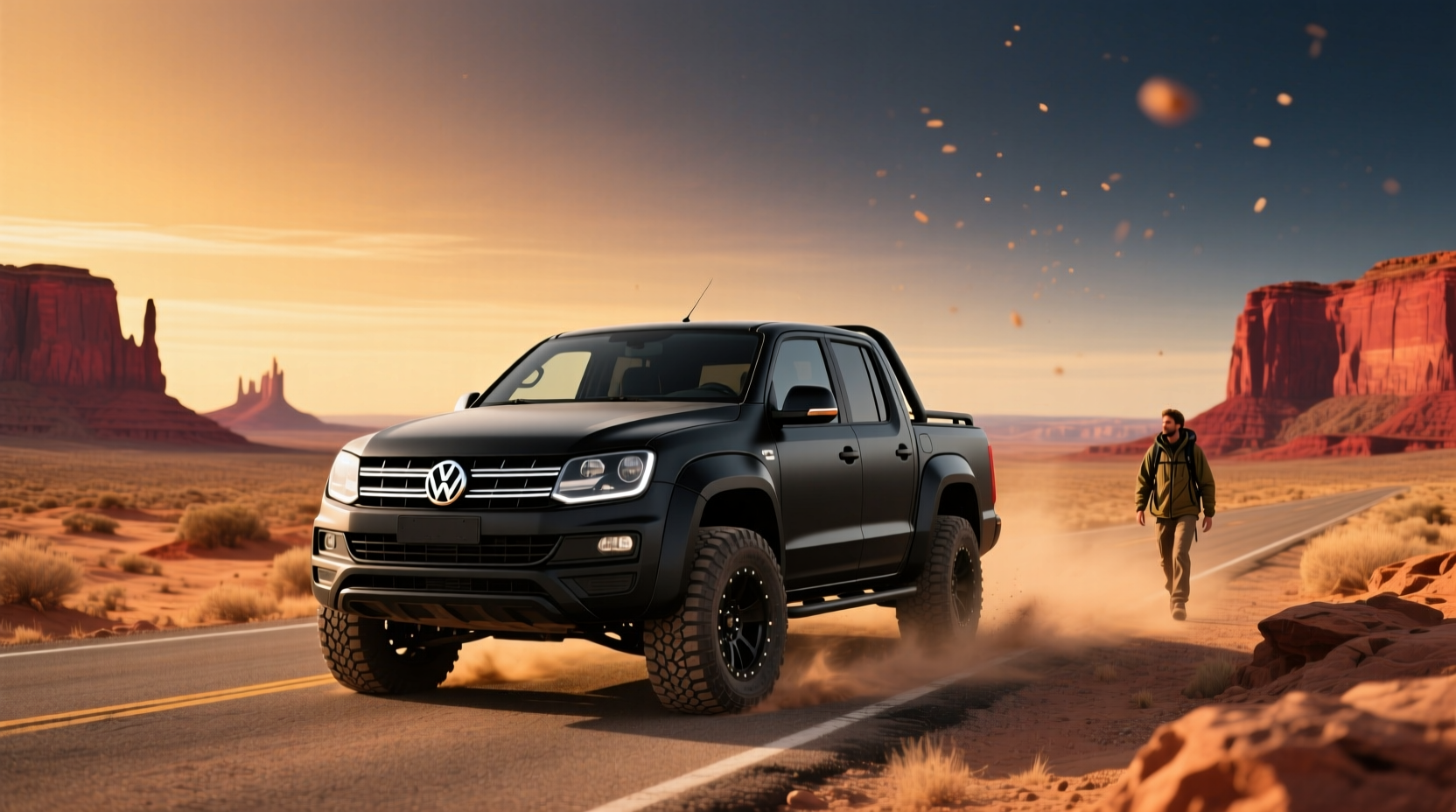
If you're asking how to choose a VW Amarok for use in the United States, the most critical fact is this: the Volkswagen Amarok is not officially sold or distributed in the U.S. Despite its global popularity as a durable midsize pickup, Volkswagen has confirmed it has no plans to introduce the Amarok to North America 1. The main barrier is the "Chicken Tax," a 25% tariff on imported light trucks that makes foreign pickups economically unviable without domestic production—a step VW has chosen not to take 2. While rare exceptions exist—like a 2017 model imported legally under a farm-use loophole—there is no official sales channel. For buyers seeking an alternative to American full-size trucks, understanding these limitations, legal import pathways, and comparable U.S.-available models is essential before making any decision.
About the VW Amarok: Definition and Typical Use Cases
The 🚚 Volkswagen Amarok is a midsize pickup truck first introduced in 2010 and currently in its second generation (launched in 2022). Unlike many compact pickups, the Amarok competes directly with larger trucks in payload and towing capacity, especially in markets like Europe, South Africa, and Latin America. It's built on the same platform as the Ford Ranger (T6 and newer), reflecting a strategic partnership between Volkswagen and Ford for commercial vehicles.
Typical use cases include:
- Commercial work: Used by contractors, farmers, and field service operators needing reliable off-road access and moderate hauling capacity.
- Adventure and overlanding: Popular among outdoor enthusiasts due to its robust diesel engines, available manual transmissions, and capable four-wheel-drive systems.
- Urban utility: Compact enough for city driving compared to full-size American pickups, yet powerful enough for weekend projects or towing small trailers.
The Amarok is particularly valued in regions where fuel efficiency, maneuverability, and strong diesel performance matter more than maximum bed size or V8 power.
Why the VW Amarok Is Gaining Popularity Globally
📈 The Amarok has seen growing interest worldwide due to several converging trends:
- Rise of lifestyle pickups: Consumers increasingly view pickups not just as work tools but as versatile daily drivers for recreation and travel.
- Demand for efficient powertrains: The Amarok offers turbo-diesel options (like the 2.0L TDI) that deliver strong torque and better fuel economy than typical American V6 or V8 engines.
- Platform sharing benefits: Co-development with the Ford Ranger improves reliability, reduces R&D costs, and ensures proven mechanicals in challenging environments.
- Regional customization: VW tailors Amarok variants to local needs—e.g., high-clearance models for rugged terrain in South America, luxury trims for urban European buyers.
These factors contribute to its appeal as a balanced, globally engineered truck that bridges the gap between compact utility and full-size capability.
Types and Variants of the VW Amarok
📋 The Amarok comes in multiple configurations depending on the market. Key variants include:
1. Single Cab / Base Work Truck
- Pros: Lower price, lighter weight, better fuel economy, ideal for tool transport.
- Cons: No rear passenger space, limited comfort features.
- Best for: Commercial fleets, tradespeople prioritizing cargo over passengers.
2. Double Cab / Crew Cab (Most Common)
- Pros: Full back seat, family-friendly interior, available premium infotainment and safety tech.
- Cons: Higher cost, slightly reduced bed length.
- Best for: Personal use, overlanding, dual-purpose work-and-recreation roles.
3. Highline / Aventura (Top-Tier Trims)
- Pros: Leather seats, advanced driver aids, enhanced suspension, unique styling.
- Cons: Significantly more expensive; may not justify added cost for utilitarian users.
- Best for: Buyers wanting a premium pickup experience without opting for luxury brands.
4. Special Editions (e.g., Canyon, Wildtrack)
- Pros: Off-road enhancements like skid plates, all-terrain tires, tow hooks.
- Cons: Niche appeal; modifications may not suit paved-road driving.
- Best for: Enthusiasts focused on trail performance.
Note: Trim availability varies by region and model year. Always verify specifications based on your country’s official VW website.
Key Features and Specifications to Evaluate
🔍 When assessing whether a VW Amarok fits your needs—even indirectly—consider these core criteria:
- Engine Type: Most markets offer 2.0L turbo-diesel (TDI) with outputs from 150hp to 258hp. Some regions have gasoline options. Diesel provides superior towing and efficiency.
- Transmission: Available in 6-speed manual or 8-speed automatic. Manuals are rarer but favored by purists.
- Drivetrain: Standard rear-wheel drive; optional permanent or part-time 4WD with low-range gearing.
- Towing Capacity: Up to 3.5 tons (7,700 lbs) when properly equipped—comparable to midsize American trucks.
- Payload: Around 1,000 kg (2,200 lbs), suitable for moderate loads.
- Safety Tech: Includes adaptive cruise control, lane assist, emergency braking (availability depends on trim and market).
- Bed Size: Approximately 1,555 mm (61.2 in) long—smaller than U.S. full-size trucks but adequate for most tasks.
For U.S. buyers exploring importation, confirm emissions compliance (EPA) and crash safety standards (NHTSA) are met—or if exemptions apply.
Pros and Cons of the VW Amarok
- Strong diesel engine performance with good fuel economy
- Capable off-road with available 4MOTION system
- Higher refinement than many global rivals
- Proven platform shared with Ford Ranger
- More compact than American full-size trucks
- No official U.S. sales or dealer support
- Limited service network outside VW’s core markets
- Parts may be harder to source in North America
- Not certified for U.S. emissions or safety standards
- Few resale options within the U.S.
How to Choose a VW Amarok: Step-by-Step Buying Guide
🧭 If you're determined to own a VW Amarok in the U.S., follow this structured approach:
- Assess Your Need: Ask: Do you need a truck primarily for work, recreation, or both? If you require warranty coverage or frequent servicing, a U.S.-sold model may be wiser.
- Explore Legal Import Options:
- 25-Year Rule: Vehicles older than 25 years can be imported without meeting FMVSS standards. No current Amarok qualifies yet.
- Show or Display: For rare or non-compliant vehicles, this NHTSA exemption allows limited use but restricts modifications and resale.
- Farm Use Loophole: As seen with the 2017 Michigan import, some states allow commercial farm vehicle registration under relaxed rules—but this requires documentation and intent verification 3.
- Verify Compliance: Contact the U.S. EPA and NHTSA to determine if retrofitting to meet standards is feasible (often costly).
- Budget Realistically: Factor in shipping, duties, conversion costs (if needed), inspection fees, and potential repairs. Total cost often exceeds MSRP in home market.
- Avoid These Pitfalls:
- Buying without verifying title status or import legality
- Assuming European specs meet U.S. requirements
- Overlooking long-term maintenance challenges
- Ignoring state-level registration hurdles
Price & Market Insights
💰 In countries where it's sold (e.g., Germany, South Africa, Australia), the VW Amarok ranges from €35,000 to €60,000+ EUR (~$38,000–$65,000 USD), depending on trim and options. In the U.S., there is no official pricing because it's not offered.
On the gray market, one-off imports have sold for over $45,000, despite being used models, due to rarity and enthusiast demand 3. This reflects premium pricing for exclusivity, not value.
Value Tip: For similar capabilities, consider U.S.-available midsize trucks like the Ford Ranger, Toyota Tacoma, or Chevrolet Colorado, which offer factory warranties, widespread service, and easier ownership.
Top-Seller & Competitive Analysis
📊 While the Amarok isn't sold in the U.S., comparing it to available competitors helps contextualize its positioning.
| Model | Engine | Towing (lbs) | MSRP (USD) | U.S. Availability |
|---|---|---|---|---|
| VW Amarok (Global) | 2.0L Turbo Diesel | 7,700 | N/A | No |
| Ford Ranger | 2.3L EcoBoost Gas | 7,500 | $33,000+ | Yes |
| Toyota Tacoma | 2.4L Turbo Gas | 6,800 | $32,000+ | Yes |
| Chevrolet Colorado | 2.7L Turbo Gas | 7,700 | $32,500+ | Yes |
The Amarok holds its own in towing and engine output, but lacks the ecosystem support of its U.S.-available peers.
Customer Feedback Synthesis
👥 Based on global owner reviews and expert analyses:
Common Praises:- “Powerful and refined diesel engine”
- “Feels car-like to drive compared to rivals”
- “High build quality and durable interior materials”
- “Excellent off-road traction with 4MOTION”
- “Fuel tank capacity could be larger for long trips”
- “Ride can be stiff when unloaded”
- “Infotainment system lags behind German car standards”
- “Limited dealer presence in rural areas”
Sourcing & Supplier Tips
🌐 If importing:
- Work with a licensed customs broker experienced in vehicle imports.
- Source from reputable exporters in countries with right-hand traffic if applicable.
- Obtain a complete service history and conduct a pre-shipment inspection.
- Verify VIN against recall databases in the original market.
- Consider joining Amarok owner forums (e.g., Amarok Club Europe) for parts sourcing advice.
For U.S. buyers, purchasing through unofficial channels carries risk—ensure clear title transfer and compliance documentation.
Maintenance, Safety & Legal Considerations
🔧 Key points for potential owners:
- Maintenance: Requires diesel-specific servicing (DPF, AdBlue if equipped). Parts may need to be ordered internationally.
- Safety: Global Amaroks may lack certain U.S.-required features (e.g., specific airbag layouts, lighting standards).
- Legal: Even if imported legally, some states may refuse registration. Always check with your DMV before proceeding.
- Warranty: Factory warranties typically do not cover vehicles outside designated regions.
Action Step: Before import, contact the California DMV or equivalent agency to understand registration feasibility.
Conclusion
The Volkswagen Amarok is not sold in the United States, and there are no current plans to change that due to the Chicken Tax and strategic market focus. While it's possible to explore importing one through legal exceptions, doing so involves significant cost, complexity, and long-term ownership challenges. If you value diesel efficiency, compact dimensions, and global engineering, the Amarok is compelling—but only if you’re prepared for non-standard ownership. For most U.S. buyers, choosing a domestically available midsize pickup like the Ford Ranger or Toyota Tacoma offers greater practicality, support, and value. If you're set on the Amarok, ensure you fully research compliance, budget for hidden costs, and confirm local registration eligibility before proceeding.
Frequently Asked Questions
- Can I legally import a VW Amarok into the U.S.?
- Yes, but only under specific conditions such as the 25-year rule, show-or-display exemption, or agricultural use loopholes. Each has strict requirements enforced by U.S. Customs and Border Protection, EPA, and NHTSA.
- Why doesn’t Volkswagen sell the Amarok in the U.S.?
- Mainly due to the "Chicken Tax," a 25% tariff on imported light trucks. Building the Amarok in the U.S. would be required to compete on price, which VW has declined to pursue.
- Is the VW Amarok better than the Ford Ranger?
- They share the same platform, so mechanicals are similar. The Amarok often has more upscale interior finishes and tuning preferences, but the Ranger offers broader U.S. support and customization.
- Will the new South American Amarok come to the U.S.?
- No. Volkswagen has explicitly stated that the next-generation Amarok developed for Argentina and Brazil will not be sold in North America 4.
- What are the best U.S.-available alternatives to the VW Amarok?
- The Ford Ranger, Toyota Tacoma, Chevrolet Colorado, and Nissan Frontier offer similar size, capability, and efficiency. All are widely supported with dealerships, parts, and warranties.




 浙公网安备
33010002000092号
 浙B2-20120091-4