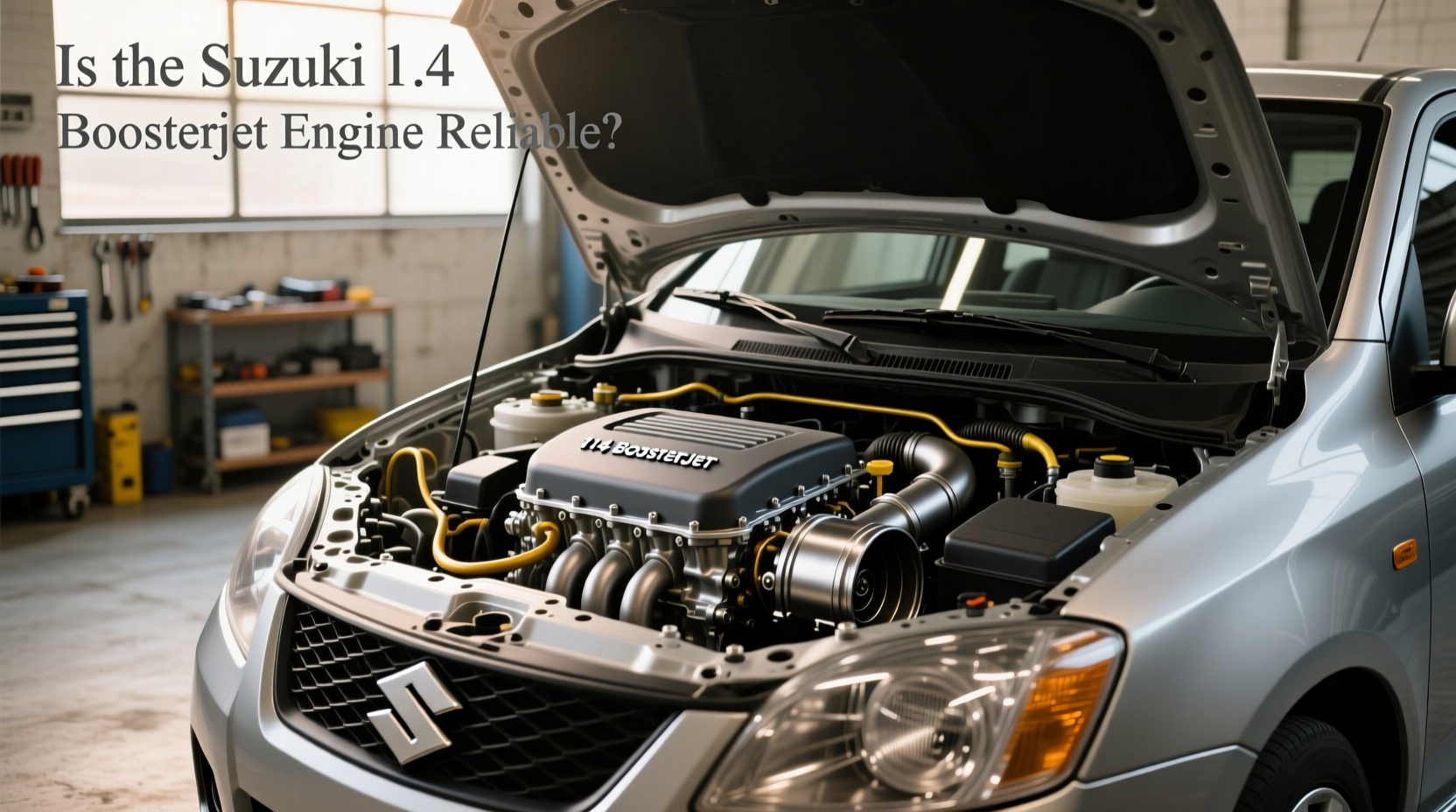
If you're asking how to choose a K14B engine for Suzuki or wondering if the Suzuki 1.4 Boosterjet engine is reliable, here’s the direct answer: yes, the naturally aspirated K14B engine is widely regarded as dependable, fuel-efficient, and durable for city commuting and light-duty use. When evaluating a used or replacement K14B engine, prioritize low mileage (under 80,000 km), full service history, and verify compatibility with your vehicle model—Swift, Baleno, Ciaz, or Ertiga. Avoid units with unclear provenance or signs of oil leaks, overheating, or poor compression. This guide covers what to look for in a K14B engine for Suzuki, including performance data, common issues, sourcing tips, and maintenance best practices to help you make an informed decision.
About the K14B Engine for Suzuki: Definition and Typical Use Cases ⚙️
The Suzuki K14B is a 1.4-liter (1,372 cc) inline-four, naturally aspirated gasoline engine introduced in 2010 as part of Suzuki's K-series family 1. Marketed under the “Boosterjet” name in some regions—though not to be confused with the turbocharged K14C or K14D variants—the K14B features DOHC, 16-valve architecture with Variable Valve Timing (VVT), delivering a balance of efficiency and responsive performance.
This engine powers several compact and subcompact models globally, including the Suzuki Swift, Baleno, Ciaz, and Ertiga 2. It is commonly used in urban environments where fuel economy, low maintenance costs, and mechanical simplicity are valued. The K14B is often chosen for:
- 🚗 Replacing a failed engine in older Suzuki vehicles
- 🔧 Restoring or rebuilding a secondhand car
- 🌍 Importing from markets like Japan where well-maintained, low-mileage units are available
- 🛠️ Swapping into compatible platforms due to its compact size and reliability
Unlike its turbocharged counterparts, the K14B does not feature direct injection or forced induction, contributing to its mechanical robustness and ease of repair.
Why the K14B Engine Is Gaining Popularity ✅
The demand for the K14B engine has grown steadily, especially in emerging markets and among DIY mechanics. Key reasons include:
- Proven reliability: Long-term owner reports show minimal major failures when properly maintained 3.
- Fuel efficiency: Real-world fuel economy averages 44–48 mpg (5–6 L/100 km), making it cost-effective for daily driving 4.
- Availability of used imports: Japanese domestic market (JDM) engines are popular due to strict inspections and low wear.
- Simplified design: No turbocharger or high-pressure fuel system reduces potential failure points compared to modern downsized engines.
For buyers seeking a dependable, economical powertrain without the complexity of turbocharging, the K14B offers a compelling option.
Types and Variants of the K14B Engine 🔧
While the core K14B engine remains consistent across models, there are minor variations based on region, emissions standards, and vehicle application. Understanding these helps avoid compatibility issues.
| Variants | Key Differences | Pros | Cons |
|---|---|---|---|
| K14B Standard (Non-VVT) | Early versions without VVT; lower torque output | Simpler design, easier tuning | Less efficient, slightly lower performance |
| K14B with VVT | Most common version; includes variable valve timing for better efficiency | Improved fuel economy and mid-range torque | Slightly more complex cam phaser mechanism |
| K14B for Manual vs. Automatic | Different flywheel, starter, and torque converter interface | Optimized for transmission type | Not directly interchangeable without modification |
| JDM vs. Export Models | Differences in ECU mapping, emissions controls, and sensor placement | JDM units often have better maintenance records | May require ECU reprogramming or harness adaptation |
When choosing a K14B engine, confirm the exact variant matches your vehicle’s requirements—especially transmission type, mounting points, and wiring harness compatibility.
Key Features and Specifications to Evaluate 📊
To assess whether a K14B engine is right for your needs, examine the following technical and operational parameters:
- Displacement: 1,372 cc (1.4L) – ideal for small to mid-sized vehicles
- Power Output: 92–96 PS (91–95 hp) at 6,000 rpm
- Torque: 130–134 N·m at 4,000–4,800 rpm – sufficient for city driving but limited for highway overtaking
- Compression Ratio: 10.0–11.0:1 – moderate, suitable for regular unleaded fuel
- Fuel System: Multi-point fuel injection (MPFI), not direct injection
- Valvetrain: DOHC, 16-valve with VVT (on later models)
- Fuel Economy: Approximately 18–20 km/L (44–48 mpg) in mixed driving 2
- Engine Weight: Around 100–110 kg – lightweight, aiding vehicle handling
These specs make the K14B well-suited for drivers prioritizing economy and reliability over high performance.
Pros and Cons of the K14B Engine 📋
- High reliability with proper maintenance
- Excellent fuel efficiency for daily commuting
- Low repair and parts cost compared to turbocharged engines
- Widely available in global used markets
- Simple design with fewer electronic complexities
- Limited power for towing or hilly terrain
- No turbo boost—less responsive than newer engines
- Older technology; lacks start-stop or hybrid integration
- Potential for carbon buildup if oil changes are delayed
- Variants may not be plug-and-play across all regions
Best suited for: Urban commuters, budget-conscious owners, and those replacing a damaged engine in a Swift or Ciaz.
Less ideal for: High-speed highway driving, towing, or performance enthusiasts.
How to Choose a K14B Engine for Suzuki: Step-by-Step Buying Guide 🛒
Selecting the right K14B engine requires careful evaluation. Follow this checklist to minimize risk:
- Confirm Compatibility: Match engine code, year, transmission type, and emissions standard to your vehicle. A mismatch can lead to ECU errors or fitment issues.
- Check Mileage and Service History: Prioritize engines under 80,000 km with documented maintenance. Ask for service records or import inspection reports.
- Inspect for Physical Damage: Look for oil leaks, cracked mounts, corrosion, or signs of overheating (discoloration on exhaust manifold).
- Verify Compression Test Results: Request a recent compression test. Healthy readings should be within 10% across all cylinders (typically 120–160 psi).
- Ask About Reason for Removal: Was the engine replaced due to accident damage, transmission failure, or mechanical issues? Avoid engines pulled from flood-damaged vehicles.
- Test the Electrical Systems: Ensure sensors, alternator, and starter motor function properly. Incompatibility with your ECU can cause drivability issues.
- Avoid These Red Flags:
- Unrealistically low prices
- No verifiable history or test data
- Missing components (intake manifold, ECU, sensors)
- Visible sludge or metal debris in oil cap or dipstick
Always source from reputable suppliers or certified dismantlers when possible.
Price & Market Insights 💵
Prices for a K14B engine vary significantly by region, condition, and supply chain:
- Used (Local): $300–$600 USD – may lack warranty or testing
- Used JDM Import: $600–$1,000 USD – typically low-mileage with full history
- Rebuilt/Refurbished: $800–$1,300 USD – includes labor, gaskets, and testing
- New OEM (if available): Rare; may exceed $2,000 USD
Value depends on condition and completeness. A fully assembled long-block with accessories offers better value than a bare engine requiring additional purchases. Always factor in shipping, import duties, and installation costs. In markets like South Africa, India, or Southeast Asia, local rebuilders offer competitive pricing with short warranties.
Top-Seller & Competitive Analysis 📈
While no single “top seller” dominates globally, JDM-imported K14B engines from Japanese auction houses are frequently cited as top choices due to transparency and low wear. Below is a comparison of common sourcing options:
| Source Type | Avg. Price (USD) | Mileage Range | Reliability | Warranty |
|---|---|---|---|---|
| JDM Used Engine | $600–$1,000 | 30k–70k km | ⭐⭐⭐⭐☆ (4.5/5) | 30–90 days |
| Local Used Engine | $300–$600 | 50k–120k km | ⭐⭐★☆☆ (2.5/5) | Rarely offered |
| Rebuilt Engine | $800–$1,300 | 0 km (reset) | ⭐⭐⭐★☆ (3.8/5) | 6–12 months |
| OEM New (if available) | $1,800+ | 0 km | ⭐⭐⭐⭐☆ (4.5/5) | 12+ months |
JDM engines often represent the best balance of price and reliability. Rebuilt units offer longer warranties but depend on workshop quality.
Customer Feedback Synthesis 👥
Analysis of owner forums, mechanic reviews, and automotive sites reveals consistent themes:
- “Runs smoothly with no issues after 100,000 km.”
- “Fuel economy is excellent—regular trips yield 45+ mpg.”
- “Easy to work on; common tools suffice for most repairs.”
- “No major engine failures reported in long-term ownership.” 4
- “Slight hesitation during acceleration, especially when climbing hills.”
- “Some electrical warning lights unrelated to engine, likely ECU glitches.”
- “Early suspension wear noted, but not engine-related.” 3
- “Carbon buildup possible if oil changes are infrequent.”
Overall, dissatisfaction tends to stem from non-engine factors like transmission or electronics, not the K14B itself.
Sourcing & Supplier Tips 🌐
When purchasing a K14B engine, consider these sourcing strategies:
- Japanese Import Specialists: Companies like Jap Motors (South Africa) or Prestige Imports (UK) specialize in verified JDM engines with inspection reports.
- Online Marketplaces: Platforms such as Car-Part.com or eBay allow filtering by location, mileage, and seller rating—but verify authenticity.
- Local Wreckers: Useful for immediate availability, though history may be limited.
- Rebuild Shops: Offer tested engines with warranties; request details on parts replaced and break-in procedures.
For bulk buyers or mechanics, establishing relationships with dismantlers can yield volume discounts. Always inspect before payment—or request a video test run if buying remotely.
Maintenance, Safety & Legal Considerations 🧼
To maximize lifespan and safety:
- Follow Maintenance Schedule: Change oil every 5,000–7,500 km, especially in hot climates 2. Replace coolant and spark plugs per manufacturer intervals.
- Use Quality Fluids: Stick to SAE 5W-30 or 10W-30 API SN-grade oil and OEM-spec coolant.
- Safety During Installation: Use proper lifting equipment; disconnect battery; follow torque specs to prevent leaks or damage.
- Legal Compliance: In some regions, engine swaps require inspection or emissions certification. Check local regulations before installation.
- Verify Emissions Standards: Ensure the replacement engine meets your area’s requirements to avoid registration issues.
When in doubt, consult a certified mechanic or dealership for compatibility and compliance.
Conclusion: Who Should Buy the K14B Engine? 🏁
The Suzuki 1.4 Boosterjet (K14B) engine is a reliable, fuel-efficient choice for replacing or upgrading compact Suzuki models. If you need a cost-effective, durable engine for city driving and daily commuting, the K14B is a strong contender—especially when sourced as a low-mileage JDM unit or professionally rebuilt engine. However, if you require high power, towing capability, or the latest tech features, consider newer turbocharged alternatives like the K14C. For most users seeking a straightforward, economical solution, the K14B delivers peace of mind and predictable performance.




 浙公网安备
33010002000092号
 浙B2-20120091-4