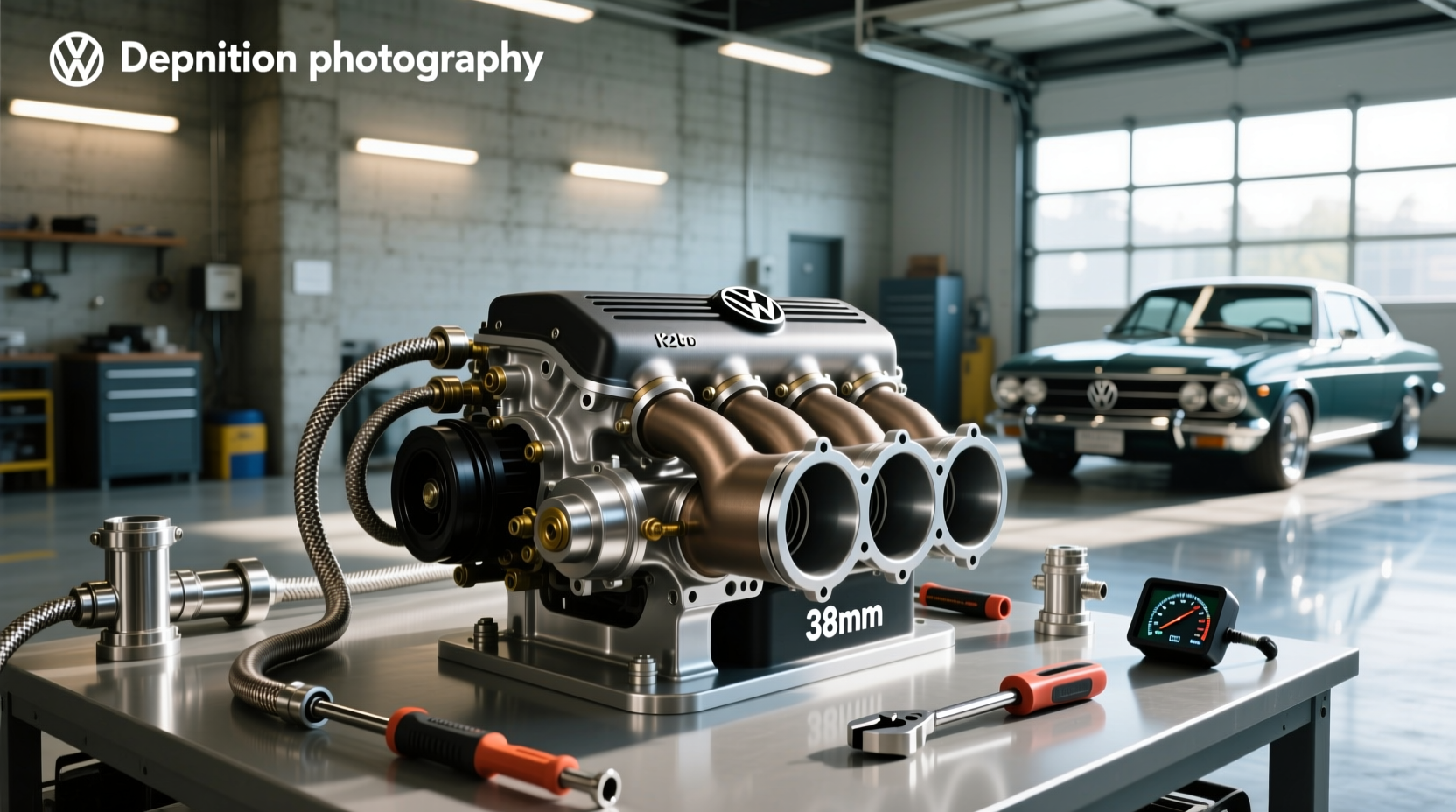
When selecting a K20 turbo manifold, one of the most critical performance factors is the internal diameter (ID) of the runners. For Honda K20 engines, common runner sizes range from 42.5 mm to 48 mm ID, depending on the build’s power goals and turbocharger setup 12. Smaller runners (43–44 mm) improve low-end torque and spool response, ideal for street-driven or mildly boosted setups. Larger runners (46–48 mm) maximize top-end power and flow for high-horsepower applications (350+ whp). Choosing the wrong size can lead to poor spool, excessive backpressure, or mismatched turbo dynamics. Always match runner size to your turbo type (twin vs. single scroll), intended RPM range, and power target.
About K20 Turbo Manifold Runner Sizes
The runner size in a turbo manifold refers to the internal diameter of the primary tubes that channel exhaust gases from each cylinder to the turbocharger turbine. In the context of a Honda K20 engine, this measurement is crucial because it directly affects exhaust velocity, scavenging efficiency, and turbocharger response. Most aftermarket manifolds for the K20 are designed with either equal-length or unequal-length runners, and diameters typically fall between 1.7” and 1.9” (43–48 mm).
These manifolds are used primarily in turbocharged builds of vehicles like the Civic Si, RSX, and Integra DC5. The choice of runner size depends heavily on whether the goal is daily drivability, track performance, or maximum horsepower. Unlike stock headers, turbo manifolds must be engineered to work with specific turbo flange patterns (e.g., T3, T4), wastegate configurations (internal or V-band external), and engine management systems.
Why K20 Turbo Manifold Runner Size Matters
Enthusiasts are increasingly focused on optimizing every aspect of forced induction systems, and manifold runner sizing has become a key differentiator in performance tuning. As more K-series engines are pushed beyond factory limits—some exceeding 400 wheel horsepower—the need for properly sized exhaust components grows. A well-matched runner diameter ensures efficient exhaust gas velocity, which improves turbo spool without sacrificing peak power.
This trend is driven by greater access to data from dyno testing and real-world tuning, allowing builders to make informed decisions rather than relying on guesswork. Additionally, the popularity of bolt-on turbo kits and hybrid turbochargers has made precise component matching essential for reliability and performance consistency.
Types and Variants of K20 Turbo Manifolds
Different designs cater to various performance objectives and installation constraints:
- ⚙️Equal-Length Tubular Manifolds: Feature precisely cut and welded tubing to ensure each runner is the same length. This design maintains pulse energy separation, especially beneficial for twin-scroll turbos. Offers improved spool and broader powerband but may require custom fitment.
Pros: Better scavenging, consistent pulse timing, optimal for high-RPM builds.
Cons: More expensive, potential clearance issues in tight engine bays. - 🏭Cast Manifolds: Made from ductile iron or steel casting. Often found in OEM or entry-level aftermarket kits. Less expensive and durable, but usually feature unequal runners and limited flow efficiency.
Pros: Cost-effective, robust under thermal cycling.
Cons: Heavier, less efficient flow, not ideal for high-performance use. - 🔧Log-Style Manifolds: Combine all runners into a single chamber before feeding the turbo. Common in budget setups.
Pros: Simple design, easy to manufacture.
Cons: Poor pulse separation, slower spool, reduced peak efficiency. - 📍Side-Mounted (Sidewinder) Manifolds: Designed to position the turbo sideways for packaging efficiency, often used with front-mount intercoolers.
Pros: Compact layout, shorter intake tract possible.
Cons: May limit turbo upgrade paths, specialized application.
Key Features and Specifications to Evaluate
When evaluating a K20 turbo manifold, consider these technical aspects:
- 📏Runner Internal Diameter (ID): Most important factor. Ranges from ~42.5 mm to 48 mm. Match to turbo size and power level.
- ⚖️Runner Length and Equalization: Equal-length promotes balanced exhaust pulses; critical for twin-scroll turbos.
- 🔥Material Type: Mild steel (budget, prone to rust), stainless steel (durable, heat-resistant), or Inconel (high-end, extreme temps).
- 🔌Flange Compatibility: Must match turbo inlet (T3, T4, etc.) and include proper wastegate port (38mm, 44mm V-band, or internal).
- 🎯Port Matching: Smooth transition from cylinder head to manifold reduces turbulence and improves flow.
- 🌡️Thermal Coatings: Optional ceramic coatings reduce underhood temperatures and prevent oxidation.
Pros and Cons of Different Runner Sizes
Understanding trade-offs helps align expectations with real-world performance:
Best for: Street cars, daily drivers, mild boost (up to 250 whp)
✔️ Pros: Faster turbo spool, better low-end torque, improved drivability
❌ Cons: Can restrict flow at high RPM, increased backpressure in high-power builds
Best for: Track-focused or high-horsepower builds (300+ whp)
✔️ Pros: Higher peak power, reduced backpressure, better flow at high RPM
❌ Cons: Slower spool, less low-end response, may feel sluggish in city driving
How to Choose a K20 Turbo Manifold Runner Size
Selecting the right manifold involves a structured decision process:
- 🔍Define Your Performance Goal: Are you building a reliable daily driver (<250 whp) or a track monster (>350 whp)? Low-power builds benefit from smaller runners (43–44 mm); high-output engines need larger ones (46–48 mm).
- 🌀Match Turbocharger Type: Twin-scroll turbos perform best with equal-length runners to preserve exhaust pulse integrity. Single-scroll turbos are more forgiving but still benefit from optimized runner length and diameter.
- 📊Analyze Engine Displacement & RPM Range: While the K20 is 2.0L, stroker builds (e.g., K24-based) may require larger runners. High-revving engines (>8,000 RPM) favor slightly larger diameters for flow.
- ✅Verify Fitment and Clearance: Measure engine bay space, especially if using a sidewinder or large-frame turbo. Confirm compatibility with downpipe, oil pan, and suspension components.
- ❗Avoid These Mistakes:
- Using oversized runners on a low-boost engine (results in lazy spool)
- Ignoring wastegate configuration (V-band vs. bellmouth)
- Assuming all "T3" manifolds are interchangeable (flange patterns vary)
- Skipping port-matching verification
For most balanced builds, a 44–46 mm ID equal-length manifold offers a good compromise between response and top-end power.
Price & Market Insights
K20 turbo manifolds vary widely in price based on material, design, and brand reputation:
- 🛒Budget ($150–$300): Cast or basic tubular manifolds, often with unequal runners. Suitable for mild upgrades.
- ✨Mid-Range ($300–$600): Equal-length tubular manifolds from reputable brands (e.g., Rev9Power, SPA TURBO USA). Stainless steel construction, T3/T4 options.
- 🏆Premium ($600–$1,000+): Fully customized or high-flow designs, sometimes with integrated features like O2 bungs or coolant passages.
Prices may vary by region and retailer. Always verify return policies and warranty terms before purchase.
Top-Seller & Competitive Analysis
Below is a comparison of popular K20 turbo manifolds based on published specifications:
| Manufacturer | Runner ID | Design Type | Turbo Flange | Wastegate | Use Case |
|---|---|---|---|---|---|
| Rev9Power HP-Series | 48 mm | Equal-Length Tubular | T3 | V-Band | High-horsepower (350+ whp) |
| SPA TURBO USA (Cast) | 43 mm | Cast Log-Style | T3 | V-Band | Street / Mild Turbo |
| Walton Motorsport | 42.56 mm | Tubular (Large Primaries) | T3/T4 | Custom | RWD Conversions / High RPM |
| CXRacing (EG Kit) | 44.5 mm (1.75") | Tubular | T3 | 44mm V-Band | NA-to-Turbo Swaps |
Note: Specifications may vary by model year and application. Always check manufacturer datasheets before purchasing.
Customer Feedback Synthesis
Analysis of buyer reviews reveals recurring themes:
- 👍Common Praises:
- Noticeable improvement in spool time with properly sized runners
- Good fitment when matched to correct vehicle variant (e.g., 8th gen Civic Si)
- Durability of stainless steel units under repeated heat cycles - 👎Frequent Complaints:
- Misaligned ports requiring grinding for optimal flow
- Missing hardware or unclear installation instructions
- Warping after prolonged high-load use in lower-grade materials
Buyers emphasize the importance of researching fitment and confirming turbo compatibility prior to installation.
Sourcing & Supplier Tips
When sourcing a K20 turbo manifold:
- 🌐 Purchase from suppliers with detailed product descriptions and dimensional drawings.
- 📦 For bulk or resale, contact manufacturers directly for distributor programs (e.g., Rev9Power, CXRacing).
- 🔎 Inspect for weld quality, warping, and proper flange flatness upon delivery.
- 📝 Verify return policy—some vendors exclude exhaust components due to fitment variability.
Consider buying from vendors offering test-fit services or compatibility guarantees.
Maintenance, Safety & Legal Considerations
Proper maintenance extends manifold life:
- 🧼 Regularly inspect for cracks, warping, or leaks, especially near welds and flanges.
- 🌡️ Allow engine to idle for 30–60 seconds before shutdown to prevent heat soak and oil coking in turbo feed lines.
- 🚦 Ensure emissions compliance: Some turbo manifolds relocate or delete catalytic converters. Check local regulations before modifying exhaust systems.
Always use new gaskets and follow torque specifications during installation to prevent exhaust leaks.
Conclusion
Choosing the right runner size for a K20 turbo manifold depends on your specific performance goals and engine configuration. If you're building a daily-driven car with moderate boost, a 43–44 mm ID manifold will provide strong low-end response and quick spool. For high-horsepower or track-oriented builds (350+ whp), opt for 46–48 mm ID equal-length designs to maximize flow and top-end power. Always match the manifold to your turbo type, verify fitment, and prioritize build quality over cost savings. There is no universal "best" size—only the best fit for your application.
Frequently Asked Questions
- What size runner is typical for a K20 turbo manifold?
Most K20 turbo manifolds range from 42.5 mm to 48 mm internal diameter. Common sizes are 43–44 mm for street use and 46–48 mm for high-performance applications. - Does a larger runner always mean more power?
No. Larger runners improve top-end power but can reduce low-end torque and spool speed. They are only beneficial when matched to high-displacement, high-RPM, or high-boost engines. - Can I use a K24 manifold on a K20 engine?
While physically possible in some cases, K24 manifolds have larger runners suited for 2.4L displacement. Using one on a K20 may result in poor spool and lag unless the engine is significantly modified. - Are equal-length manifolds worth the extra cost?
Yes, for performance builds. Equal-length runners improve exhaust scavenging and pulse consistency, leading to smoother power delivery and better turbo efficiency, especially with twin-scroll turbos. - How do I verify runner diameter before buying?
Check manufacturer specifications online. If not listed, contact the seller directly or measure a physical unit with calipers. Be aware that outer diameter (OD) differs from internal diameter (ID).




 浙公网安备
33010002000092号
 浙B2-20120091-4