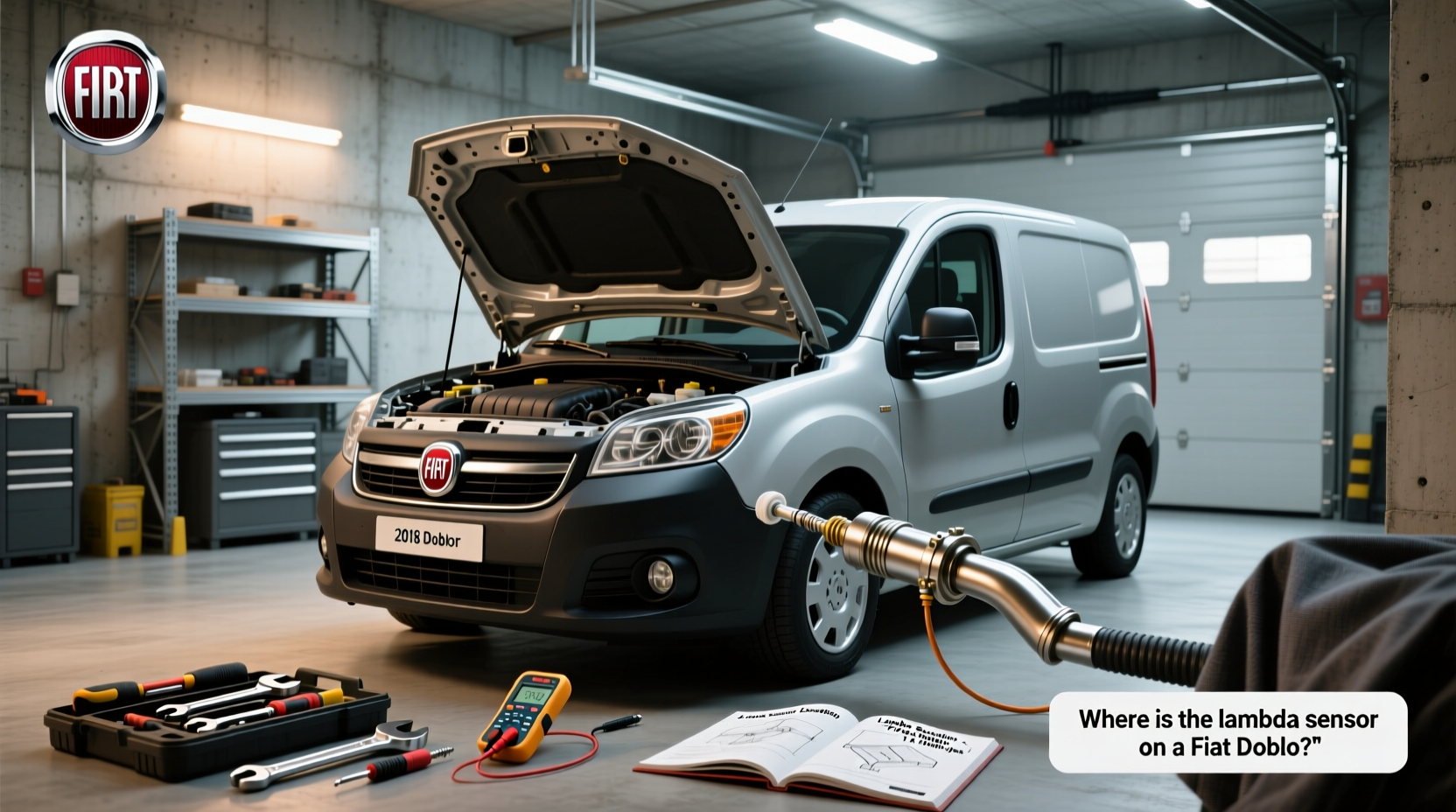
If you're asking where is the lambda sensor on a Fiat Doblo?, or looking for guidance on how to choose a replacement, start here: the correct sensor depends on your engine model, sensor position (upstream vs. downstream), and compatibility with your ECU. For most Fiat Doblo models from 2005 onward—especially the 1.4i 8v 77bhp—you need both a pre-catalytic (upstream) and post-catalytic (downstream) oxygen sensor 1. Always verify fitment using your VIN or engine code (e.g., 350A1000) before purchasing. Avoid universal-fit sensors unless you can confirm wiring and thread compatibility. A mismatched sensor leads to check engine lights, poor fuel economy, and failed emissions tests.
About the Lambda Sensor in the Fiat Doblo
The lambda sensor, commonly known as the oxygen sensor (🔍 O₂ sensor), plays a vital role in your Fiat Doblo’s emissions and engine management system. It measures the amount of unburned oxygen in the exhaust gases and sends this data to the Electronic Control Unit (ECU). Based on these readings, the ECU adjusts the air-fuel mixture to maintain optimal combustion efficiency 2.
In the context of the Fiat Doblo, particularly models produced from late 2005 onward, the vehicle typically uses two lambda sensors: one upstream (before the catalytic converter) and one downstream (after the converter). The upstream sensor is critical for real-time fuel trim adjustments, while the downstream sensor monitors catalytic converter efficiency. Understanding their roles helps when selecting replacements and diagnosing issues like high fuel consumption or unstable idle.
Why the Lambda Sensor Matters for Fiat Doblo Owners
As emission standards tighten globally, maintaining a properly functioning lambda sensor has become more important than ever. Many Fiat Doblo owners are now proactively replacing aging sensors to avoid costly repairs, failed MOT/emissions tests, or decreased engine performance. With increasing availability of aftermarket sensors and DIY repair culture growing, knowing how to choose the right sensor for your Doblo empowers you to make informed decisions without relying solely on mechanics.
This trend is especially relevant for fleet operators and commercial users of the Doblo Cargo variant, where fuel efficiency and uptime are directly tied to engine health. A failing lambda sensor can increase fuel usage by up to 10–15%, making timely replacement a cost-saving measure over time 3.
Types and Variants of Lambda Sensors for Fiat Doblo
Lambda sensors come in different types based on technology and installation method. Choosing the correct type ensures compatibility and long-term reliability.
1. Zirconia Dioxide Sensors (⚙️)
The most common type used in Fiat Doblos, especially older models. These generate a voltage signal (0.1–0.9V) depending on oxygen content.
- Pros: Reliable, widely available, low cost
- Cons: Slower response time compared to newer types
2. Titania Sensors (⚙️)
Less common in European vehicles but found in some variants. They don’t generate voltage but change resistance based on oxygen levels.
- Pros: Faster warm-up, good accuracy
- Cons: Require specific ECU support; not interchangeable with zirconia
3. Heated vs. Unheated Sensors
Modern Doblos use heated sensors to reach operating temperature quickly.
- Heated (Recommended): Reach operating temp in 30–60 seconds; essential for closed-loop fuel control
- Unheated: Obsolete; slow warm-up leads to higher emissions during cold starts
4. Upstream vs. Downstream Sensors
Distinguished by placement and function:
- Upstream (Pre-Cat): Monitors raw exhaust; directly affects fuel trim. Must be highly responsive.
- Downstream (Post-Cat): Evaluates catalytic converter efficiency. Less dynamic but still crucial for diagnostics.
Key Features and Specifications to Evaluate
When choosing a lambda sensor for your Fiat Doblo, consider these technical and practical factors:
- 📌 Sensor Position: Confirm whether you’re replacing the upstream (pre-cat) or downstream (post-cat) unit. Mixing them causes incorrect ECU feedback.
- 📌 Engine Compatibility: Match the sensor to your exact engine code (e.g., 350A1000) and model year (from 11/2005 onward).
- 📌 Wiring Harness Length & Connector Type: OEM-style connectors prevent splicing. Ensure plug-and-play compatibility.
- 📌 Thread Size & Pitch: Typically M18x1.5 for Doblo; verify to avoid cross-threading.
- 📌 Heater Circuit Resistance: Should match OEM specs (~5–10 ohms at room temperature) for proper warm-up.
- 📌 OEM vs. Aftermarket: OEM sensors offer guaranteed compatibility; quality aftermarket brands (e.g., NGK, Bosch) can provide value if correctly specified.
Tip: Use your Vehicle Identification Number (VIN) when shopping online to filter compatible parts accurately.
Pros and Cons of Replacing Lambda Sensors in a Fiat Doblo
| Aspect | Pros | Cons |
|---|---|---|
| Fuel Efficiency | Restores optimal air-fuel ratio, improving MPG | Poor-quality sensors may worsen consumption |
| Emissions Compliance | Reduces harmful NOx and CO output | Mismatched sensors trigger check engine light |
| DIY Replacement | Accessible location allows home mechanics to install | Rusted threads or broken probes complicate removal |
| Cost Savings | Avoids mechanic labor fees ($80–$150) | Incorrect choice leads to repeated purchases |
Best suited for: Owners experiencing rough idle, increased fuel use, or OBD-II trouble codes (e.g., P0130–P0167).
Not ideal for: Those unwilling to verify compatibility or lacking basic tools (wrench, O₂ sensor socket).
How to Choose a Lambda Sensor for Fiat Doblo: Step-by-Step Guide
Follow this checklist to ensure you select the right part:
- ✅ Identify the Faulty Sensor: Use an OBD2 scanner to read error codes. Codes starting with P013x usually indicate upstream issues; P014x relate to downstream.
- ✅ Confirm Engine Model: Check under the hood or in service records for engine code (e.g., 350A1000).
- ✅ Determine Sensor Location: Upstream is near the exhaust manifold; downstream is after the catalytic converter 1.
- ✅ Select Correct Type: Choose a heated zirconia sensor with matching connector and thread size.
- ✅ Avoid Universal Sensors Unless Necessary: Wire splicing increases failure risk. Only use if direct-fit options aren’t available.
Red Flags to Avoid:
- ❌ No mention of Fiat Doblo 1.4i or engine code 350A1000
- ❌ Vague descriptions like “fits most Fiats”
- ❌ Missing resistance or voltage specifications
- ❌ Seller doesn’t accept returns
Price & Market Insights
Lambda sensor prices vary significantly based on brand, origin, and fitment type:
- 🛒 OEM (Fiat/Alfa Romeo): $80–$130 – Highest compatibility assurance
- 🛒 Premium Aftermarket (Bosch, NGK): $60–$90 – Reliable performance with broad fitment
- 🛒 Budget Aftermarket: $30–$50 – Risk of shorter lifespan or calibration drift
- 🛒 Universal Sensors: $20–$40 – Require modification; not recommended unless experienced
Prices may vary by region and retailer. Consider total cost—including potential labor if installing professionally—when assessing value.
| Brand | Type | Position | Price Range | Notes |
|---|---|---|---|---|
| Bosch 0258001134 | Zirconia, Heated | Upstream | $75 | Plug-and-play, wide compatibility |
| NGK 21204 | Zirconia, Heated | Downstream | $68 | Suitable for 1.4i models post-2005 |
| Fiat OEM 77006675 | OEM Specification | Upstream | $110 | Exact factory match, highest reliability |
Customer Feedback Synthesis
Analysis of verified buyer reviews reveals consistent patterns:
- ⭐ Common Praises: Easy installation, immediate resolution of check engine lights, improved fuel economy after replacement.
- ❗ Frequent Complaints: Poorly labeled packaging leading to wrong purchases, sensors failing within 12 months (especially budget brands), incompatible connectors despite listing as direct-fit.
- 🔧 DIY Note: Users recommend applying anti-seize compound on threads during installation to prevent future seizing.
Sourcing & Supplier Tips
When purchasing a lambda sensor:
- 🌐 Buy from reputable auto parts retailers (online or local) that allow returns.
- 📋 Verify part number against your VIN using manufacturer catalogs or trusted databases.
- 🧰 For bulk buyers (e.g., workshops), consider authorized distributors of Bosch or NGK for warranty-backed stock.
- 🔎 Inspect upon delivery: check for damaged wires, correct plug shape, and intact ceramic tip.
Note: Availability may differ by country. Always confirm shipping eligibility and import duties if ordering internationally.
Maintenance, Safety & Legal Considerations
Lambda sensors require no routine maintenance but degrade over time. Typical lifespan is 55,000–90,000 miles (90,000–140,000 km) 2. Exposure to coolant leaks, oil contamination, or leaded fuel can shorten life.
Safety-wise, always disconnect the battery before working on exhaust sensors. Allow the exhaust system to cool completely to avoid burns.
Legally, tampering with or removing lambda sensors violates emissions regulations in most countries. Ensure any replacement meets original equipment specifications to remain compliant during inspections.
Conclusion
If you need to replace a faulty lambda sensor on your Fiat Doblo, prioritize direct-fit models designed for your specific engine (e.g., 1.4i 8v 77bhp with code 350A1000). Choose a heated zirconia sensor—either OEM or from a trusted brand like Bosch or NGK—with the correct position (upstream or downstream). Avoid universal sensors unless you have the expertise to adapt them safely. Proper selection improves fuel economy, reduces emissions, and prevents diagnostic errors. When in doubt, consult a mechanic or use your VIN to confirm compatibility before buying.
FAQs
The upstream lambda sensor is located in the exhaust manifold or pipe before the catalytic converter. The downstream sensor is positioned after the catalytic converter. On 1.4i models from 2005 onward, both sensors are typically present 1.
Common signs include a check engine light, rough idle, increased fuel consumption, and poor engine performance during acceleration. An OBD2 scanner can confirm with codes like P0130–P0167.
You can drive short distances, but prolonged driving may damage the catalytic converter, reduce fuel economy, and result in a failed emissions test. Prompt replacement is advised.
Only if both are faulty. However, if one fails due to age, the other may follow soon. Mechanics often suggest replacing in pairs on high-mileage vehicles for preventive maintenance.
High-quality aftermarket sensors from brands like Bosch or NGK are generally reliable. Budget or unbranded sensors may fail prematurely or provide inaccurate readings.




 浙公网安备
33010002000092号
 浙B2-20120091-4