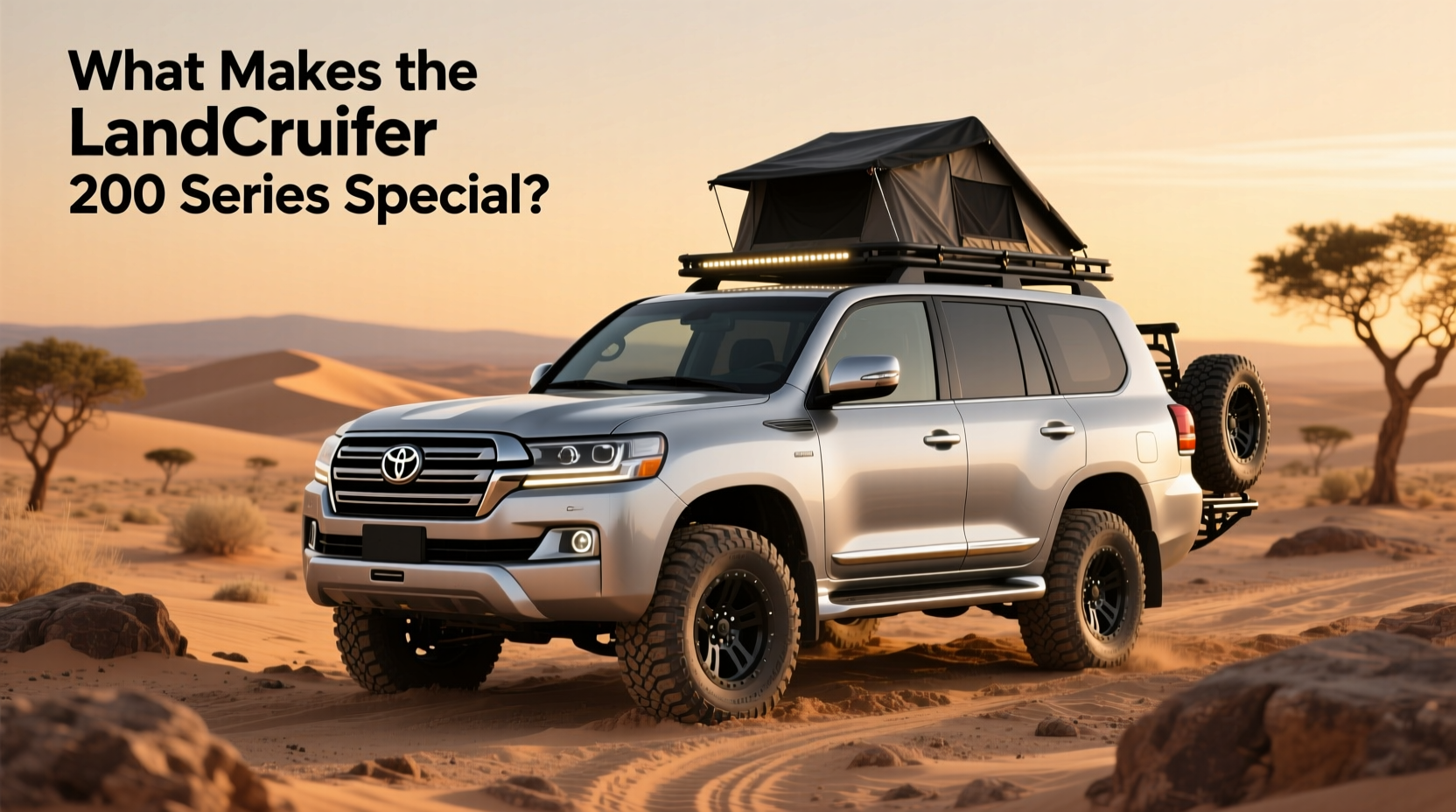
When deciding how to choose Toyota Land Cruiser LC200 accessories, understanding what is special about the LandCruiser 200 series is essential. The LC200 stands out for its proven off-road capability, unmatched durability, and strong resale value 1. For buyers, prioritizing accessories that enhance protection, range, and utility—like heavy-duty bumpers, lift kits, auxiliary fuel tanks, and roof racks—is key 2. Avoid cheap, non-engineered parts that compromise safety or fitment. Focus on compatibility with your intended use—overlanding, daily driving, or extreme off-roading.
The Toyota Land Cruiser 200 series (LC200) has earned a global reputation as one of the most capable and durable SUVs ever built. Introduced in 2007, it combines a robust V8 engine, full-time 4WD with a center differential, high ground clearance, and a steel-intensive body structure that excels in harsh environments 3. Its reliability allows many owners to reach over 300,000 miles with proper maintenance, making it a top choice for overlanders, expedition teams, and remote-area workers.
Equally important is the vast ecosystem of aftermarket accessories available for the LC200. From front bumpers to dual battery systems, these upgrades allow owners to tailor their vehicles for specific missions. However, selecting the right components requires understanding your goals, evaluating technical compatibility, and avoiding common pitfalls like poor material quality or improper installation.
About toyota land cruiser lc200 accessories,What is special about the LandCruiser 200 series?
The term Toyota Land Cruiser LC200 accessories refers to any aftermarket or OEM add-on designed to improve functionality, protection, comfort, or performance of the 200-series Land Cruiser. These include bumpers, suspension lifts, lighting, cargo solutions, and electrical enhancements.
What sets the LC200 apart from other SUVs—and why it attracts so many accessory investments—is its combination of engineering resilience and real-world versatility. Unlike many modern SUVs that prioritize on-road comfort, the LC200 was engineered for extreme conditions. It features:
- A full-time 4WD system with locking center differential ⚙️
- A body-on-frame construction with extensive steel usage ✅
- A 5.7L V8 engine producing 381 hp and 401 lb-ft of torque ⚡
- High factory ground clearance (~9.0 inches) 📍
- Excellent approach and departure angles for rock crawling 🛠️
These traits make the LC200 ideal for applications such as desert exploration, mountain trails, overlanding expeditions, and emergency response in rugged terrain. Owners often modify their vehicles to extend range, increase payload capacity, or improve night visibility.
Why toyota land cruiser lc200 accessories,What is special about the LandCruiser 200 series? is gaining popularity
Despite being succeeded by the 300 series in 2024, the LC200 remains highly sought after. One reason is its proven long-term reliability, which newer models have yet to match through time-tested use 4. Many buyers prefer a platform with over 15 years of field data rather than adopting unproven updates.
Another driver of demand is the mature aftermarket support network. Thousands of products are available specifically for the LC200, often at competitive prices due to market saturation. This contrasts with the newer 300 series, where accessory options are still developing and can be more expensive.
Additionally, the LC200’s classic boxy design appeals to enthusiasts who value rugged aesthetics over modern styling. Combined with excellent resale value retention, this makes the LC200 not just a tool but a long-term investment.
Types and variants
Aftermarket accessories for the LC200 fall into several functional categories. Each serves distinct purposes and comes with trade-offs.
🔧 Bumpers & Armor
Winch-compatible front bumpers (e.g., Dissent Off-Road, CBI) offer frame protection and mounting points for winches and lights. Steel versions are extremely durable but add significant weight. Aluminum alternatives reduce mass but may dent under impact.
Rock sliders protect rocker panels during side impacts on trails. Full-length sliders double as running boards but can limit articulation if poorly designed.
Pros: High protection level, integrate with recovery gear
Cons: Added weight, potential reduction in approach/departure angles if oversized
⚙️ Suspension & Lifts
Lift kits range from 0–3.5 inches. Brands like Old Man Emu and Rough Country offer balanced on/off-road performance. Coilovers provide better adjustability; leaf spring upgrades suit heavy loads.
Pros: Increased clearance, fits larger tires
Cons: Alters factory geometry, may require alignment adjustments
🛒 Tires & Wheels
All-terrain (AT) tires like BFG KO2 or Toyo Open Country are popular. Upgrading beyond 35” diameter usually requires a lift kit. Wheel spacers improve stance but must be hub-centric to avoid vibration.
Pros: Better traction, improved appearance
Cons: Reduced fuel economy, increased noise
✨ Lighting
LED light bars (Rigid Industries), fog light upgrades, and roof-mounted spotlights improve visibility. Wiring harnesses should include relays to prevent alternator strain.
Pros: Enhanced safety at night, better trail navigation
Cons: Can blind other drivers if improperly aimed
🚚 Fuel & Air Systems
Auxiliary fuel tanks (Long Range America) extend range up to 1,000 miles. Onboard air compressors (ARB Twin) enable tire inflation/deflation without external sources.
Pros: Greater autonomy, convenience off-grid
Cons: High initial cost, added complexity
🧰 Roof Racks & Cargo
Aluminum roof racks (ARB, Dissent) support tents, storage boxes, or solar panels. Load ratings vary; always check dynamic vs static limits.
Pros: Frees interior space, enables rooftop sleeping
Cons: Raises center of gravity, increases wind noise
⚡ Interior & Convenience
Dual battery systems (RedArc DCDC) power fridges or communication gear. Switch panels centralize control of auxiliary lights or compressors.
Pros: Supports off-grid living, improves usability
Cons: Requires professional wiring to avoid electrical issues
Key features and specifications to evaluate
To make an informed decision when choosing LC200 accessories, assess the following criteria:
- Material Quality: Look for DOM steel tubing, powder-coated finishes, or aircraft-grade aluminum.
- Engineering Design: Check for CAD-designed brackets and real-world testing data.
- Compatibility: Verify fitment with your model year, trim level, and existing mods.
- Weight Impact: Heavier parts affect fuel economy and handling—especially critical for roof-mounted items.
- Installation Requirements: Some kits require welding or ECU tuning; others are bolt-on.
- Warranty & Support: Reputable brands offer multi-year warranties and responsive customer service.
For example, when evaluating a lift kit, consider whether it maintains factory CV angles and includes upgraded shocks. For bumpers, confirm whether they retain parking sensors or adaptive cruise control.
Pros and cons
Advantages of upgrading LC200 accessories:
- Extends vehicle capability for off-road and overlanding use ✅
- Improves safety and self-reliance in remote areas 🌍
- Enhances personalization and utility for specific needs 📎
- Leverages a large community for advice and troubleshooting 👥
Limitations and risks:
- Poorly designed parts can compromise structural integrity ❗
- Excessive modifications may void certain warranty clauses (verify with dealer)
- Increased maintenance demands due to added systems ⏱️
- Higher purchase and installation costs reduce short-term ROI 💸
The LC200 is best suited for users needing maximum durability and off-road readiness. It's less ideal for those focused solely on fuel efficiency or urban commuting.
How to choose toyota land cruiser lc200 accessories,What is special about the LandCruiser 200 series?
Follow this step-by-step guide to select appropriate accessories:
- Define Your Use Case: Are you planning weekend trails, cross-country overlanding, or daily driving with occasional off-road trips?
- Set a Realistic Budget: Prioritize safety-critical items first (e.g., bumper, recovery points).
- Research Compatibility: Confirm product fits your exact model (2007–2021) and engine type (V8 only).
- Evaluate Installation Complexity: Bolt-on kits save time and cost; welded installations require skilled labor.
- Check Reviews and Community Feedback: Sites like IH8MUD forums provide honest user experiences.
- Verify Return Policies: Ensure you can return items if fitment issues arise.
Red flags to avoid:
- No clear manufacturer contact information 🔍
- Vague claims without technical details 📊
- Parts made from thin-wall tubing or未经热处理钢材 (non-heat-treated steel)
- Missing load ratings or stress analysis reports 📈
If your goal is serious overlanding, invest in a dual battery system, roof rack, and auxiliary fuel tank. For mild trail use, focus on all-terrain tires and basic skid plates.
Price & market insights
Accessory pricing varies widely based on brand, materials, and region:
- Front bumpers: $800–$2,500
- Lift kits: $1,200–$4,000 (installed)
- Roof racks: $600–$1,800
- Auxiliary fuel tanks: $1,500–$3,000+
- LED light bars: $200–$800
OEM parts tend to be more expensive but come with guaranteed fitment. Aftermarket leaders like ARB, CBI, and Dissent Off-Road command premium prices due to engineering quality. Entry-level brands may offer savings but often lack rigorous testing.
Prices may differ significantly between North America, Australia, and the Middle East. Always compare landed costs including shipping and import duties when sourcing internationally.
Top-seller & competitive analysis
Below is a comparison of leading products across key categories:
| Product | Category | Key Features | Approx. Price |
|---|---|---|---|
| Dissent Off-Road Modular Front Bumper | Bumper | Laser-cut steel, winch-ready, retains sensors | $2,100 |
| Old Man Emu BP-51 Suspension | Suspension | Adjustable damping, 2.5" lift, OE-quality ride | $3,700 (kit + install) |
| ARB Summit Roof Rack | Rack | 660 lb static load, aerodynamic design | $1,650 |
| Long Range America 42Gal Tank | Fuel | Doubles range, integrates with stock gauge | $2,900 |
| SwitchPro 9100 Panel | Electrical | 9 circuits, programmable labels, waterproof | $550 |
While these represent top-tier options, budget-conscious buyers might consider compatible alternatives with verified user feedback.
Customer feedback synthesis
Based on community discussions and owner reports:
Common praises:
- “The Old Man Emu suspension transformed my ride quality both on and off road.”
- “Installed the ARB rack—holds my tent and two jerry cans securely.”
- “Dual battery setup powered our fridge for a week-long trip with no issues.”
Frequent complaints:
- “Cheap Chinese bumper arrived with misdrilled holes—had to modify myself.”
- “Lift kit caused death wobble; needed additional steering stabilizer.”
- “Roof rack generates loud wind noise above 60 mph.”
Reliability, ease of installation, and customer support consistently emerge as decisive factors in satisfaction.
Sourcing & supplier tips
Buy from authorized dealers or well-established online retailers specializing in 4x4 parts. Popular platforms include:
- TheyotaGarage.com
- DissentOffRoad.com
- ARB USA / Australia
- IH8MUD Marketplace (used/refurbished)
For bulk purchases or resale, contact distributors directly. Request sample units before committing. When importing, verify compliance with local emissions and lighting regulations. Inspect packaging upon delivery and test-fit major components before final installation.
Maintenance, safety & legal considerations
Modified vehicles require additional upkeep:
- Inspect weld points annually for cracks.
- Lubricate winches and sliders regularly.
- Monitor tire pressure changes after installing spacers or larger tires.
Safety-wise, ensure all lights comply with beam pattern laws. Winch cables should be replaced if frayed. Overloading roof racks beyond dynamic limits increases rollover risk.
No universal regulation governs off-road modifications, but some regions restrict:
- Light bar usage on public roads
- Vehicle height limits
- Fuel tank placement near exhaust
Always consult your local DMV or transport authority to confirm legality.
Conclusion
The Toyota Land Cruiser LC200 remains a benchmark in rugged SUV design, combining legendary durability with extensive customization potential. When selecting accessories, align choices with your actual usage—whether daily driving, weekend trails, or long-distance overlanding. Prioritize well-engineered, compatible products from reputable suppliers. Avoid low-cost options lacking technical documentation or user validation. If you need maximum off-road protection and self-sufficiency, focus on armor, extended range, and electrical independence. For lighter use, simpler upgrades like tires and lighting suffice.
FAQs
- Q: What are the most essential LC200 accessories for overlanding?
A: A reliable roof rack, dual battery system, auxiliary fuel tank, and all-terrain tires form the core foundation for extended trips. - Q: Do lift kits affect the LC200’s reliability?
A: Properly engineered kits do not harm reliability, but improper installation or excessive lift can accelerate wear on drivetrain components. - Q: Can I install LC200 accessories myself?
A: Many bolt-on parts can be DIY-installed with basic tools. Complex systems like suspension or electrical upgrades benefit from professional help. - Q: How does modifying the LC200 impact resale value?
A: High-quality, desirable modifications (e.g., reputable lift, roof rack) often maintain or increase value. Poorly executed or niche mods may deter buyers. - Q: Are OEM accessories better than aftermarket ones?
A: OEM parts guarantee fitment and integration but are limited in scope. Aftermarket offerings provide greater capability and variety, though quality varies by brand.




 浙公网安备
33010002000092号
 浙B2-20120091-4