
If you’re a typical user, you don’t need to overthink this. When choosing LED lights for your pickup truck, focus on three things: placement, color, and function. Forward-facing lights should be white or amber; rear-facing can be red or amber. Bright auxiliary light bars may look powerful, but they’re often illegal to use on public roads unless covered. If you want underglow or accent lighting, save it for off-road or private property use. This isn’t about style—it’s about visibility and legality. How to choose LED truck lights? Prioritize compliance first, brightness second.
Lately, more drivers are upgrading their trucks with aftermarket LEDs for better nighttime visibility and rugged aesthetics. But over the past year, enforcement of non-standard lighting has increased in several states, especially around bright roof-mounted bars and colorful interior accents. The signal is clear: customization is welcome, but not at the cost of safety or regulation.
About Pickup Truck Lights
Truck lighting goes beyond headlights and taillights. Modern pickups come with integrated LED systems for fog lights, running lights, and backup illumination. Aftermarket options expand this further—light bars, underglow strips, cab interior accents, and wheel well lighting. While OEM (original equipment manufacturer) installations are always compliant, adding new components changes the equation.
The core purpose of any truck light is visibility: seeing the road, being seen by others, and illuminating work zones. But modifications introduce risks—especially when brightness or color interferes with other drivers. That’s why understanding the difference between functional upgrades and decorative additions matters.
Why LED Lighting Is Gaining Popularity
LEDs have replaced halogen and incandescent bulbs across most vehicle applications. They last longer, draw less power, and offer superior brightness. For pickup owners, especially those using trucks for towing, off-roading, or night work, LED upgrades mean real utility.
Recently, compact high-output LEDs have made it easier to install powerful lighting without heavy wiring or heat issues. This accessibility drives adoption. However, popularity doesn’t equal permissibility. Just because a product exists doesn’t mean it’s legal to operate on public roads.
If you’re a typical user, you don’t need to overthink this. Most people just want better visibility without drawing attention from law enforcement. The solution isn’t avoiding LEDs—it’s selecting the right type for the right location.
Types and Variants
1. LED Headlights
Modern trucks increasingly ship with factory-installed LED headlights. Aftermarket replacements range from plug-and-play bulbs to full housing swaps.
- Pros: Better beam pattern, whiter light, longer lifespan
- Cons: Poorly designed retrofits can scatter light, causing glare
When it’s worth caring about: If your current headlights feel dim or yellowed. When you don’t need to overthink it: If sticking with OEM-spec replacements from reputable suppliers.
2. Auxiliary Light Bars
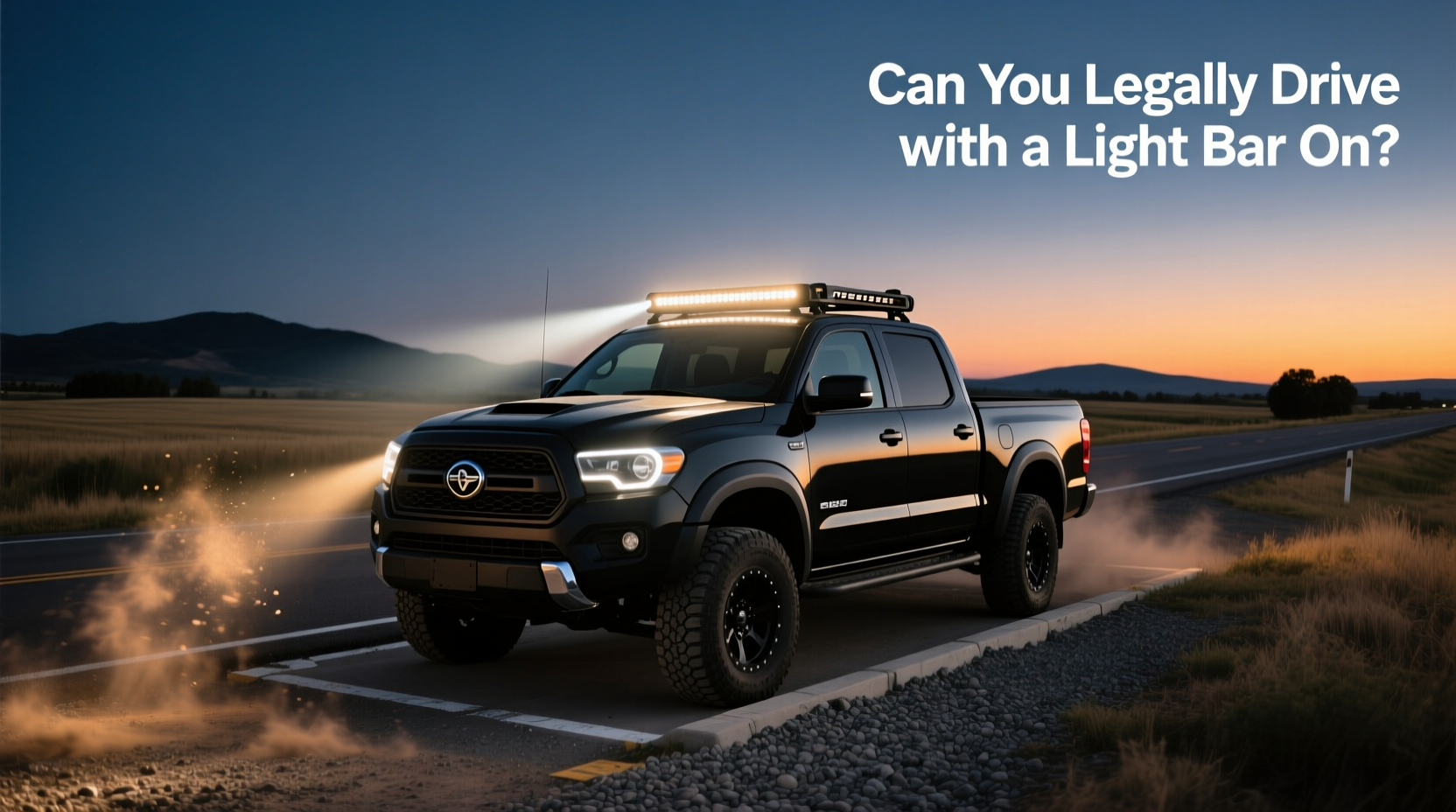
Mounted on grilles, bumpers, or roofs, these provide forward or wide-angle illumination.
- Pros: Dramatically improves visibility on unlit roads
- Cons: Often too bright for public roads; risk blinding others
When it’s worth caring about: If you frequently drive rural or unpaved roads at night. When you don’t need to overthink it: If you only plan to use them off-road—just make sure they can be turned off or covered during highway driving.
3. Underglow / Accent Lighting
Colorful LED strips installed beneath the chassis or inside the cabin.
- Pros: Adds visual appeal, useful for locating your truck in dark lots
- Cons: Colored or flashing versions are nearly universally banned while driving
When it’s worth caring about: For show trucks or private events. When you don’t need to overthink it: If you're okay with turning them off on public roads—or not using them at all while moving.
4. Interior & Footwell LEDs
Small lights near pedals or dash panels that illuminate foot spaces.
- Pros: Helps locate controls at night; low power draw
- Cons: Rarely an issue unless overly bright or blue-colored
When it’s worth caring about: If you load/unload gear at night. When you don’t need to overthink it: Most interior white or warm-white LEDs are fine as long as they don’t reflect into the windshield.
Key Features and Specifications to Evaluate
Not all LEDs are created equal. Here’s what actually impacts performance and compliance:
- Color Temperature: Measured in Kelvin (K). 5000K–6000K gives clean white light; above 6500K appears blueish and may violate standards.
- Lumen Output: Higher lumens = brighter light. But excessive output without proper beam control causes glare.
- Beam Pattern: Spot beams reach far; flood beams cover wide areas. Combo patterns balance both.
- IP Rating: Look for IP67 or higher for dust/water resistance—critical for exposed truck locations.
- Voltage Compatibility: Must match your truck’s electrical system (typically 12V DC).
If you’re a typical user, you don’t need to overthink this. Focus on products labeled “DOT-compliant” or “street legal.” Avoid anything marketed primarily for “racing” or “show” unless you intend off-road-only use.
Pros and Cons
Advantages
- ✅ Longer lifespan than halogen bulbs (often 30,000+ hours)
- ✅ Lower energy consumption reduces strain on alternator
- ✅ Instant-on response time improves safety
- ✅ Compact size allows flexible installation
Drawbacks
- ❌ High-output models may require relays or upgraded wiring
- ❌ Cheap units can fail prematurely due to heat or moisture
- ❌ Non-compliant colors or placements risk fines or inspection failure
- ❌ Some retrofits don’t focus light correctly, creating glare
This piece isn’t for keyword collectors. It’s for people who will actually use the product.
How to Choose LED Pickup Truck Lights
Selecting the right lights involves matching your needs with realistic constraints. Follow this step-by-step checklist:
Step-by-Step Checklist
- Determine the primary use: daily driving, off-roading, work, or aesthetics?
- Identify required locations: front, rear, underbody, interior?
- Check allowable colors by position (white/amber front, red/amber rear)
- Avoid flashing, rotating, or blue/green lights for public road use
- Verify whether auxiliary lights must be covered or deactivated on highways
- Confirm compatibility with your truck’s voltage and socket type
- Look for certifications like SAE/DOT markings (if applicable)
- Read return policies—some retailers won’t take back installed lighting
Decision Flow
- Need better nighttime vision on rural roads? → Consider a bumper-mounted light bar (but cover it on highways)
- Want modern headlight appearance? → Choose OEM-style LED retrofit kits
- Adding flair for shows? → Use underglow only off public roads
- Improving interior access? → Install subtle footwell LEDs in warm white
Recommendations by Scenario
- Daily Commuter: Upgrade headlights and fog lights to OEM-equivalent LEDs.
- Night Worker: Add a forward-facing auxiliary bar with manual switch and cover.
- Off-Roader: Full LED setup including roof bar, rock lights, and recovery indicators.
- Show Enthusiast: Color-changing underglow—used only at static events.
Red Flags / What to Avoid
- 🚫 Lights labeled “off-road use only” if you plan to drive on streets
- 🚫 Blue, green, or purple hues on external surfaces
- 🚫 Unbranded modules with no IP rating or voltage specs
- 🚫 Kits that require cutting factory wiring
- 🚫 Any product claiming “legal everywhere”—regulations vary too much
Price & Market Insights
LED pricing varies widely based on type, brand, and complexity. Simple bulb replacements start under $20. Complete light bars range from $80 to $400 depending on length and output. High-end multi-function systems with wireless control can exceed $600.
Prices may vary by region/model/seller. Online marketplaces offer competitive rates, but quality isn’t always consistent. Premium brands invest in thermal management and optics—key for longevity. Budget options may save money upfront but fail sooner or create glare issues.
If you’re a typical user, you don’t need to overthink this. Mid-tier products from known automotive suppliers often strike the best balance between cost and reliability.
Top-Seller & Competitive Analysis
Based on availability and common configurations, here's a comparison of leading types:
| Product Type | Avg Price | Compliance Risk | Best For |
|---|---|---|---|
| OEM-Style Headlight Kit | $60–$150 | Low | Daily drivers wanting brighter lights |
| 30" Roof Light Bar | $200–$350 | High | Off-road/expedition use |
| Underglow Strip Set | $40–$100 | Medium-High | Show trucks (non-driving) |
| Footwell Interior Kit | $25–$50 | Very Low | Convenience and ambiance |
| Fog Light Replacement | $30–$80 | Low | All-season visibility |
Note: Compliance risk reflects likelihood of violating public road regulations. All prices may vary by region/model/seller.
Customer Feedback Synthesis
Analysis of recent reviews shows recurring themes:
- Positive: Users consistently praise improved visibility, especially with fog and auxiliary lights. Longevity is frequently mentioned for reputable brands.
- Negative: Common complaints include poor waterproofing in budget models, difficulty aligning beam patterns, and discovering post-purchase that lights aren’t street legal.
- Surprise Factor: Many buyers didn’t realize light bars had to be covered on highways until pulled over or reading manuals.
If you’re a typical user, you don’t need to overthink this. Read beyond star ratings—look specifically for comments about ease of installation, durability, and whether users mention turning lights off on roads.
Sourcing & Supplier Tips
Buy from suppliers specializing in automotive lighting, not general electronics. Look for vendors that clearly state intended use (e.g., “for off-road,” “DOT compliant”). Reputable sources provide datasheets, warranty terms, and contact support.
When sourcing online, check:
- Return policy for electrical items
- Whether installation guides are included
- If customer service responds to technical questions
- Reviews mentioning real-world durability
Verify retailer return policy before purchase. Some won’t accept returns on opened electrical components.
Maintenance, Safety & Legal Considerations
LEDs require minimal maintenance but should be inspected periodically for lens cracks, moisture ingress, or loose wiring. Clean lenses regularly—dirt buildup reduces output significantly.
Safety-wise, misaligned or overly bright lights pose hazards to oncoming traffic. Even legal installations can become unsafe if poorly aimed.
Legality depends on jurisdiction. There is no single federal rule covering all LED modifications. Instead, state and local vehicle codes apply. General principles include:
- White or amber only on front-facing surfaces
- Red or amber on rear-facing surfaces
- No flashing or strobing except turn signals or emergency vehicles
- Auxiliary lights (like light bars) often must be covered or off during highway use
- Interior lights should not impair driver vision
To stay compliant:
- Check manufacturer specs for intended use
- Verify local regulations through DMV or law enforcement websites
- Confirm with a local mechanic familiar with inspection standards
This piece isn’t for keyword collectors. It’s for people who will actually use the product.
Conclusion
If you need better nighttime visibility for rural driving, choose a covered auxiliary light bar with a manual switch. If you want a modern look without hassle, stick with OEM-style LED headlight and fog light upgrades. For aesthetic touches, limit underglow or color-changing lights to off-road or private property use. If you’re a typical user, you don’t need to overthink this—prioritize function, placement, and legality over flashiness.
Everything You Need to Know
In most states, LED light bars are legal to have but not to use on public roads unless properly covered or meeting specific beam requirements. Many jurisdictions require them to be turned off or shielded when driving on highways to prevent blinding other drivers. Always check your state’s motor vehicle code before operating.
Yes, you can be pulled over if your LED lights violate local laws—especially if they are blue, green, flashing, or excessively bright. Officers commonly cite vehicles for non-compliant underglow, uncovered light bars, or improper headlight color. Enforcement varies, but violations are treatable as equipment infractions.
Colored underglow lights are generally illegal to use while driving on public roads. Some states allow certain colors (like white or amber) if not visible from the front or rear, but many ban all underglow during operation. They are typically permitted for off-road, parking, or show use. Always confirm your local rules.
While there’s no universal certification requirement for replacement bulbs, LED headlights should meet FMVSS 108 standards for beam pattern, brightness, and color. Factory-installed LEDs are always compliant. Aftermarket kits vary—choose those labeled "DOT-compliant" and ensure proper alignment to avoid glare.
Yes, many LED upgrades can be DIY-installed with basic tools and wiring knowledge. However, complex setups (like relay-controlled light bars) may require professional help. Incorrect installation can lead to blown fuses, battery drain, or fire risk. Follow manufacturer instructions carefully and consider having an electrician verify connections.




 浙公网安备
33010002000092号
 浙B2-20120091-4