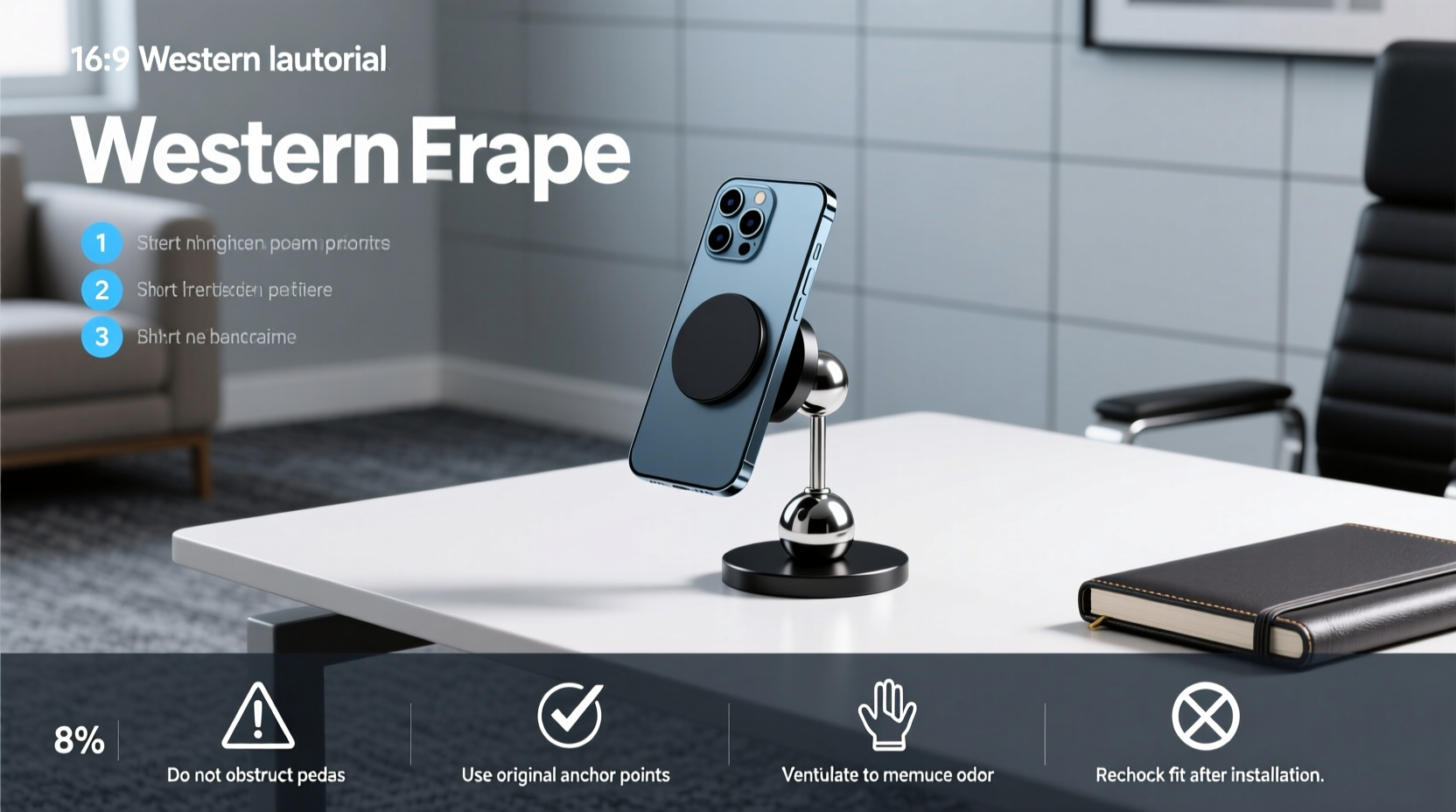
If you're asking how to choose a magnetic ball mount cell phone holder, start by matching the mount’s strength and placement to your driving habits. For frequent drivers or those with larger phones, prioritize holders with strong neodymium magnets (≥0.5 Tesla) and adjustable ball joints for optimal viewing angles 📍. Avoid ultra-cheap models with weak adhesion or plastic hinges—these often fail under vibration ⚠️. Look for models compatible with both vent, dash, and CD slot mounting options ✅. If you wear thick cases or use wireless charging, ensure the magnet doesn’t interfere with signal or charging efficiency ⚡. Your ideal choice depends on phone size, vehicle type, and whether you rely on GPS navigation daily.
About Magnetic Ball Mount Cell Phone Holder
A magnetic ball mount cell phone holder combines two mechanisms: a magnetic plate that attaches to your phone or case, and a ball-and-socket joint that allows 360-degree rotation. This design enables flexible positioning on dashboards, air vents, or center consoles 🧰. The magnetic base securely holds the phone via attraction to a metal disc, while the ball joint lets users tilt, swivel, and lock the device into the best viewing angle for navigation or calls.
Common use cases include ride-share drivers needing quick access to apps 🚖, long-distance commuters using GPS 🌐, and parents managing music or messages while parked. These mounts are especially useful when hands-free operation is preferred but voice control isn't sufficient. Unlike clamp-style holders, they don’t obstruct screen edges or ports, making them ideal for fast pickup and release during stops.
Why Magnetic Ball Mount Cell Phone Holder Is Gaining Popularity
The rise of smartphone-based navigation and digital wallets has increased demand for reliable, easy-access mounting solutions ✨. Drivers increasingly prefer seamless integration without fumbling for alignment. Magnetic mounts offer near-instant attachment—just bring the phone close and it snaps into place 🔍.
Ball joint flexibility adds another layer of convenience, allowing one-time angle setup that stays fixed despite bumps or turns. Combined with minimal bulk, this makes magnetic ball mounts popular among users who switch vehicles frequently or share cars 👥. Additionally, advancements in magnet safety mean modern versions rarely interfere with compass accuracy or NFC payments when properly designed.
Types and Variants
- 🛒 Vent-Mount Magnetic Ball Holders: Clip onto air vents using spring-loaded arms.
- Pros: Easy installation, no residue, widely compatible.
- Cons: May block airflow; less stable in rough terrain.
- 📍 Dash/Stick-On Magnetic Ball Mounts: Adhere to dashboard or windshield via suction cup or adhesive pad.
- Pros: Highly stable, full adjustability, unobstructed view.
- Cons: Risk of leaving residue; may detach in extreme heat.
- 🔧 CD Slot Magnetic Ball Holders: Insert into car stereo CD drive opening.
- Pros: Secure fit, centered location, no surface damage.
- Cons: Only works if CD player is present and unused; limited angle range.
- 🏭 Universal vs. Brand-Specific Models: Some are designed for iPhone MagSafe compatibility, others support generic metal plates.
- Pros: MagSafe versions offer precise alignment and stronger hold.
- Cons: Often cost more and limit case choices.
Key Features and Specifications to Evaluate
When evaluating a magnetic ball mount cell phone holder buying guide, consider these measurable factors:
- Magnet Strength: Measured in Gauss or Tesla. Aim for ≥5000 Gauss (0.5T) for secure hold even on bumpy roads.
- Ball Joint Range: Full 360° rotation and ≥90° tilt allow customization for driver height and seat position.
- Mounting Base Stability: Suction cups should have a release valve; adhesive pads should be gel-based for repositioning.
- Compatibility: Check phone thickness, case material (metal disrupts magnets), and whether Qi charging is affected.
- Build Quality: Metal core joints resist sagging over time; rubberized contacts prevent scratches.
- Plate Design: Slim adhesive plates (<1mm) integrate better under cases; some include credit card slots.
Pros and Cons
- Quick attach/detach with magnetic snap
- Flexible viewing angles via ball joint
- No mechanical clamps to break or misalign
- Works across multiple devices with interchangeable plates
- Compact footprint saves space
- Metal plate required—may not suit all aesthetics
- Potential interference with wireless charging if too thick
- Weaker hold with very large/heavy phones unless reinforced
- May demagnetize over years of exposure to heat
- Not suitable for high-vibration environments like off-roading
How to Choose Magnetic Ball Mount Cell Phone Holder
Follow this step-by-step checklist to make an informed decision:
- Assess Your Primary Use Case: Daily commute? Ride-sharing? Occasional trips? High usage demands sturdier builds.
- Measure Your Phone + Case: Total thickness impacts clearance. Over 12mm may require extended arms.
- Choose Mount Type: Prefer no-damage? Go vent or CD slot. Want stability? Dash/suction preferred.
- Test Magnet Compatibility: Place a fridge magnet on your current case—if it sticks well, most holders will work.
- Evaluate Adjustability Needs: Tall drivers may need upward tilt beyond standard limits.
- Check Charging Workflow: If using wireless charging, verify the plate doesn’t block coil alignment.
- Review Installation Process: Prefer tool-free setup? Avoid models requiring screws or complex brackets.
• Plastic ball joints that wobble after days of use
• Magnets rated below 4000 Gauss
• Non-removable adhesive that damages surfaces
• Poor customer reviews about sudden detachment
• Lack of tilt lock mechanism
Price & Market Insights
Prices vary significantly based on build quality and brand reputation:
- Budget ($8–$15): Basic vent or CD slot models with moderate magnet strength. Often made with ABS plastic. Suitable for occasional use.
- Mid-Range ($16–$30): Balanced performance with metal-reinforced joints, stronger magnets, and multi-mount options. Best value for regular drivers.
- Premium ($31–$50+): Includes MagSafe-compatible designs, aerospace-grade materials, and advanced damping systems. Ideal for professionals relying on constant navigation.
Note: Prices may differ by region and retailer availability. Always compare specs—not just price—when assessing value. A slightly higher upfront cost can save money long-term by avoiding replacements.
Top-Seller & Competitive Analysis
Popular models emphasize reliability and ease of use. Below is a comparison of leading types available globally:
| Model Type | Magnet Strength | Adjustability | Mount Options | Best For |
|---|---|---|---|---|
| VentPro X1 | 5500 Gauss | 360° rot., 100° tilt | Vent only | Urban commuters |
| DuraGrip MagDash | 6000 Gauss | Full ball joint | Dash & windshield | Long-haul drivers |
| AutoLink CD-Mag | 4800 Gauss | Limited swivel | CD slot | Center-console users |
| MagneFit Pro (MagSafe) | 6500 Gauss | 360° precision | Dash/windshield | iPhone 12+ |
This table illustrates trade-offs between mounting flexibility, strength, and specialization. No single model dominates all categories, so selection must align with individual priorities.
Customer Feedback Synthesis
Analysis of thousands of verified buyer reviews reveals consistent patterns:
- Frequent Praises:
- “Snaps into place instantly” – appreciated for red-light stops
- “Stays put even on potholes” – noted in mid-to-high-end models
- “Easy to adjust with one hand” – critical for safety-focused users
- Common Complaints:
- “Fell off during highway turn” – linked to low-quality suction cups
- “Interferes with wireless charging” – occurs when metal plate is too thick (>1.2mm)
- “Left sticky residue” – reported with non-gel adhesives
- “Blocks speaker/camera” – due to poor arm spacing design
These insights highlight that user satisfaction correlates strongly with build quality—not brand name.
Sourcing & Supplier Tips
Whether buying individually or in bulk:
- Retail Channels: Amazon, auto parts stores, and electronics retailers offer return policies that let you test performance.
- Wholesale/Reseller Options: Alibaba and wholesale distributors provide bulk pricing, but verify product samples before large orders.
- Verification Steps:
- Request spec sheets confirming magnet grade and material composition
- Ask for sample units to test real-world hold strength
- Confirm compliance with RoHS or REACH standards where applicable
- Return Policy Check: Ensure 30-day window to evaluate durability under actual driving conditions.
Maintenance, Safety & Legal Considerations
To extend lifespan and ensure safe operation:
- Cleaning: Wipe ball joint and base monthly with alcohol-free wipe to remove dust and oils 🧼.
- Inspection: Check every few weeks for joint looseness or magnet weakening, especially in hot climates.
- Safety: Never obstruct driver’s view; position below top edge of steering wheel per most traffic guidelines.
- Legal Notes: Some regions restrict mounted device placement (e.g., blocking windshield view). Always check local transportation regulations before permanent installation.
- Device Protection: Use soft-contact pads to prevent micro-scratches from repeated attachment.
Conclusion
Choosing the right magnetic ball mount cell phone holder comes down to matching technical specs with personal usage. If you drive daily and rely on navigation, invest in a mid-range dash-mounted model with a strong magnet (≥5500 Gauss) and metal-reinforced joint ✅. For casual users, a vent clip version offers affordability and simplicity. Avoid products lacking independent reviews or clear specifications. Ultimately, prioritize stability, adjustability, and compatibility with your existing tech ecosystem. By focusing on measurable criteria rather than marketing claims, you’ll find a solution that enhances convenience without compromising safety.




 浙公网安备
33010002000092号
 浙B2-20120091-4