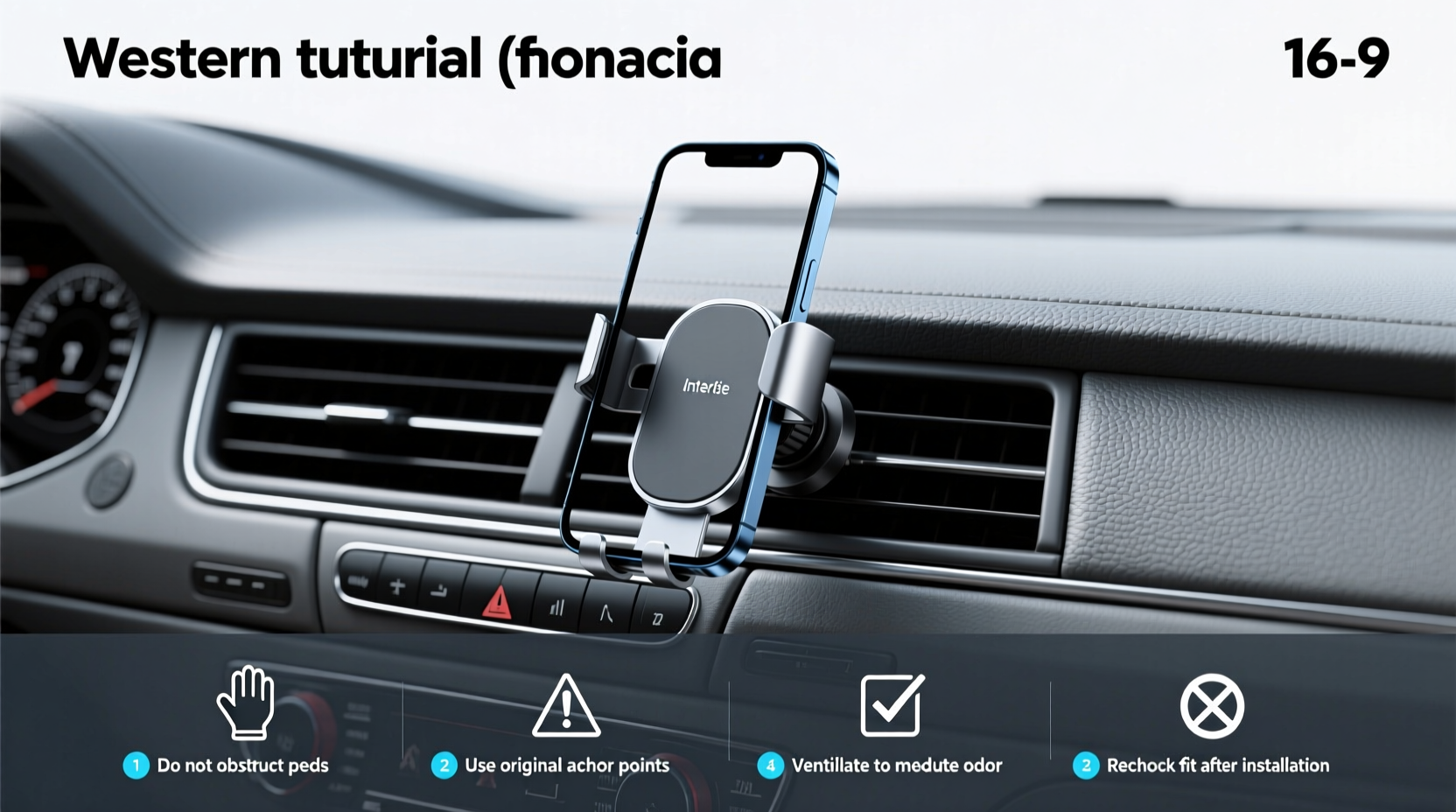
🛒 Short Introduction: What You Need to Know First
If you're trying to figure out how to choose magnetic car phone holders, start here: focus on three core factors—mounting method (vent, dashboard, CD slot), magnet strength (measured in kg or lbs), and compatibility with your phone case. Stronger magnets (8–12 kg pull force) work better for larger phones but may interfere with credit cards or pacemakers. Avoid ultra-cheap models with weak adhesives or poorly aligned magnets. For most users, a dash-mounted magnetic holder with a metal plate and 360° rotation offers the best balance of stability and usability. If you have a thick case or use wireless charging, verify fit before buying.
✅ Quick decision guide: Choose vent mounts for easy install, dash mounts for stability, and CD slot types only if your car has one. Always test alignment before finalizing placement.
📍 About Magnetic Car Phone Holders
Magnetic car phone holders are vehicle accessories that use permanent magnets to securely hold smartphones in place while driving. Unlike traditional clip-style or cradle mounts, they rely on magnetic attraction between a built-in magnet in the holder and a thin metal plate attached to the phone or its case. This design allows for fast, one-handed placement and removal.
They are commonly used for navigation (e.g., Google Maps, Waze), hands-free calling, voice assistant access, and music streaming. Most models support portrait and landscape orientation, making them suitable for video calls or watching short clips at red lights—though viewing videos while driving is unsafe and often illegal.
These holders typically consist of two parts: the mount (attached to the car interior) and the magnetic adapter (a steel plate or ring adhered to the phone/case). Some newer phones with MagSafe-compatible backs (like iPhone 12 and later) work directly without additional plates.
📈 Why Magnetic Car Phone Holders Are Gaining Popularity
The rise in smartphone dependency for navigation and communication has driven demand for reliable in-car solutions. Magnetic holders stand out due to their simplicity and speed. Drivers can dock their phone instantly without precise alignment—a major advantage over mechanical grips.
Advancements in neodymium magnet technology have made small yet powerful magnets widely available and affordable. At the same time, consumers increasingly value minimalism and clean aesthetics, which magnetic designs support by eliminating bulky arms or clamps.
Integration with digital lifestyles also plays a role. With more people relying on real-time traffic updates, ride-sharing apps, and delivery tracking, having quick access to a stable phone mount improves both convenience and safety 1.
🔧 Types and Variants
Different mounting styles suit different vehicle interiors and user preferences. Here are the main types:
❱ Vent Mounts ⚙️
- Pros: Easy installation, no residue, rotates freely
- Cons: Can block airflow, less stable on rough roads, not all vent types fit
❱ Dashboard Mounts ✨
- Pros: Highly stable, customizable position, doesn’t interfere with vents
- Cons: Requires adhesive (may leave marks), needs flat surface, longer setup
❱ CD Slot Mounts 📀
- Pros: Secure fit, out-of-the-way location
- Cons: Only works in cars with CD players, limited adjustability, risks damaging the slot
❱ Windshield Mounts 🌐
- Pros: Optimal visibility, flexible positioning
- Cons: May obstruct view (illegal in some regions), adhesive failure in heat
No single type fits all vehicles or drivers. Consider your car’s interior layout and typical driving conditions when choosing.
📌 Key Features and Specifications to Evaluate
To make an informed decision when selecting magnetic car phone holders, assess these technical and functional aspects:
- ⚡Magnet Strength: Measured in kilograms (kg) or pounds (lbs) of pull force. 5–8 kg suits average phones; 10+ kg recommended for heavier devices.
- 🧼Mounting Surface Compatibility: Check if your dashboard texture or vent shape matches the holder’s design.
- 🔗Adjustability: Look for ball joints or swivel bases for multi-angle viewing.
- 📱Phone Size Support: Confirm maximum thickness and width (especially for large phones like iPhone 15 Pro Max or Samsung Galaxy S24 Ultra).
- 🔋Wireless Charging Compatibility: If using Qi charging, ensure the metal plate won’t block the coil (thin plates centered correctly usually work).
- 📎Metal Plate Design: Options include slim sheets, adhesive rings, or wallet inserts. Thinner plates reduce bulk.
Also consider whether the product includes multiple mounting options or replacement adhesives.
✅ Pros and Cons
✔️ Advantages
- One-handed operation improves safety
- Compact and unobtrusive design
- No moving parts to break
- Works with most phone sizes and cases
- Fast attachment/detachment
✖️ Limitations
- Metal plate required for non-MagSafe phones
- Potential interference with credit cards, hotel keys, or medical devices
- Weaker adhesives may fail in hot climates
- Limited support for very thick or curved backs
- May not pass vehicle inspections in strict jurisdictions
Best suited for daily commuters, rideshare drivers, and frequent navigators. Less ideal for off-road driving or extreme climate zones unless specifically rated.
📋 How to Choose Magnetic Car Phone Holders
Follow this step-by-step checklist to find the right model:
- Identify Your Mounting Preference: Decide where you want the holder—vent, dash, windshield, or CD slot.
- Check Magnet Strength: Aim for at least 8 kg pull force for phones over 6 inches.
- Verify Phone Compatibility: Measure your phone + case thickness; check if it blocks sensors or charging.
- Test Placement Safety: Ensure it doesn't block instrument cluster view or airbag zones.
- Evaluate Adjustability Needs: Do you need landscape mode for GPS? Look for full rotation.
- Review Installation Process: Prefer no-drill, residue-free options if renting or sharing vehicles.
❗ Red Flags to Avoid
- Unrealistic claims (e.g., “holds any phone up to 20 kg”)
- No clear specs on magnet strength
- Cheap plastic construction with poor joint stability
- Missing return policy or warranty info
- Negative reviews about sudden detachment
Always read recent customer feedback and watch demo videos before purchasing.
💰 Price & Market Insights
Prices vary significantly based on build quality, brand reputation, and added features:
- Budget ($5–$12): Basic models with moderate magnet strength. Often lack durability in high heat.
- Mid-range ($13–$25): Better materials, stronger magnets, improved adjustability. Best value for most users.
- Premium ($26–$40+): Includes MagSafe integration, aluminum bodies, advanced cooling systems, or wireless charging.
Geographic region affects pricing—U.S. and EU markets tend to have higher average costs than Asian e-commerce platforms. However, shipping delays and import fees may offset savings. Look for bundles that include multiple metal plates or adapters.
Value isn't always tied to price. Some mid-tier brands offer performance comparable to premium ones. Prioritize verified performance metrics over branding.
📊 Top-Seller & Competitive Analysis
Below is a comparison of popular magnetic holder types based on common configurations:
| Type | Avg. Pull Force | Installation Time | Stability Score (1–5) | Ideal For |
|---|---|---|---|---|
| Vent Mount | 6–8 kg | Under 2 min | 3.2 | City drivers, renters |
| Dash Mount | 8–12 kg | 5–10 min | 4.5 | Long-distance commuters |
| CD Slot | 7–9 kg | 3–5 min | 3.8 | Older vehicles with CD players |
| Windshield | 9–11 kg | 8–12 min | 4.3 | Delivery drivers needing wide view |
Note: Performance varies by model and environment. Always check manufacturer specifications and user-submitted data before deciding.
👥 Customer Feedback Synthesis
Analyzing hundreds of verified buyer reviews reveals consistent patterns:
🌟 Frequently Praised Aspects
- “Super easy to grab the phone with one hand”
- “Stays put even on bumpy roads”
- “Clean look compared to old clip mounts”
- “Rotates smoothly between portrait and landscape”
💢 Common Complaints
- “Adhesive failed after two weeks in summer heat”
- “Metal plate interferes with contactless payments”
- “Doesn’t fit my OtterBox case properly”
- “Blocks part of the screen when adjusting angle”
Reliability under temperature extremes and compatibility with rugged cases are recurring concerns. Buyers appreciate products that include multiple plate options and clear installation guides.
🏭 Sourcing & Supplier Tips
When buying magnetic car phone holders, consider your source:
- Online Retailers (Amazon, eBay): Offer variety and customer reviews. Watch for counterfeit listings mimicking well-known brands.
- Automotive Stores (AutoZone, Halfords): Higher confidence in authenticity, sometimes include professional installation advice.
- Bulk Suppliers (Alibaba, CJ Dropshipping): Suitable for resellers or fleet managers. Request samples first to evaluate magnet strength and build quality.
For business use or resale, verify supplier return policies and warranty terms. Independent labs rarely certify these accessories, so physical inspection remains key. Look for CE or RoHS markings as basic indicators of material safety compliance, though these don’t guarantee performance.
⚠️ Maintenance, Safety & Legal Considerations
Regular maintenance ensures longevity:
- Clean the magnet surface monthly with a dry cloth to remove dust.
- Inspect adhesive mounts every few months, especially in hot climates.
- Replace worn metal plates to maintain grip strength.
Safety-wise, never place the holder where it obstructs your view of the road or dashboard instruments. Keep it away from airbag deployment areas. Be cautious if carrying medical implants—consult your device manual about electromagnetic interference 2.
Legality varies by country and state. In places like the UK and parts of Australia, any obstruction to driver visibility may be fined. In the U.S., laws differ by state—some ban mounts on windshields entirely. Always check local regulations before installing.
📌 Conclusion: Making the Right Choice
Choosing the right magnetic car phone holder depends on your specific needs. If you prioritize ease of use and frequent access, go for a vent or dash mount with strong, smooth rotation. If you drive long distances or on uneven terrain, invest in a high-pull-force dash model. If you own a MagSafe-enabled iPhone, consider a compatible ring mount to skip the metal plate. And if you live in a hot climate, avoid low-quality adhesives by opting for mechanical vent grips or reinforced gel pads.
Ultimately, the best choice balances secure hold, ergonomic placement, and compatibility with your existing tech setup. Take time to measure, test, and confirm before final purchase.
❓ FAQs
Will a magnetic phone holder damage my smartphone?
No, modern smartphones are not affected by static magnets used in holders. However, strong magnets may temporarily interfere with compass or sensor accuracy until recalibrated.
Can I use a magnetic holder with wireless charging?
Yes, if the metal plate is thin and properly positioned. Centered steel rings designed for MagSafe work best. Thick or misaligned plates may reduce charging efficiency.
How do I remove adhesive residue from my dashboard?
Use isopropyl alcohol and a microfiber cloth. Apply gently, let sit for 30 seconds, then wipe. Avoid abrasive tools that could scratch surfaces.
Are magnetic phone holders legal everywhere?
No—laws vary by region. Some areas restrict mounts on windshields or require unobstructed driver visibility. Always verify local traffic regulations before installation.
Do I need a metal plate for all phones?
Only if your phone lacks built-in magnetic support. iPhones 12 and newer (MagSafe) work natively. Android users typically need to attach a plate unless using a magnetic case.




 浙公网安备
33010002000092号
 浙B2-20120091-4