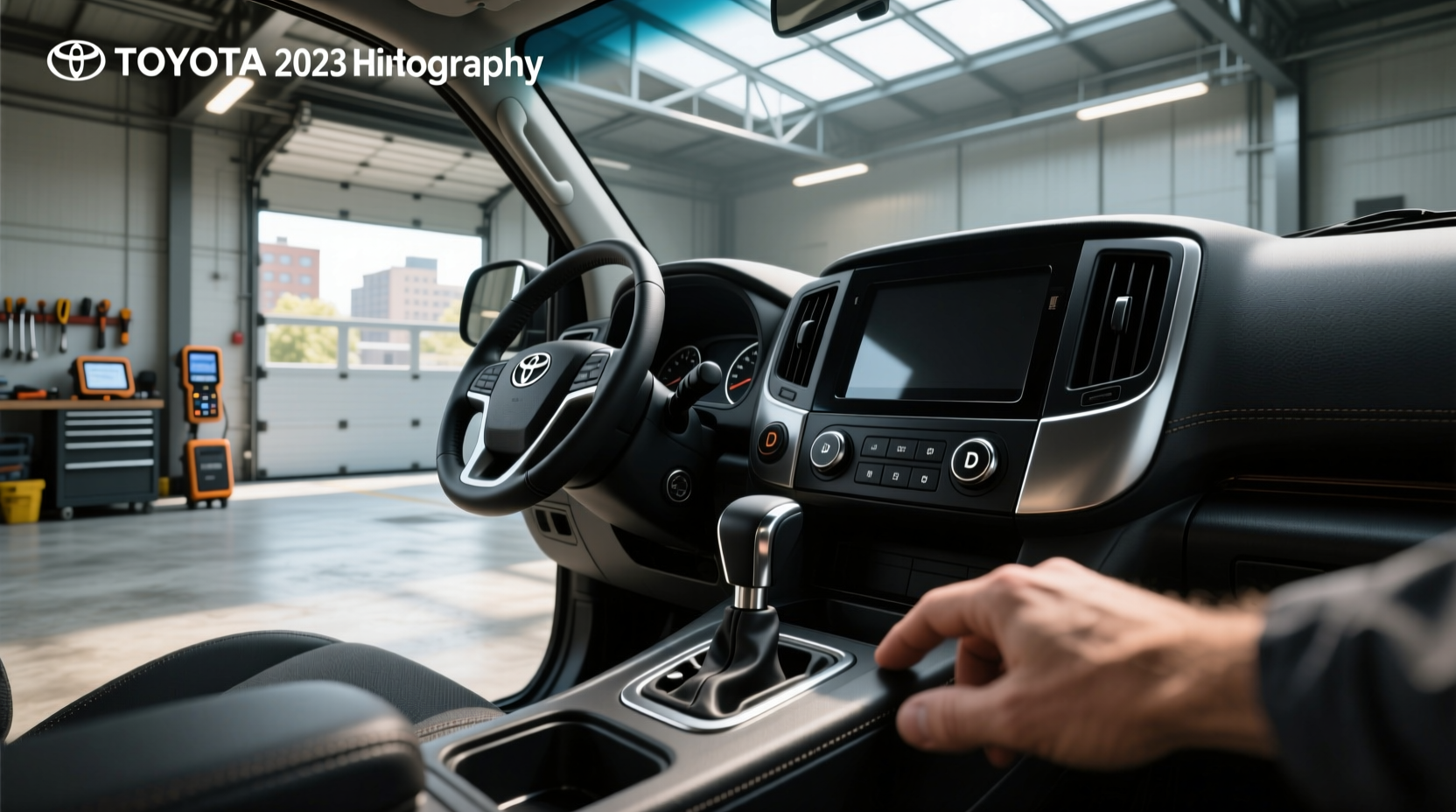
If you're asking how to choose Toyota Hiace gear shift, the answer depends on your driving habits, operating environment, and long-term cost goals. The Toyota Hiace is available with both manual and automatic transmissions across its generations, giving buyers flexibility. For drivers in heavy urban traffic or those prioritizing ease of use, an automatic transmission (especially the 6-speed automatic in H200 and H300 models) offers smoother operation and reduced driver fatigue ✅1. Conversely, if fuel economy, lower repair costs, and greater control are priorities — particularly for rural routes or frequent towing — a manual transmission may be the better choice ⚙️2. When evaluating what to look for in a Toyota Hiace gear shift, consider engine type, regional availability, and intended use case early in your decision process.
About Toyota Hiace Gear Shift: Manual or Automatic?
The term "Toyota Hiace gear shift" refers to the vehicle’s transmission system, which determines how power from the engine is delivered to the wheels. This includes both manual and automatic options, each with distinct shifting mechanisms 🛠️. A manual transmission requires the driver to operate a clutch pedal and manually select gears using a stick shift, offering direct control over performance. An automatic transmission shifts gears automatically without driver input, relying on hydraulic systems and sensors.
These gear shift types serve different operational needs. The manual version is commonly found in commercial fleets, delivery vans, and off-road camper conversions where drivers value mechanical simplicity and engagement ✅. Automatic variants are preferred in passenger transport services, executive shuttles, and city-based operations where smooth, low-effort driving is essential 🚐.
Why Toyota Hiace Gear Shift Options Are Gaining Popularity
Demand for both manual and automatic Toyota Hiace models remains strong due to the vehicle's global utility and reliability 🔋. In emerging markets, manual transmissions dominate because of their durability and affordability, especially in regions with rugged terrain or undeveloped road infrastructure 🌍. Meanwhile, automatic models are increasingly popular in urban centers and developed economies where traffic congestion makes clutch-heavy driving impractical ⚡.
This dual-preference trend reflects evolving user expectations: operators want vehicles that balance cost-efficiency with driver comfort. Additionally, newer generations like the H300 series now offer refined 6-speed automatics that rival manuals in fuel efficiency, narrowing historical performance gaps 📈.
Types and Variants
The Toyota Hiace has offered several transmission configurations over its six generations. Understanding these helps identify compatible models based on year, engine, and region.
🛒 Manual Transmission
- ✅4-Speed Manual: Found in first (H10) and second (H11–H40) generations (1967–1982), this basic setup was standard before more advanced options emerged 3.
- ✅5-Speed Manual: Introduced in the third generation (H50–H90), it improved highway cruising efficiency and became common in petrol and diesel models through the H200 era.
- ✅6-Speed Manual: Available in fifth-gen (H200) and current sixth-gen (H300) models, particularly paired with the 2.8L turbo-diesel engine for better torque management ⚙️.
✨ Automatic Transmission
- ✅4-Speed Automatic: First introduced in the third generation, widely used in fourth-gen (H100) and early fifth-gen models, especially luxury trims like Regius Ace 4.
- ✅6-Speed Automatic: Debuted in later H200 models and now standard in H300 series, providing smoother shifts and improved fuel economy compared to older 4-speed units.
Key Features and Specifications to Evaluate
When assessing what to look for in a Toyota Hiace gear shift, focus on these core specifications:
- Number of Gears: More gears generally mean better fuel economy and smoother acceleration. Sixth-generation models feature either 6-speed manual or automatic as standard.
- Engine Compatibility: Diesel engines (e.g., 2.8L 1GD-FTV) are often factory-mated to automatics, while some petrol variants allow both options 🏭.
- Driving Environment: City driving favors automatics; rural or mountainous areas may benefit from manual control for engine braking.
- Trim Level: Higher-end trims (e.g., Super Grandia LXV) often come only with automatic transmissions in certain markets 4.
- Market Availability: Transmission options vary by country — always verify local dealer offerings.
Pros and Cons
| Transmission Type | Pros | Cons |
|---|---|---|
| Manual | Lower purchase price, better fuel economy (~5–10% improvement), simpler maintenance, greater driver control | Higher driver fatigue in traffic, steeper learning curve, less common in newer high-trim models |
| Automatic | Easier driving, smoother ride, preferred for passenger service, growing availability | Higher initial cost, potentially expensive repairs, slightly lower fuel efficiency in older models |
Best for manual: Budget-conscious buyers, commercial drivers, off-road users.
Best for automatic: Urban commuters, fleet operators, passenger transport services.
How to Choose Toyota Hiace Gear Shift: Step-by-Step Guide
Follow this checklist when deciding between manual and automatic:
- Assess Your Driving Conditions: Do you drive mostly in cities? Choose automatic. Frequent highways or rough roads? Manual may suit better 📍.
- Set a Maintenance Budget: Manuals typically have lower lifetime repair costs. Automatics require periodic fluid changes and may need costly rebuilds after 150,000+ km.
- Check Engine-Transmission Pairings: Confirm compatibility. For example, the 2.8L diesel is often sold with a 6-speed automatic in many markets.
- Review Trim and Market Data: In the Philippines, the Super Grandia trim comes only with automatic; in Thailand, automatics were added later to GL grade models 4.
- Avoid These Pitfalls:
- Don’t assume all dealerships offer both types — availability varies.
- Don’t overlook used imports — some JDM (Japanese Domestic Market) Hiaces have rare manual 6-speed diesel combos.
- Never skip a test drive — feel the shift quality and responsiveness firsthand.
Price & Market Insights
Pricing varies significantly by region, model year, and transmission type. Generally:
- New Models: Automatic versions command a $1,500–$3,000 premium over manual equivalents depending on market.
- Used Imports: JDM Hiaces with manual transmissions often sell at lower prices but may lack modern comforts.
- Value Retention: Both types hold value well, though automatics in urban markets tend to depreciate slower due to higher demand.
For best value, consider mid-tier trims with automatics in developing markets, or opt for manuals in regions where spare parts are readily available and labor costs are low.
Top-Seller & Competitive Analysis
In recent years, the H300 series with 6-speed automatic has become a top seller globally, especially in Southeast Asia and Africa. Below is a comparison of key models:
| Model | Transmission | Engine | Fuel Efficiency (Combined) | Ideal Use Case |
|---|---|---|---|---|
| H300 Commuter (15-seater) | 6-speed manual | 2.7L Petrol | ~9.8 L/100km | Rural transport, fleet operations |
| H300 GL Grandia | 6-speed automatic | 2.8L Diesel | ~8.5 L/100km | City shuttle, corporate transport |
| H200 Super Grandia LXV | 6-speed automatic | 3.5L V6 Petrol | ~11.2 L/100km | Executive passenger service |
The shift toward automatics in higher trims reflects consumer preference for comfort and ease of use.
Customer Feedback Synthesis
Based on owner forums and reviews, here are recurring themes:
- Positive (Manual): “Reliable over 200,000 km,” “Great fuel savings on long hauls,” “Easy to repair locally.”
- Negative (Manual): “Tiring in stop-and-go traffic,” “Hard to find new models with manual diesel.”
- Positive (Automatic): “Smooth daily commute,” “Perfect for elderly drivers,” “No clutch wear issues.”
- Negative (Automatic): “Expensive transmission rebuild,” “Slight lag during overtaking,” “Higher fuel use in hilly areas.”
Overall satisfaction is high for both, but context matters: automatic owners praise convenience, while manual users emphasize cost control.
Sourcing & Supplier Tips
When purchasing a Toyota Hiace, consider sourcing options carefully:
- New Vehicles: Visit authorized dealers to confirm transmission availability for your region.
- Used Imports: JDM exporters often list transmission type clearly. Verify VIN and service records before shipment 🌐.
- Wholesale/Bulk Buyers: Contact distributors in Japan or UAE who specialize in commercial vans. Request detailed specs per unit.
- Inspection Checklist:
- Test clutch engagement (manual).
- Check for delayed shifts or slipping (automatic).
- Inspect transmission fluid color and odor.
- Confirm ECU error codes via OBD2 scanner.
Always work with reputable suppliers who allow pre-purchase inspections.
Maintenance, Safety & Legal Considerations
Both transmissions require regular care:
- Manual: Replace clutch every 100,000–150,000 km; inspect linkage and bushings annually.
- Automatic: Change transmission fluid every 60,000 km; monitor for overheating in hot climates.
- Safety: Ensure proper gear engagement before moving. Faulty sensors or worn clutches can cause unintended movement.
- Legal: Verify that imported models meet local emissions and safety standards. Registration eligibility may depend on transmission type in some countries.
To ensure compliance, consult local transportation authorities before import or conversion projects.
Conclusion
The choice between manual and automatic Toyota Hiace gear shift ultimately hinges on your specific needs. If you prioritize fuel economy, lower maintenance, and full control — especially in non-urban settings — a manual transmission is likely the better fit. If you drive frequently in congested areas, carry passengers, or prefer relaxed operation, an automatic transmission will enhance comfort and usability. Modern 6-speed automatics have closed the efficiency gap, making them viable even for cost-sensitive buyers. Always verify transmission availability by model, engine, and market before purchasing.
Frequently Asked Questions
Yes, the Toyota Hiace has been available with automatic transmissions since the third generation (1982–1989). Current models (H300) typically offer a 6-speed automatic option, especially in higher trim levels and diesel variants.
Historically, manual transmissions are more fuel-efficient by about 5–10%. However, modern 6-speed automatics in the H200 and H300 generations have narrowed this gap significantly, with some automatic diesel models achieving comparable efficiency.
Yes, the 2.8L 1GD-FTV turbo-diesel engine is available with a 6-speed manual transmission in select markets, particularly in the H200 and H300 generations. Availability varies by region, so check with local dealers or import specialists.
Higher-end trims like the Super Grandia are designed for passenger comfort and urban driving, where automatic transmissions provide smoother operation and ease of use. Manufacturers often limit these models to automatics to align with their target market.
During inspection, test for smooth shifting, listen for grinding or slipping noises, check fluid condition (dark or burnt smell indicates issues), and scan for stored error codes using an OBD2 tool. A professional diagnostic is recommended for high-mileage vehicles.




 浙公网安备
33010002000092号
 浙B2-20120091-4