
Short introduction
If you're considering a Mazda 2.5 hatchback, here's the bottom line: the 2.5L SkyActiv-G engine is widely regarded as reliable, often lasting beyond 200,000 miles with regular oil changes and proper fuel (what to look for in a used Mazda). Over the past year, interest has grown as more drivers seek long-term value over short-term features. If you’re a typical user, you don’t need to overthink this. Most owners report smooth ownership, though carbon buildup on intake valves—common in direct-injection engines—and occasional coolant leaks in pre-2021 models are worth checking. When choosing a Mazda 2.5 hatchback, prioritize service history over mileage and confirm timing chain inspection at high mileage. This piece isn’t for keyword collectors. It’s for people who will actually use the product.
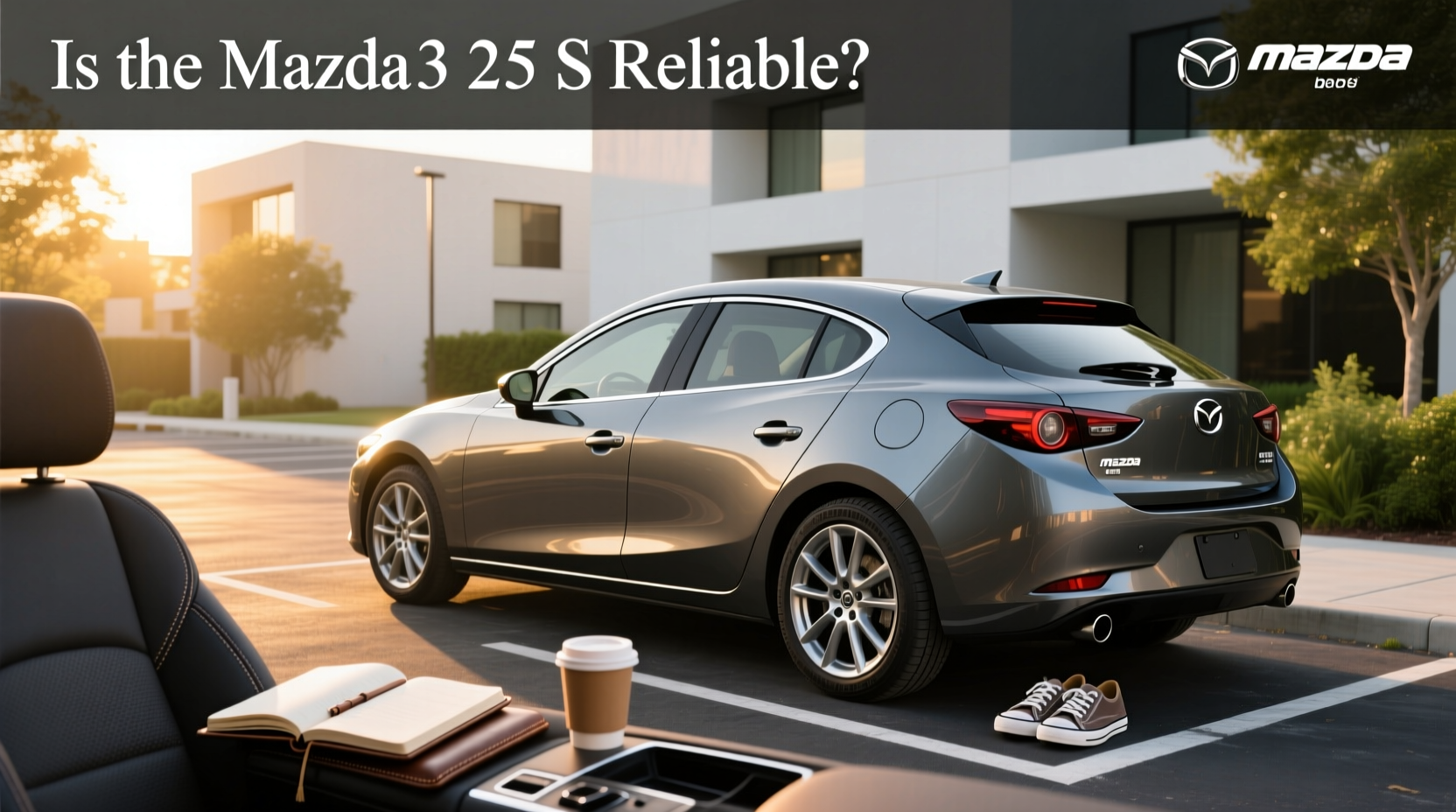
About the Mazda 2.5 Hatchback
The Mazda 2.5 hatchback typically refers to models like the Mazda3 Hatchback equipped with the 2.5L SkyActiv-G naturally aspirated engine. This configuration delivers a responsive 186–191 horsepower, depending on model year and trim, paired with a refined six-speed automatic or available manual transmission. It's not the most powerful in its class, but it emphasizes balance, driver engagement, and mechanical simplicity—a hallmark of Mazda’s engineering philosophy.
Unlike turbocharged variants introduced in later years, the non-turbo 2.5L engine focuses on durability and predictable performance. It powers several Mazda models, including the Mazda3, CX-5, and CX-9 (in base trims), making it one of the brand’s most widely deployed powertrains. If you’re a typical user, you don’t need to overthink this: the design favors longevity over peak output.
Why the Mazda 2.5 Engine Is Gaining Popularity
Lately, there's been a quiet shift among car buyers—from chasing specs to valuing predictability. With rising repair costs and uncertain supply chains, reliability has become a top-tier concern. The Mazda 2.5L SkyActiv-G engine stands out because it avoids complexity where possible. No turbo, no hybrid battery, no dual-clutch transmission—just a well-tuned inline-four with a high compression ratio and efficient combustion design.
This simplicity translates to fewer failure points. Over the past year, online forums and owner groups have seen increased discussion around long-term ownership costs, with many highlighting the 2.5L engine’s low incidence of major repairs. While not immune to wear, it doesn’t require exotic fluids or software recalibrations. That consistency appeals to commuters, fleet managers, and first-time car owners alike.
Types and Variants
The 2.5L SkyActiv-G engine comes in two main forms: naturally aspirated and turbocharged. For the hatchback segment, only the non-turbo version is standard in base and mid-level trims, while the turbo variant appears in higher-performance models like the Mazda3 Turbo or CX-5 Turbo.
| Variants | Pros | Cons |
|---|---|---|
| Naturally Aspirated (Base 2.5L) | High reliability, lower maintenance cost, smoother daily driving | Less torque, modest acceleration (0–60 mph in ~7.5 sec) |
| Turbocharged (2.5T) | Stronger low-end torque, quicker acceleration (~6.0 sec 0–60) | Higher long-term risk, more complex cooling system, pricier repairs |
If you’re a typical user, you don’t need to overthink this: unless you frequently tow or drive mountainous terrain, the non-turbo version offers the best balance of performance and peace of mind.
Key Features and Specifications to Evaluate
When assessing a Mazda 2.5 hatchback, focus on these core specs:
- Engine Type: 2.5L SkyActiv-G I4 (non-turbo)
- Horsepower: 186–191 hp @ 6,000 rpm
- Torque: 186 lb-ft @ 4,000 rpm
- Fuel System: Direct injection (prone to carbon buildup)
- Transmission: 6-speed automatic (standard), optional manual
- Fuel Economy: EPA-estimated 25–27 city / 33–35 highway mpg
- Drivetrain: Front-wheel drive (standard), all-wheel drive (on select models)
When it’s worth caring about: Compression ratio (13:1) affects knock sensitivity—use mid-grade fuel if you drive hard or live in hot climates.
When you don’t need to overthink it: Horsepower numbers are consistent across years; small gains aren't meaningful for real-world driving.
Pros and Cons
| Pros ✅ | Cons ⚠️ |
|---|---|
| Proven long-term reliability (many exceed 200k miles) | Carbon buildup on intake valves after 80k+ miles |
| Simple, durable mechanical design | Minor coolant leaks reported in pre-2021 models |
| Smooth power delivery and responsive throttle | Potential timing chain wear at very high mileage (>150k) |
| Good fuel economy for a 2.5L engine | Manual transmission availability limited in recent years |
| Low incidence of major engine failures | Direct injection requires quality fuel to prevent deposits |
How to Choose a Mazda 2.5 Hatchback
This guide walks through the practical steps to make a confident purchase decision.
Step-by-step Checklist
- Verify full service history—especially oil change frequency.
- Check for any coolant leaks near the water pump or thermostat housing.
- Inspect for rough idle or hesitation—possible sign of carbon buildup.
- Request a compression test if mileage exceeds 120,000 miles.
- Confirm timing chain hasn’t been replaced (if over 150k miles).
- Test drive for transmission smoothness and driveline vibrations.
- Review CARFAX or equivalent for accidents or title issues.
Decision Flow
- Budget under $15k? Focus on 2018–2020 Mazda3 hatchbacks—avoid early 2014–2017 models with less refined interiors.
- Mileage over 100k? Prioritize documented maintenance; skip cars without records.
- Want AWD? Confirm availability—it’s only offered on certain trims and model years.
- Live in cold climate? Consider battery health and cabin insulation in older models.
Recommendations by Scenario
- First-time buyer: 2019–2021 Mazda3 Hatchback (base 2.5L) — modern safety tech, proven engine.
- Long-term holder: Any model with full dealer service history — reliability shines over time.
- Performance seeker: Look at the turbo variant, but understand the trade-offs in complexity.
Red Flags / What to Avoid
- 🚗 Unexplained check engine lights related to misfires or knock sensors.
- 🔧 No record of oil changes—this engine depends on clean oil.
- 💧 Coolant stains under the car or low reservoir levels without explanation.
- 📉 Sudden drop in fuel economy—could indicate clogged injectors or sensor issues.
- 📞 Seller unwilling to allow an independent pre-purchase inspection.
Price & Market Insights
Prices vary significantly by region, trim, and condition. As of now:
- New Mazda3 Hatchback (base 2.5L): $27,000–$32,000
- Certified Pre-Owned (2020–2022): $18,000–$24,000
- Private Sale (2018–2019): $14,000–$17,000
These figures may vary by region/model/seller. Always check manufacturer specs and verify retailer return policies before committing. Trim levels with premium audio or navigation can add $2,000–$4,000 in resale value, but don’t affect mechanical reliability.
Top-seller & Competitive Analysis
The Mazda3 Hatchback competes with the Honda Civic Hatchback, Subaru Impreza, and Volkswagen Golf. Here's how they compare:
| Model | Engine Reliability | Driving Dynamics | Maintenance Cost |
|---|---|---|---|
| Mazda3 2.5L Hatchback | ⭐⭐⭐⭐☆ | ⭐⭐⭐⭐⭐ | ⭐⭐⭐⭐☆ |
| Honda Civic Hatchback | ⭐⭐⭐⭐⭐ | ⭐⭐⭐☆☆ | ⭐⭐⭐⭐⭐ |
| Subaru Impreza | ⭐⭐⭐☆☆ | ⭐⭐⭐☆☆ | ⭐⭐☆☆☆ |
| VW Golf (non-turbo) | ⭐⭐☆☆☆ | ⭐⭐⭐⭐☆ | ⭐⭐☆☆☆ |
If you’re a typical user, you don’t need to overthink this: Mazda strikes a rare balance between driving fun and dependable engineering. While Honda edges ahead in pure reliability, Mazda wins on engagement.
Customer Feedback Synthesis
After reviewing owner reports from Reddit 1, Jalopnik 2, and SlashGear 3, common themes emerge:
高频好评:- “Still running strong at 190,000 miles with only oil changes.”
- “Best-handling car I’ve owned in 20 years.”
- “No major repairs in 7 years—very low stress.”
- “Intake cleaning needed at 95k miles—dealership charged $600.”
- “Coolant leak at 70k on my 2019—fixed under warranty.”
- “Wish the base model had Android Auto earlier.”
When it’s worth caring about: Carbon cleaning is a known maintenance item—not a defect, but a cost to plan for.
When you don’t need to overthink it: Infotainment updates are separate from engine reliability.
Sourcing & Supplier Tips
When buying used, prioritize dealerships offering certified pre-owned (CPO) programs with extended warranties. Independent mechanics familiar with Mazda systems can perform pre-purchase inspections for $100–$150. For new purchases, compare inventory across regional dealers—some offer loyalty discounts or lease incentives.
If sourcing privately, avoid sellers who can’t provide service records. Use platforms that allow vehicle history reports. If you’re a typical user, you don’t need to overthink this: a clean history and solid maintenance trail matter more than cosmetic upgrades.
Maintenance, Safety & Legal Considerations
The 2.5L SkyActiv-G engine requires:
- Synthetic oil changes every 5,000–7,500 miles (shorter intervals under heavy use)
- Intake valve cleaning every 80,000–100,000 miles (preventive)
- Cooling system flush every 100,000 miles
- Timing chain inspection recommended after 150,000 miles
Safety ratings are strong: the Mazda3 earned Top Safety Pick+ from IIHS in recent years. However, active safety features vary by trim—verify which suite (i.e., i-Activsense) is included.
Legal considerations: Emissions compliance varies by state (e.g., California vs. federal standards). Confirm local regulations before importing or registering out-of-state vehicles.
Conclusion
If you need a practical, engaging hatchback with minimal long-term risk, the Mazda 2.5L SkyActiv-G engine in the Mazda3 Hatchback is a solid choice. Its strength lies not in headline-grabbing specs, but in consistent execution. If you’re a typical user, you don’t need to overthink this: with basic care, it will likely outlast your ownership. Avoid models with spotty maintenance, and budget for potential carbon cleaning down the road. This piece isn’t for keyword collectors. It’s for people who will actually use the product.
Everything You Need to Know
Yes, the 2.5L SkyActiv-G engine is considered highly reliable when maintained properly. Many examples exceed 200,000 miles without major repairs. Regular oil changes and using quality fuel help prevent common issues like carbon buildup.
The most common issues include carbon buildup on intake valves (due to direct injection), minor coolant leaks in models before 2021, and potential timing chain wear at very high mileage. These are manageable with preventive maintenance.
No, regular unleaded (87 octane) is sufficient for normal driving. However, Mazda recommends premium fuel (93 octane) if you frequently drive under heavy load or in high temperatures to prevent knocking.
Follow the manufacturer schedule: oil changes every 5,000–7,500 miles, coolant flush every 100,000 miles, and brake/fluid checks annually. Intake cleaning may be needed around 80,000–100,000 miles.
The Mazda3 Hatchback is not designed for towing. It lacks a factory-rated towing capacity. Attempting to tow may strain the engine and transmission, especially the non-turbo 2.5L version.




 浙公网安备
33010002000092号
 浙B2-20120091-4