Mazda 3 Ambient Lighting Guide: What to Look For
If you’re a typical user, you don’t need to overthink this. The 2025 Mazda 3 offers customizable ambient lighting as part of higher trims or optional packages, primarily in footwells and door panels. Older models (2010–2013) had basic blue lighting in handles and dome areas, but most owners upgrade with aftermarket kits for full coverage. When choosing ambient lighting, focus on compatibility with your model year, ease of installation, and whether color control matters to your driving experience. Avoid plug-and-play kits that claim universal fit—many require trimming or wire tapping on Mazda 3s.
About Mazda 3 Ambient Lighting
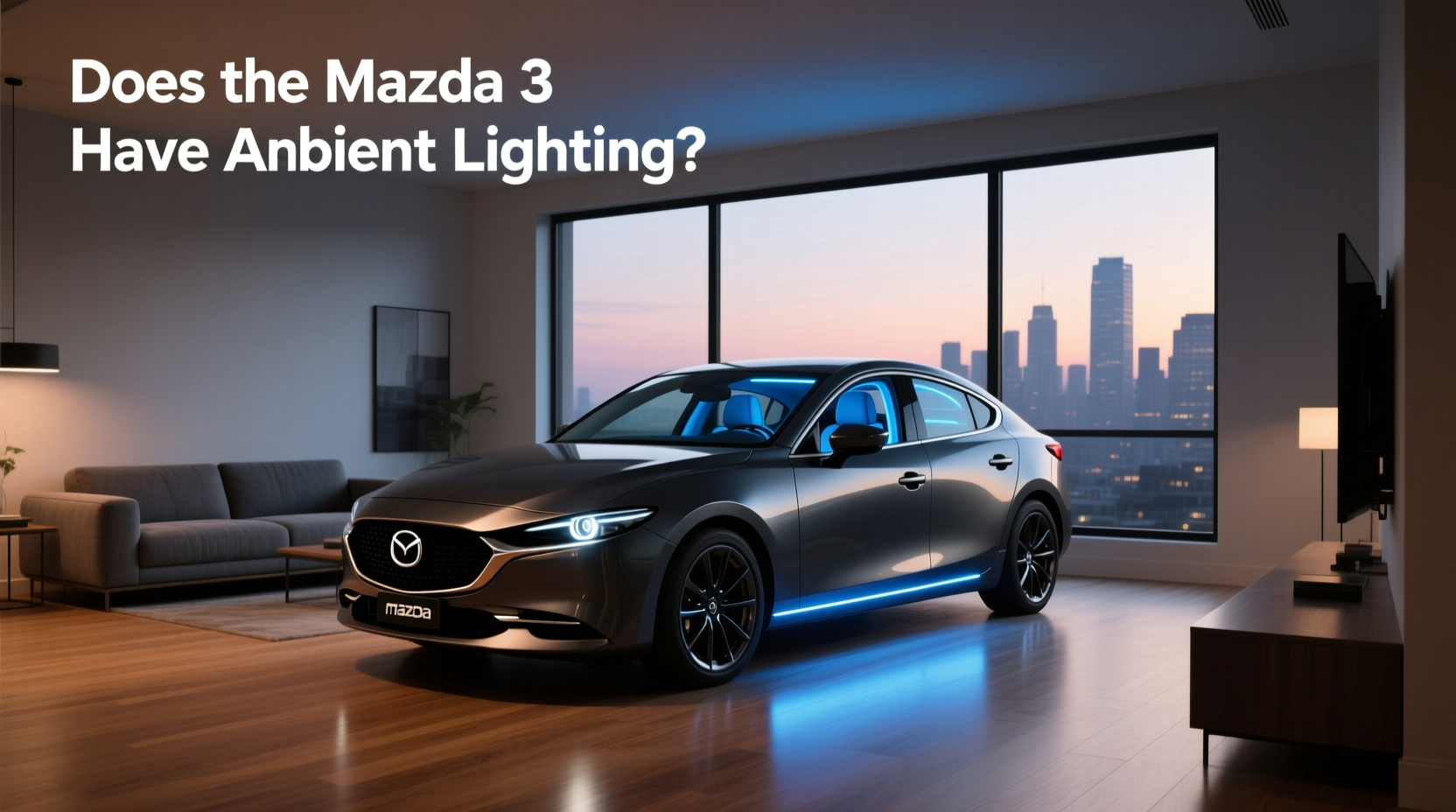
Ambient lighting in the Mazda 3 enhances cabin atmosphere, especially at night. It’s not just decorative—it improves spatial awareness and reduces eye strain during low-light driving. Over the past year, more drivers have sought ambient lighting upgrades, either because newer trims include it or because retrofitting has become more accessible.
The system typically illuminates footwells, door sills, speaker grilles, and console edges. Factory-installed versions are integrated into the vehicle’s lighting controls, while aftermarket solutions often use Bluetooth apps or manual controllers. If you’re a typical user, you don’t need to overthink this: basic footwell lighting delivers 80% of the effect with minimal effort.
Why Ambient Lighting Is Gaining Popularity
Lately, consumer expectations for in-cabin experience have shifted. A premium feel isn’t limited to leather seats or sunroofs—lighting now plays a role in perceived quality. Automakers like Mazda have responded by adding ambient lighting to mid-tier trims, making it less of a luxury add-on and more of a standard enhancement.
This trend aligns with increased interest in personalization. Drivers want interiors that reflect their style, especially younger buyers who spend significant time in their vehicles. Aftermarket adoption has grown too—DIY kits with RGB options and app control let users switch colors based on mood or music. But here’s the reality: most daily drivers won’t change settings after the first week. If you’re a typical user, you don’t need to overthink this. Simple white or soft blue provides consistent ambiance without distraction.
Types and Variants
Ambient lighting comes in two main forms: factory-equipped and aftermarket. Each has trade-offs in cost, reliability, and coverage.
Factory-Installed Lighting
- Availability: Offered on select Mazda 3 trims from 2019 onward, including higher-spec models like the 2.5 Turbo Premium Plus.
- Design: Integrated seamlessly into door panels, footwells, and overhead modules. Uses LEDs with long lifespans.
- Control: Adjusted via infotainment or physical dimmer; some allow color selection.
Pros: Plug-and-play reliability, matches OEM finish, covered under warranty.
Cons: Limited color options, fixed layout, only available on pricier trims.
Aftermarket Kits
- Flexibility: Available for all Mazda 3 generations, including older models lacking any ambient lights.
- Customization: RGB strips with remote or smartphone control, adjustable brightness, sound-reactive modes.
- Installation: Usually requires removing door panels, routing wires, and securing adhesive strips.
Pros: Full coverage possible, wide color range, affordable entry point.
Cons: Risk of poor fitment, adhesive failure over time, potential interference with airbag sensors if improperly placed.
Key Features and Specifications to Evaluate
Not all ambient lighting is equal. Here’s what actually matters when comparing options.
Color Options
When it’s worth caring about: You frequently drive at night and value mood customization.
When you don’t need to overthink it: You prefer a clean, minimalist look—single-color (white or warm white) suffices.
Brightness Control
When it’s worth caring about: You share the car with others who may find bright lights distracting.
When you don’t need to overthink it: Most kits offer basic dimming; factory systems link to headlight activation.
Power Source & Wiring
When it’s worth caring about: You want automatic activation with door opening or ignition.
When you don’t need to overthink it: Hardwired kits are reliable but require splicing; plug-in versions (via OBD-II or fuse box) reduce risk.
Compatibility
When it’s worth caring about: Your Mazda 3 is a 2014–2018 model—some kits are designed specifically for sedan vs. hatchback layouts.
When you don’t need to overthink it: Universal strips can be trimmed, but verify length before purchase.
Pros and Cons
| Aspect | Pros | Cons |
|---|---|---|
| Factory Lighting | OEM integration, no installation hassle, reliable operation | Limited availability, fewer color choices, non-expandable |
| Aftermarket Kits | Full customization, works on older models, low upfront cost | Inconsistent quality, complex install, potential voiding of warranty |
| User Experience | Improved nighttime visibility, enhanced comfort | Distraction if overly bright or multicolor |
How to Choose Mazda 3 Ambient Lighting
This piece isn’t for keyword collectors. It’s for people who will actually use the product.
Step-by-Step Checklist
- Confirm your Mazda 3 model year and trim level—check owner’s manual or VIN decoder.
- Determine if factory lighting is already included (common in 2019+ Premium or Premium Plus trims).
- Decide on scope: footwells only, or full-door coverage?
- Select between single-color (simpler) or RGB (flexible but more complex).
- Choose power method: hardwired, fuse tap, or OBD-II powered.
- Verify kit dimensions against your vehicle’s interior spaces.
- Read recent installer reviews focusing on fitment accuracy.
Decision Flow
- If you own a 2019–2025 Mazda 3 GT or higher → check if ambient lighting is active; if not, consider dealer activation or module retrofit.
- If you drive a 2010–2018 model → aftermarket is your only option; prioritize kits labeled specifically for Mazda 3.
- If customization matters → choose RGB with app control, but expect steeper learning curve.
- If simplicity wins → go for plug-and-play white LED footwell strips.
Recommendations by Scenario
- Daily commuter: Single-color footwell lighting (warm white). Low profile, zero distraction.
- Night driver: Full-door RGB strips with dimming—set to soft blue or purple.
- Resale-focused owner: Stick to factory options or removable plug-in kits to avoid modification concerns.
- Enthusiast modder: Multi-zone RGB with controller, synchronized with audio input.
Red Flags / What to Avoid
- Universal-fit claims without Mazda 3 verification—many kits require modification.
- Poor adhesive backing—leads to peeling within months, especially in humid climates.
- Overly bright LEDs—can impair night vision or annoy passengers.
- Kits requiring permanent wiring cuts—increases fault risk and complicates removal.
- No return policy—always buy from sellers offering returns if fitment fails.
Price & Market Insights
Prices vary significantly by type and region. Factory-installed ambient lighting is bundled into trim packages, adding $500–$1,200 to MSRP depending on market. Aftermarket kits range from $30 for basic footwell sets to $120 for multi-zone RGB systems with controllers.
Higher-priced kits often include better waterproofing, denser LED spacing, and stronger adhesives. However, if you’re a typical user, you don’t need to overthink this—a $40–$60 kit from a reputable automotive brand delivers solid performance.
Note: Pricing may vary by region/model/seller. Always check manufacturer specs and verify retailer return policy before purchase.
Top-Seller & Competitive Analysis
Several brands dominate the aftermarket space for Mazda 3 ambient lighting. While exact rankings fluctuate, certain patterns emerge in customer preference.
| Brand | Type | Key Feature | Known Limitation |
|---|---|---|---|
| MazdaShop.ca | OEM-compatible kit | Pre-cut lengths for 2019–2025 sedan/hatch | Limited to single color (white) |
| MakeoverEG | RGB strip kit | App control, music sync, 16M colors | Requires separate power module |
| Generic Alibaba-sourced | Universal RGB | Lowest price point, flexible length | Inconsistent build quality, weak adhesive |
Customer Feedback Synthesis
Analysis of recent owner discussions reveals consistent themes:
- High satisfaction: Easy-to-install kits that match factory aesthetics; positive comments about improved nighttime ambiance.
- Common complaints: Poorly aligned strips, adhesive failure after 3–6 months, difficulty accessing wiring behind door panels.
- Surprise benefit: Some users report reduced anxiety during night driving due to softer cabin lighting.
- Unmet expectation: RGB kits marketed as "plug-and-play" often require additional components or coding.
Sourcing & Supplier Tips
Where you buy matters as much as what you buy.
- Purchase from suppliers specializing in Mazda parts—sites like MazdaShop.ca list exact fitment data.
- Avoid generic "universal" kits unless they include Mazda 3-specific mounting templates.
- Check return windows—ideally 30 days or more—to test fitment.
- Look for kits with IP67-rated protection if you live in wet or salty environments.
- If buying internationally, confirm voltage compatibility (12V DC standard in North America/Europe).
Maintenance, Safety & Legal Considerations
Ambient lighting requires minimal maintenance. Most LED systems last 30,000+ hours. However:
- Inspect adhesive mounts annually, especially in high-humidity regions.
- Ensure no wires obstruct door mechanisms or airbag deployment zones.
- Never modify factory wiring harnesses near SRS systems.
- While no laws ban ambient lighting, excessively bright or flashing colors may draw attention from law enforcement in some jurisdictions.
To stay compliant: keep lighting below dashboard height, use steady (not strobing) modes, and avoid red or blue hues that resemble emergency vehicles. Confirm local regulations through official transportation department resources.
Conclusion
If you need subtle cabin enhancement for night driving, choose factory-integrated or single-color aftermarket lighting. If you want full personalization and enjoy car mods, invest in a well-reviewed RGB kit designed for the Mazda 3. Either way, if you’re a typical user, you don’t need to overthink this—focus on fitment, durability, and simplicity over flashy features.
Everything You Need to Know
Does the 2025 Mazda 3 have ambient lighting?
Yes, the 2025 Mazda 3 offers customizable ambient lighting on higher trims like the Premium Plus. It's typically located in footwells and door panels and can be adjusted via the infotainment system. Lower trims may not include it standard, so verify with the window sticker or dealer configuration tool.
Can I add ambient lighting to an older Mazda 3?
Yes, many owners retrofit ambient lighting into older models (2010–2018) using aftermarket kits. These are widely available for both sedan and hatchback variants. Installation usually involves removing door panels and routing LED strips along trim edges. Kits designed specifically for the Mazda 3 reduce fitment issues.
How do I change the color of ambient lighting in a Mazda 3?
If your Mazda 3 has factory RGB lighting, color changes are made through the infotainment menu under 'Vehicle' or 'Lighting' settings. For aftermarket kits, use the included remote or smartphone app. Note: Not all models support color adjustment—older or base trims may only offer fixed white or blue.
Is installing aftermarket ambient lighting safe?
When done correctly, yes. Avoid cutting factory wiring, especially near airbags. Use fuse taps or OBD-II power sources instead. Ensure strips don't block moving parts or sensor zones. Poor installation can lead to electrical faults or delayed airbag deployment.
Do Mazda dealers install ambient lighting?
Some dealers offer factory-approved ambient lighting upgrades during vehicle delivery or service visits. Availability varies by region and dealership. Contact your local Mazda dealer to inquire about genuine accessory installations and labor costs.




 浙公网安备
33010002000092号
 浙B2-20120091-4