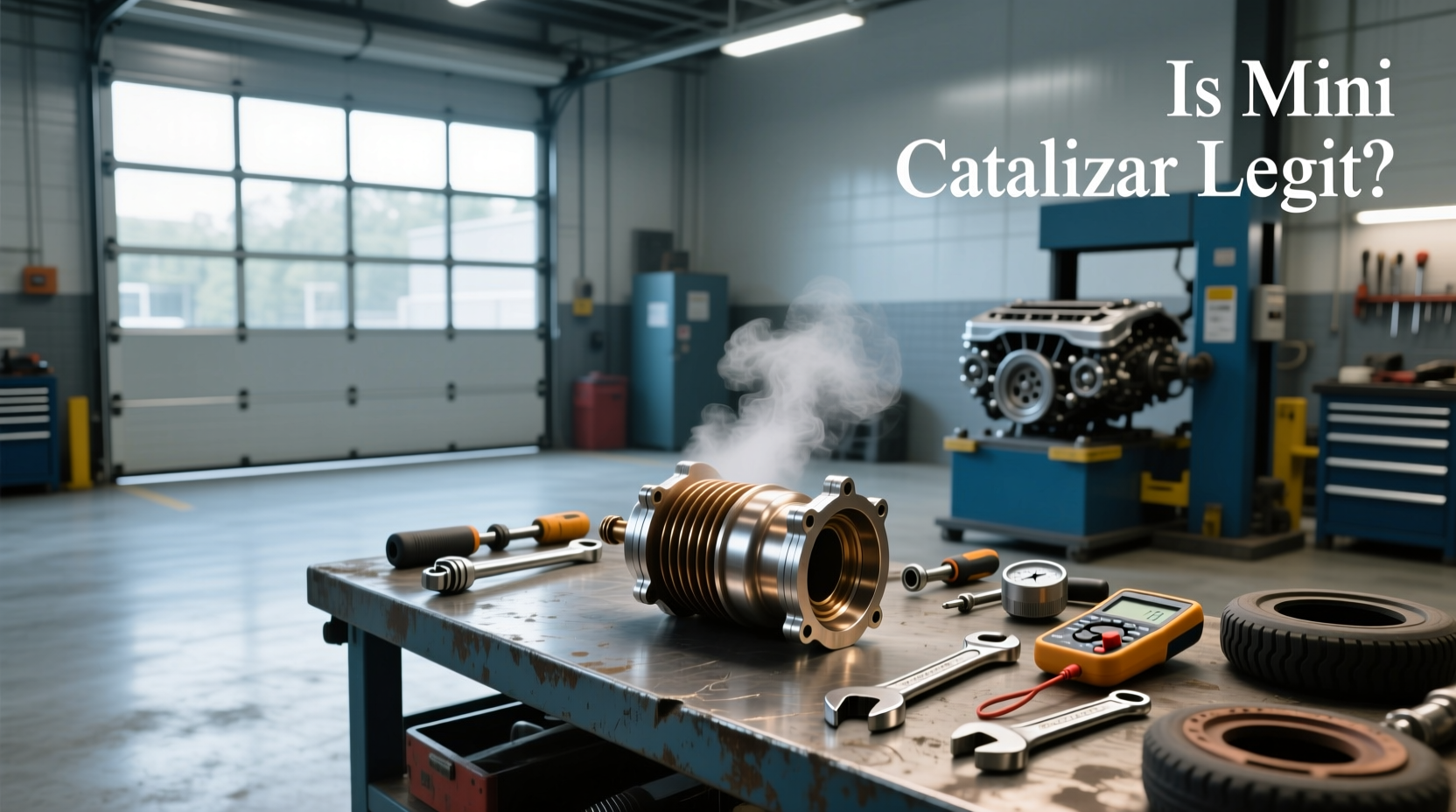
If you're asking how to choose a mini catalytic converter or wondering is mini catalizador legit?, the answer depends on your use case and legal context. These O₂ sensor spacers with built-in mini catalysts are effective at resolving P0420/P0430 codes caused by exhaust modifications, offering a quick, low-cost alternative to full catalytic converter replacement 1. They work well for off-road or race-only vehicles where emissions compliance isn’t required. However, they are not legal for street use in most regions, including California 2. When choosing one, prioritize correct thread size (typically M18x1.5mm), verify compatibility with your engine size (1.6L–6.3L), and always buy from official sources to avoid counterfeits 3.
About Mini Catalytic Converter: What Is It and Who Uses It?
🔧 A mini catalytic converter, often marketed as "mini catalizador," is not a standalone emissions device but an O₂ sensor spacer with a small internal catalytic element. It's installed between the exhaust manifold and the downstream (post-cat) oxygen sensor. Its primary role is to simulate the chemical activity of a functioning catalytic converter, helping prevent the ECU from triggering error codes like P0420 (catalyst efficiency below threshold) after the original catalytic converter has been removed or modified.
📍 This product is commonly used by:
- Enthusiasts who have deleted or gutted their factory catalytic converters for performance or sound reasons
- Drivers whose catalytic converters were stolen and seek a temporary fix
- Race car owners operating in closed-course environments where emissions equipment is not enforced
It does not replace the function of a full-sized catalytic converter in reducing overall vehicle emissions but focuses on fooling the ECU into believing the system is intact.
Why Is Mini Catalizador Gaining Popularity?
📈 The rise in popularity of mini catalytic converters stems from several real-world challenges:
- High theft rates: Catalytic converters contain valuable precious metals, making them frequent targets for theft. Replacing them can cost $1,000–$2,500, whereas a mini catalytic converter costs under $100.
- Cost-effective diagnostics fix: For those modifying exhaust systems, avoiding persistent check engine lights without reflashing the ECU is a major convenience.
- Simplified installation: Most units install in under 10 minutes using basic tools, appealing to DIY mechanics 4.
- Universal fitment: Standardized threading (M18x1.5mm) allows broad compatibility across brands like Toyota, Honda, BMW, and Audi.
Despite its appeal, users must understand it’s a workaround—not a permanent or legal emissions solution for public roads.
Types and Variants of Mini Catalytic Converters
⚙️ While most mini catalytic converters follow a similar design, variations exist based on construction and materials:
| Type | Pros | Cons |
|---|---|---|
| Basic Ceramic Honeycomb + Precious Metals Coating | Affordable; effective at simulating post-cat readings; widely available | May degrade over time; limited lifespan under high heat |
| Stainless Steel Housings with Reinforced Substrate | Durable; better heat resistance; longer service life | Higher price point; heavier |
| Programmable Simulators (Electronic) | No physical catalyst needed; consistent signal output; compact | More complex; potential reliability issues; may require power |
Note: True “mini catalytic converters” contain a passive catalytic substrate. Electronic simulators are sometimes grouped under the same term but operate differently.
Key Features and Specifications to Evaluate
🔍 When evaluating options for what to look for in a mini catalytic converter, consider these technical and functional criteria:
- Thread Size: Confirm your vehicle uses M18x1.5mm (most common). Measure or consult OEM specs if unsure.
- Catalytic Substrate: Look for ceramic honeycomb coated with platinum, palladium, or rhodium—materials that facilitate oxidation reactions 5.
- Heat Resistance: Should withstand sustained exhaust temperatures (up to 700°C).
- Compatibility Range: Check manufacturer claims regarding engine displacement (e.g., 1.6L–6.3L) and supported makes/models.
- Installation Method: Should require no welding or wiring—simple screw-on design preferred.
- Build Quality: Stainless steel body resists corrosion better than aluminum or low-grade alloys.
Pros and Cons: Balanced Assessment
✅ Pros
- Resolves P0420/P0430 codes effectively in many cases
- Low cost compared to OEM catalytic converter replacement
- Easy installation—no special tools or expertise needed
- Helps pass visual or basic tailpipe emissions tests in some jurisdictions
- Useful for off-road/race applications where emissions controls are waived
❌ Cons
- Not legal for use on public roads in regulated areas (e.g., CARB states)
- Does not reduce actual emissions—only masks sensor data
- Potential for counterfeit products that fail prematurely
- Limited long-term durability under continuous high load
- May void warranties or lead to fines if detected during inspection
How to Choose a Mini Catalytic Converter: Step-by-Step Buying Guide
📋 Follow this checklist when deciding how to choose mini catalytic converter, is mini catalizador legit?:
- Confirm Your Use Case: Are you using it off-road only? If driving on public roads, this product likely violates local laws.
- Verify Sensor Thread Size: Use a caliper or gauge to confirm M18x1.5mm. Incorrect fit leads to leaks or damage.
- Check Compatibility: Match the product’s listed engine range (e.g., 2.0L–5.0L) with your vehicle.
- Avoid Counterfeits: Buy only from the official website or authorized distributors. Third-party sellers often offer inferior copies 2.
- Review Return Policy: Ensure you can return if it doesn’t work with your setup.
- Read Real User Feedback: Look beyond star ratings—check comments about longevity and noise issues.
❗ Red Flags to Avoid:
- Claims of being “street legal” or “CARB compliant”—these are false for emission-simulating devices.
- Vague descriptions lacking material or dimensional details.
- No clear manufacturer location or contact information.
- Pricing significantly below market average (likely fake).
Price & Market Insights
💰 Prices for mini catalytic converters typically range from $60 to $120, depending on build quality and brand reputation. Higher-priced models often feature better heat shielding, thicker metal housings, and genuine catalytic coatings.
While more expensive than generic spacers, authentic mini catalytic converters justify the cost through improved reliability. Be cautious of listings under $50 on third-party marketplaces—they may lack real catalytic material and fail quickly.
There is currently no standardized certification for these products, so value is assessed through customer reviews, warranty terms, and transparency of company operations.
Top-Seller & Competitive Analysis
One of the most-reviewed brands is MiniCatalizador.com, established in 2023 and based in Riverside, CA. Below is a comparison of key attributes among leading offerings:
| Feature | MiniCatalizador.com | Generic Brand A | Performance Tuner B |
|---|---|---|---|
| Type | O₂ spacer + mini cat | Spacer only (no catalyst) | Electronic simulator |
| Price | $99 | $45 | $110 |
| Material | SS housing, ceramic substrate | Aluminum, no coating | Plastic housing, circuit board |
| Installation | Screw-on, no tools | Screw-on | Wiring required |
| Legal Disclaimer | Clearly stated: race-only | None provided | “For off-road use” |
| Customer Rating | 4.8/5 (RealReviews) | 3.7/5 (Marketplace) | 4.3/5 (Forum reviews) |
This illustrates that higher-rated products tend to offer clearer disclaimers, better materials, and stronger post-purchase support.
Customer Feedback Synthesis
👥 Aggregating user experiences reveals consistent patterns:
高频 Positive Feedback
- “Fixed my check engine light immediately after installing.”
- “Passed state emissions test despite having no catalytic converter.”
- “Saved hundreds compared to dealership repair.”
- “Installed in 8 minutes with no issues.”
Common Complaints
- “Stopped working after three months.” (Often linked to counterfeit units)
- “Made a rattling noise under acceleration.”
- “Return process was slow and required multiple emails.”
- “Didn’t fit properly—thread mismatch.”
Overall satisfaction correlates strongly with purchasing from verified channels and matching specifications accurately.
Sourcing & Supplier Tips
🛒 To ensure authenticity and performance:
- Purchase directly from the manufacturer’s official website whenever possible.
- Avoid Amazon, eBay, or AliExpress unless sold by a confirmed authorized dealer.
- Look for companies that provide traceable business addresses and responsive customer service.
- For bulk buyers or resellers, inquire about wholesale programs—but verify minimum order quantities and shipping policies.
- Upon delivery, inspect packaging for branding consistency and check for signs of tampering.
Maintenance, Safety & Legal Considerations
🌍 These devices require minimal maintenance but are subject to environmental regulations:
- Legality: In the U.S., removing or bypassing catalytic converters violates the Clean Air Act. Devices like mini catalizadores are explicitly labeled “race-only” and are not permitted on public highways 4.
- Safety: Install only on cooled-down exhaust systems. Improper seating can cause exhaust leaks or sensor damage.
- Compliance: Always check your state or country’s emissions laws before installation. Some areas conduct sniff tests or require OBD-II scans that may detect anomalies even with a working spacer.
- Emissions Impact: These units do not eliminate harmful pollutants. CO, HC, and NOx levels remain elevated if the main converter is missing.
If you plan to drive legally, replacing the catalytic converter with a certified unit remains the only compliant option.
Conclusion: Making the Right Choice
The question is mini catalizador legit? has a nuanced answer: yes, as a functional tool for specific non-street applications. It is a legitimate mechanical solution designed to resolve sensor-related fault codes when the catalytic converter is absent. However, legitimacy does not imply legality for road use.
If you need a temporary, cost-effective way to silence the check engine light on a track-only or off-road vehicle, a genuine mini catalytic converter from a reputable source can be a practical choice. If you drive daily on public roads, this product is not suitable due to regulatory risks and ethical concerns about emissions.
Always verify compatibility, purchase from trusted suppliers, and understand your local laws before buying. For those seeking a true emissions-compliant repair, investing in a proper catalytic converter replacement is the responsible path forward.
FAQs
It may help in jurisdictions that rely on OBD-II readings or visual inspections, especially if the rest of the system is healthy. However, areas with strict tailpipe testing may still detect high pollutant levels. Success varies by location and testing method.
In most U.S. states, especially those following CARB regulations, modifying or removing a catalytic converter—and using devices to bypass it—is illegal for street-driven vehicles. The product itself carries a “race-only” disclaimer for this reason.
Lifespan varies from 6 months to 3 years depending on build quality, driving conditions, and exposure to extreme heat. Genuine units with ceramic substrates tend to outlast cheap imitations.
Yes, most models screw onto the O₂ sensor bung using standard wrenches and take less than 10 minutes. No electrical or welding work is required.
Yes: replacing the catalytic converter with an OEM or approved aftermarket unit, using a dummy O₂ sensor simulator (electronic), or reprogramming the ECU to ignore post-cat sensor data—all with varying legal implications.




 浙公网安备
33010002000092号
 浙B2-20120091-4