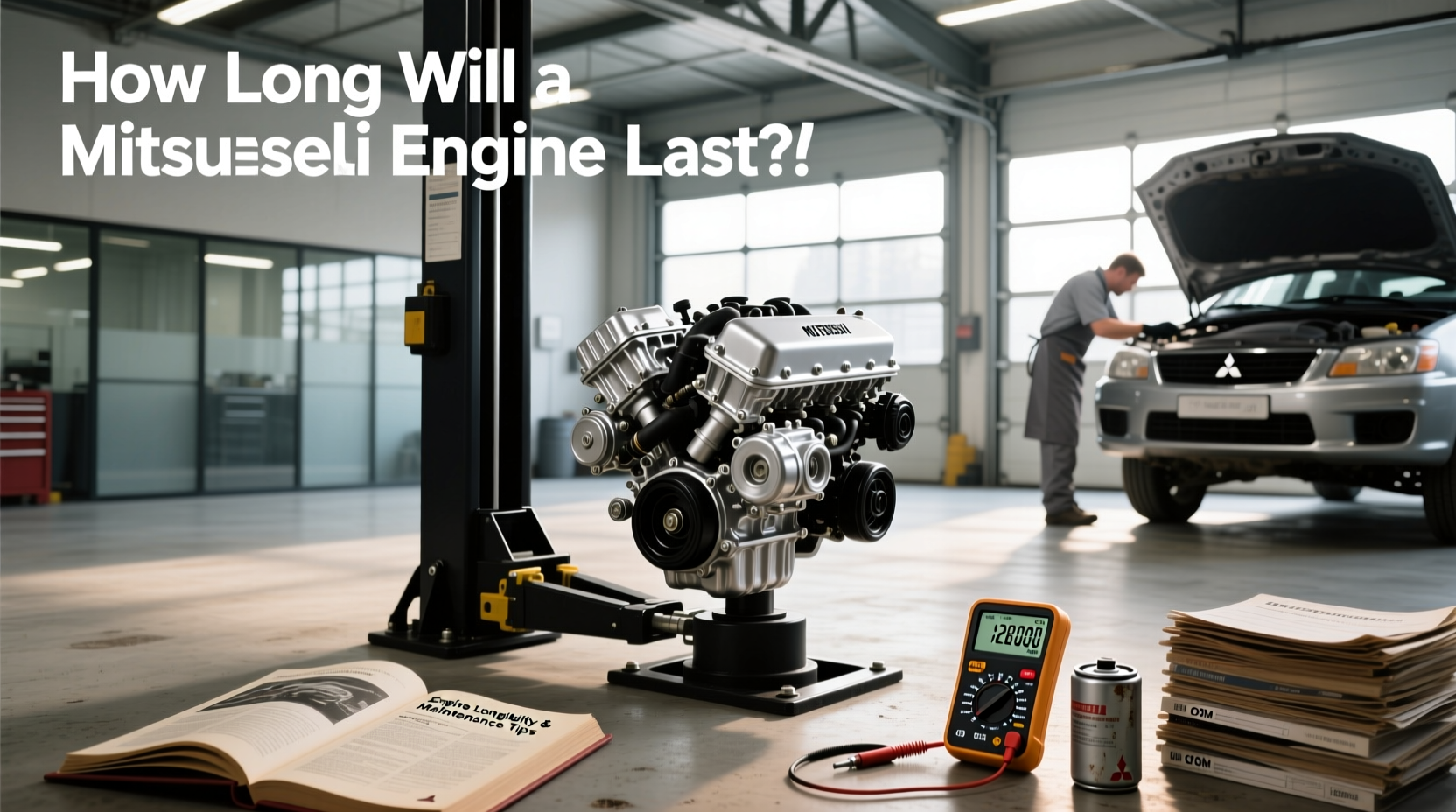
If you're asking how long will a Mitsubishi engine last?, particularly the 1.6L models like the 4A92 or 4G92, the answer is clear: with proper care, these engines typically reach 150,000 to over 300,000 miles. When evaluating how to choose a Mitsubishi 1.6L engine, focus on maintenance history, model year, driving conditions, and whether it's petrol or diesel. Older petrol units (e.g., 4G92) are praised for mechanical simplicity and durability, while newer MIVEC-equipped engines offer efficiency but require stricter service schedules. Diesel variants like the 4N14 excel in high-mileage commercial use. Avoid neglected engines showing oil sludge, overheating signs, or timing belt neglect—these are red flags.
About the Mitsubishi 1.6L Engine and Longevity
The Mitsubishi 1.6L engine family includes several inline-four gasoline and diesel units used across compact sedans, hatchbacks, and light commercial vehicles such as the Lancer, Carisma, Space Star, ASX, and Delica. These engines are designed for balance between fuel economy, reliability, and moderate performance. A common question among buyers is: how long will a Mitsubishi engine last? Real-world data shows that many 1.6L variants exceed 200,000 miles when maintained properly, making them viable choices for budget-conscious drivers, fleet operators, or those seeking dependable daily transportation 1.
Key applications include urban commuting, regional delivery services, and personal use in regions where spare parts and technical expertise are accessible. The engine’s lifespan depends less on inherent design flaws and more on usage patterns and preventive upkeep. Understanding what to look for in an engine mitsubishi 1.6 can help avoid costly repairs down the line.
Why the Mitsubishi 1.6L Engine Is Gaining Popularity
Despite Mitsubishi Motors reducing its passenger car presence in some markets, demand for its 1.6L engines remains strong due to their proven track record in durability and cost-effective operation. Used vehicle buyers and mechanics often cite low repair frequency and ease of servicing as major advantages. In emerging markets and taxi fleets, older Lancers equipped with the 4G92 engine have logged over 450,000 miles with only routine replacements like clutches and exhaust components 2.
Additionally, the rise of eco-conscious driving has renewed interest in smaller-displacement engines. Models with MIVEC (Mitsubishi Innovative Valve timing and lift Electronic Control) technology improve fuel efficiency without sacrificing responsiveness. As fuel prices fluctuate globally, the engine mitsubishi 1.6,How long will a Mitsubishi engine last? equation becomes increasingly relevant for long-term ownership planning.
Types and Variants of the 1.6L Mitsubishi Engine
Several engine codes fall under the 1.6L category, each suited to different needs and eras of production:
- 4A92 (Petrol, MIVEC): Found in Lancers from the 2000s–2010s. Offers variable valve timing for improved efficiency and smoother power delivery.
- 4G92 (Petrol, DOHC): Used in 1990s–2000s Lancer and Carisma models. Known for robust construction and high-revving capability.
- 4G18 (Petrol, SOHC 8-valve): Simpler design used in base trims of Lancer and Space Star. Less powerful but extremely durable under basic maintenance.
- 4N14 (Diesel): Introduced in the 2010s for ASX and Delica models. Turbocharged, fuel-efficient, and built for heavy-duty use in commercial vans.
| Engine Code | Pros | Cons |
|---|---|---|
| 4A92 | Fuel-efficient, modern emissions compliance, smooth idle | Sensitive to oil quality, timing chain issues reported in rare cases |
| 4G92 | High-revving, mechanically reliable, easy to repair | Higher fuel consumption than newer models, no variable valve tech |
| 4G18 | Low maintenance needs, tolerant of lower-grade fuels | Limited power output, outdated design |
| 4N14 | Excellent torque, long life in fleet use, efficient | More expensive repairs if turbo or injection system fails |
Key Features and Specifications to Evaluate
When researching what to look for in engine mitsubishi 1.6, prioritize these measurable and observable criteria:
- Mileage and Service History: Look for stamped logbooks or digital records showing regular oil changes and coolant flushes every 50,000 miles.
- Timing Mechanism: The 4A92 uses a timing chain (generally lifelong), while older models may have belts requiring replacement every 60,000–100,000 miles.
- Compression Test Results: Healthy cylinders should read within 10% of each other (typically 140–160 psi).
- Oil Condition: Check for sludge under the oil cap or dipstick—this indicates poor maintenance.
- Cooling System Integrity: Inspect radiator, hoses, and thermostat. Overheating damages head gaskets and warps blocks.
- Fuel System Type: Port-injected (older) vs. direct-injected (newer)—latter may need carbon cleaning after 100k miles.
For diesel 4N14 engines, also assess EGR valve condition and turbocharger spool-up noise during acceleration.
Pros and Cons of the Mitsubishi 1.6L Engine
✅ Advantages
- Proven longevity with proper maintenance
- Wide availability of aftermarket parts
- Good fuel economy, especially in city driving
- Diesel versions ideal for commercial or high-mileage applications
❗ Considerations
- Newer MIVEC engines require high-quality synthetic oil
- Some 4A92 units had early water pump failures
- Diesel variants need professional diagnostics for DPF/EGR issues
- Declining dealer support in some regions affects warranty and updates
This makes the engine mitsubishi 1.6,How long will a Mitsubishi engine last? discussion highly dependent on context. It’s best suited for owners who maintain vehicles regularly or operate in areas with skilled independent mechanics.
How to Choose a Mitsubishi 1.6L Engine: Step-by-Step Guide
Follow this checklist when evaluating a used or replacement Mitsubishi 1.6L engine:
- Verify full service history—missing records increase risk.
- Inspect for leaks (oil, coolant) around the valve cover, oil pan, and water pump.
- Request a compression or leak-down test to assess internal wear.
- Listen for abnormal noises (ticking, knocking) at idle and under load.
- Check if the timing belt (if applicable) was replaced per schedule.
- Scan for stored OBD2 trouble codes—even cleared codes suggest past issues.
- Avoid engines with known recalls unaddressed (e.g., certain 4A92 water pumps).
Red flags include milky oil (head gasket failure), excessive blue smoke (oil burning), or hesitation under acceleration. For DIY rebuilders, the 4G92 offers the most straightforward disassembly and part interchangeability.
Price & Market Insights
Pricing varies significantly by region, condition, and engine type:
- Used petrol 1.6L (4A92/4G92): $800–$1,800 USD
- Rebuilt long block: $1,500–$2,500 USD
- New OEM unit (rare): $3,000+ USD
- Diesel 4N14 (used): $1,200–$2,200 USD
Prices may be lower in Asia and Eastern Europe, higher in North America and Australia due to import costs. Always confirm return policies and core exchange requirements when buying online. Compare listings on platforms like eBay Motors, Car-Part.com, or local salvage yards. Remember: the cheapest option isn’t always the most cost-effective if hidden damage exists.
Top-Seller & Competitive Analysis
The 4A92 is currently one of the most commonly sought-after 1.6L replacements due to its use in later-model Lancers. However, the 4G92 remains a favorite among enthusiasts for its durability and tuning potential.
| Model | Avg. Lifespan | Maintenance Cost | Best For |
|---|---|---|---|
| 4A92 | 200,000 miles | Moderate | Daily drivers, fuel efficiency |
| 4G92 | 250,000+ miles | Low | Fleet vehicles, high-mileage use |
| 4N14 Diesel | 300,000+ miles | Moderate-High | Commercial vans, towing |
Compared to Toyota’s 1ZZ-FE or Honda’s D-series, Mitsubishi engines hold up well but may lack the same level of widespread acclaim for bulletproof reliability 3. Still, many users report comparable real-world results, especially with disciplined maintenance.
Customer Feedback Synthesis
Analysis of owner forums, mechanic reviews, and fleet operator reports reveals consistent themes:
👍 Frequent Praises:- Engines lasting beyond 200,000 miles with basic care
- Simple design allows for DIY repairs
- Diesel 4N14 praised in Delica vans for reliability
- Good balance of power and economy in 4A92
- Timing belt neglect leading to interference engine damage
- Water pump failures in early 4A92 models
- Lack of dealer support in some countries
- Carbon buildup in direct-injected variants after 100k miles
Owners who follow maintenance schedules rarely report catastrophic failures, reinforcing that longevity hinges on stewardship rather than just engineering.
Sourcing & Supplier Tips
When purchasing a replacement engine:
- Choose suppliers offering a minimum 6-month warranty.
- Prefer engines from low-mileage donor vehicles with clean titles.
- Ask for photos of the actual unit, not stock images.
- Confirm compatibility using VIN or chassis code (e.g., CJ2A for Lancer).
- For bulk buyers (e.g., repair shops), negotiate core return terms upfront.
Platforms like Japan’s auction exporters or European dismantlers often provide detailed inspection reports. Always perform a visual and functional check upon arrival—even if shipped “tested.”
Maintenance, Safety & Legal Considerations
To maximize lifespan, adhere to factory-recommended intervals:
- Change oil every 5,000–7,500 miles (use 5W-30 synthetic for MIVEC engines).
- Replace coolant every 50,000 miles to prevent corrosion.
- Inspect belts, hoses, and mounts annually.
- Use OEM-spec spark plugs and filters.
Safety-wise, ensure all electrical connections and fluid lines are secure before startup. In regions with emissions testing, verify the engine meets local standards—modifications may affect compliance. While no universal regulations govern used engine swaps, some jurisdictions require smog certification or documentation for registration. Always check your local DMV or transport authority guidelines.
Conclusion
The Mitsubishi 1.6L engine offers solid value for buyers prioritizing longevity and serviceability. If you need a dependable daily driver engine, the 4A92 with documented maintenance is a sound choice. For high-mileage or commercial use, consider the diesel 4N14 or older 4G92 petrol variant, both proven in fleet environments. Your decision should hinge on usage pattern, access to technical support, and willingness to maintain the engine properly. When asking how long will a Mitsubishi engine last?, remember: the answer is largely in your hands through consistent care.
Frequently Asked Questions
- How long do Mitsubishi 1.6L engines typically last?
- With regular maintenance, most last between 150,000 and 300,000 miles. Diesel models like the 4N14 often exceed 300,000 miles in commercial use.
- Which Mitsubishi 1.6L engine is the most reliable?
- The 4G92 (1990s–2000s) and 4N14 diesel are frequently cited for durability. The 4A92 is reliable if serviced with quality oil and timely checks.
- Do Mitsubishi 1.6L engines have common problems?
- Yes—early 4A92 engines had water pump issues, and neglected timing belts can cause severe damage. Direct-injected models may develop carbon buildup.
- Is the 4A92 engine better than the 4G92?
- The 4A92 is more fuel-efficient and modern; the 4G92 is simpler and more robust. Choice depends on whether you prioritize efficiency or mechanical resilience.
- Can I install a Mitsubishi 1.6L engine myself?
- Experienced DIYers can swap these engines using proper tools and manuals. However, calibration, ECU pairing, and emission compliance may require professional help depending on your region.




 浙公网安备
33010002000092号
 浙B2-20120091-4