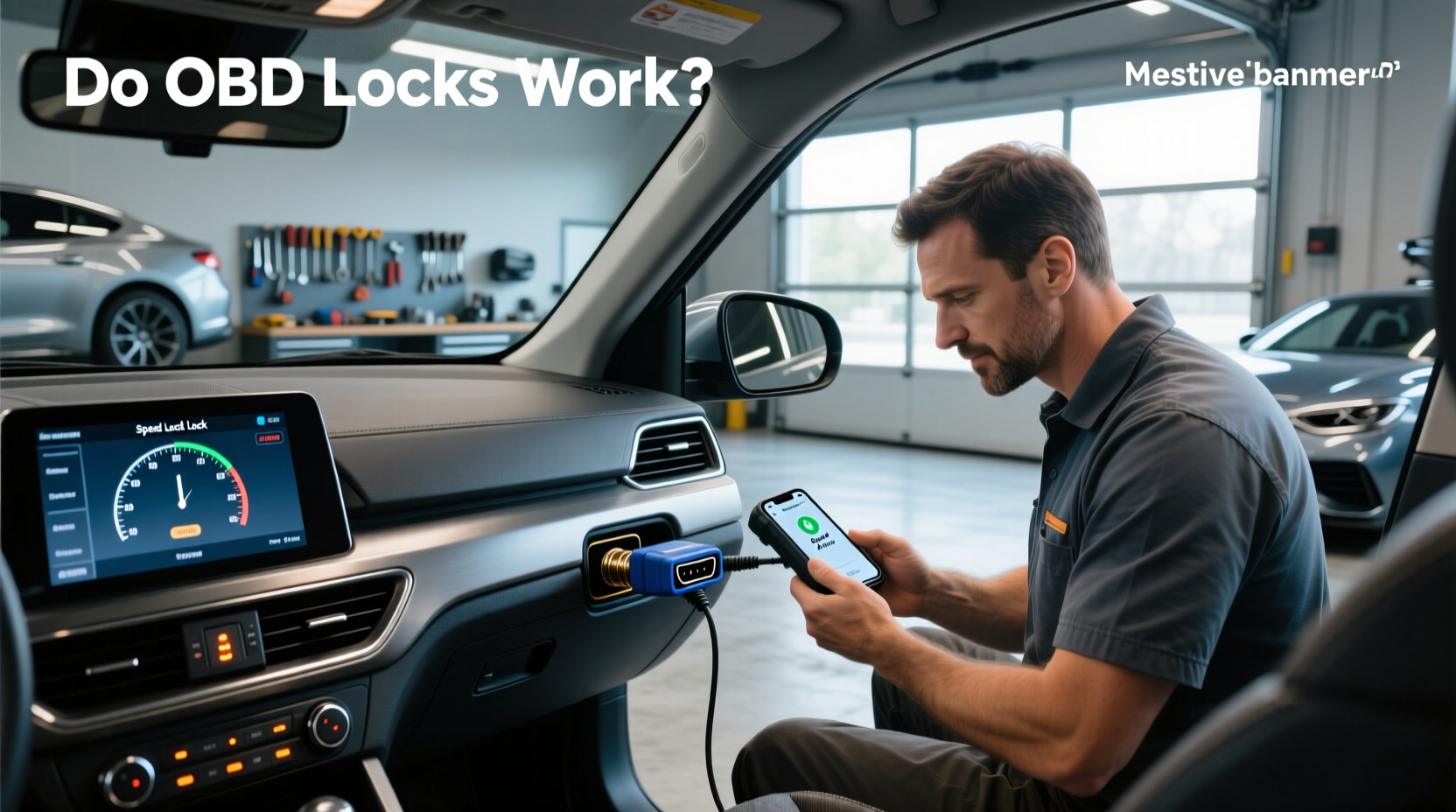
If you're asking how to choose an obd speed lock device, do OBD locks work?, the short answer is: they offer minimal theft deterrence and come with notable risks. While marketed as a simple solution to prevent keyless car theft via the OBD port, most OBD locks can be removed in minutes using basic tools and may even cause electrical issues or void diagnostics access 1. For better protection, experts recommend combining visible physical deterrents—like steering wheel locks—and Faraday pouches for key fobs instead of relying solely on an OBD lock 1. This guide breaks down what to look for in obd speed lock device, do OBD locks work? scenarios, evaluates real-world effectiveness, and compares safer, more reliable alternatives.
About obd speed lock device,Do OBD locks work?
🔍An OBD (On-Board Diagnostics) lock is a mechanical or electronic device designed to block access to a vehicle’s OBD-II port, typically located under the dashboard. The idea behind obd speed lock device, do OBD locks work? is that by physically covering or locking this port, thieves cannot plug in devices to reprogram blank key fobs or bypass ignition systems—common tactics in relay attacks and keyless entry thefts.
These devices are often used by owners of vehicles with push-button start or smart keys, especially in urban areas with higher rates of keyless car theft. However, while the concept seems logical, the actual security benefit is limited. The OBD port was never intended as a primary entry point for theft prevention—it's a diagnostic interface. Blocking it does not disable other attack vectors, such as signal amplification or direct ECU hacking.
Why obd speed lock device,Do OBD locks work? is gaining popularity
The rise in keyless vehicle theft has driven interest in aftermarket solutions like OBD locks. With reports showing increasing incidents of relay attacks—where criminals amplify the signal from a nearby key fob to unlock and start a car—consumers seek affordable, easy-to-install protections. What to look for in obd speed lock device, do OBD locks work? becomes a common search as people try to understand if these products deliver real value.
Marketing often highlights convenience and low cost, positioning OBD locks as a “set-it-and-forget-it” defense. Some models even include alarms or Bluetooth connectivity, adding perceived sophistication. Yet, despite their growing presence online, automotive security experts remain skeptical about long-term efficacy, particularly against determined or professional thieves.
Types and variants
There are several types of OBD locks available, each with distinct mechanisms and limitations:
- Mechanical Caps/Locks – Simple plastic or metal covers that screw or snap into the OBD port. Often keyed. Pros: Inexpensive, no power needed. Cons: Easily pried out; offers little resistance.
- Electronic Locks with Alarms – Include motion sensors or tamper alerts. May beep when disturbed. Pros: Adds audible warning. Cons: Risk of false alarms, battery drain, potential interference with vehicle electronics 2.
- Smart OBD Locks (Bluetooth/App-Controlled) – Connect to a smartphone app, allowing remote monitoring. Pros: Real-time alerts. Cons: Introduces cybersecurity risks; requires software updates; may create vulnerabilities 2.
No variant completely prevents access—the weakest link remains the physical port location and standardization across vehicles.
Key features and specifications to evaluate
When assessing an obd speed lock device, do OBD locks work?, consider these technical and practical factors:
- Build Material: Metal housings resist tampering better than plastic.
- Installation Method: Does it require tools? Can it be installed without triggering error codes?
- Power Source: Battery-powered models risk draining your car’s battery if poorly designed 2.
- Compatibility: Must fit standard OBD-II ports (16-pin). Verify fitment with your vehicle make/model.
- Connectivity: Bluetooth-enabled units should support secure pairing and regular firmware updates.
- Alarm Sensitivity: Adjustable sensitivity reduces nuisance triggers.
Always check manufacturer specs before purchase, as performance varies widely between brands.
Pros and cons
✅ Pros
- Low upfront cost (<$20 in most cases)
- Easy to install for non-technical users
- May deter casual thieves through visibility
- No modification to factory systems (if purely mechanical)
❗ Cons
- Limited deterrent effect—most can be removed in under 5 minutes
- Risk of damaging OBD port or ECU during installation
- Potential for battery drain (especially with powered devices) 2
- Can complicate diagnostics and void service claims
- Introduces new security vulnerabilities if connected
Best suited for: Low-risk environments, temporary use, or as part of a layered strategy.
Not recommended for: High-theft areas, luxury/keyless vehicles as sole protection.
How to choose obd speed lock device,Do OBD locks work?
Follow this step-by-step checklist when evaluating options:
- Assess Your Risk Level: If you park on the street in a high-crime area, prioritize stronger measures first.
- Avoid Powered Devices: Stick to mechanical locks to eliminate battery and software risks.
- Check Vehicle Compatibility: Confirm the lock fits your car’s OBD port depth and shape.
- Look for Tamper Resistance: Prefer models with hardened steel inserts or dual-locking mechanisms.
- Verify Return Policy: Buy from retailers allowing returns if the device causes issues.
- Never Use as Standalone Security: Always pair with other methods like steering locks or Faraday pouches.
❗Red flags to avoid: Claims of “theft-proof” protection, lack of clear installation instructions, no customer reviews, or devices requiring permanent wiring.
Price & market insights
OBD locks are generally inexpensive:
- Basic Mechanical Locks: $10–$20
- Alarm-Equipped Models: $25–$50
- Smart/Bluetooth Versions: $50–$90+
Higher prices don’t guarantee better security. Many premium smart models introduce unnecessary complexity and risk. For most users, a well-built mechanical lock offers the best balance of cost and simplicity—but remember, even the best OBD lock adds only marginal delay to a skilled thief.
Top-seller & competitive analysis
Popular models include No-Key, AutoLockStar, and Techshark OBD locks. Below is a comparison of key attributes:
| Feature | No-Key Mechanical | AutoLockStar Pro | Techshark Smart Alarm |
|---|---|---|---|
| Type | Mechanical | Mechanical + Keyed | Electronic + Alarm |
| Price Range | $15 | $22 | $45 |
| Battery Required | No | No | Yes (CR2032) |
| Tamper Alert | No | No | Yes (audible) |
| Installation Risk | Low | Low | Medium (potential drain) |
| Security Value | ⭐⭐☆☆☆ | ⭐⭐☆☆☆ | ⭐⭐⭐☆☆ |
Note: Ratings based on expert assessments of real-world effectiveness and risk profile 1. Performance may vary by region and vehicle model.
Customer feedback synthesis
Analysis of hundreds of user reviews reveals consistent patterns:
- Positive Feedback: “Easy to install,” “good peace of mind,” “sturdy feel,” “works as expected.” Users appreciate simplicity and low cost.
- Common Complaints: “Popped off easily,” “caused check engine light,” “drained battery overnight,” “interfered with scan tools,” “felt flimsy.” Several reported issues after dealership visits due to port obstruction.
Satisfaction tends to correlate with realistic expectations—those who view OBD locks as one layer among many report fewer disappointments.
Sourcing & supplier tips
Most OBD locks are sold online via Amazon, eBay, or auto parts retailers. When sourcing:
- Prefer Sellers with Clear Return Policies: Test the device promptly upon arrival.
- For Bulk Purchases (Fleet Use): Contact distributors directly, but verify compatibility across vehicle types.
- Check Reviews with Photos: Look for real installation examples and long-term usage notes.
- Avoid Unknown Brands: Stick to established names unless independent testing supports newer models.
There is no standardized certification for OBD locks, so due diligence is essential.
Maintenance, safety & legal considerations
Keep these points in mind:
- Maintenance: Inspect mechanical locks periodically for wear or corrosion.
- Safety: Remove the lock before any diagnostic work to avoid technician errors.
- Legal Compliance: While not illegal, obstructing the OBD port may violate terms of service at some repair shops or inspection stations. Laws vary by jurisdiction—verify local rules if required for emissions testing.
- Warranty Impact: Manufacturers may deny warranty claims if aftermarket devices are linked to system faults.
Always inform mechanics if an OBD device has been used.
Conclusion
To answer do OBD locks work?: minimally. They provide a slight delay but are not a robust anti-theft solution. If you’re considering an obd speed lock device, do OBD locks work? for added peace of mind, choose a simple mechanical version and avoid powered models. However, for meaningful protection, combine it with proven methods: use a steering wheel lock for visible deterrence and store your key fob in a Faraday pouch to block relay attacks. Vehicle security works best when layered—not reliant on a single gadget. If your goal is serious theft prevention, invest in systems that increase effort, noise, and time for attackers, making your car a less appealing target.
Frequently Asked Questions
- Can OBD locks prevent all types of car theft?
No. OBD locks only block access to the OBD port and are ineffective against relay attacks, forced entry, or towing. - Do OBD locks damage my car?
Poorly designed or incorrectly installed locks can damage the OBD port, interfere with airbag systems, or cause starting issues 1. - Are smart OBD locks safer than mechanical ones?
Not necessarily. While they offer alerts, they also introduce cybersecurity risks and potential battery drain 2. - Should I use an OBD lock if I have a keyless car?
Only as part of a broader strategy. A Faraday pouch for your key fob and a steering lock are more effective first steps. - How do thieves bypass OBD locks?
Most use small pry tools to remove caps in seconds. Professional thieves often carry removal kits for common models.




 浙公网安备
33010002000092号
 浙B2-20120091-4