
If you’re looking for a practical compact car with sporty handling and proven reliability, the Toyota Corolla Hatchback is worth considering. Recently, interest has surged in both new and used models—especially the current 12th-generation version introduced in 2019. But if you're asking, “Did Toyota make a Corolla hatchback?” or “What years did they make the Toyota Corolla hatchback?”, here’s the quick answer: yes, Toyota has offered hatchback versions across multiple generations, but not continuously. The most relevant ones today are from 1975–1988 and then again starting in 2019. If you’re a typical user, you don’t need to overthink this: for daily driving and long-term ownership, focus on post-2019 models unless you're specifically seeking vintage appeal. Avoid known weak years like 2007–2009 due to engine issues. When evaluating older models, check maintenance history carefully—this piece isn’t for keyword collectors. It’s for people who will actually use the product.
About the Toyota Corolla Hatchback
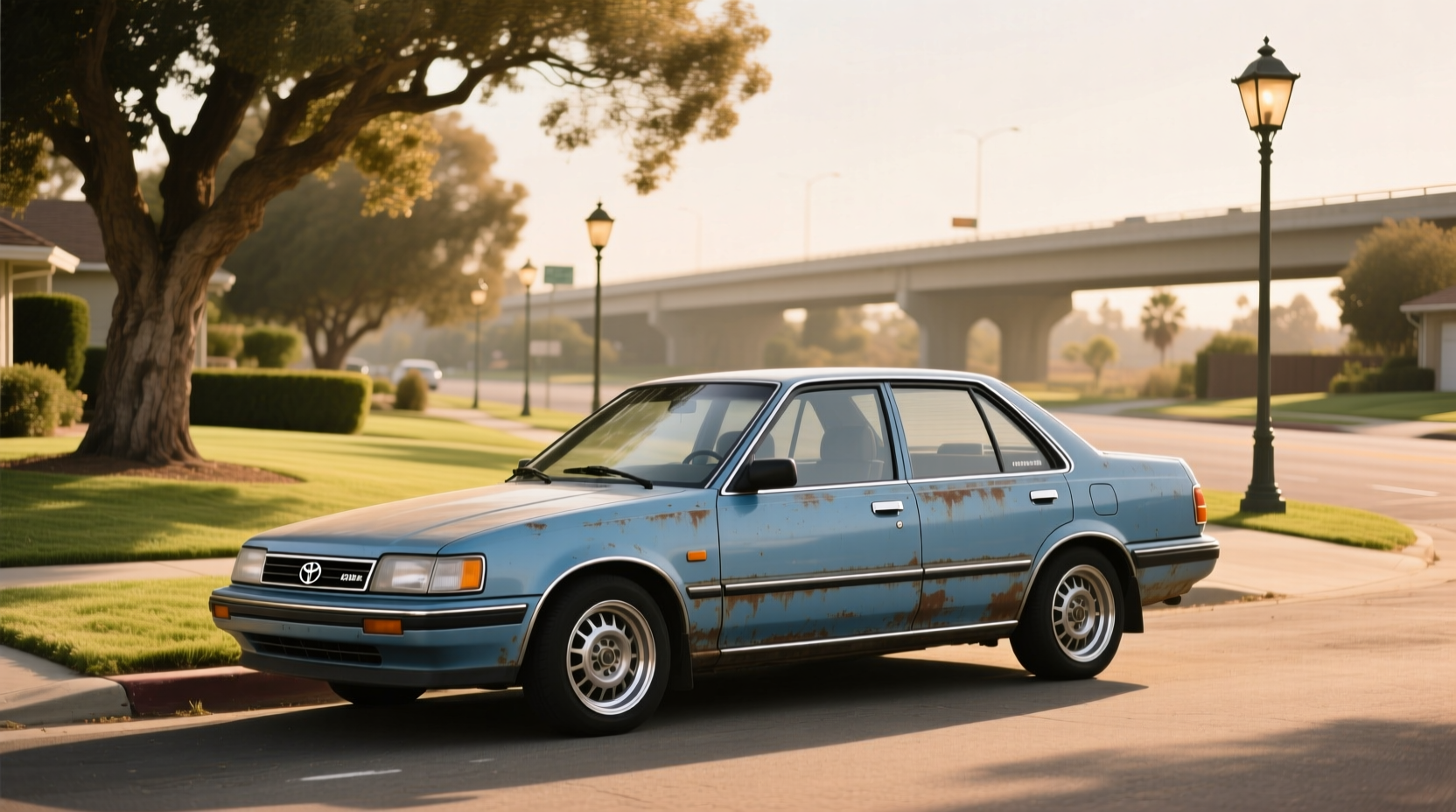
The Toyota Corolla began as a compact sedan in 1966 and evolved into one of the best-selling vehicles in history. While primarily known for sedans and economy-focused design, Toyota has periodically released hatchback variants to meet shifting consumer demands for versatility and agility. The term “Corolla Hatchback” officially applies to two distinct eras: early models from the late 1970s through the late 1980s, and the modern revival launched globally in 2018 as a 2019 model year vehicle.
Prior to 2019, North American buyers saw a similar vehicle under different branding—the Scion iM (2016–2018), which was rebadged and reintroduced as the Corolla Hatchback after Scion was discontinued. This lineage matters because it explains why some earlier hatchbacks aren't labeled “Corolla” despite mechanical similarity. Over the past year, used listings have increasingly included these transitional models, creating confusion about naming and availability.
Why the Corolla Hatchback Is Gaining Popularity
Lately, there's been renewed attention on compact hatchbacks due to rising fuel prices, tighter parking spaces in cities, and growing preference for agile, efficient vehicles. The Corolla Hatchback fits this trend perfectly. Its combination of Toyota’s reputation for durability, improved infotainment systems, and available safety tech makes it appealing to first-time buyers, commuters, and downsizers alike.
Another factor boosting visibility is its manufacturing origin. All U.S.-market Corolla Hatchbacks since 2019 are produced in Japan1, which resonates with buyers who associate Japanese assembly with higher build quality. Combined with standard Toyota Safety Sense 2.0 (TSS 2.0) across trims, the hatchback offers peace of mind without premium pricing.
If you’re a typical user, you don’t need to overthink this: the current model balances cost, capability, and comfort better than most rivals in its class.
Types and Variants
The Corolla Hatchback exists in two main historical categories: classic-era models and the current generation. Each serves different needs.
Classic-Era Models (1975–1988)
- Third Generation (E70): 1975–1981 — Known for simplicity and ease of repair.
- Fourth Generation (E80): 1982–1983 — Introduced more aerodynamic styling.
- Fifth Generation (E90): 1984–1988 — Final widely available hatchback before hiatus.
Pros: Lightweight, easy to modify, low purchase price.
Cons: Outdated safety features, limited cargo space by modern standards, harder to source parts.
Modern Generation (2019–Present)
This includes three primary trims: SE, XSE, and Nightshade Edition. All share a 2.0L Dynamic Force four-cylinder engine producing 168 horsepower, paired with a CVT that simulates 10 speeds.
- SE: Base trim with sport-tuned suspension, LED headlights, and cloth seats.
- XSE: Adds leather-trimmed seats, dual-zone climate control, and upgraded audio.
- Nightshade Edition: Cosmetic package based on SE, featuring blacked-out trim and unique wheels.
Pros: Modern safety suite, responsive handling, strong resale value.
Cons: Firm ride on rough roads, CVT can feel artificial during hard acceleration.
Key Features and Specifications to Evaluate
When comparing models, prioritize these aspects based on your usage pattern:
- Engine and Transmission: The 2.0L engine is reliable and efficient. If you frequently drive highways or hilly terrain, test how the CVT responds under load. When it’s worth caring about: if you tow occasionally or carry heavy loads. When you don’t need to overthink it: for city commuting under normal conditions.
- Safety Tech: Standard TSS 2.0 includes pre-collision braking, lane departure alert, adaptive cruise, and automatic high beams. When it’s worth caring about: if you drive long distances alone or in poor weather. When you don’t need to overthink it: if you mostly park and drive short routes in good conditions.
- Interior Materials: SE uses soft-touch plastics and fabric; XSE adds synthetic leather and heated front seats. When it’s worth caring about: if you live in cold climates or value comfort. When you don’t need to overthink it: if you plan to install seat covers anyway.
- Infotainment: 8-inch touchscreen with Apple CarPlay and Android Auto compatibility. No wireless option. When it’s worth caring about: if you rely heavily on smartphone integration. When you don’t need to overthink it: if you prefer physical buttons or use Bluetooth audio only.
If you’re a typical user, you don’t need to overthink this: the base SE provides nearly all essential tech and performance needed for most drivers.
Pros and Cons
Advantages
- Proven Toyota reliability with lower-than-average repair costs
- Excellent fuel economy: up to 32 mpg city / 41 mpg highway
- Spacious rear cargo area with 60/40 fold-down seats
- Standard advanced driver assistance features
- Japanese manufacturing ensures consistent build quality
Drawbacks
- Ride can be stiff on uneven pavement
- CVT lacks engagement compared to manual or traditional automatic
- Limited third-row seating or towing capacity (not applicable)
- Base stereo system is adequate but not premium
- Fewer dealer service incentives than competitors
How to Choose the Right Corolla Hatchback
Follow this step-by-step checklist to streamline your decision.
Step-by-Step Checklist
- Determine your budget (new vs. certified pre-owned vs. private sale).
- Decide whether you need premium features (heated seats, navigation, sunroof).
- Test drive at least two trims to feel ride differences.
- Review vehicle history report for used models (Carfax or equivalent).
- Verify warranty coverage and remaining factory protection.
- Confirm local tax, registration, and insurance estimates.
Decision Flow
- Need maximum value? → Choose SE trim.
- Want added comfort in winter? → Upgrade to XSE.
- Prefer bold aesthetics? → Consider Nightshade Edition.
- Buying used? → Prioritize 2020+ models with documented maintenance.
- Avoiding potential problems? → Skip 2007–2009 and 2014 models if found in older lineups.
Recommendations by Scenario
- City commuter: SE trim — lightweight, maneuverable, fuel-efficient.
- Suburban family: XSE — extra comfort and safety tech matter more.
- First-time buyer: Certified pre-owned 2020–2022 model — balance of cost and reliability.
- Enthusiast driver: SE with optional manual transmission (available in early 2019–2021) — sharper engagement.
Red Flags / What to Avoid
- Unexplained oil consumption in any model year — may indicate internal wear.
- Vehicles modified with non-OEM body kits or exhausts — could affect alignment or emissions compliance.
- Missing maintenance records — increases risk of hidden issues.
- Pricing significantly below market average — likely reflects accident history or title problems.
- Dealers refusing independent inspection — walk away immediately.
If you’re a typical user, you don’t need to overthink this: stick with well-documented examples from 2019 onward, and prioritize condition over cosmetic upgrades.
Price & Market Insights
New Corolla Hatchback pricing starts around $24,000 for the SE and reaches about $28,000 for the XSE, depending on options and destination fees. Prices may vary by region/model/seller, especially in areas with import tariffs or incentives. Used models from 2019–2021 typically range from $17,000 to $22,000, influenced by mileage, trim, and geographic location.
Over the past year, depreciation rates have stabilized faster than expected, suggesting strong residual demand. However, supply remains constrained in certain markets due to production allocation priorities. Always check manufacturer specs and compare against local listings before finalizing a purchase.
Top-Seller & Competitive Analysis
The Corolla Hatchback competes directly with the Honda Civic Hatchback, Mazda3 Hatchback, and Volkswagen Golf (discontinued in U.S. after 2021). Here's how they compare:
| Model | Starting Price | Horsepower | Safety Score | Build Origin |
|---|---|---|---|---|
| Toyota Corolla Hatchback | $24,180 | 168 | Top Safety Pick+ (IIHS) | Japan |
| Honda Civic Hatchback | $25,500 | 180 | Top Safety Pick+ (IIHS) | U.S./Mexico |
| Mazda3 Hatchback | $25,900 | 165 | Top Safety Pick (IIHS) | Mexico/U.S. |
| Volkswagen Golf (2021) | $23,500 (used avg.) | 147–228 | Top Safety Pick (IIHS) | Germany |
Note: Safety scores based on Insurance Institute for Highway Safety (IIHS) evaluations2. Horsepower and pricing are approximate and may vary by trim and year. The Corolla stands out for its Japanese build quality and standard safety tech, while the Civic offers slightly more power and interior refinement.
Customer Feedback Synthesis
Based on aggregated owner reviews and forum discussions (including Reddit and Edmunds), common sentiments include:
- Highly praised: Reliability over time, low maintenance costs, intuitive safety system behavior, spacious trunk for class.
- Frequent complaints: Harsh ride over potholes, lack of power at high speeds, screen glare in direct sunlight, limited voice command accuracy.
- Surprising positives: Manual transmission version (discontinued after 2021) receives enthusiast acclaim for precision and feedback.
- Common regrets: Not upgrading to larger wheels sooner, skipping fabric protection at purchase.
If you’re a typical user, you don’t need to overthink this: real-world experiences confirm that day-to-day usability outweighs minor ergonomic flaws.
Sourcing & Supplier Tips
When sourcing a Corolla Hatchback, consider the following:
- Purchase from authorized Toyota dealers for full warranty access and CPO eligibility.
- For imports or gray-market vehicles, verify compliance with local emissions and lighting regulations.
- Private sellers may offer lower prices but require independent mechanical inspection.
- Check whether the seller includes recent tire rotation, brake check, or battery test in the listing.
- Ask for VIN-specific service history via Toyota’s online portal or dealership lookup.
This piece isn’t for keyword collectors. It’s for people who will actually use the product.
Maintenance, Safety & Legal Considerations
Routine maintenance includes oil changes every 5,000–10,000 miles depending on driving conditions, cabin air filter replacement annually, and brake inspections every 12,000 miles. Use synthetic oil to maximize engine longevity, especially in stop-and-go traffic.
Safety systems like TSS 2.0 require periodic camera and radar calibration if windshield is replaced or front bumper is damaged. Failure to recalibrate may disable adaptive cruise or automatic braking.
Legal considerations vary by jurisdiction. Some regions require annual safety inspections or emissions testing. To verify: check official transportation department website or consult local mechanic familiar with imported vehicles.
Conclusion
If you need a dependable, fuel-efficient hatchback with strong resale value and minimal ownership stress, choose a 2019 or newer Toyota Corolla Hatchback in SE or XSE trim. If you're drawn to vintage models, understand that restoration and upkeep require specialized knowledge. For most users, the current generation delivers exactly what it promises—no surprises, no gimmicks. If you’re a typical user, you don’t need to overthink this.
Everything You Need to Know
Did Toyota make a Corolla hatchback?
Yes, Toyota has produced Corolla hatchbacks in two major periods: from 1975 to 1988 and again starting with the 2019 model year. The current version replaced the Scion iM and is built in Japan for global markets including North America.
What years did Toyota make the Corolla hatchback?
Toyota made hatchback versions during the third to fifth generations (1975–1988) and resumed production with the 12th generation in 2019. There was no official Corolla hatchback sold in the U.S. between 1989 and 2018 under that name, though mechanically similar vehicles existed under other badges.
Is the Corolla hatchback made in Japan?
Yes, all Corolla Hatchbacks sold in the U.S. since 2019 are manufactured in Japan. This differs from the Corolla sedan, which is produced in several countries including the U.S. Build origin may vary by region, so check window sticker or VIN decoder for confirmation.
Which Corolla hatchback trim is best?
The SE offers the best balance of price, performance, and features for most buyers. Enthusiasts may prefer the now-discontinued manual transmission option. The XSE adds comfort and convenience upgrades ideal for colder climates or longer commutes.
Are older Corolla hatchbacks reliable?
Early models (pre-1990) can be reliable if well-maintained, but parts availability and outdated safety technology limit practicality. Among later Corollas, avoid 2007–2009 and 2014 models due to reported engine issues. Always check service history and perform a pre-purchase inspection.




 浙公网安备
33010002000092号
 浙B2-20120091-4