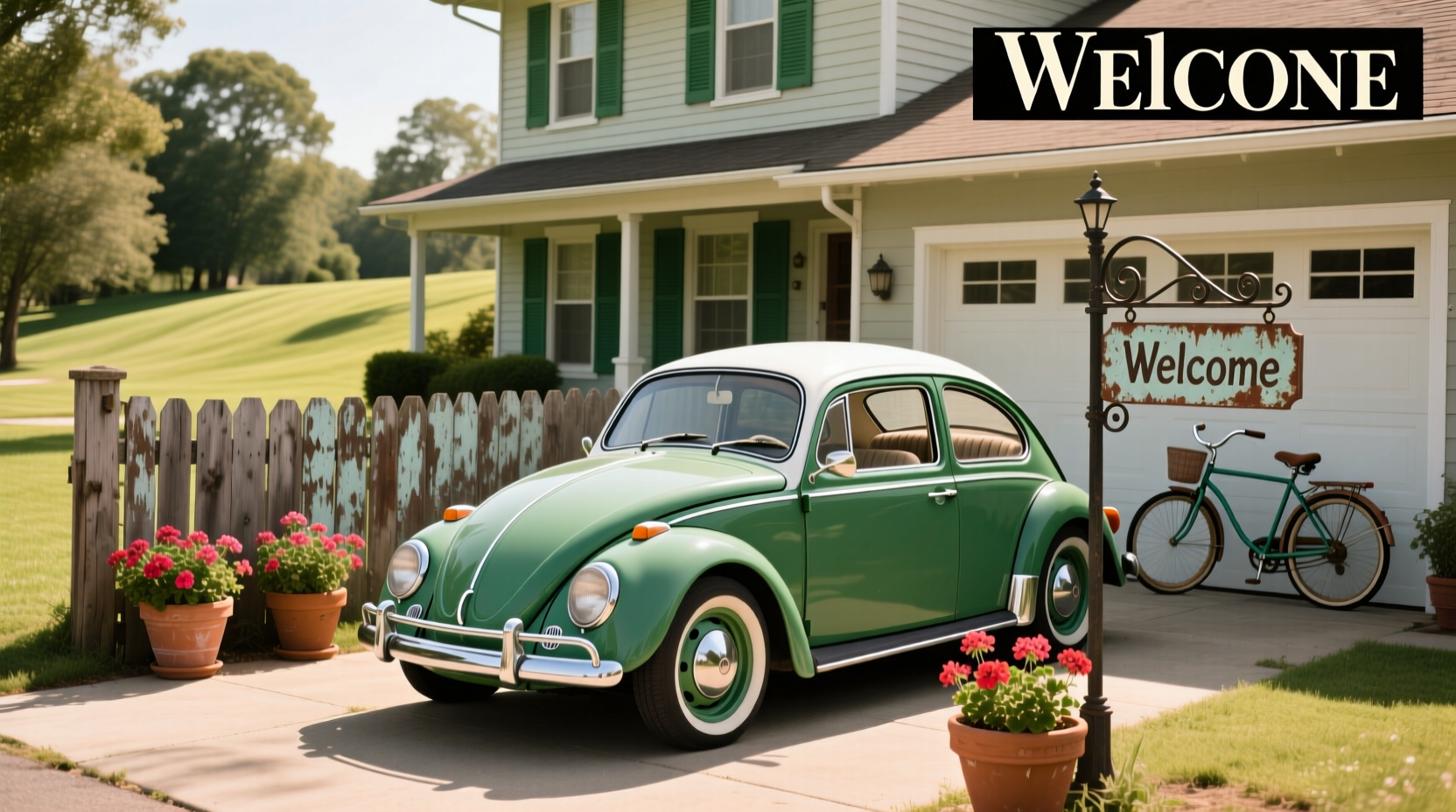
If you're looking for a classic car with character, reliability, and timeless design, how to choose an old VW hatchback comes down to understanding three core things: model lineage, mechanical simplicity, and long-term ownership cost. The most common types include the Type 3 (Fastback, Squareback), the original Golf/Rabbit (Mk1), and derivatives like the Karmann Ghia. If you’re a typical user, you don’t need to overthink this. Focus on rust condition, drivetrain integrity, and parts availability—not nostalgia. Over the past year, interest in these vehicles has risen due to growing demand for analog driving experiences and lower-tech ownership. Recently, more buyers are prioritizing usability over showroom perfection.
About Old VW Hatchbacks
The term "old VW hatchback" doesn't refer to one single model but rather a category of compact, rear-engine or front-engine hatchback-style cars produced by Volkswagen from the 1960s through the early 2000s. Unlike modern SUVs or sedans, these vehicles were built with mechanical simplicity in mind—many using air-cooled engines and minimal electronics. This makes them easier to repair but also exposes them to age-related wear if not maintained.
Historically, Volkswagen didn’t market many true hatchbacks until the launch of the Mk1 Golf (sold as the Rabbit in North America) in 1974. Before that, the closest equivalents were the Type 3 series—especially the Fastback and Squareback—which featured liftback designs allowing access to the cargo area. These are often grouped under the broader umbrella of "hatchbacks" today, even though they technically differ from modern five-door configurations.
Why Old VW Hatchbacks Are Gaining Popularity
Lately, there's been a quiet resurgence in interest around older, driver-focused vehicles. As newer cars become increasingly reliant on software and complex systems, many drivers are turning to simpler machines. Old VW hatchbacks offer predictable handling, manual controls, and a direct connection between driver and road.
This trend isn't driven by collectors alone. Practical users are discovering that well-maintained examples of the Mk1 Rabbit or Type 3 Squareback can serve as functional daily drivers—if selected carefully. Enthusiast communities have grown stronger online, making it easier to source parts, share repairs, and verify authenticity. If you’re a typical user, you don’t need to overthink this. You're not buying a museum piece—you're choosing a usable car with charm.
The change signal here is cultural: people want ownership back. Not subscription-based infotainment, not proprietary tools, not locked-down ECUs. They want something they can open the hood on and understand. That’s why these models are gaining traction beyond niche circles.
Types and Variants
Type 3: Fastback, Notchback, Squareback (1961–1973)
- Fastback: Sleek roofline with a large rear hatch; great aerodynamics for its time.
- Squareback: Boxier shape with more cargo space; practical layout similar to a small station wagon.
- Notchback: Traditional trunk; less relevant for hatchback seekers.
When it’s worth caring about: If you value vintage aesthetics combined with usable interior space, the Fastback and Squareback stand out. Their unibody construction was advanced for the era.
When you don’t need to overthink it: Unless you're committed to air-cooled mechanics and vintage upkeep, the complexity of maintaining a 50-year-old electrical system may outweigh the benefits.
Mk1 Golf / Rabbit (1974–1984)
The first-generation Golf (Rabbit in the U.S.) marked Volkswagen’s shift to water-cooled, front-engine, front-wheel-drive layouts. It introduced the modern hatchback form factor to the brand—a five-door body style with folding rear seats.
Pros: More reliable than air-cooled predecessors, better heating/cooling, wider tire availability.
Cons: Prone to rust, especially in floor pans and wheel arches; some trim levels had underpowered engines.
When it’s worth caring about: For daily use or city driving, the Mk1 Rabbit offers the best balance of simplicity and functionality among old VW hatchbacks.
When you don’t need to overthink it: If all you want is retro styling without maintenance trade-offs, consider a restored example or skip to a later generation.
Karmann Ghia (Type 14, based on Beetle chassis)
A stylish coupe and convertible co-developed with coachbuilder Karmann. While not a true hatchback, its rear engine compartment opens upward, offering limited storage.
Pros: Iconic design, lightweight, fun to drive on twisty roads.
Cons: Minimal cargo space, poor visibility, outdated safety features.
When it’s worth caring about: Only if you prioritize visual appeal over utility.
When you don’t need to overthink it: It’s not practical for regular hauling or family use—don’t confuse beauty with function.
Key Features and Specifications to Evaluate
Don’t get distracted by shiny bumpers or restored interiors. Focus on what actually affects performance and longevity.
- Engine Type: Air-cooled (pre-1974) vs. water-cooled (post-1974). Water-cooled engines generally require less frequent tuning but depend on coolant integrity.
- Rust Condition: Check floorboards, rocker panels, and suspension mounts. Surface rust can be repaired; structural corrosion cannot.
- Transmission: Manual gearboxes on these models are durable—but listen for grinding or slipping during test drives.
- Electrical System: Older wiring degrades over time. Flickering lights or intermittent wipers suggest deeper issues.
- Parts Availability: Some components (like specific trim pieces or NOS gauges) may be scarce. Verify supplier networks before purchase.
If you’re a typical user, you don’t need to overthink this. Prioritize mechanical soundness over cosmetic perfection.
Pros and Cons
| Aspect | Pros | Cons |
|---|---|---|
| Driving Experience | Engaging, analog feel; no driver aids needed | Soft suspension, light steering—feels vague at high speed |
| Maintenance | Simple design allows DIY repairs | Specialty tools sometimes required; labor-intensive tasks |
| Fuel Efficiency | Decent for size and era (25–35 mpg expected) | Carbureted models sensitive to fuel quality |
| Resale Value | Stable among enthusiast markets | No guarantee of appreciation; heavily condition-dependent |
| Safety | None have airbags or ABS | Limited crash protection compared to post-2000 vehicles |
How to Choose an Old VW Hatchback
Step-by-Step Checklist
- Define your primary use: daily commute, weekend fun, restoration project?
- Determine budget—including room for repairs (add 20–30% above purchase price).
- Research common failure points per model (e.g., Mk1 Rabbit sunroof leaks).
- Inspect vehicle history: title status, accident records, service logs.
- Conduct a thorough physical inspection: underside, engine bay, interior seams.
- Test drive with attention to clutch engagement, brake response, and noise.
- Verify VIN against known production data 1.
Decision Flow
- If you want practicality + simplicity → Look at Mk1 Rabbit (non-sunroof models).
- If you want vintage flair + moderate usability → Consider Type 3 Fastback or Squareback.
- If you want collector appeal only → Explore rare trims like the Type 3 “Notchback” or factory sunroof variants.
Recommendations by Scenario
- First-time classic buyer: Start with a later-model Mk1 Rabbit (1982–1984)—more reliable electrics, better parts support.
- DIY mechanic: Any model works, but prioritize complete examples over “barn finds” unless you enjoy sourcing every nut and bolt.
- Urban commuter: Choose a fuel-efficient, easy-to-park Mk1 Rabbit. Avoid air-cooled models in extreme climates.
Red Flags / What to Avoid
- Rust holes in floor pans or inner fenders: Structural damage reduces safety and increases repair cost exponentially.
- Replaced dashboards with mismatched gauges: Often indicates ignored electrical problems.
- “Restomod” claims without documentation: Modified suspensions or engines may not be reversible or street-legal.
- No service history: Assume worst-case maintenance backlog.
- Too-good-to-be-true pricing: Below-market prices usually reflect hidden flaws.
Price & Market Insights
Pricing varies widely depending on region, condition, and provenance. A driver-quality Mk1 Rabbit may sell for $4,000–$9,000 in the U.S., while a fully restored example could reach $15,000+. Type 3 models tend to command higher premiums due to lower production numbers.
European markets often list earlier models with lower mileage, but import costs and compliance checks add expense. Always check local regulations before purchasing internationally. Prices may vary by region/model/seller—verify listings against recent sales data from enthusiast forums or classifieds like Volkswagen of Streetsboro's heritage blog 2.
Top-Seller & Competitive Analysis
The Mk1 Golf/Rabbit remains the most accessible and commonly traded old VW hatchback. Its combination of practicality, relative reliability, and aftermarket support gives it an edge over rarer models like the Type 3 or Karmann Ghia.
| Model | Availability | Ownership Cost | User Suitability |
|---|---|---|---|
| Mk1 Rabbit/Golf | High | Low–Moderate | Everyday use, beginners |
| Type 3 Fastback | Low | Moderate–High | Enthusiasts, collectors |
| Type 3 Squareback | Low | Moderate–High | Practical vintage users |
| Karmann Ghia | Moderate | Moderate | Show circuits, weekend drives |
Customer Feedback Synthesis
Based on owner testimonials and forum discussions 3, recurring themes emerge:
- Highly praised: Driving engagement, ease of basic repairs, community support.
- Frequently criticized: Rust progression, outdated heating systems, lack of spare parts for discontinued options.
- Common surprise: Fuel economy exceeds expectations when engines are properly tuned.
If you’re a typical user, you don’t need to overthink this. Real-world satisfaction correlates strongly with realistic expectations—not originality or show awards.
Sourcing & Supplier Tips
Buy locally whenever possible. Shipping vintage cars risks damage and delays. When sourcing online:
- Use platforms with seller ratings and photo verification.
- Contact national clubs (e.g., Club VeeDub in Australia 3) for referrals.
- Confirm return policies—even private sellers sometimes offer short trial periods.
- Request full VIN decode to validate production date and factory specs.
This piece isn’t for keyword collectors. It’s for people who will actually use the product.
Maintenance, Safety & Legal Considerations
These vehicles predate modern safety standards. None include electronic stability control, airbags, or crumple zones. Use seat belts (if equipped), and maintain brakes and tires rigorously.
Maintenance should follow period-correct service intervals. For air-cooled models, valve adjustments every 10,000 miles are essential. Water-cooled engines require regular coolant flushes and timing belt checks.
Legality depends on your jurisdiction. Some regions exempt pre-1980 vehicles from emissions testing; others require modifications to pass. Always check local regulations before registering. Verify requirements through official transport department websites—not third-party advice.
Conclusion
If you need a simple, engaging car for occasional or light daily use, choose a rust-free Mk1 Rabbit with documented maintenance. If you're drawn to vintage engineering and don’t mind higher upkeep, explore the Type 3 Fastback or Squareback. But if your goal is hassle-free transportation, don’t romanticize old VWs—they demand attention. If you’re a typical user, you don’t need to overthink this. Focus on condition, not badges.
Everything You Need to Know
What are the old Volkswagens called? +
The most famous old Volkswagens include the Beetle (Type 1), Bus/Transporter (Type 2), Type 3 (Fastback, Squareback, Notchback), Karmann Ghia, and the original Golf (known as the Rabbit in North America). Each type served different purposes—from economy transport to lifestyle vehicles.
Is there a VW hatchback from the 1970s? +
Yes—the first true VW hatchback was the Mk1 Golf, introduced in 1974 and sold as the Rabbit in the U.S. It featured a five-door layout, fold-down rear seats, and front-wheel drive, setting the template for modern compact hatchbacks.
What should I look for when buying an old VW hatchback? +
Focus on structural rust, engine health, transmission smoothness, and electrical system reliability. Also verify parts availability and ensure the vehicle has consistent service history. Avoid projects unless you have time and skills.
Are old VW hatchbacks reliable? +
They can be, if well-maintained. Simpler mechanics make diagnostics easier, but age-related wear—especially rust and degraded wiring—is common. Reliability hinges more on care than design.
How much does an old VW hatchback cost? +
Prices range from $4,000 for a driver-quality Mk1 Rabbit to over $15,000 for restored or rare models. Costs may vary by region/model/seller. Always budget extra for immediate maintenance.




 浙公网安备
33010002000092号
 浙B2-20120091-4