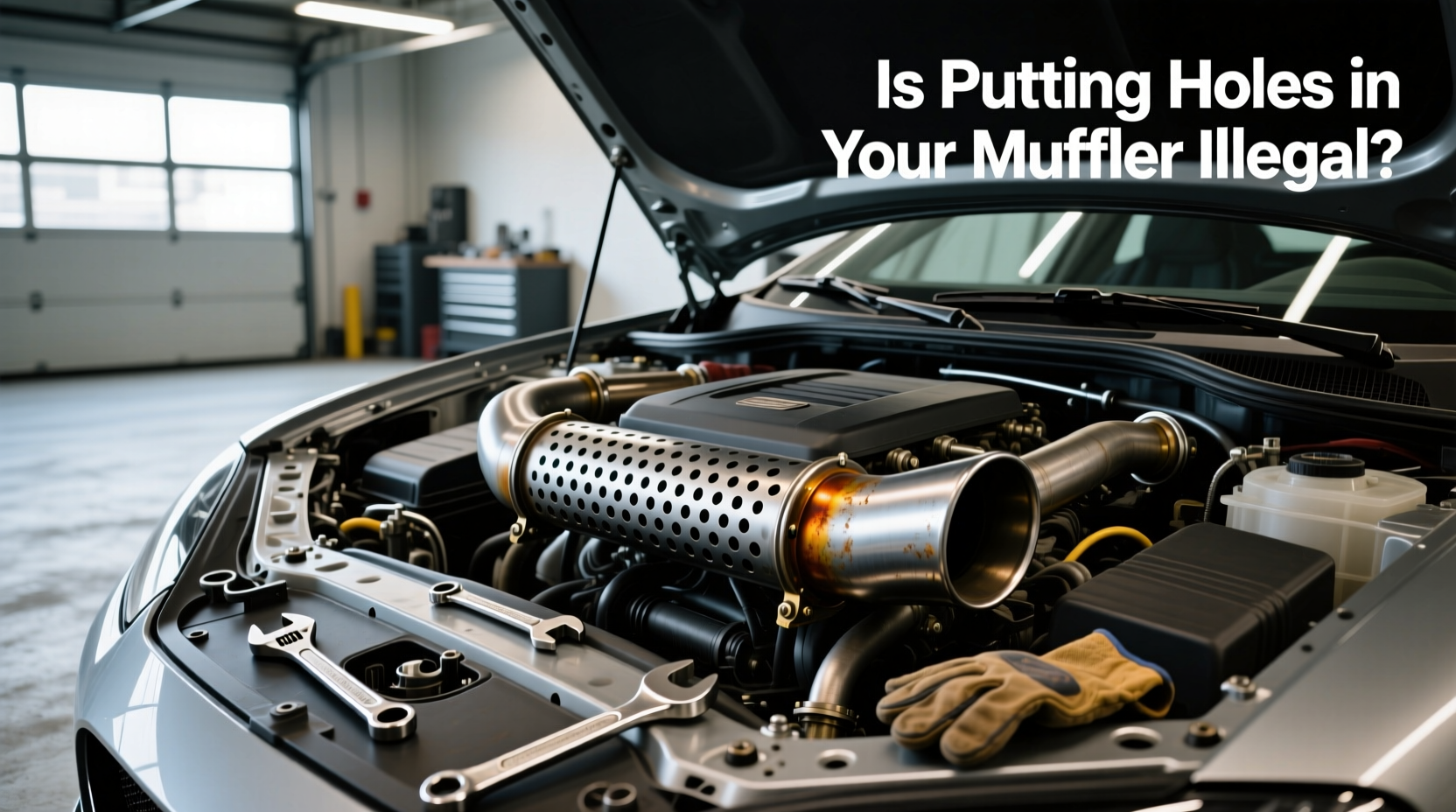
If you're asking how to choose a perforated tube muffler or wondering is putting holes in your muffler illegal?, here’s what matters most: not all perforated designs are modifications—many are factory-engineered components designed for performance and compliance. A perforated tube muffler uses internal holes within a central core wrapped in sound-dampening material to balance exhaust flow and noise reduction. These are typically legal and widely used in both OEM and aftermarket systems. However, drilling holes into an existing muffler to alter its sound or backpressure is generally an illegal modification that violates noise and emissions regulations in most jurisdictions. When choosing a perforated tube muffler, prioritize models certified for your region, ensure compatibility with your vehicle’s make and model, and verify compliance with local laws to avoid fines, inspection failures, or part confiscation.
About Perforated Tube Mufflers: Definition and Use Cases 📍
A perforated tube muffler refers to a specific engineering design where a central metal tube contains small drilled holes and is surrounded by acoustic insulation like fiberglass or ceramic packing. This setup allows exhaust gases to pass through the perforations into the damping material, reducing sound waves before exiting the tailpipe. It's commonly found in “straight-through” or “glasspack” muffler configurations.
This design serves dual purposes: maintaining relatively free exhaust flow (which supports engine efficiency) while still attenuating unwanted noise. Unlike arbitrary hole-drilling, which damages the structural and functional integrity of a muffler, this is a controlled, intentional design feature manufactured under precise tolerances.
Typical use cases include performance vehicles seeking moderate sound enhancement without excessive drone, daily drivers wanting improved throttle response, and restoration projects aiming for a classic muscle car tone. Because these mufflers are built to meet regulatory standards, they are often stamped with compliance certifications such as EPA or CARB (California Air Resources Board), making them suitable for street-legal applications.
Why Perforated Tube Mufflers Are Gaining Popularity ✨
The growing interest in perforated tube mufflers stems from their ability to deliver a balanced upgrade—offering noticeable improvements in engine sound and potential performance gains without crossing legal boundaries. Enthusiasts appreciate the deeper, more aggressive exhaust note compared to stock units, while remaining compliant with noise ordinances.
Additionally, advancements in materials have increased durability and heat resistance, allowing these mufflers to last longer even under high-stress conditions. The modular nature of many aftermarket versions also makes installation straightforward for DIY mechanics. As urban areas enforce stricter anti-noise pollution rules, consumers are shifting toward engineered solutions rather than risky modifications like open-piping or random hole-drilling.
Another driver is awareness: publicized cases of law enforcement destroying illegally modified exhaust parts 1 have made vehicle owners more cautious about compliance. This has boosted demand for legal performance alternatives like properly designed perforated tube systems.
Types and Variants 🔧
- ⚙️ Straight-Through Perforated Mufflers: Feature a straight central tube with perforations and full surrounding packing. Offers minimal backpressure and a deep, resonant tone. Best for V8s and high-displacement engines. May produce cabin drone at cruising speeds.
- ⚙️ Chambered Perforated Mufflers: Combine perforated tubes with internal chambers that reflect and cancel sound waves. Provide smoother sound profiles across RPM ranges. Slightly higher backpressure but better noise control.
- ⚙️ Reverse-Flow Perforated Mufflers: Exhaust enters from the side opposite the outlet, increasing dwell time inside the chamber. Quieter than straight-through types but may reduce peak flow. Good for daily drivers needing refinement.
- ⚙️ Oval vs. Round Body Styles: Oval fits tighter spaces; round offers better symmetry and airflow. Choice depends on chassis clearance and aesthetic preference.
Each variant trades off between sound level, volume consistency, performance gain, and space requirements. Your selection should align with your vehicle type, driving habits, and local noise limits.
Key Features and Specifications to Evaluate 📊
To effectively evaluate options when researching what to look for in a perforated tube muffler, consider these measurable criteria:
- 📏 Internal Diameter: Larger diameters (e.g., 2.5–3 inches) allow greater flow but require matching downstream piping.
- 📏 Wall Thickness & Material: Look for aluminized steel or stainless steel (304 or 409 grade). Thicker walls resist corrosion and vibration fatigue.
- 🔊 Decibel Rating: Some manufacturers provide dB levels at specific RPMs. Compare against local noise limits (often 95 dB at 50 ft).
- ✅ Emissions Compliance: Check for CARB EO number or EPA certification if required in your state.
- 📐 Length and Inlet/Outlet Size: Must match your existing exhaust system or planned upgrades.
- 🧱 Packing Density: Higher-quality fiberglass or ceramic wool lasts longer and maintains consistent sound dampening.
Pros and Cons ⚖️
- Improved exhaust scavenging and potential horsepower gains
- Deeper, sportier exhaust tone without extreme loudness
- Legal when properly certified and installed
- Durable construction with proper maintenance
- Potential interior resonance (drone) on certain frequencies
- May void factory warranty if not approved
- Higher cost than basic replacements
- Not all models pass strict emissions testing regions
These mufflers suit those wanting a subtle performance edge and enhanced auditory feedback. They’re less ideal for individuals seeking race-level exhaust notes or zero-cost modifications.
How to Choose a Perforated Tube Muffler: Step-by-Step Guide 📋
- Verify Local Regulations: Research your state or country’s noise and emissions laws. States like California, New York, and Washington have strict rules.
- Match Vehicle Specifications: Confirm inlet/outlet diameter, length, and mounting position compatibility.
- Check Certification Labels: Prioritize mufflers labeled as CARB-compliant or 50-state legal if applicable.
- Assess Sound Goals: Decide whether you want mild enhancement or bold presence—and stay within legal decibel limits.
- Review Installation Complexity: Bolt-on systems are easier; weld-in types require professional help.
Red Flags to Avoid:
- Unlabeled or uncertified products sold without compliance data
- Claims of “unlimited power” or “guaranteed legality”
- Instructions encouraging cutting or modifying stock components
- Vendors refusing to provide test reports or spec sheets
Price & Market Insights 💰
Prices vary significantly based on brand, material, and certification status:
- Budget Tier ($40–$80): Aluminized steel, limited warranty, regional availability.
- Mid-Tier ($80–$160): Stainless steel, CARB-certified options, national distribution.
- Premium Tier ($160–$300+): High-grade alloys, lifetime warranties, advanced acoustic tuning.
Top-Seller & Competitive Analysis 🏆
| Model Type | Material | Noise Level | Certification | Price Range |
|---|---|---|---|---|
| Straight-Through Glasspack | Stainless Steel | Moderate-High | CARB Compliant | $110–$180 |
| Chambered Performance | Aluminized Steel | Medium | Not Certified | $60–$100 |
| Reverse-Flow Touring | Stainless Steel | Low-Medium | 50-State Legal | $140–$220 |
When comparing top sellers, focus on real-world fitment reviews and long-term reliability rather than advertised specs alone. Models with verifiable compliance records tend to perform better during inspections.
Customer Feedback Synthesis 📈
Analysis of buyer comments reveals recurring themes:
- Frequent Praise: Noticeable improvement in engine responsiveness, clean appearance, ease of installation, durable finish.
- Common Complaints: Cabin drone at highway speeds, shorter-than-expected packing life, inconsistent labeling across retailers, difficulty returning non-fitting units.
Sourcing & Supplier Tips 🌐
Buy from authorized dealers or platforms offering detailed product documentation. For bulk purchases (e.g., repair shops), request sample units first to assess build quality. Verify return policies and confirm whether the supplier provides access to compliance certificates. When sourcing internationally, be aware that imported mufflers may not meet U.S. or EU standards unless explicitly stated. Always inspect packaging and weld integrity upon delivery.
Maintenance, Safety & Legal Considerations 🔍
Regularly inspect for rust, loose hangers, or packing degradation. A failing muffler can increase noise output beyond legal thresholds. Never attempt to modify a certified unit by adding holes or removing internals—this voids compliance and may trigger penalties.
To remain compliant:
- Retain manufacturer labels and certification numbers
- Confirm annual inspection requirements in your area
- Contact local DMV or environmental agency for clarification on exhaust rules
Conclusion 📝
If you want improved exhaust flow and a sportier tone without breaking the law, choose a factory-designed perforated tube muffler with proper certification. If you're considering drilling holes in your stock muffler for louder sound, reconsider—this modification is typically illegal and risks fines or failed inspections. Instead, invest in a purpose-built unit matched to your vehicle and local regulations. Always check compliance status, measure for fit, and prioritize documented performance over anecdotal claims.
FAQs ❓
Is putting holes in your muffler illegal?
Yes, in most jurisdictions, drilling holes in a muffler is considered an illegal modification because it increases noise output and may interfere with emissions control, violating local ordinances and federal regulations.
Are perforated tube mufflers street legal?
Yes, when manufactured and sold as complete units with proper certification (such as CARB or EPA approval), perforated tube mufflers are generally street legal and designed to comply with noise and emissions standards.
Can a perforated muffler improve performance?
Potentially yes—by reducing backpressure and improving exhaust flow, some perforated tube designs can enhance engine efficiency and low-to-mid range power, though gains vary by engine and system design.
What happens if I get caught with an illegal muffler?
You may face fines, fail mandatory vehicle inspections, or have the illegal component confiscated and destroyed by authorities, depending on local enforcement practices.
How do I know if a muffler is legal in my state?
Check for official certification labels (like a CARB EO number), consult your state’s Department of Motor Vehicles website, or contact a licensed inspection station for verification.




 浙公网安备
33010002000092号
 浙B2-20120091-4