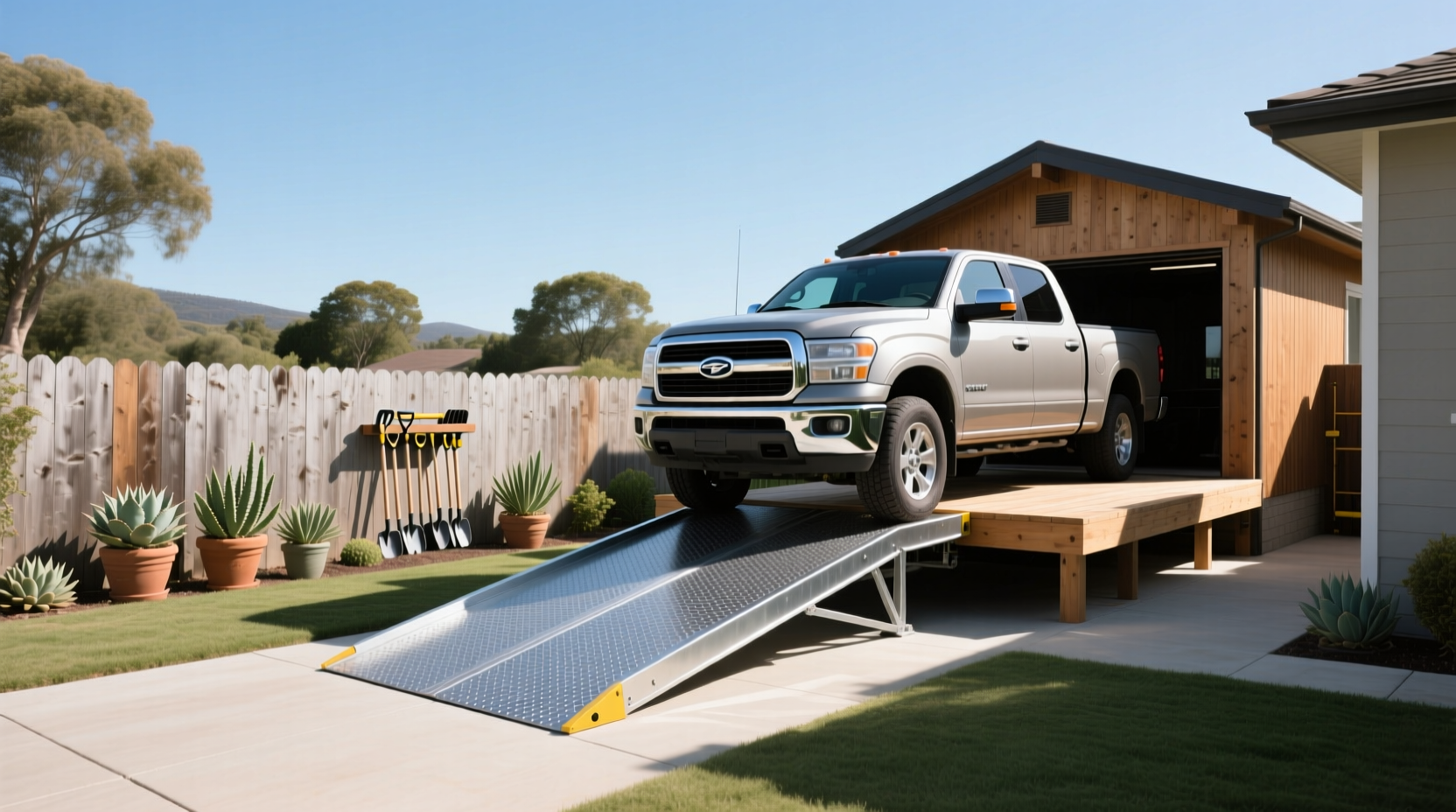
If you’re a typical user, you don’t need to overthink this. For most pickup owners, a pair of 6–8 ft aluminum ramps with 1,200–1,500 lb capacity and 12+ inch width will handle lawn mowers, ATVs, and tools safely. Recently, more homeowners and contractors have shifted from makeshift wood boards to engineered ramps—driven by durability concerns and easier storage. How to choose loading ramps comes down to three real constraints: what you’re loading, how often, and where you store it. If your equipment tires are wider than 10 inches, get 14-inch-wide ramps. If you travel between job sites, prioritize foldable or lightweight models. Skip plastic-composite ramps—they may crack under heavy loads or in cold weather.
This piece isn’t for keyword collectors. It’s for people who will actually use the product.
About Loading Ramps for Pickup Trucks
Loading ramps bridge the gap between ground level and your truck bed or trailer floor. They enable wheeled equipment like riding mowers, ATVs, generators, or tool carts to be rolled in instead of lifted. While some users improvise with wooden planks or steel plates, purpose-built ramps offer better traction, predictable load ratings, and portability. These ramps are also used for sheds, garages, and storage buildings—especially when there’s a step or curb at the entrance.
Two main use cases dominate search interest: truck bed loading and shed access. The same principles apply—weight capacity, surface grip, and alignment—but the ideal specs differ slightly based on vehicle type and frequency of use.
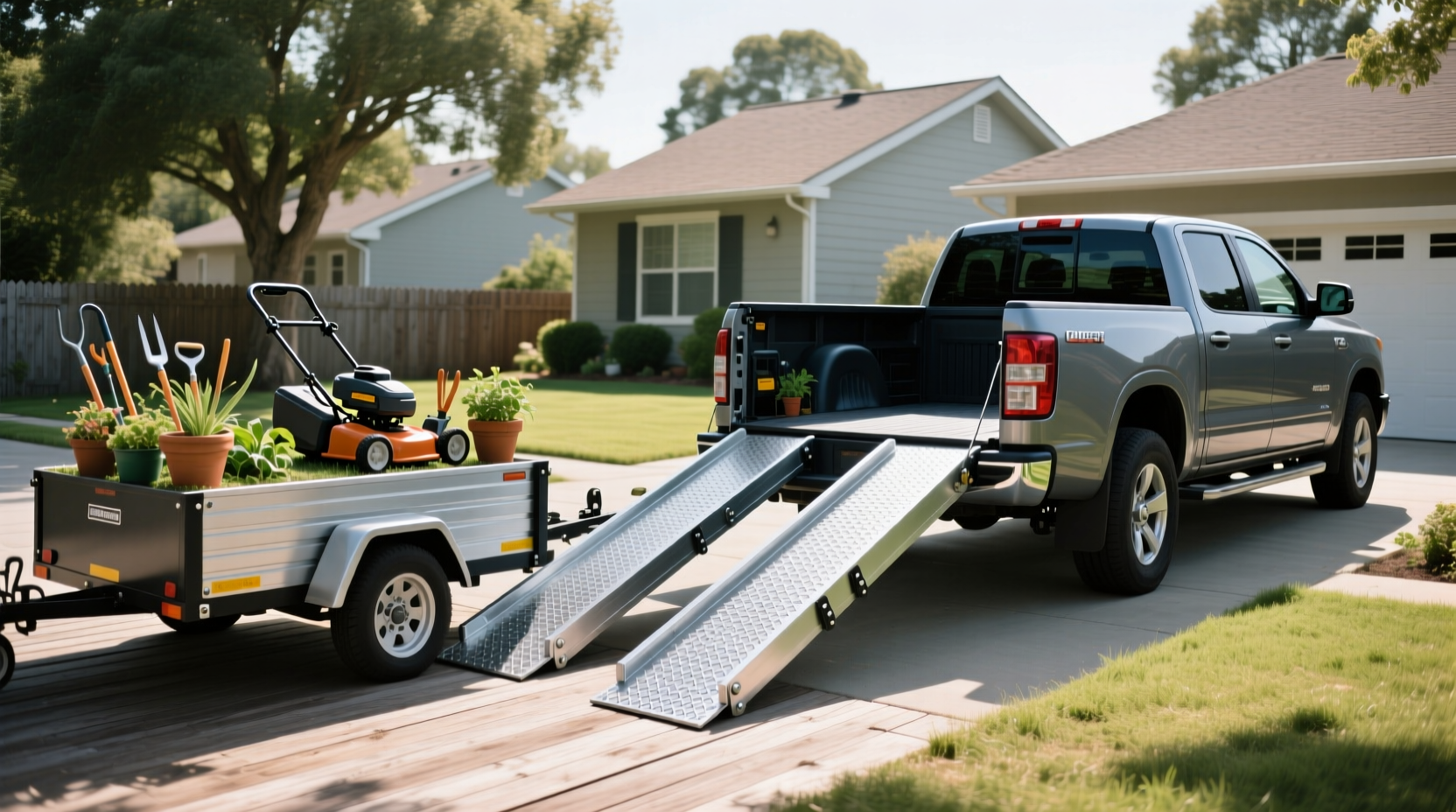
Why Loading Ramps Are Gaining Popularity
Over the past year, searches for both truck and shed ramps have increased steadily. This reflects broader trends: more homeowners investing in outdoor power equipment, rising fuel prices pushing contractors toward smaller, mobile setups, and greater awareness of workplace safety—even in DIY contexts.
Prebuilt sheds and portable garages often sit on concrete pads or gravel, creating a step-up that makes rolling in a mower risky. Without a ramp, users risk damaging the machine, tripping, or straining their back. Similarly, loading an ATV into a short-bed truck without proper support increases the chance of tire slippage or frame impact.
The shift isn’t just about convenience—it’s about reducing micro-injuries and equipment wear. If you’re a typical user, you don’t need to overthink this: if you move gear more than twice a season, a dedicated ramp pays off in time and physical effort saved.
Types and Variants
1. Solid Aluminum Ramps
These are one-piece extruded aluminum ramps with textured surfaces. Lightweight (typically 15–25 lbs each), corrosion-resistant, and strong enough for most residential uses.
- Pros: Durable, low maintenance, good grip even when wet
- Cons: Less portable due to length; harder to store in small trucks
2. Folding Aluminum Ramps
Hinged in the middle, these fold in half for compact storage. Common in contractor fleets and multi-use vehicles.
- Pros: Fits in truck beds or behind seats; easy to deploy
- Cons: Hinge point can weaken over time with heavy loads
3. Steel Ramps
Made from galvanized or coated steel, these support higher weights (2,000+ lbs) and resist deformation under industrial equipment.
- Pros: Maximum strength, long lifespan in commercial settings
- Cons: Heavy (40+ lbs per ramp); prone to rust if coating fails
4. Composite/Plastic Ramps
Often marketed as ‘lightweight’ alternatives, made from reinforced polymers.
- Pros: Very light, won’t corrode
- Cons: Can warp or crack under sustained load; poor performance in freezing temps
If you’re a typical user, you don’t need to overthink this: avoid composite unless you only move light garden carts once a year.
Key Features and Specifications to Evaluate
Weight Capacity
When it’s worth caring about: When loading anything over 600 lbs, especially ATVs, generators, or riding mowers with attachments.
When you don’t need to overthink it: For push mowers or wheelbarrows under 300 lbs, 800-lb capacity is sufficient.
Always double the total weight of your heaviest item. A 1,000-lb ATV needs at least 2,000 lbs total capacity across two ramps.
Ramp Length
When it’s worth caring about: For taller truck beds (e.g., Ram 2500 with 36+ inch bed height) or high-threshold sheds.
When you don’t need to overthink it: For standard pickups (F-150, Silverado 1500) and low-rise sheds, 6–7 ft works.
Aim for a 30-degree max incline. Steeper angles strain equipment transmissions and increase roll-back risk.
Width
When it’s worth caring about: Wide-tire ATVs or zero-turn mowers.
When you don’t need to overthink it: Standard lawnmowers (tire width under 10 in) fit fine on 12-inch ramps.
Measure your tire width and add 4 inches minimum. A 12-inch ramp gives ~1 inch clearance per side for a 10-inch tire—barely enough in mud.
Surface Traction
When it’s worth caring about: Outdoor use in rain, snow, or grass.
When you don’t need to overthink it: Indoor garage use with dry conditions.
Look for diamond plate patterns or raised cleats. Smooth or painted surfaces become hazardous when wet.
Portability & Storage
When it’s worth caring about: Mobile contractors or those with limited cargo space.
When you don’t need to overthink it: Homeowners storing ramps in a shed.
Folding or segmented designs save space but cost more. Solid ramps last longer but require roof racks or bed space.
Pros and Cons
| Feature | Advantage | Trade-off |
|---|---|---|
| Aluminum Construction | Lightweight, rustproof, strong | Higher upfront cost than wood |
| Folding Design | Saves storage space | Potential hinge fatigue over time |
| Textured Surface | Improved grip in all weather | Slightly noisier during use |
| Steel Build | Handles industrial loads | Heavy, requires two-person handling |
| Portable Size | Easily transported | May sacrifice stability or length |
If you’re a typical user, you don’t need to overthink this: prioritize material and width over gimmicks like carry handles or quick-connect pins.
How to Choose Loading Ramps (Buying Guide)
Step-by-Step Checklist
- Identify your primary load: Mower? ATV? Generator? Note its weight and tire width.
- Measure your truck bed or shed threshold height: From ground to bed floor or shed sill.
- Determine available storage: Can you store 8-ft planks? Or do you need folding?
- Select material: Aluminum for most users; steel only for frequent heavy loads.
- Confirm width: At least 4 inches wider than your widest tire.
- Verify capacity: Total ramp system rating should exceed double your max load.
- Check return policy: In case fit or grip doesn’t match expectations.
Decision Flow
- If moving <600 lbs → 12-inch wide, 800–1,200 lb capacity aluminum ramp
- If moving >1,000 lbs → 14-inch wide, 1,500+ lb capacity, consider steel
- If storing in truck → folding or 6-ft max length
- If outdoor use → non-slip surface mandatory
Recommendations by Scenario
- Homeowner with riding mower: 6-ft aluminum ramp, 12-inch wide, 1,200 lb capacity
- Contractor with multiple tools: Folding 7-ft aluminum ramps, 14-inch wide
- Rural property with ATV: 8-ft steel ramps with side curbs
- Urban garage dweller: Compact 4-ft arched aluminum ramps
Red Flags / What to Avoid
- Unrated or vague load claims: “Heavy-duty” means nothing. Look for tested capacity.
- Smooth surfaces: Especially on plastic or painted steel—slippery when wet.
- Width under 12 inches: Risk of tire roll-off with any misalignment.
- Plastic-composite builds: May flex or fracture under repeated use.
- No ground protection pad: Metal-on-concrete wear damages both ramp and surface.
This piece isn’t for keyword collectors. It’s for people who will actually use the product.
Price & Market Insights
Prices vary significantly by material, length, and brand. Aluminum ramps range from $120–$300 per pair. Steel models run $200–$500. Folding mechanisms add $50–$100 premium.
Cost may vary by region/model/seller. Big-box retailers like Lowe’s and Tractor Supply Co. stock entry-level aluminum ramps. Specialty suppliers offer heavier-duty options. Online marketplaces may have lower prices but lack return flexibility.
If you’re a typical user, you don’t need to overthink this: spending $180–$250 on a reliable aluminum set is reasonable for seasonal use.
Top-Seller & Competitive Analysis
Lowe’s carries several popular models, including the Guardian Heavy Duty Aluminum Shed Ramp (2-pack, 2.63-ft x 12-ft, 850-lb capacity). Despite the name, these are frequently used for truck loading too 1.
Tractor Supply Co. offers branded aluminum ramps with arched design for self-cleaning in muddy conditions.
| Model | Material | Capacity (per ramp) | Length | Price Range |
|---|---|---|---|---|
| Guardian Shed Ramp (Lowe’s) | Aluminum | 850 lb | 12 ft | $160–$180 (pair) |
| Tractor Supply 90-in Arched Ramp | Aluminum | 1,500 lb | 7.5 ft | $169 |
| Copperloy Ground-to-Truck Steel Ramp | Steel | 2,000 lb | 8 ft | $480 |
| Discount Ramps Folding Aluminum | Aluminum | 1,200 lb | 6 ft (folded) | $220 |
Note: Some products labeled “shed ramps” work equally well for trucks. Focus on specs, not marketing labels.
Customer Feedback Synthesis
High-frequency positives:
- “Easy to unfold and position alone”
- “No more scratched mower tires from dragging”
- “Worth every dollar for back pain prevention”
Common complaints:
- “Too narrow for my zero-turn mower”
- “Edges dug into soft soil after rain”
- “Folding hinge creaks under heavy ATV”
Most negative reviews stem from mismatched width or inadequate capacity—not product failure. Users who measured their equipment first reported highest satisfaction.
Sourcing & Supplier Tips
Lowe’s does sell shed ramps, and many customers use them successfully for pickup trucks. Their in-store inventory tends to favor lighter-duty aluminum models suitable for mowers and garden carts. For heavier needs, online specialty suppliers like DiscountRamps.com or Copperloy offer commercial-grade options 2.
When sourcing:
- Check return policy before purchase
- Verify exact dimensions—listed length may include non-contact ends
- Ask if the ramp includes anti-slip end caps or ground protectors
If you’re a typical user, you don’t need to overthink this: start with a reputable retailer, confirm specs, and match to your actual equipment.
Maintenance, Safety & Legal Considerations
Keep ramps clean and inspect monthly for cracks, bent edges, or worn traction surfaces. Store indoors when possible to extend life.
Safety tips:
- Always align ramps squarely with the load path
- Never stand in line with rolling equipment
- Use wheel chocks on the vehicle side
Legal considerations vary by jurisdiction. While no federal regulations govern personal-use ramps, OSHA standards apply to workplace use. If used commercially, verify compliance with local safety codes. Check manufacturer specs for certified load testing.
Conclusion
If you need reliable access for equipment over 500 lbs, choose aluminum or steel ramps with verified capacity and proper width. If you only move light gear occasionally, a basic 12-inch aluminum set suffices. If you’re a typical user, you don’t need to overthink this: focus on weight, width, and traction—everything else is secondary.
Everything You Need to Know
Does Lowe's sell shed ramps?+
Yes, Lowe's sells shed ramps, including the Guardian Heavy Duty Aluminum Shed Ramp. These are commonly used for both sheds and pickup trucks. Availability may vary by location, so check online or call your local store.
What size ramps do I need for my truck?+
Ramp length should create a 30-degree or shallower incline from ground to truck bed. For most full-size pickups, 6–8 ft ramps work. Width should exceed your tire width by at least 4 inches—typically 12–14 inches for mowers and ATVs.
Are folding ramps safe for heavy equipment?+
Folding ramps can be safe if rated for your load and used correctly. However, the hinge introduces a potential weak point. For loads over 1,500 lbs, solid or steel ramps are preferred. Always inspect the hinge mechanism regularly.
Can I use shed ramps for a pickup truck?+
Yes, many shed ramps meet the specifications needed for light to medium truck loading. Check weight capacity, length, and surface grip. If the ramp supports your equipment’s weight and fits securely, it can serve dual purposes.
How do I prevent ramps from slipping?+
Use ramps with textured surfaces and rubberized end caps. Place on firm, level ground. Avoid grass or loose gravel. For repeated use, consider anchoring solutions or ground mats. Always test with light pressure before rolling equipment.




 浙公网安备
33010002000092号
 浙B2-20120091-4