
Lately, plug-in hybrids (PHEVs) have become a practical bridge between gas-only SUVs and full EVs — but the real question isn’t just how to charge them, it’s whether you should. If your daily commute is under 40 miles, charging nightly maximizes fuel savings and reduces emissions. For longer drives, the gasoline engine takes over, so skipping a charge won’t leave you stranded. What to look for in a PHEV? Prioritize models with at least 30 miles of electric range and Level 2 charging compatibility. Avoid assuming all hybrids are the same — only plug-in hybrids require external charging to unlock their efficiency.
If you’re a typical user, you don’t need to overthink this. Charge when convenient, especially after short trips — it’s not mandatory, but it pays off.
This piece isn’t for keyword collectors. It’s for people who will actually use the product.
About Plug-in Hybrids
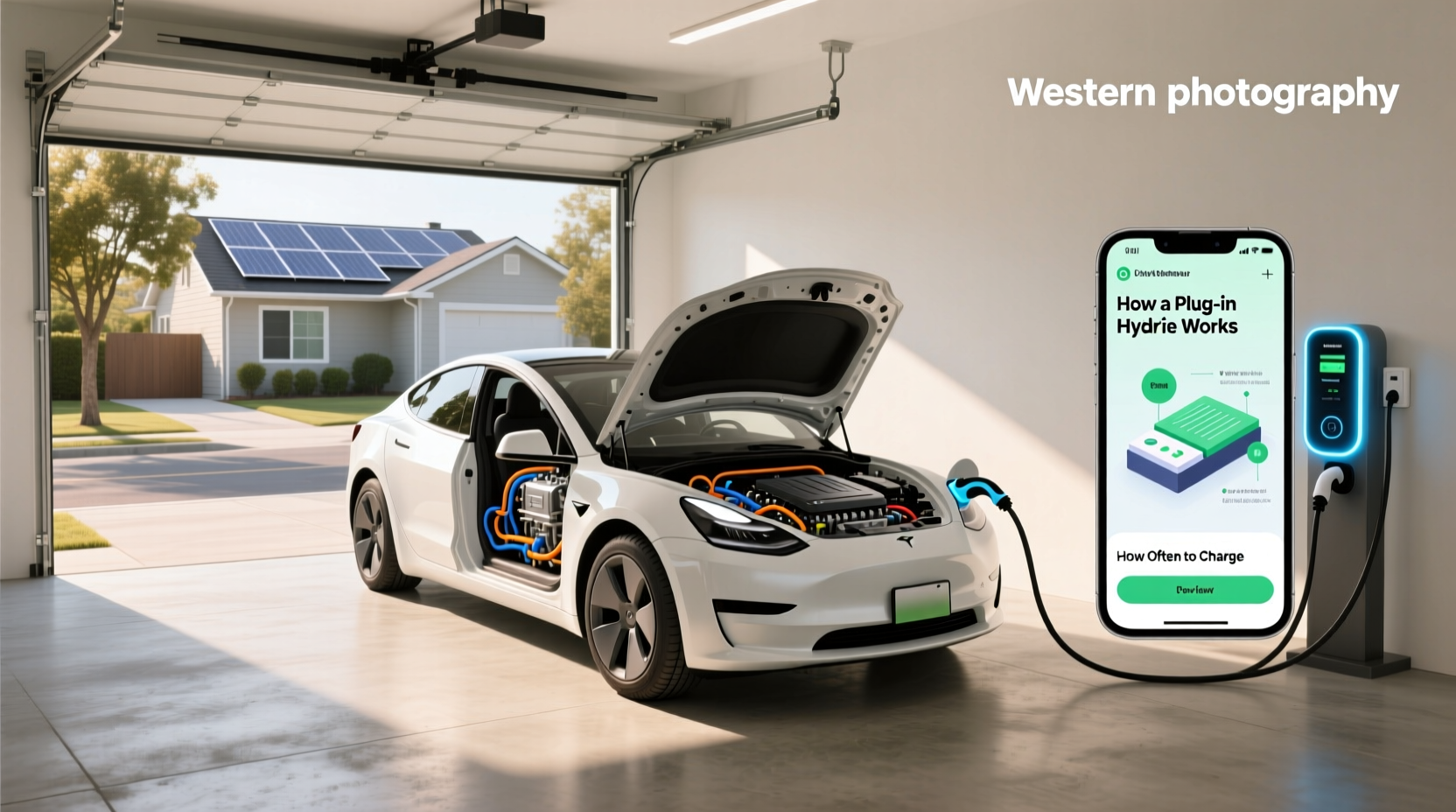
A plug-in hybrid electric vehicle (PHEV) combines a gasoline engine with a rechargeable battery that can be charged from an external power source. Unlike conventional hybrids, which rely solely on regenerative braking and the internal combustion engine to charge the battery, PHEVs let drivers plug in to fully recharge the battery. This allows for extended electric-only driving — typically between 20 and 50 miles per charge, depending on model and conditions.
The dual-power setup means PHEVs operate in multiple modes: all-electric at low speeds, hybrid during acceleration or high load, and gas-only when the battery is depleted. Because of this flexibility, they offer greater range than most battery electric vehicles (BEVs), while still reducing fuel consumption for city-centric drivers.
Why Plug-in Hybrids Are Gaining Popularity
Over the past year, more drivers have turned to PHEVs as a realistic alternative to full EVs, especially where charging infrastructure remains limited or home installation isn’t feasible. They eliminate range anxiety — if the battery runs out, the car continues running on gasoline. At the same time, they deliver tangible fuel savings for those who can charge regularly.
Urban commuters benefit most: daily errands, school drop-offs, and office commutes often fall within the electric range. Charging at home overnight turns these trips into near-zero fuel events. Meanwhile, road-trippers retain the convenience of gas refueling without sacrificing weekday efficiency.
The appeal also lies in policy incentives in some regions, such as tax credits, HOV lane access, or reduced registration fees — though these vary by location and eligibility requirements.
If you’re a typical user, you don’t need to overthink this. The value isn’t in perfect charging discipline — it’s in consistent, low-effort habits.
Types and Variants
PHEVs come in several configurations, each suited to different lifestyles and priorities.
Compact PHEVs (e.g., Toyota Prius Prime, Hyundai Ioniq Plug-in)
- Pros: High fuel economy, affordable pricing, easy to park, ideal for city driving
- Cons: Limited cargo space, shorter electric range (~25–30 miles), less powerful engines
SUV and Crossover PHEVs (e.g., Toyota RAV4 Prime, Ford Escape PHEV)
- Pros: More passenger and cargo room, higher towing capacity, longer electric range (up to 42 miles), better performance
- Cons: Heavier, slightly lower efficiency in electric mode, higher purchase price
Luxury and Performance PHEVs (e.g., BMW X5 xDrive50e, Porsche Cayenne E-Hybrid)
- Pros: Premium interiors, advanced tech, strong acceleration due to electric boost, brand-specific charging networks
- Cons: Expensive maintenance, complex systems, smaller relative fuel savings given high baseline costs
Minivan and Full-Size PHEVs (e.g., Chrysler Pacifica Hybrid)
- Pros: Spacious seating, family-friendly features, smooth ride, up to 32 miles of electric range
- Cons: Bulky, less agile, limited availability in newer model years
If you’re a typical user, you don’t need to overthink this. Choose based on your space and route needs — not the badge on the hood.
Key Features and Specifications to Evaluate
When comparing PHEVs, focus on metrics that impact real-world usability.
Electric Range (EPA-Estimated)
Most PHEVs offer 20–50 miles of electric-only range. When it’s worth caring about: If your round-trip commute is under 40 miles and you can charge at home, maximizing electric range cuts fuel costs significantly. When you don’t need to overthink it: If you frequently drive over 60 miles daily, the gas engine will dominate anyway — small differences in electric range matter less.
Charging Speed (Level 1 vs Level 2)
Level 1 uses a standard 120V outlet (included with most vehicles), adding about 3–5 miles of range per hour. Level 2 requires a 240V charger (like those used for dryers), delivering 10–25 miles per hour. When it’s worth caring about: For nightly full recharges, Level 2 is far more practical. When you don’t need to overthink it: If you only take short trips occasionally, Level 1 may suffice.
Fuel Economy (MPGe and MPG)
MPGe measures electric efficiency; MPG reflects gas-only performance. When it’s worth caring about: Compare MPGe if you plan to charge regularly — higher values mean lower electricity costs. When you don’t need to overthink it: If you rarely charge, focus on hybrid MPG instead.
Onboard Charger Capacity
Determines how fast the battery accepts charge. Most support 3.3 kW or 6.6 kW input. Higher capacity enables faster Level 2 charging. When it’s worth caring about: With frequent long drives followed by quick turnarounds, faster charging reduces downtime. When you don’t need to overthink it: For overnight charging at home, even 3.3 kW is adequate.
If you’re a typical user, you don’t need to overthink this. Prioritize ease of charging access over peak specs.
Pros and Cons
Advantages
- Reduced fuel costs when charged regularly ⚡
- No range anxiety — gas engine acts as backup 🛣️
- Eligibility for certain incentives ✅
- Smooth, quiet electric driving in urban settings ✨
- Lower tailpipe emissions compared to gas-only vehicles 🌍
Drawbacks
- Battery degradation over time 🔧
- Higher upfront cost than conventional hybrids 💸
- Need for regular charging to realize benefits ⏱️
- Limited electric range compared to BEVs 📊
- Added complexity in maintenance 👥
How to Charge a Plug-in Hybrid: Buying Guide
Understanding your usage pattern is key to getting value from a PHEV. Here’s how to decide what kind of system fits your life.
Step-by-Step Checklist
- Determine your average daily driving distance
- Assess home charging feasibility (garage/outlet access)
- Compare electric range against your commute
- Evaluate public charging availability near work or errands
- Review local utility rates and off-peak discounts
- Factor in potential tax credits or rebates
- Test-drive models to feel electric-mode responsiveness
Decision Flow
- If you drive ≤ 30 miles/day: Look for ≥ 30-mile electric range + Level 2 charging option
- If you drive 30–60 miles/day: Focus on combined fuel economy and reliable charging access
- If you drive > 60 miles/day: A standard hybrid or efficient gas vehicle might offer better ROI
Recommendations by Scenario
- Urban commuter: Toyota Prius Prime or Hyundai Ioniq 5 Plug-in — compact, efficient, easy to charge
- Family driver: Toyota RAV4 Prime or Chrysler Pacifica Hybrid — space, safety, decent EV range
- Rural resident: Any PHEV with robust gas engine — prioritize reliability over max EV miles
- Weekend traveler: BMW X5 xDrive50e or Volvo XC60 Recharge — comfort, performance, dual-mode confidence
Red Flags / What to Avoid
- Buying a PHEV without any way to charge at home or work — you’ll pay more upfront for unused capability
- Ignoring electricity costs — cheap gas doesn’t mean free charging
- Assuming automatic savings — if you never plug in, you’re carrying dead weight
- Overlooking resale value trends — some PHEV models depreciate faster than others
- Skipping test drives — electric and hybrid transitions vary widely by brand
If you’re a typical user, you don’t need to overthink this. Your behavior determines the payoff — not the brochure claims.
Price & Market Insights
PHEV prices vary widely by region, trim level, and dealer incentives. Compact models start around $30,000, while luxury SUVs can exceed $60,000. Expect to pay $4,000–$8,000 more than their non-plug-in hybrid counterparts.
Installation of a Level 2 charger adds $500–$2,000 depending on electrical setup. Some utilities offer rebates; others provide discounted off-peak rates. Always check manufacturer specs and verify retailer return policies before purchasing.
Note: Incentives may vary by region/model/seller. Confirm local regulations and eligibility through official government portals or dealership disclosures.
Top-seller & Competitive Analysis
The following models represent popular choices across segments based on recent market presence and user-reported satisfaction.
| Model | Electric Range (miles) | Charging Time (Level 2) | Fuel Economy (MPG combined) | Starting Price (USD) |
|---|---|---|---|---|
| Toyota Prius Prime | 44 | ~2.5 hrs | 57 | $32,500 |
| RAV4 Prime | 42 | ~2.5 hrs | 38 | $44,075 |
| Chrysler Pacifica Hybrid | 32 | ~2 hrs | 82 MPGe / 32 MPG | $40,395 |
| Hyundai Tucson Plug-in | 33 | ~2 hrs | 85 MPGe / 38 MPG | $42,000 |
| BMW X5 xDrive50e | 31 | ~3 hrs | 25 | $67,000 |
Data sourced from manufacturer websites and verified automotive publications 1. Actual performance may vary by driving style, climate, and equipment.
Customer Feedback Synthesis
Based on aggregated reviews and forum discussions:
Common Praises
- "I save over $100/month on fuel since switching to a RAV4 Prime and charging nightly."
- "The electric mode is whisper-quiet — perfect for early morning drives."
- "No stress about finding chargers on road trips — the gas engine kicks in seamlessly."
Recurring Complaints
- "I bought a PHEV but don’t have a garage — charging has been a hassle."
- "Battery range dropped noticeably after two winters in a cold climate."
- "Dealership didn’t explain that skipping charges negates most savings."
If you’re a typical user, you don’t need to overthink this. Real-world results depend more on routine than technology.
Sourcing & Supplier Tips
When purchasing a PHEV:
- Work with dealers experienced in electrified vehicles — they’re more likely to assist with charging setup questions
- Ask for demonstrations of the charging process and app integration
- Verify warranty coverage for battery and powertrain components
- Consider certified pre-owned options — newer PHEVs hold value reasonably well
- Use manufacturer configurators to compare trims and available features
For charging equipment, reputable brands include Autel Energy and ChargePro. Installation services may be bundled with hardware purchases. Always confirm compatibility with your vehicle’s connector type (typically J1772 in North America).
Maintenance, Safety & Legal Considerations
PHEVs require similar maintenance to conventional cars — oil changes, tire rotations, brake checks — but with added attention to the battery and electric drivetrain. Follow the manufacturer’s recommended service intervals.
Battery health monitoring is usually built into the dashboard or companion app. Report unusual warning lights immediately. While high-voltage systems are designed with safety interlocks, only qualified technicians should perform repairs involving the battery pack.
There are no special licensing requirements for driving a PHEV. However, some areas impose restrictions or fees on hybrid vehicles despite their environmental benefits. To verify:
- Check state/provincial transportation department websites
- Contact local DMV offices
- Review toll road and congestion zone rules
These policies may vary by region/model/seller — always confirm locally.
Conclusion
If you need maximum fuel savings and drive mostly short distances, choose a PHEV with ample electric range and a reliable way to charge it nightly. If your lifestyle involves unpredictable long drives and no charging access, a conventional hybrid or efficient gas vehicle may serve you better. The technology works best when aligned with habit — not forced into one.
If you’re a typical user, you don’t need to overthink this. Use the electric mode when you can, rely on gas when you must — simplicity wins.
Everything You Need to Know
❓ Do you have to charge a plug-in hybrid?
No, you don’t have to charge it every time, but doing so maximizes fuel savings and reduces emissions. If you never plug in, the vehicle operates like a regular hybrid using gas and regenerative braking — but you lose the main advantage of owning a PHEV.
❓ How often should I charge my plug-in hybrid?
For best results, charge after short trips or nightly if your commute is under the electric range (typically 20–50 miles). If you’re going on a long trip, charge when convenient — the gas engine will maintain operation. Regular charging preserves battery health and lowers fuel costs.
❓ Can I use a regular wall outlet to charge?
Yes, all PHEVs come with a Level 1 charging cable that plugs into a standard 120V household outlet. It’s slower — adding about 3–5 miles of range per hour — but sufficient for overnight top-ups. For faster charging, consider installing a Level 2 (240V) station.
❓ What happens if I forget to charge my PHEV?
Nothing critical — the gasoline engine starts automatically when the battery is low. You won’t get stranded, but you’ll burn more fuel and miss out on electric-only benefits like quiet operation and lower energy costs.
❓ Are there hidden costs to owning a PHEV?
Potential costs include home charger installation ($500–$2,000), possible battery replacement after many years, and varying insurance rates. However, these are often offset by fuel savings and available incentives. Always check manufacturer specs and verify retailer return policy before committing.




 浙公网安备
33010002000092号
 浙B2-20120091-4