
Samsung 15W Super Fast Wireless Charger: What to Look for in 2025
If you’re trying to decide whether the Samsung 15W Super Fast Wireless Charger is still worth buying, here’s the quick verdict: yes — but only if you already own a compatible Galaxy phone and value convenience over raw speed. Over the past year, more Android brands have moved to 30W or even 50W wireless charging, making Samsung’s 15W standard feel modest. If you’re a typical user, you don’t need to overthink this. For overnight charging or desk use, 15W delivers reliable performance without overheating. But if you're switching from a brand like Xiaomi or OnePlus with faster wireless options, manage your expectations. Avoid third-party chargers that claim 'Super Fast' support but lack Adaptive Fast Charging certification — they often throttle below 10W.
About Samsung 15W Super Fast Wireless Charging
Samsung introduced its 15W Super Fast Wireless Charger (model EP-P2400) several years ago as a step up from standard Qi charging. It works with select Galaxy smartphones including the S20 series and later, Z Fold and Z Flip models, and some tablets. The technology relies on proprietary extensions to the Qi standard, requiring both compatible hardware and firmware support on the device side. Unlike generic 10W wireless pads, Samsung’s version uses Adaptive Fast Charging protocols to maintain higher wattage during the initial charge phase.
The charger itself is a compact pad, usually sold with or without a wall adapter (TA). When paired with a 25W or 45W USB-C PD adapter, it can deliver up to 15W output under ideal conditions. However, actual performance depends heavily on alignment, case thickness, temperature, and background activity on the phone.
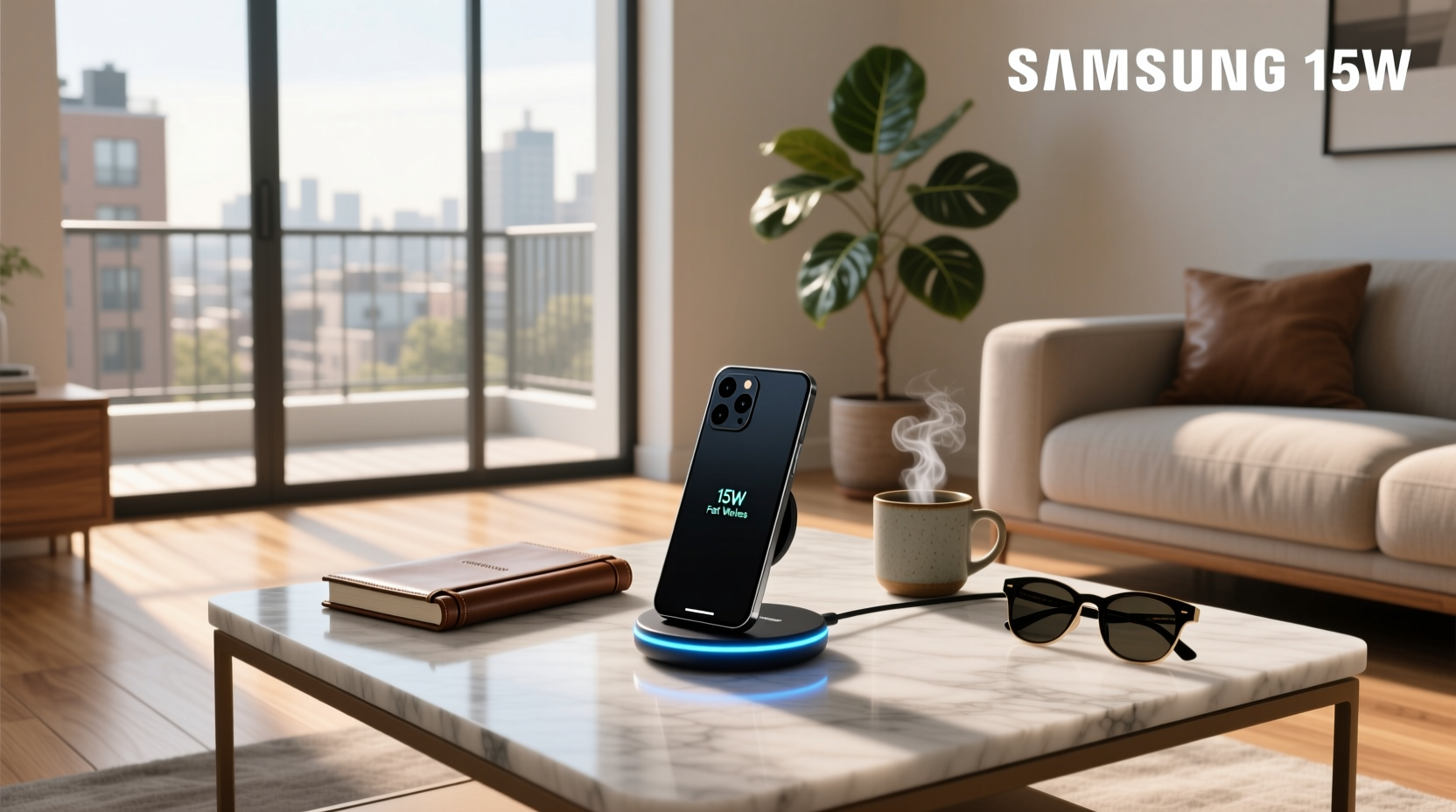
Why 15W Charging Is Gaining Popularity Again
Lately, there’s been renewed interest in 15W wireless charging — not because it’s fast by modern standards, but because of stability and longevity concerns with higher-wattage systems. Recently, users have reported faster battery degradation in phones using 30W+ wireless charging daily. As a result, many are returning to 15W as a safer middle ground between speed and cell health.
This shift reflects a broader trend: consumers prioritizing long-term device maintenance over peak convenience. If you’re a typical user, you don’t need to overthink this. Using 15W charging nightly instead of 45W may extend your battery cycle life by hundreds of charges. That doesn’t mean 15W is 'better' — just more sustainable for light-to-moderate usage patterns.
Types and Variants
Samsung offers multiple versions of its 15W wireless charger, each suited to different environments and needs.
Single Pad (EP-P2400)
- Pros: Compact, affordable, easy to travel with
- Cons: No stand function; requires precise placement
Duo Pad (EP-P5400)
- Pros: Charges phone and earbuds/watch simultaneously; better cable management
- Cons: Larger footprint; second coil limited to 5W
Tripod Stand (EP-P6300)
- Pros: Allows viewing while charging; good airflow reduces heat buildup
- Cons: More expensive; less stable on uneven surfaces
When it’s worth caring about: If you frequently charge multiple devices at bedtime, the Duo model saves space and cables. When you don’t need to overthink it: For single-device users, the basic pad performs identically and costs less.
Key Features and Specifications to Evaluate
Not all 15W chargers perform equally. Here’s what matters:
Voltage Regulation & Thermal Management
Poorly regulated chargers spike voltage early then drop off, leading to inconsistent speeds. Look for models with built-in temperature sensors and adaptive throttling.
Input Power Requirement
The Samsung 15W pad requires at least a 15W input (e.g., 9V/1.67A), but performs best with a 25W or 45W PD adapter. Many users overlook this and pair it with weak adapters, resulting in sub-10W output.
Coil Alignment and Detection
Better units include foreign object detection (FOD) and multi-coil layouts to improve positioning tolerance. Misalignment can cut effective power by 30–50%.
When it’s worth caring about: If you charge on a moving surface (like a car or bedside table), precise alignment becomes critical. When you don’t need to overthink it: On a stable desk, most official Samsung pads handle minor misplacement well.
Pros and Cons
Pros
- ✅ Seamless integration with Galaxy ecosystem
- ✅ Lower heat generation than 25W+ wired alternatives
- ✅ Reduces cable wear and port damage over time
- ✅ Supports simultaneous charging on Duo models
Cons
- ❌ Slower than modern wired or competitor wireless standards
- ❌ Requires specific adapter for full performance
- ❌ Thicker phone cases block charging efficiency
- ❌ Not suitable for quick top-ups before leaving home
This piece isn’t for keyword collectors. It’s for people who will actually use the product.
How to Choose the Right 15W Charger: A Step-by-Step Buying Guide
Follow this checklist when shopping:
Step 1: Confirm Device Compatibility
Check your phone model against Samsung’s official list. Only certain Galaxy devices support 15W wireless charging. Older models default to 5W or 7.5W even with a Super Fast charger.
Step 2: Decide Between Pad or Stand
Choose based on usage context:
• Pads: Best for flat surfaces, travel, minimalists
• Stands: Ideal for nightstand or desk viewing
Step 3: Verify Adapter Inclusion
Some listings include a TA (travel adapter), others don’t. If yours doesn’t, ensure you have a compatible 25W+ PD charger. Without it, you won’t reach 15W speeds.
Step 4: Check Retailer Return Policy
Wireless charging performance may vary by region/model/seller. Buy from retailers offering returns if real-world speed doesn’t match claims.
Decision Flow
- Do you own a compatible Galaxy phone? → Yes → Continue
- Need to charge two devices? → Yes → Choose Duo
- Charge while watching videos? → Yes → Choose Tripod Stand
- Want fastest possible charge? → No → 15W is sufficient
Recommendations by Scenario
- Home Nightstand: Duo Pad (EP-P5400)
- Office Desk: Single Pad or Stand depending on viewing needs
- Travel: Single Pad (lightweight, fits in bag)
- Car Mount Charging: Not recommended — vibration disrupts coil contact
Red Flags / What to Avoid
- 🚫 Chargers labeled “Fast” but not “Super Fast” — these cap at 10W
- 🚫 Third-party units without Samsung certification — may trigger error messages
- 🚫 Bundled adapters under 15W — will limit performance
- 🚫 Units with no FOD (foreign object detection) — safety risk
If you’re a typical user, you don’t need to overthink this. Stick to official Samsung accessories unless third-party certifications (like MFi or Qi Extended Power Profile) are clearly stated.
Price & Market Insights
Prices vary significantly by region and seller. In North America, the single pad ranges from $40–60 USD; the Duo sells for $70–90. In Europe, expect €40–€85 due to VAT and import factors. Refurbished units appear on marketplace platforms at 20–30% discounts, but verify warranty status.
Performance differences between OEM and authorized clones are minimal under normal use. However, uncertified clones degrade faster and may fail after 6–12 months. When it’s worth caring about: If you plan to use the charger daily for over a year, invest in genuine. When you don’t need to overthink it: Occasional users can opt for reputable third parties with return windows.
Top-Seller & Competitive Analysis
The following compares major variants available through official and authorized channels:
| Model | Type | Max Output | Adapter Included? | MSRP (USD) |
|---|---|---|---|---|
| EP-P2400 | Single Pad | 15W | Select SKUs | $49.99 |
| EP-P5400 | Duo Pad | 15W + 5W | No | $79.99 |
| EP-P6300 | Tripod Stand | 15W | No | $89.99 |
Note: All models require firmware-enabled Galaxy devices for full 15W support. Competitors like Anker offer similar designs but cannot activate Samsung’s proprietary mode, limiting them to 10W max.
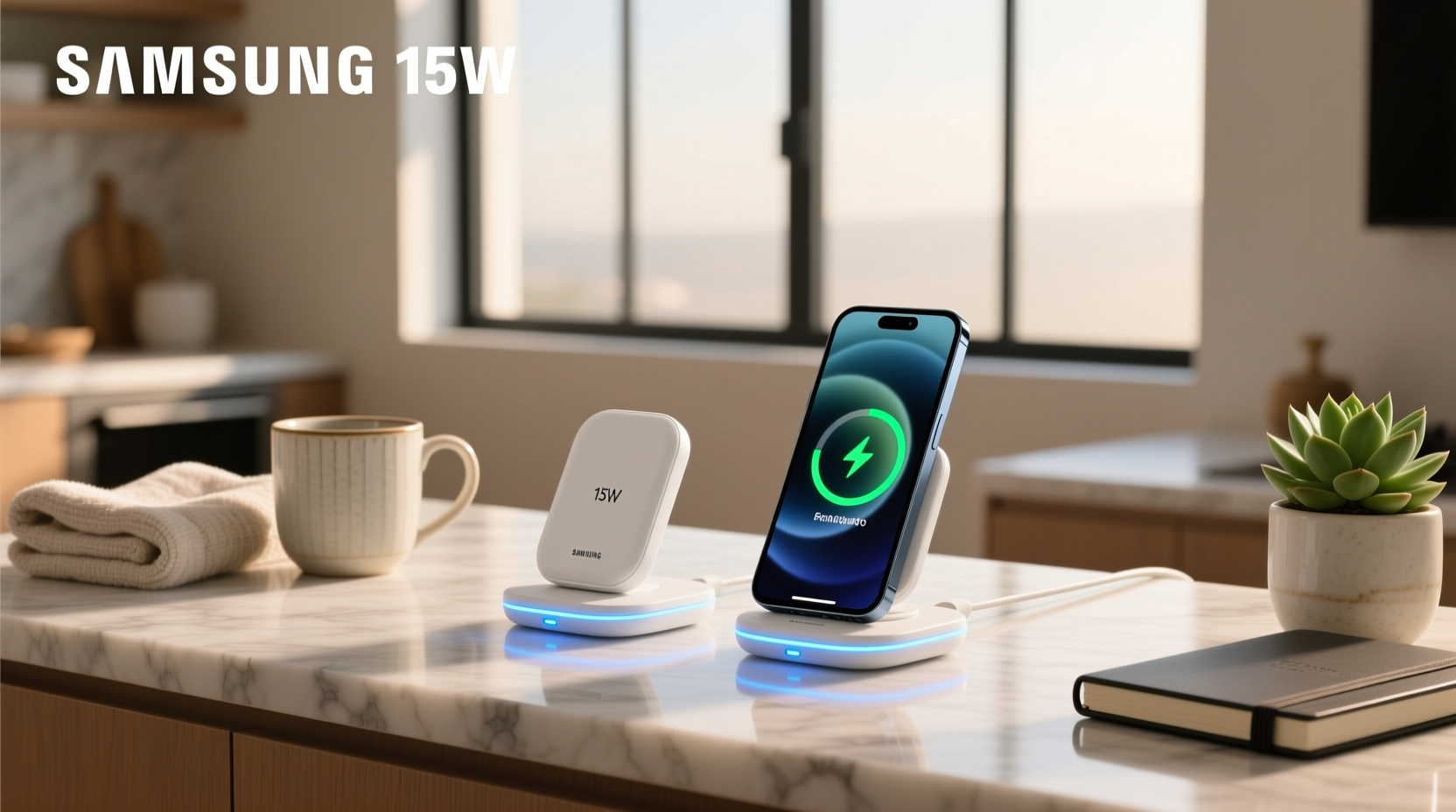
Customer Feedback Synthesis
Analyzing recent user reviews across forums and retail sites reveals consistent themes:
Highly Praised
- Reliable connection with Galaxy phones once aligned
- Quiet operation (no coil whine)
- Durable build quality on original units
- Clean aesthetic that blends into home setups
Frequent Complaints
- Charging stops randomly if phone shifts slightly
- No fast charging with thick or metal-backed cases
- Duo version lacks independent coil control (both activate simultaneously)
- Inconsistent availability of TA-included bundles
One recurring note: users upgrading from older Samsung chargers notice little speed difference, suggesting diminishing returns beyond 10W for everyday use.
Sourcing & Supplier Tips
To avoid counterfeits:
• Purchase from Samsung.com or authorized resellers
• Look for holographic anti-counterfeit labels on packaging
• Verify serial number via Samsung Members app
• Avoid marketplaces with unverified third-party sellers
If buying used, inspect for yellowing coils or loose micro-USB/USB-C ports — signs of thermal stress. This piece isn’t for keyword collectors. It’s for people who will actually use the product.
Maintenance, Safety & Legal Considerations
Clean the charging surface weekly with a dry microfiber cloth. Avoid liquids or abrasive cleaners. Remove debris from the vent areas to prevent overheating.
All Samsung-branded units meet IEC 60950 safety standards and include overvoltage, overcurrent, and short-circuit protection. However, local regulations may affect legality of modified or imported units. To verify compliance:
• Check manufacturer specs for regional certifications (CE, FCC, KC)
• Confirm with retailer whether unit is intended for sale in your country
Conclusion
If you need seamless, low-heat charging for your Galaxy phone and wearables at home or work, the Samsung 15W Super Fast Wireless Charger remains a solid choice — especially the Duo model for multi-device owners. If you need rapid top-ups on the go, consider wired 25W or 45W alternatives instead. If you’re a typical user, you don’t need to overthink this. For most daily routines, 15W wireless delivers enough power without compromising battery lifespan.
Everything You Need to Know
Is 15W considered fast charging on Samsung phones?
Yes, 15W is classified as Super Fast Wireless Charging on compatible Samsung devices like the Galaxy S23 and later models. However, it's slower than the 25W or 45W wired charging those same phones support. Real-world charging gains are about 15–20% faster than standard 10W pads, mainly during the first 30 minutes.
Do I need a special adapter for the Samsung 15W wireless charger?
Yes. To achieve 15W output, you must use a USB Power Delivery (PD) adapter rated at least 15W, though 25W or 45W adapters are recommended for stable performance. Using lower-wattage adapters will result in slower charging, often below 10W. Check manufacturer specs before purchasing.
Why does my Samsung phone charge slower wirelessly than advertised?
Several factors reduce real-world speeds: phone case thickness, coil misalignment, high ambient temperature, background app activity, and using non-certified adapters. Charging typically starts at peak wattage but drops after 30–40% battery. Performance may vary by region/model/seller — verify compatibility and components.
Can I use third-party 15W wireless chargers with my Samsung phone?
You can, but only Samsung-certified or Qi-compliant chargers will reliably deliver 15W. Many third-party units claim 'Super Fast' support but lack the necessary handshake protocol, defaulting to 5W or 10W. For best results, use official accessories or those explicitly listed as compatible in Samsung’s documentation.
Does wireless charging damage my Samsung phone’s battery over time?
All charging generates heat, which affects battery longevity. Wireless charging produces more sustained heat than wired, potentially accelerating wear if done frequently at high wattage. However, 15W strikes a balance — it’s faster than 5W but cooler than 45W wired. To minimize impact, avoid charging under pillows or direct sunlight, and remove thick cases.




 浙公网安备
33010002000092号
 浙B2-20120091-4