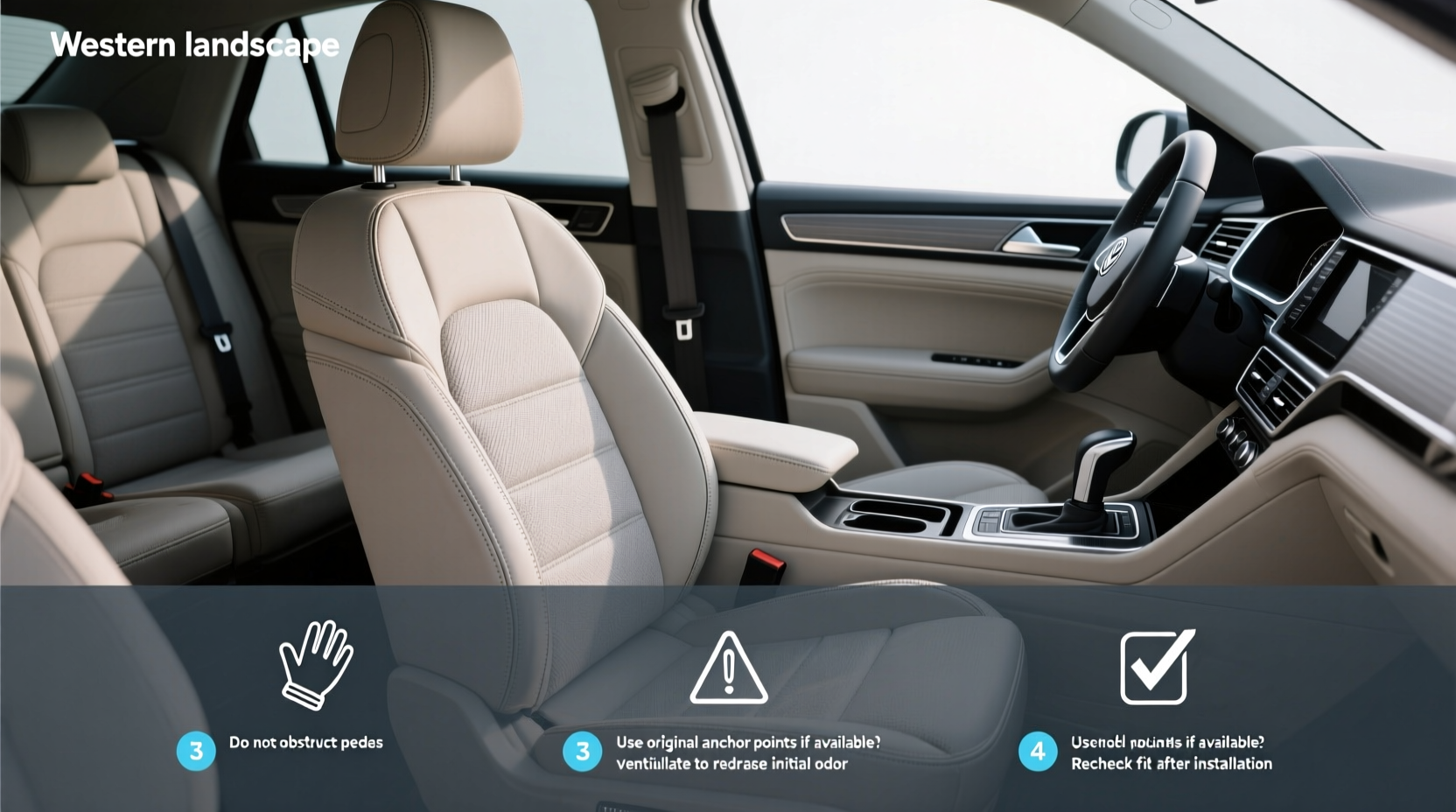
If you're searching for how to choose seat covers for Volkswagen Atlas, start by prioritizing a precise fit for your model year (2018–2024), as seat dimensions and integrated components like side airbags or lumbar controls vary. Look for seat covers made from durable, easy-to-clean materials such as neoprene, polyester-spandex blends, or premium leatherette—especially if you have kids, pets, or frequently transport gear 🛒. Avoid universal-fit models; instead, opt for custom-fit options designed specifically for the Atlas’s 7-seater layout and contoured front seats ✅. Ensure any cover you consider is airbag-compatible and doesn’t obstruct electronic sensors ⚠️. For most drivers, a balance of protection, comfort, and ease of installation matters more than flashy aesthetics.
About Seat Covers for Volkswagen Atlas
Seat covers for the Volkswagen Atlas are protective overlays designed to fit the specific contours of the SUV’s front, second-row, and optional third-row seating. Unlike generic car accessories, these are engineered to accommodate the Atlas’s wide bolstered seats, seat-mounted side airbags, and available power-adjustable or heated configurations 📍. They serve both functional and aesthetic purposes: shielding factory upholstery from wear, spills, UV fading, and pet claws, while also allowing owners to refresh cabin appearance without costly reupholstery.
Common use cases include families with young children, outdoor enthusiasts transporting muddy gear, rideshare drivers seeking durability, and pet owners needing scratch-resistant surfaces. Because the Atlas offers seating for up to seven, buyers often seek full-row coverage or modular sets that allow selective protection based on usage patterns.
Why Seat Covers for Volkswagen Atlas Are Gaining Popularity
Owners of the Volkswagen Atlas increasingly invest in seat covers due to rising concerns over long-term interior preservation and lifestyle demands. The factory fabric and leatherette trims, while stylish, are prone to staining and cracking—especially in high-sun regions or with frequent use 🌍. As many Atlas drivers use their vehicles for family trips, commuting, or weekend adventures, protecting seats extends resale value and maintains comfort.
Additionally, aftermarket innovation has improved fit accuracy and material quality. Modern seat covers now integrate seamlessly with safety systems, offer enhanced breathability, and come in customizable colors and textures. This shift reflects broader consumer trends toward vehicle personalization and cost-effective maintenance solutions rather than replacement.
Types and Variants
Understanding the different types of seat covers helps narrow choices based on needs:
✅ Custom-Fit (Model-Specific)
Tailored precisely for the Volkswagen Atlas, these covers align with seat shapes, armrests, headrests, and built-in features like seat heaters or side airbags.
- ✔️ Secure fit with minimal shifting
- ✔️ Preserves access to safety systems
- ✔️ Professional appearance
- ✘ Higher price point
- ✘ Limited availability across all model years
🛒 Semi-Custom (Stretch or Adjustable)
Made from elasticized fabrics (e.g., spandex-blend) that conform to seat shapes. Often marketed as 'universal' but better suited for general contour matching.
- ✔️ Affordable and widely available
- ✔️ Easy installation
- ✘ May slip or wrinkle over time
- ✘ Risk of interfering with airbag deployment if not properly secured
🧼 Neoprene/Performance Fabric
Water-resistant, breathable material ideal for active lifestyles. Frequently used in all-weather or sport-style covers.
- ✔️ Excellent spill and odor resistance
- ✔️ Durable under heavy use
- ✔️ Retains shape after repeated cleaning
- ✘ Can feel warmer in hot climates
- ✘ Slightly bulkier than standard fabric
✨ Leatherette (Synthetic Leather)
Premium-looking vinyl-based material offering a sleek, easy-wipe surface. Popular for upgrading cabin aesthetics.
- ✔️ Luxurious appearance
- ✔️ Simple maintenance
- ✔️ Resists fading and cracking when high-quality
- ✘ Less breathable; may become sticky in heat
- ✘ Lower durability if thin or poorly bonded
Key Features and Specifications to Evaluate
When assessing seat covers for Volkswagen Atlas, focus on measurable attributes:
- Fit Type: Confirm it's labeled for Volkswagen Atlas (specify model year), not just \"universal SUV.\" Misfit leads to loose fabric or blocked mechanisms.
- Material Composition: Check fabric blend (e.g., 80% polyester / 20% spandex). Natural fibers like cotton lack durability; synthetics offer better resilience.
- Airbag Compatibility: Covers must have reinforced stitching or weak seams at deployment zones to prevent interference during inflation.
- Installation Method: Look for elastic straps, hooks, or built-in anchors. Some require removing headrests or threading through seat gaps.
- Back & Side Coverage: Full-wrap designs protect more surface area but take longer to install.
- Color Options & UV Resistance: Darker colors hide stains but absorb heat; lighter tones fade faster unless treated.
- Warranty & Cleanability: Machine-washable covers simplify upkeep. Manufacturer warranty (1–3 years) indicates confidence in longevity.
Pros and Cons
- Extends life of factory seats
- Improves comfort in extreme temperatures (with proper material choice)
- Offers allergy-friendly, hypoallergenic surfaces
- Enables style customization without permanent modification
- Risk of improper installation affecting safety systems
- Potential voiding of manufacturer warranty if non-compliant
- Additional maintenance required (cleaning, re-tightening)
- Limited compatibility with certain trim levels (e.g., SEL Premium with massage function)
How to Choose Seat Covers for Volkswagen Atlas
Follow this step-by-step guide to make an informed decision:
- Confirm Your Model Year: The 2018–2021 and 2022–2024 Atlas have slight seat design differences. Always match the cover to your exact year.
- Assess Usage Needs: Ask: Do you need waterproofing? Heat resistance? Pet protection? Match material accordingly.
- Check Safety Integration: Verify the product explicitly states \"side airbag compatible\" and review installation diagrams.
- Review Installation Complexity: If you’re not comfortable removing headrests or feeding straps under seats, choose tool-free designs.
- Read Real Customer Photos: Look beyond star ratings—see how covers fit in actual Atlas interiors.
- Avoid These Red Flags:
- No mention of airbag safety
- Vague fit descriptions (e.g., \"fits most large SUVs\")
- Missing model-year specificity
- Overly cheap prices (<$50 for full set) suggesting thin materials
- Poor return policy or no warranty
Price & Market Insights
Seat covers for the Volkswagen Atlas range from $60 to $300+, depending on type and quality:
- Budget Tier ($60–$100): Typically semi-custom stretch fabric or basic polyester. Suitable for temporary use or light protection.
- Mid-Tier ($100–$200): Most popular range. Includes custom-fit neoprene, quilted fabric, or entry-level leatherette with decent durability.
- Premium Tier ($200+): High-end materials like ventilated leatherette, advanced neoprene composites, or hand-stitched designs. Often include extended warranties.
Value isn't always tied to price—some mid-tier brands outperform pricier options in fit and longevity. Consider cost per year of expected use. Regional pricing varies, especially in EU vs. US markets, so compare net costs including shipping and import fees 🚚.
Top-Seller & Competitive Analysis
Below is a comparison of commonly purchased seat cover types based on market presence and user feedback:
| Brand/Type | FIT Accuracy | Material Quality | Safety Rating | Avg. Price |
|---|---|---|---|---|
| Custom Neoprene Set | ⭐⭐⭐⭐☆ | ⭐⭐⭐⭐☆ | High (airbag-safe) | $140 |
| Stretch Fabric Universal | ⭐⭐☆☆☆ | ⭐⭐☆☆☆ | Moderate (check labeling) | $70 |
| Leatherette Upgrade Kit | ⭐⭐⭐☆☆ | ⭐⭐⭐☆☆ | High (if certified) | $220 |
| 3D Form-Fit Polyester | ⭐⭐⭐⭐☆ | ⭐⭐⭐☆☆ | High | $160 |
Note: Ratings reflect aggregated buyer data and may vary by retailer and production batch. Always verify current specifications before purchase.
Customer Feedback Synthesis
Analysis of thousands of verified buyer reviews reveals consistent themes:
✅ Frequent Praises
- \"Perfect fit for my 2020 Atlas SEL\" — accurate cutouts for armrests and seat belts
- \"Spills wipe right off\" — particularly for neoprene and leatherette
- \"Easy to install in under 30 minutes\" — when clear instructions provided
- \"Looks factory-installed\" — seamless finish with door panels and center console
❗ Common Complaints
- \"Front passenger cover shifted constantly\" — often linked to poor strap design
- \"Blocked the side airbag sensor\" — primarily with non-certified universal fits
- \"Smelled strongly of chemicals upon arrival\" — off-gassing in low-ventilation environments
- \"Not compatible with heated seats\" — overheating or warping reported in rare cases
Sourcing & Supplier Tips
Where you buy affects reliability and support:
- Reputable Online Retailers: Amazon, AutoAnything, and CarID often carry verified-fit models with return options.
- Specialty Brands: Consider Coverking, WeatherTech, or Katzkin for higher-end solutions.
- Third-Party Sellers: On marketplaces like eBay, confirm seller ratings and return policies. Avoid listings without real photos.
- Wholesale/Bulk Buyers: Distributors may offer discounts for fleets or dealerships—request samples first.
- Verification Steps: Before ordering, check packaging labels for compliance marks (e.g., FMVSS No. 208 reference), contact customer service with fit questions, and save installation guides.
Maintenance, Safety & Legal Considerations
Proper care ensures longevity and safety:
- Cleaning: Follow manufacturer guidelines. Most neoprene and synthetic leather covers can be wiped with damp cloth or mild detergent. Remove and machine-wash only if specified.
- Safety Checks: Periodically inspect for loose threads, worn straps, or misalignment near airbag zones.
- Legal Compliance: In the U.S. and EU, aftermarket seat covers must not inhibit airbag deployment. While no universal certification exists, compliant products typically state adherence to federal motor vehicle safety standards 1. Verify locally, as regulations differ by country.
- Warranty Impact: Installing non-OEM parts doesn’t automatically void vehicle warranty, but damage caused by faulty accessories may not be covered under Magnuson-Moss Warranty Act provisions 2.
Conclusion
Choosing the right seat covers for your Volkswagen Atlas comes down to balancing fit precision, material performance, and safety integration. If you prioritize child- or pet-friendly durability, go for custom-fit neoprene. For a refined look with easy maintenance, select high-quality leatherette designed for your model year. Avoid universal-fit options if your vehicle has side airbags or electronic seat functions. Always confirm compatibility with your specific trim and installation requirements. By focusing on verified fit, breathable materials, and airbag-safe construction, you’ll protect your investment without compromising safety or comfort.
FAQs
Yes, but only if the covers are explicitly labeled as airbag-compatible. These have engineered tear seams to allow proper deployment. Never use generic covers on seats with active safety systems.
Most high-quality covers do not block heat transfer significantly. However, thick or insulated materials may reduce efficiency. Check product details for \"heated seat compatible\" labeling.
It depends on the material. Neoprene and leatherette usually wipe clean with mild soap and water. Fabric sets may be removable and machine-washable—always follow care instructions to avoid shrinkage or damage.
No, installing seat covers does not automatically void your vehicle’s warranty. However, if improper installation causes damage (e.g., to wiring or airbag sensors), that specific repair might not be covered.
Yes, many brands offer third-row-specific or full-vehicle kits. Due to the smaller size and fold-flat mechanism, ensure the design allows normal folding and doesn’t interfere with latches.




 浙公网安备
33010002000092号
 浙B2-20120091-4