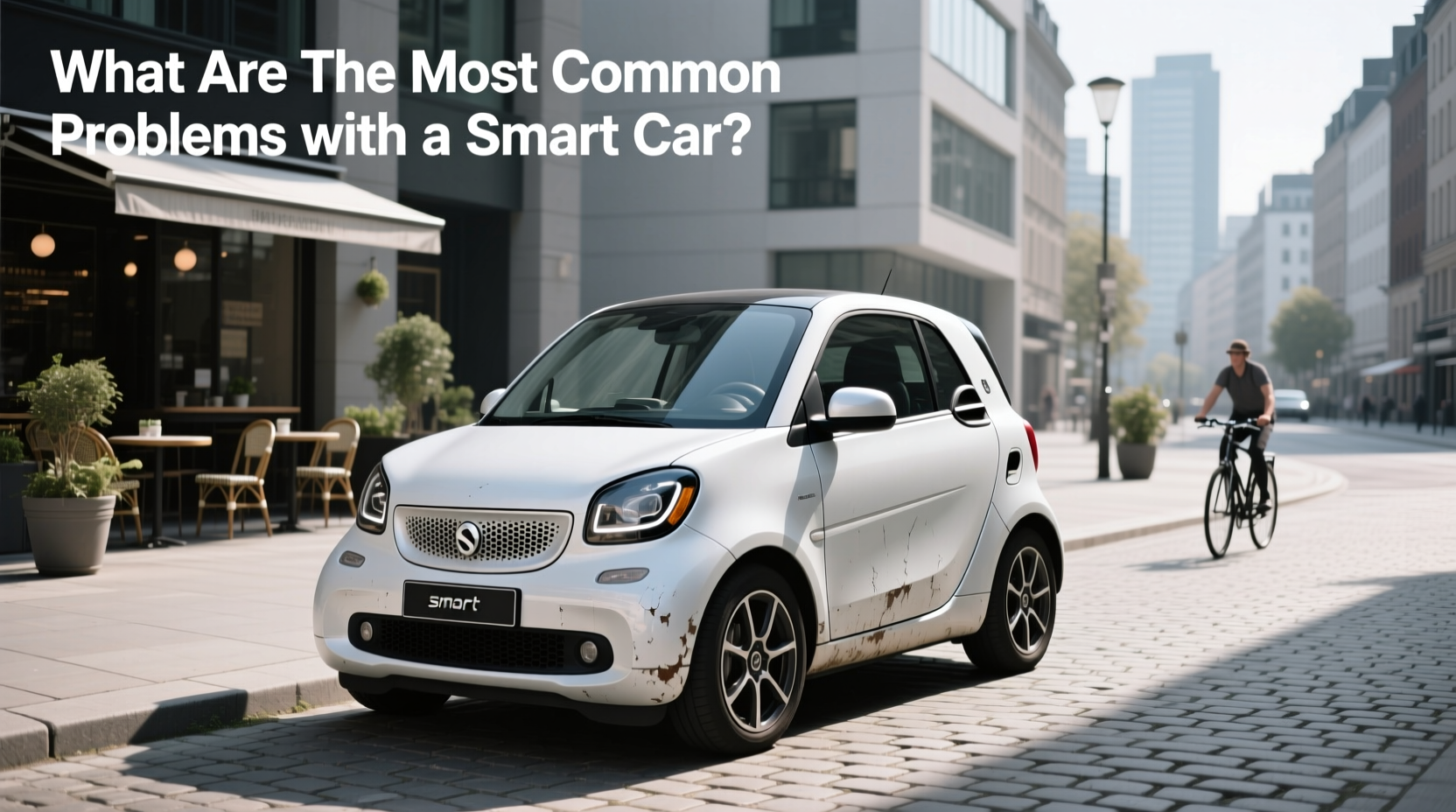
If you're asking how to choose Smart Fortwo panels or wondering what are the most common problems with a Smart Car?, start here: prioritize models from 2013–2015, avoid 2008–2012 units due to structural and engine recalls, and always inspect for coolant leaks, transmission wear, and electrical faults. When sourcing replacement body panels (like side cladding or bumpers), verify OEM compatibility and check for rust or impact damage—especially in older models prone to suspension bottoming. This guide breaks down key reliability concerns, model-year trends, and practical selection criteria to help buyers make informed decisions.
📍 About Smart Fortwo Panels and Common Vehicle Issues
The term "Smart Fortwo panels" typically refers to exterior body components such as front/rear bumpers, side moldings, fenders, and roof sections used for repairs or customization. These panels are often needed due to the car’s compact size and frequent urban use, which increases exposure to minor collisions, curbing, and parking scrapes. At the same time, prospective buyers frequently search for information on what are the most common problems with a Smart Car? because of well-documented mechanical and structural concerns across multiple generations.
Understanding both aspects—availability and quality of replacement panels, and the vehicle’s inherent reliability—is essential when purchasing or maintaining a Smart Fortwo. Whether restoring a used model or preparing for long-term ownership, knowing where failures commonly occur helps prioritize inspections and budget for potential repairs.
📈 Why Smart Fortwo Panels and Reliability Insights Are Gaining Popularity
As urban mobility demands grow, microcars like the Smart Fortwo remain relevant for city dwellers needing efficient parking and fuel economy. However, their age—especially first- and second-generation models (2008–2016)—means more vehicles are entering high-mileage ownership phases where mechanical issues surface. This drives demand for reliable replacement parts, including durable body panels resistant to cracking or warping.
Simultaneously, buyer interest in what to look for in Smart Fortwo panels and broader reliability trends has increased due to rising repair costs and limited dealer support. Enthusiasts and cost-conscious drivers alike seek transparent data on failure rates, model-year differences, and maintenance best practices before investing. Forums, parts marketplaces, and pre-purchase inspection services have grown around these needs, reflecting a shift toward proactive ownership planning.
🔧 Types and Variants of Smart Fortwo Models and Panel Options
🚗 Vehicle Generations and Powertrains
- First Generation (2008–2012): Known for structural adhesive flaws and fire-risk insulation mats. Lightweight design but poor crash energy distribution. Prone to head gasket and mechatronic transmission failures.
- Second Generation (2013–2015): Improved build quality; fewer structural issues. Still vulnerable to clutch wear and coolant leaks. A better balance of affordability and reliability.
- Third Generation (2016–2020): More electronics-heavy, leading to sensor and wiring harness issues. Electric EQ versions offer low running costs but suffer from limited range (~63–68 miles).
🛠️ Body Panel Types
- OEM Panels: Direct replacements from Daimler/Smart. High fit precision but expensive. Best for matching factory finish and corrosion resistance.
- Aftermarket Panels: Lower cost, widely available. Quality varies—some crack under temperature stress. Verify UV resistance and mounting alignment before purchase.
- Recycled/Used Panels: Sourced from salvage yards. Cost-effective but inspect closely for hidden rust, prior repairs, or misalignment from past impacts.
📊 Key Features and Specifications to Evaluate
When evaluating a Smart Fortwo or its replacement panels, focus on measurable and observable traits:
- Model Year and Service History: Check for completed recalls (e.g., fire hazard insulation, roof adhesives). Full service records reduce uncertainty.
- Mileage vs. Usage Pattern: City-driven cars accumulate brake and clutch wear faster than highway-driven ones, even at lower odometer readings.
- Coolant System Integrity: Inspect for white residue (indicating past leaks) or milky oil (sign of head gasket failure).
- Transmission Response: For automated manuals, test shifting smoothness. Hesitation or grinding suggests mechatronic unit degradation.
- Panel Material Quality: ABS plastic is standard; ensure no brittleness or fading. Compare thickness if replacing multiple panels.
- Electrical Diagnostics: Scan for stored codes related to sensors, key fobs, or shifter mechanisms—even if symptoms aren’t active.
✅ Pros and Cons of Owning a Smart Fortwo
- Excellent maneuverability and parking footprint
- Fuel efficiency up to 47 mpg city (gasoline models)
- Low insurance premiums due to small size and low power
- EV version offers zero-emission operation in urban zones
- Premature brake wear (every 8–12 months in city use)
- Harsh ride quality due to stiff suspension tuning
- Limited cargo space and two-seater configuration
- High-cost repairs for engine gaskets ($1,000+) and transmissions ($2,000+)
This makes the Fortwo ideal for single commuters in dense cities but less suitable for families, road trips, or areas with poor road conditions.
🔍 How to Choose Smart Fortwo Panels and Avoid Common Problems
Follow this step-by-step checklist when buying a used Smart Fortwo or replacement panels:
- Review Model Year Risks: ❗ Avoid 2008–2012 models due to documented structural weaknesses and fire hazards. Prioritize 2013–2015 for better reliability.
- Inspect Engine Bay: Look for coolant stains, cracked hoses, or oil sludge. Confirm recent timing belt changes (if applicable).
- Test Drive Transmission: Ensure smooth engagement in automatic mode. Listen for clunking during gear shifts—a sign of worn solenoids or clutch packs.
- Examine Suspension Components: Check control arms and bushings for cracks. Bottoming out on speed bumps may indicate weakened mounts.
- Evaluate Electrical Systems: Test door locks, window motors, and dashboard warnings. Intermittent failures suggest corroded connectors.
- Assess Panel Condition: For bodywork, inspect seams and paint match. Misaligned panels may signal previous unreported accidents.
- Verify Battery Health (EV Models): Request battery degradation report. Below 70% capacity significantly reduces usable range.
📌 Red Flags: Stuck ignition key (common in 2014+ models due to shifter design), uneven tire wear (alignment/suspension issue), or error codes related to the mechatronic unit.
💰 Price & Market Insights
Used Smart Fortwo prices vary widely by generation and condition:
- 2008–2012 Models: $2,000–$5,000 – cheapest upfront but highest risk of costly repairs.
- 2013–2015 Models: $5,000–$8,000 – best value for balanced reliability and price.
- 2016–2020 Electric (EQ): $8,000–$15,000 – higher initial cost but lower fuel/maintenance expenses.
Replacement body panels range from $80–$250 each (aftermarket) to $300–$600+ (OEM). Labor adds $200–$500 per panel depending on complexity. Consider total cost of ownership: while purchase price is low, annual repair costs average $751—above the industry average of $650.
| Model Year | Key Issues | Reliability Rating | Estimated Repair Risk |
|---|---|---|---|
| 2008–2012 | Engine gasket, structural adhesive, fire hazard | 1/5 | High |
| 2013–2015 | Early transmission wear, coolant leaks | 3/5 | Moderate |
| 2016–2020 | Electrical faults, EV battery degradation | 3/5 | Moderate |
⭐ Top-Seller & Competitive Analysis
While no single “top-selling” replacement panel dominates, OEM front bumpers and side skirts are among the most frequently replaced due to parking incidents. Aftermarket suppliers like Replace, KAHN Design, and Modix offer styled alternatives, but fitment consistency varies.
For complete vehicles, privately listed coupes in excellent condition (2014–2015) tend to sell fastest online. They appeal to buyers seeking a mechanically simpler platform before full electrification. When comparing options, weigh:
- Availability of spare parts
- Local mechanic familiarity with Smart systems
- Resale liquidity (limited market in rural areas)
👥 Customer Feedback Synthesis
Analysis of owner forums and review platforms reveals consistent patterns:
👍 Frequent Praise
- “Incredible for parking in tight city spots.”
- “Fun to drive short distances; gets compliments.”
- “Cheap to insure and tax.”
👎 Common Complaints
- “Brakes wore out in just 10 months of city driving.”
- “Transmission failed at 45,000 miles—$2,300 repair.”
- “Key fob stopped working repeatedly; ignition stuck.”
- “Ride is too harsh on rough roads.”
These reflect real-world trade-offs between urban convenience and long-term durability.
🏭 Sourcing & Supplier Tips
When buying Smart Fortwo panels or used vehicles:
- Check Compatibility: Confirm VIN-specific fit—minor facelifts affect panel dimensions between 2012 and 2013.
- Use Reputable Suppliers: Sites like AutoPartsWarehouse, RockAuto, or authorized Smart recyclers provide traceable part histories.
- Request Photos: For online orders, ask for close-ups of mounting points and surface condition.
- Verify Return Policy: Ensure you can return mismatched or damaged panels without restocking fees.
- Consider Bulk Lots: If restoring multiple cars, salvage auctions may offer discounted sets—but inspect personally if possible.
🧼 Maintenance, Safety & Legal Considerations
To extend lifespan:
- Change engine oil every 7,500 miles (or annually), especially on turbocharged models.
- Replace transmission fluid per manufacturer schedule to prevent mechatronic failure.
- Inspect cooling system hoses and thermostat regularly.
Safety-wise, note that while the Tridion safety cell is strong, the short crumple zones limit protection in high-speed collisions. The car lacks advanced driver aids (no adaptive cruise, lane keep), so driver vigilance is critical.
Legally, ensure all repairs meet local vehicle safety standards. In some regions, non-OEM panels may require certification for roadworthiness inspections. Always confirm regulations with your transport authority.
📌 Conclusion
If you need an affordable, ultra-compact city commuter and understand the limitations, a well-maintained Smart Fortwo from 2013–2015 can be a practical choice. However, if you prioritize long-term reliability, minimal repair hassle, or plan frequent highway driving, consider alternative subcompacts. When sourcing Smart Fortwo panels, prioritize OEM or high-grade aftermarket parts and inspect thoroughly for prior damage. Your decision should balance initial savings against expected maintenance investment—factoring in what the data shows about the most common problems with a Smart Car.




 浙公网安备
33010002000092号
 浙B2-20120091-4