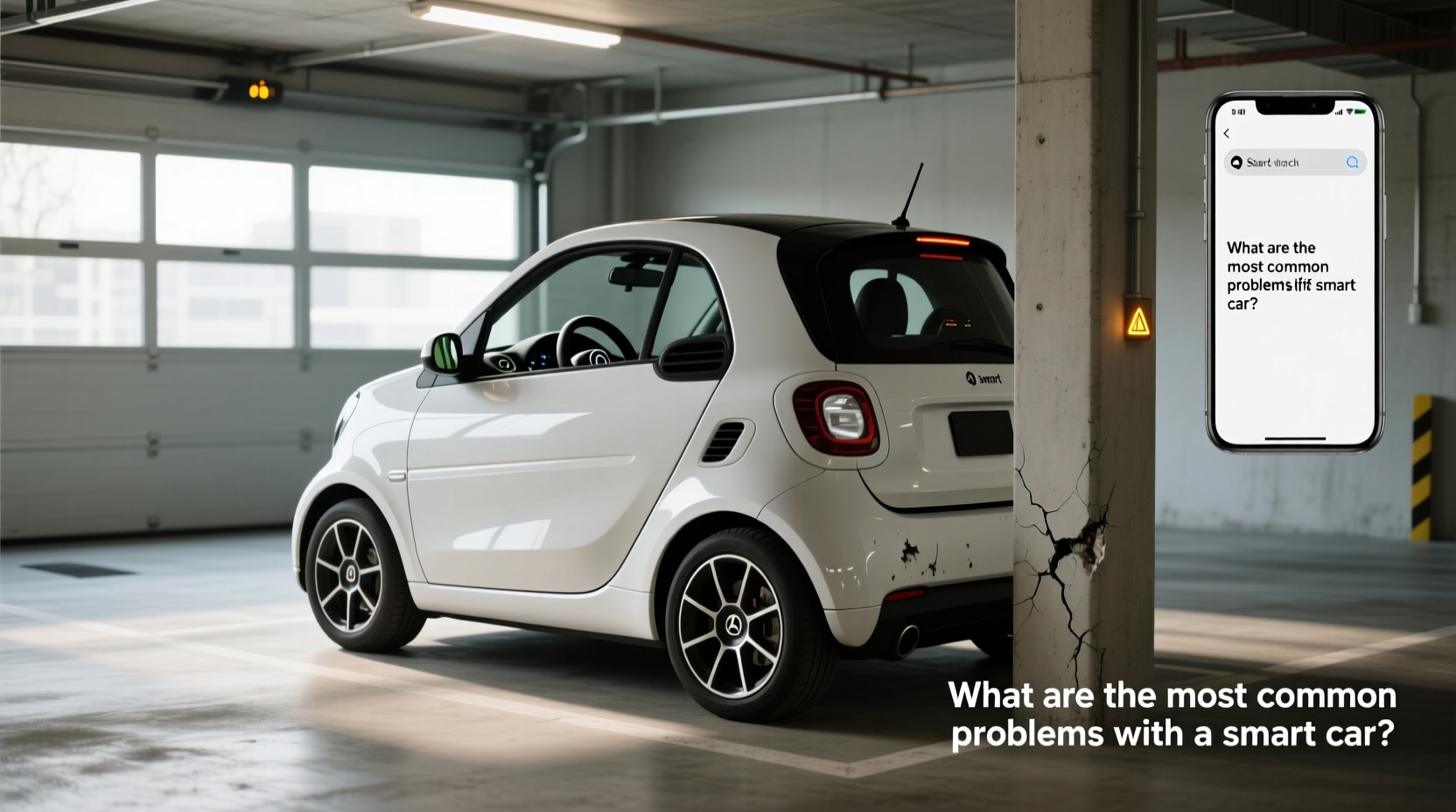
\uD83D\uDDFA\uFE0F About Smart Fortwo Steering Systems & Common Car Problems
The Smart Fortwo, known for its compact footprint and urban efficiency, has carved a niche in city transportation since its introduction. Designed primarily for short commutes and tight parking scenarios, it's often praised for fuel economy and maneuverability. However, potential buyers must be aware that while the vehicle excels in size and efficiency, it comes with a well-documented set of mechanical vulnerabilities—particularly related to its steering system.
The core concern centers around the Electric Power Steering (EPS) system, which replaces traditional hydraulic assistance with an electric motor. While this design saves space and improves fuel efficiency, it introduces failure points not present in older systems. Owners frequently report sudden loss of steering assist, heavy steering feel, unresponsive handling, or even complete steering lock-up after turning 1. These issues are especially critical given the car’s lightweight build and lack of redundancy in steering control.
Beyond steering, other common problems include transmission glitches in automated manual models, rapid brake wear due to frequent stop-and-go use, soft suspension leading to undercarriage damage, and various electrical malfunctions affecting infotainment, shifter operation, and key fobs 2. Understanding these pain points is essential when evaluating whether a Smart Fortwo fits your needs.
\uD83D\uDD0B Why Smart Fortwo Reliability Concerns Are Gaining Attention
As urban congestion increases and parking spaces shrink, microcars like the Smart Fortwo are regaining interest among city dwellers and eco-conscious drivers. Their small size, ease of parking, and relatively low emissions (especially in electric form) make them appealing for last-mile commuting. Yet, rising search volume around “what are the most common problems with a smart car?” reflects growing buyer caution.
Increased awareness stems from owner forums, repair databases, and consumer reports highlighting recurring issues that can turn a budget-friendly purchase into a costly ownership experience. While RepairPal rates Smart at 4.0/5.0 for reliability (ranking 10th out of 32 brands), the average annual repair cost of $751 is slightly above average 3. More importantly, repairs—when needed—are often expensive due to proprietary components and labor complexity.
Buyers today are no longer swayed solely by novelty or compactness. They seek value, longevity, and predictability—making comprehensive guides on how to choose a steering wheel Smart Fortwo and assess long-term reliability increasingly valuable.
\u2699\uFE0F Types and Variants of Smart Fortwo Models
The Smart Fortwo has evolved through three generations (C450, C452, C453), each with distinct drivetrains and technological updates:
- First Generation (C450, 2008–2011): Introduced the modern Fortwo design. Available with a 1.0L petrol engine and automated manual transmission. Prone to early EPS failures, engine noise, and clutch issues.
- Second Generation (C452, 2012–2015): Minor updates over the first gen. Improved electronics but retained similar mechanical flaws. Electric version introduced (ED) with better reliability.
- Third Generation (C453, 2016–2020): Redesigned platform shared with Renault Twingo. Offered both petrol and electric (EQ) variants. Despite improvements, 2016 models faced major recalls and electronic faults.
| Model Type | Pros | Cons |
|---|---|---|
| Petrol (Manual/Automated) | Fuel-efficient (~45 mpg city), widely available | Transmission lag, high brake wear, EPS issues in older models |
| Electric (EQ) | Noise-free, lower maintenance, fewer moving parts | Limited range (~63–68 miles), charging infrastructure dependency |
| Diesel (Limited Markets) | Better highway economy, torquey at low speeds | Rare, higher emissions scrutiny, complex servicing |
\uD83D\uDD0D Key Features and Specifications to Evaluate
When assessing a used Smart Fortwo, focus on these technical and mechanical indicators:
- Steering System Health: Check for heavy steering, noises from the column, or error messages like “Steering Fault.” A diagnostic scan should reveal any stored EPS codes.
- Brake Condition: Due to city use, brakes wear faster. Inspect pad thickness; replacement every 8–12 months is common 2.
- Suspension Integrity: Look for bottoming-out signs—damaged undertray, misaligned wheels, or excessive bouncing on bumps.
- Transmission Response: Test drive to ensure smooth gear engagement. Hesitation or jerking indicates clutch or actuator issues.
- Electrical Systems: Verify key fob function, shifter responsiveness, and infotainment stability.
- Service History: Full records increase confidence. Absence raises risk, especially for high-mileage examples.
\u2714\uFE0F\u274C Pros and Cons of Owning a Smart Fortwo
| Advantages | Disadvantages |
|---|---|
| \u2714\uFE0F Excellent city maneuverability and parking ease | \u274C High susceptibility to EPS and transmission failures |
| \u2714\uFE0F Low fuel consumption (petrol) or zero emissions (electric) | \u274C Short EV range limits usability beyond urban zones |
| \u2714\uFE0F Lightweight and fun to drive in traffic | \u274C Soft suspension leads to frequent undercarriage damage |
| \u2714\uFE0F Minimal exterior footprint reduces insurance premiums | \u274C Rapid brake wear increases maintenance frequency |
| \u2714\uFE0F Electric model offers quiet, low-maintenance operation | \u274C Limited cargo space and two-seater configuration |
\uD83D\uDD0E How to Choose a Smart Fortwo: Step-by-Step Buying Guide
To minimize risk when purchasing a used Smart Fortwo, follow this checklist:
- Avoid Problematic Years: Steer clear of 2008, 2009, and 2016 models. These have documented recalls and systemic issues including fire hazards, paint-as-adhesive errors, cooling system defects, and in-drive shutdowns 4.
- Prefer Electric Models: The EQ versions (2017–2020) eliminate engine and transmission concerns and reduce steering load, potentially extending EPS life.
- Request a Diagnostic Scan: Use an OBD2 scanner to check for historical or active fault codes, especially in the steering and transmission modules.
- Inspect Suspension & Undercarriage: Look for dents, scrapes, or cracked components—common from speed bumps or potholes.
- Test Drive Thoroughly: Perform low-speed turns, emergency lane changes, and hill starts to evaluate steering response and clutch behavior.
- Verify Service Records: Regular oil changes, software updates, and brake inspections suggest responsible ownership.
- Check Recall Status: Visit NHTSA.gov or manufacturer site to confirm all recalls (e.g., insulation mat fire risk in 2008) have been addressed.
\uD83D\uDCB0 Price & Market Insights
Used Smart Fortwo prices vary significantly by model year, condition, and drivetrain:
- 2008–2011 Petrol: $2,000–$5,000 — Often unreliable; high risk of major repairs.
- 2012–2015 Petrol/Electric: $4,000–$8,000 — Moderate reliability; electric versions hold value better.
- 2017–2020 EQ Electric: $8,000–$14,000 — Most reliable, lowest mechanical risk, preferred choice for cautious buyers.
Premiums apply for low mileage, full service history, and accident-free titles. Always compare local listings and factor in potential repair costs—especially for steering and transmission work, which can exceed $2,000.
\uD83D\uDD0E Top-Seller & Competitive Analysis
The 2018–2020 Smart EQ Fortwo is currently the most sought-after variant due to improved software stability and reduced mechanical complexity. Below is a comparison of top models:
| Model Year | Drivetrain | Known Issues | Reliability Score | Estimated Repair Risk |
|---|---|---|---|---|
| 2008 | Petrol | Fire hazard, adhesive error, transmission noise | 1.8/5 | Very High |
| 2009 | Petrol | Cooling system defects, gear engagement issues | 2.0/5 | High |
| 2016 | Petrol/Electric | Engine shutdown, shifter stuck, EPS faults | 2.2/5 | High |
| 2018 | Electric (EQ) | Minor software bugs, battery degradation over time | 4.0/5 | Low |
| 2020 | Electric (EQ) | Infrequent sensor recalibrations needed | 4.2/5 | Low |
\uD83D\uDDBC\uFE0F Customer Feedback Synthesis
Analysis of owner reviews and forum discussions reveals consistent patterns:
Common Praises:- “Perfect for downtown parking and errands.”
- “The electric model is whisper-quiet and cheap to run.”
- “Fun to zip through traffic.”
- “Steering suddenly went stiff—cost $2,300 to fix.”
- “Brakes wore out in 10 months despite light driving.”
- “Car wouldn’t start; dealer said shifter sensor failed.”
- “Bottomed out on a speed bump—damaged the undercarriage.”
\uD83D\uDEE0\uFE0F Sourcing & Supplier Tips
When buying a used Smart Fortwo:
- Purchase from dealerships or private sellers who allow pre-purchase inspections by an independent mechanic familiar with European microcars.
- For electric models, confirm battery health via a state-of-charge (SOC) and capacity test—available through authorized service centers.
- If importing or sourcing internationally, verify compatibility with local charging standards (Type 2 vs. CCS) and regulatory compliance.
- Avoid salvage-title vehicles—structural or electrical damage is difficult to fully remediate in such a tightly integrated design.
\u2693\uFE0F Maintenance, Safety & Legal Considerations
Maintain your Smart Fortwo with regular checks on:
- EPS System: Monitor for warning lights; address minor symptoms early.
- Brakes: Inspect pads every 6 months due to accelerated wear.
- Suspension: Avoid aggressive driving over curbs or uneven roads.
Safety-wise, the Smart Fortwo has limited crash protection compared to larger vehicles. It’s best suited for low-speed environments. Always ensure airbags, ABS, and electronic stability control are functional.
Legally, verify that the vehicle meets local emissions and safety inspection requirements. In some regions, older petrol models may face restrictions or higher taxes.
\u2705 Conclusion: Who Should Buy a Smart Fortwo?
The Smart Fortwo can be a smart choice—but only under specific conditions. If you need a reliable second car for city errands and have access to off-street charging, the 2018–2020 EQ electric model is the best option. Avoid earlier petrol models unless they come with full service history and passed a professional inspection. Always prioritize models without EPS or transmission complaints. Given the high cost of steering repairs, a clean diagnostic report is non-negotiable. For those seeking ultra-compact mobility with minimal environmental impact, the later electric Fortwo delivers—if purchased wisely.




 浙公网安备
33010002000092号
 浙B2-20120091-4